



Kiwis still love one-tonne utes: the top-two-selling vehicles of any kind year-to-date are pickup trucks and there are three of them in the overall top 10.
They inspire fierce brand loyalty among many, but even the most ardent fans of things-with-trays would have to admit the popular ute models are all made to a very similar formula: cabs with a tray on on the back, kinda square and mostly diesel-powered. Let's be honest: it's hard to stand out.
Hang on, here's a way: a manual transmission. Remember those? There's a gearlever you have to move by hand, and to do that you have co-ordinate the changes with a third pedal called the clutch. It's tricky, but you do get the hang of it.
It might surprise you (it certainly did us) that Toyota is now the only maker of one-tonne utes to offer a manual-transmission option in NZ. Other brands have just quietly phased them out. Even Isuzu, perhaps the most grass-roots uteist of all, no longer offers a D-Max manual.
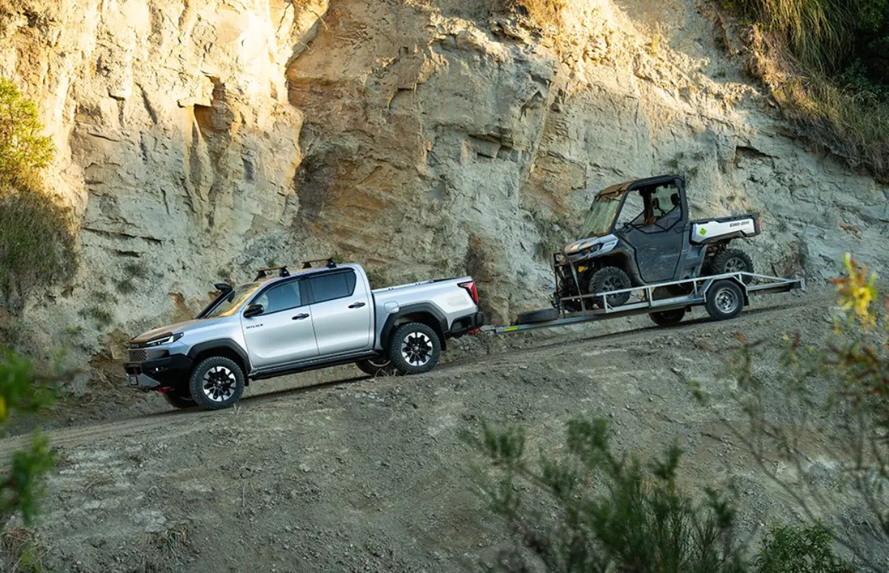
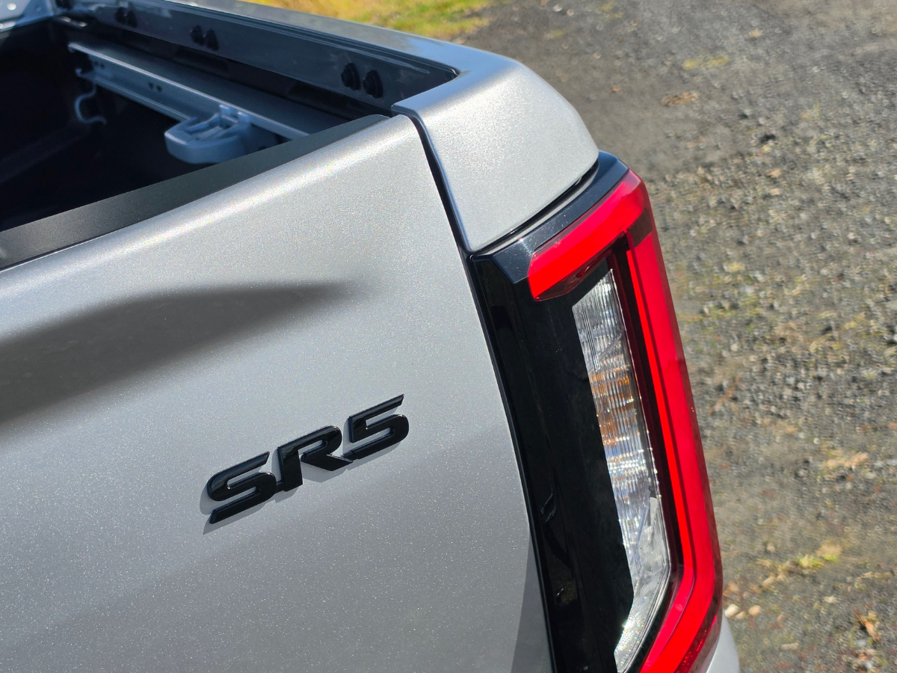
But Toyota can sell you a manual-transmisison Hilux. There's even a choice. The SR, SR5 and SR5 Limited can all be purchased with a 6-speed DIY gearbox.
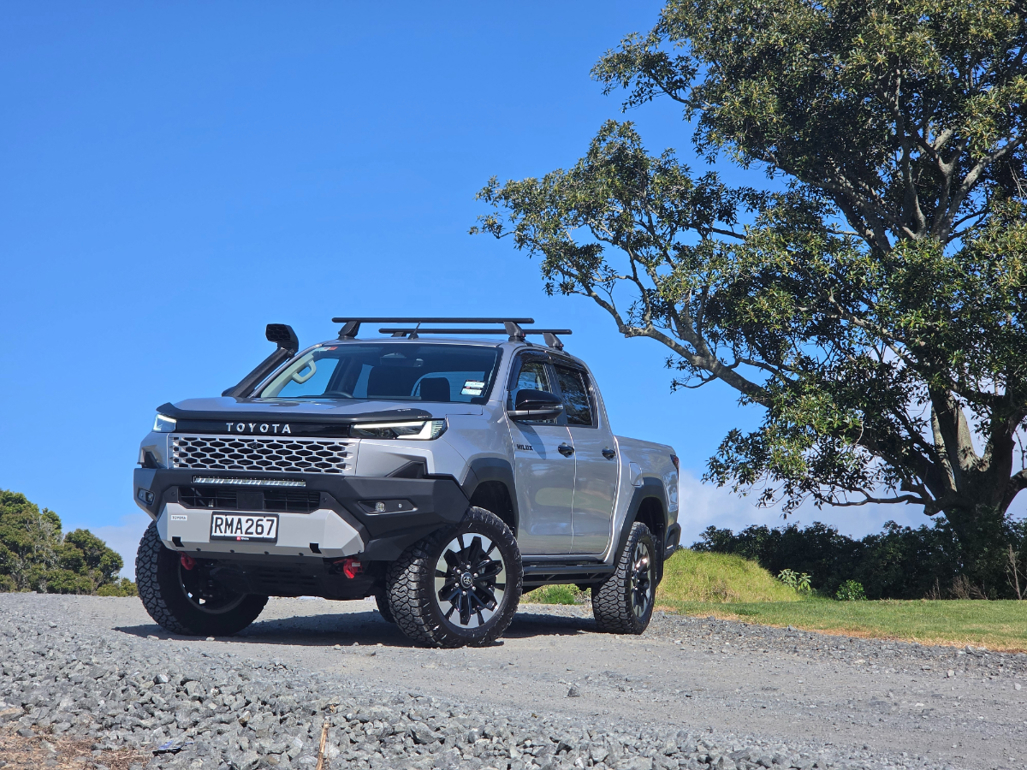
The model you see here lurking under all those Toyota-approved accessories is the SR5, which costs $58,490 ($2k less than the automatic). Should be fun, although there is some significant opportunity cost in choosing manual with the Hilux, beyond a tired left leg. We'll get to that.
On the outside: what are the Toyota Hilux SR5 manual's main design features?
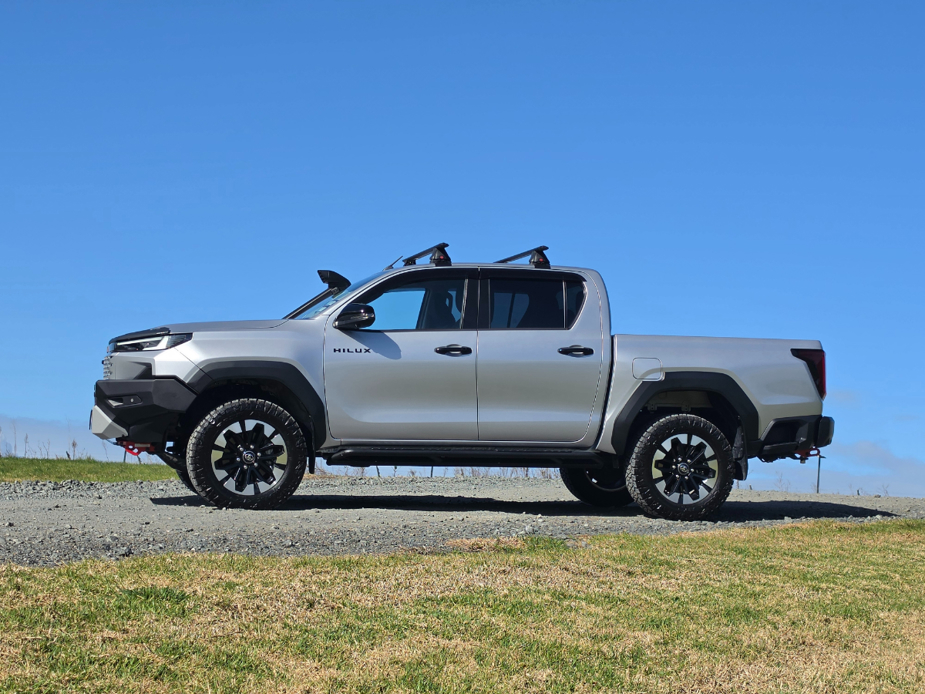
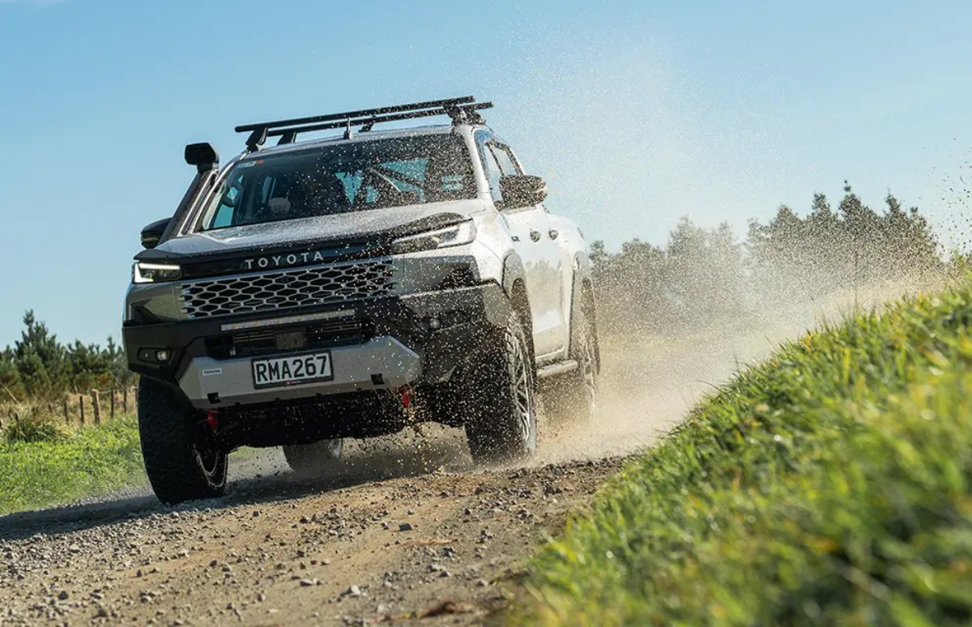
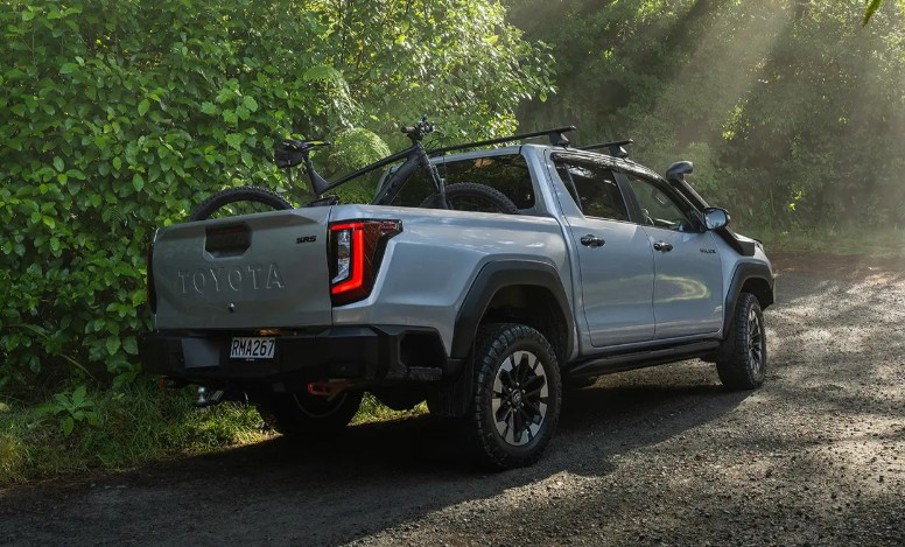
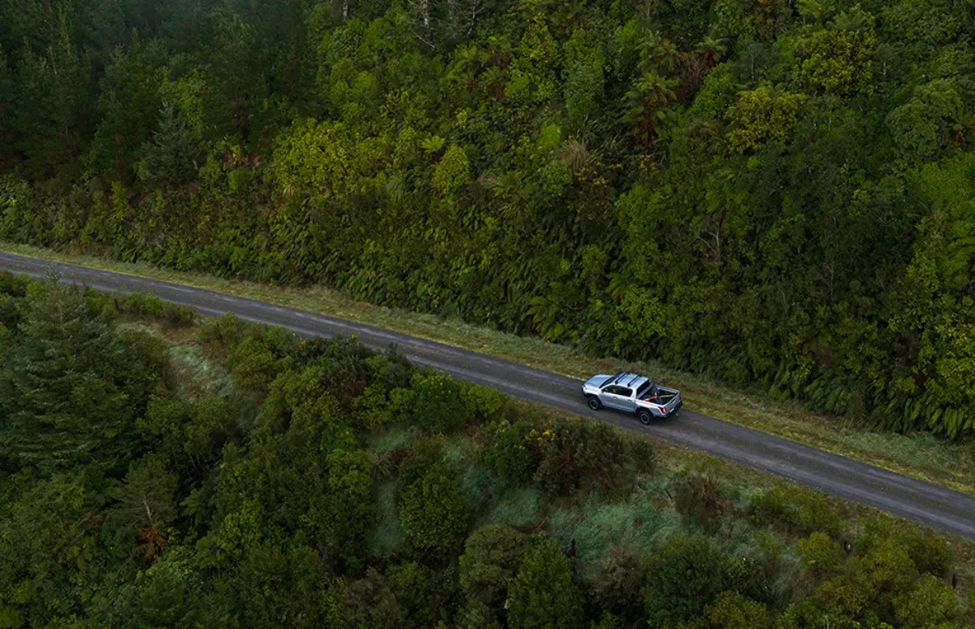
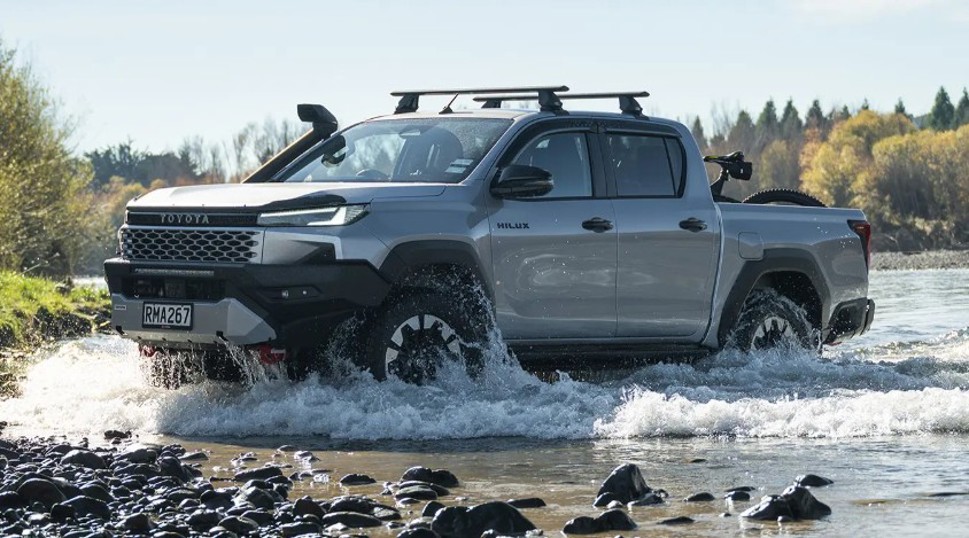
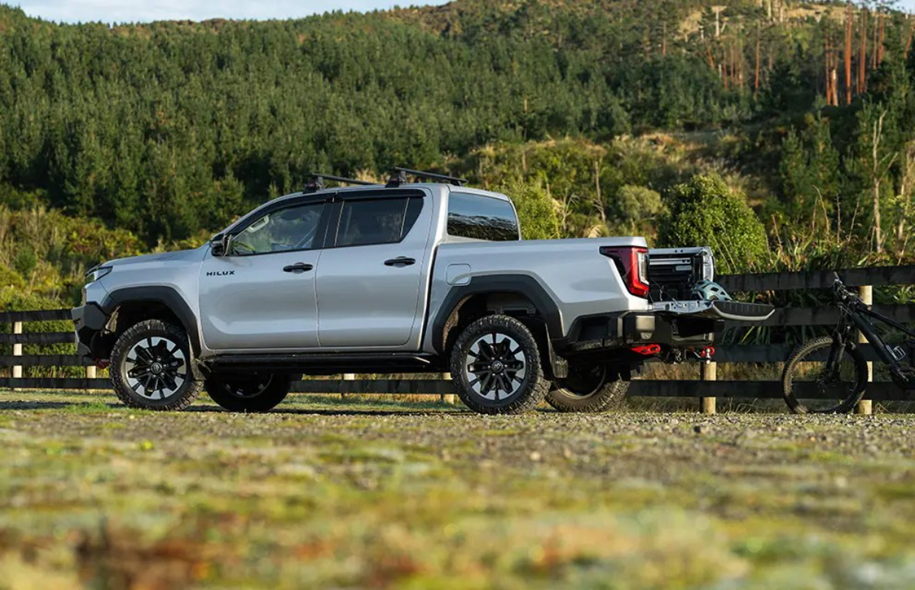
The new Hilux has gone all "Cyber Sumo" in its exterior design, although some of it is concealed here by Toyota NZ's desire to showcase its vast range of official acessories on media-review models.
It might surprise you (it certainly did us) that Toyota is now the only maker of one-tonne utes to offer a manual-transmission option in New Zealand.
Highlights on our SR5 double cab include the Hoopless Steel Bar front bumper assembly ($4066), Ram Head Snorkel ($862), Aero Roof Racks ($485), the dreaded Slimline Weather Shields ($301, great for driving-and-smoking) and a bonnet protector ($235). To name but a few.
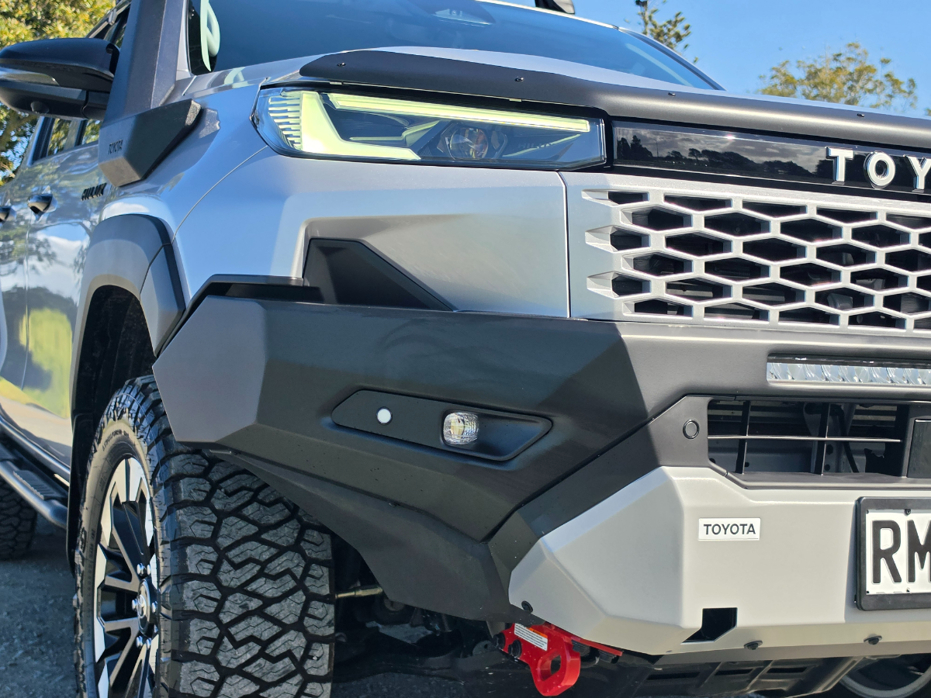
The SR5 rides on 18-inch alloys in a "cog" design that's supposed to suggest a tough mechanical kind of character. On our test car they're shod with a set of (optional) chunky all terrain (AT) tyres, which look the part and are great for off-roading, but don't do the on-road dynamics any favours.
OVERVIEW
| Price | $58,490 (base price only) |
| Body style | 4-door double-cab wellside ute |
| Wheels and tyres | 18in alloy wheels, 265/60 Maxxis Razr AT tyres (optional) |
| Length | 5325mm |
| Wheelbase | 3090mm |
| Weight | 2110kg |
| Website | toyota.co.nz |
On the inside: what's the Toyota Hilux SR5 manual cabin like?
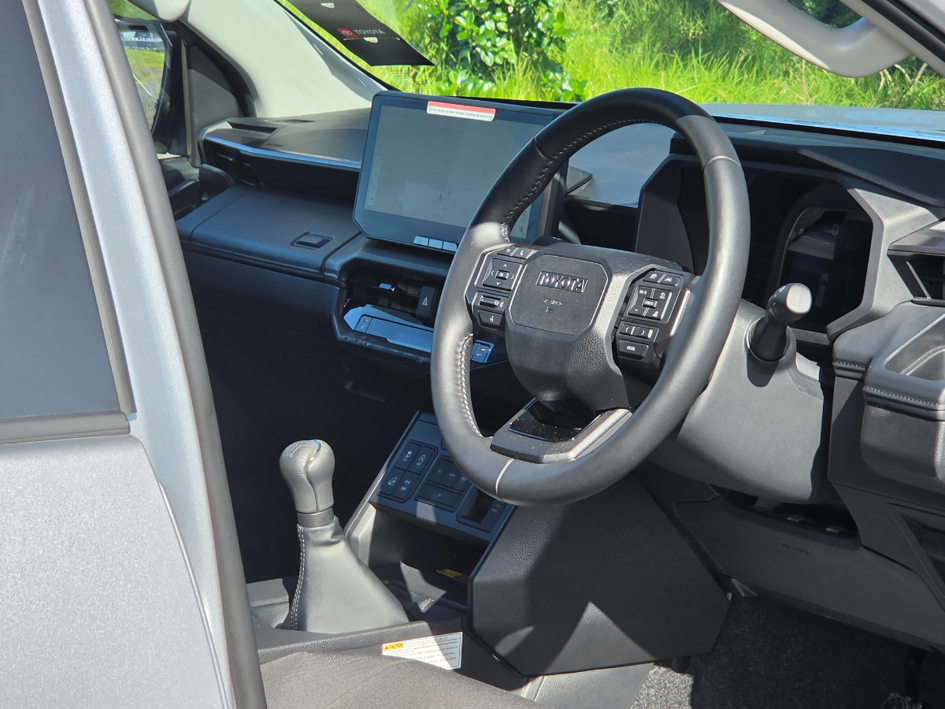
Hilux has really raised its game in terms of interior design. The cabin is now a Land Cruiser-like environment full of squared-off shapes and chunky switchgear. Pretty good on tech too, with a digital instrument cluster that you can customise for multiple themes (there are cog shapes in there, too) and a 12.3in infotainment screen.
The SR5 feels right as a lifestyley truck, although you still have to step up to the SR5 Limited for leather upholstery, power seat adjustment and a premium sound system. It's not a big step, though.
The SR is pretty basic, but the SR5 is where Hilux gets a bit more SUV-adjacent in look and feel, with softer surfaces and an even a glove compartment that serves as a coolbox.
Standard on the SR5 is heating for the steering wheel and front seats, plus privacy glass. It feels right as a lifestyley truck, although you still have to step up to the SR5 Limited for leather upholstery, power seat adjustment and a premium sound system. It's not a big step, though: just $1500.
INTERIOR
| Head-up display | No |
| Infotainment screen | 12.3 inches |
| Phone projection | Wireless Android Auto and Apple CarPlay |
| Wireless phone charger | Single |
| USB ports | 2x USB-C front plus 220v, 2xUSB-C rear |
| Climate control | Dual zone |
| Front seat heating/ventilation | Yes/no plus heated seering wheel |
| Front seat adjustment | 6-way manual driver, 4-way manual passenger |
| Rear seat split/fold | 60/40 |
| Power tailgate | No, tailgate assist for drop-down |
On the road: what's the Toyota Hilux SR5 manual like to drive?
Part of the reason manuals are disappearing as an option in the ute market is that new powertrains come along that haven't been developed with three pedals in mind (a consequence of low demand, of course).
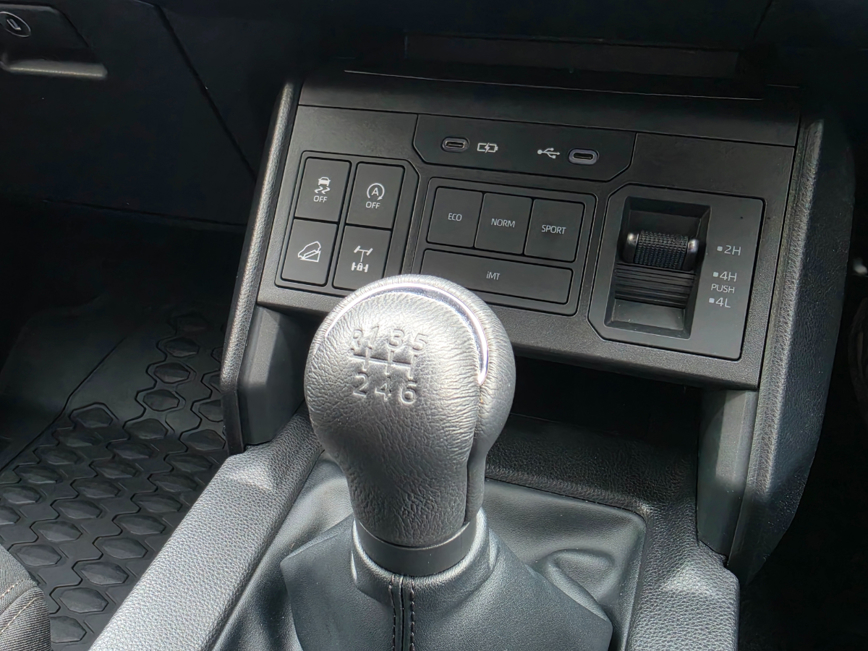
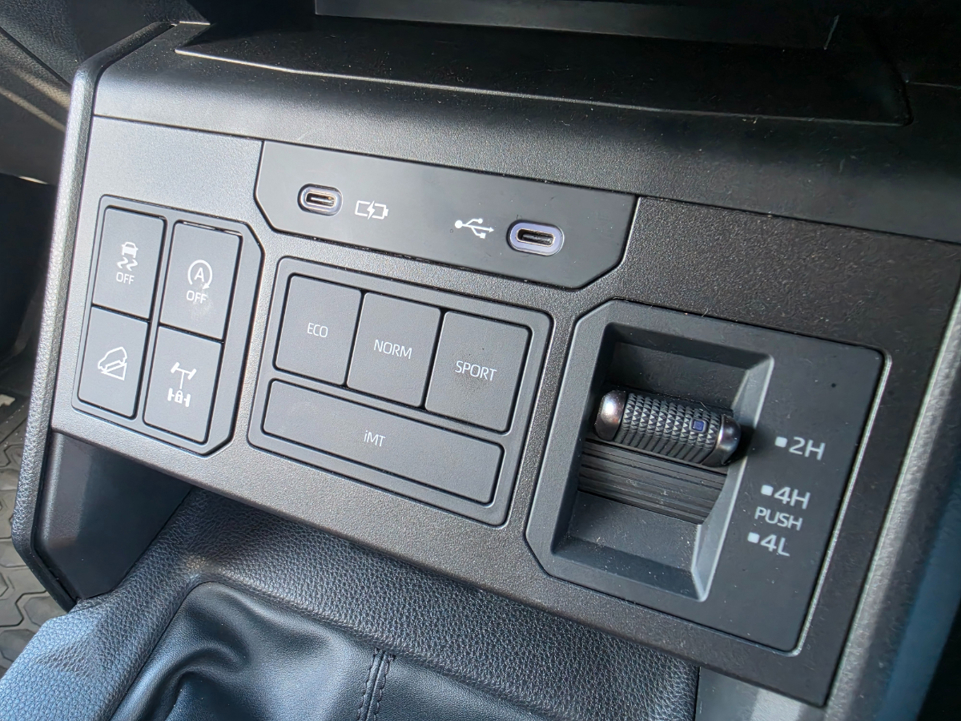
The i-MT function is the same thing as you get on a manual GR Yaris. You will definitely get compliments on your smooth manual driving skills.
That's less of a problem for Hilux, because a lot of the mechanical package of the 9th-generation model launched this year is carried over from the previous model. Which carried over a lot from the previous model.
That all goes double for the manual, because if you want the three-pedal gearbox, it can only be matched to the non-hybrid turbo diesel engine. This is truly old-school.
As we've established with the previous Hilux, the 48-volt mild hybrid system doesn't add a whole lot in terms of fuel economy. Our SR5 manual is rated at 8.2l/100km, compared to 8.3l/100km for the SR5 MHEV automatic under the Kiwi 3P-WLTP formula. So there's nothing in it, really.
But the manual-diesel has 80Nm less torque (albeit with the peak delivered 200rpm earlier) and what the MHEV system does offer is a noticeably smoother and more flexible power delivery. As is sometimes the case with hybridisation, you get enhanced performance without opportunity cost in fuel consumption.
That lower torque output is a Hilux manual thing, not a Hilux non-hybrid thing, by the way. The automatic SR PreRunner 2WD also has a non-hybrid diesel, but it makes the full 500Nm.
The manual model doesn't as pull as willingly from low revs as the auto-hybrid and isn't as relaxed in-ratio when you're cruising. You could put some of that down to differences in gearing, but it's a powertrain character development that was obvious when the previous auto-model went MHEV for the first time.
You're probably not fixated on relaxed driving if you've opted for the manual, anyway. It is fun and the gearchange is remarkably light and precise - within reason, for a diesel ute. It also has switchable i-MT, a rev-matching function for downshifts that's ostensbily designed for smoother towing, but is also quite sporty. It's the same thing you get on a manual GR Yaris. And you will get compliments on your smooth manual driving skills. Sweet.
Additional opportunity cost for the manual includes the lack of the automatic models' Multi Terrain Select drive modes, Multi Terrain Monitor and Downhill Assist Control. That's all about compatibility with the transmission of course, but yes - this one is all about the driver being in complete control.
The SR5 gets the softer state of rear suspension tune designed to make the Hilux ride and handle a bit better on the sealed stuff. Alll Hiluxes have moved to electric steering and disc rear brakes.
All good, but as with the Adventure we just tested, the chunky tyres fitted to our review vehicle do mask much of that benefit, so we can't comment too much further. It's especially tricky on our SR5 because it wears the full AT rubber, compared to a more hybrid (no pun intended) AT-S pattern on the tricked-up Adventure we reviewed earlier.
SPECIFICATIONS
| Powertrain type | Turbo diesel |
| Capacity | 2755cc |
| Power | 150kW |
| Torque | 420Nm |
| Transmission | 6-speed manual with iMT downshift rev-matching, part-time 4WD with low range |
| Power to weight | 71kW/tonne |
| Adaptive suspension | No |
| Efficiency | 8.2l/100km (3P-WLTP) |
| Tank size, fuel type | 80 litres, diesel |
| Tow rating | 3.5 tonnes |
On ownership: what's the Toyota Hilux SR5 manual warranty and servicing situation?
The vehicle is covered for 3 years/100,000km, but extended to 5 years/150,000 ("Platinum Warranty") is servicing is carried out at an authorised outlet.
Servicing is required every 12 months/15,000km.
On the whole: what do we think of the Toyota Hilux SR5 manual?
A manual Hilux is a very specific thing and, these days, any manual ute is a very niche thing. There are all kinds of things it's lacking compared to the automatic version, including MHEV technology and 4x4-assistance features.
None of that will matter to the person who wants one. Fair enough, too: changing your own gears is fun in a vehicle like this and the addition of i-MT makes it even better.
Toyota Hilux SR5 manual FAQs
What kind of car is the Toyota Hilux SR5 manual?
A double-cab ute.
Does the Toyota Hilux SR5 manual have hybrid or EV technology?
No, the manual gearbox is matched to the non-hybrid diesel.
What’s the fuel economy of the Toyota Hilux SR5 manual?
It's rated at 8.2l/100km (3P-WLTP).
Is the Toyota Hilux SR5 manual safe?
Hilux has a 5-star ANCAP rating (valid until December 2031).
What safety and assistance features does the Toyota Hilux SR5 manual have?
| Intelligent lights | Bi-beam LED |
| Rain sensing wipers | Yes |
| Airbags | Dual front and side, front-centre, driver's knee, side curtain |
| Adaptive cruise control | Yes |
| Driver attention monitor | Yes |
| Traffic sign recognition | Yes |
| Forward collision warning | Yes |
| Blind spot warning/assist | Yes/no |
| Lane departure warning/assist | Yes/no |
| Rear cross traffic alert/braking | Yes/no |
| Reverse collision braking | Yes |
| Parking sensors | Front and rear |
| Camera system | Reversing |
What are the Toyota Hilux SR5 manual's main rivals?
- Ford Ranger XLT ($55,990): Not a manual. Less power than 'Lux, but nice even in this mid-spec.
- Mitsubishi Triton VRX ($59,990): Not a manual. But Hilux SR5 money almost gets you the top Triton VRX.
- Nissan Navara Pro-4X ($59,990): Not a manual. But Navara Pro-4X is fully kitted up.
- Isuzu D-Max LS ($61,490): Not a manual. Definitely not new. LS is the D-Max mid-grade.
- Toyota Hilux SR5 Limited manual ($60,990): A little extra spend and you get a whole lot more luxury.


