


The Jac T9 PHEV is the latest entrant into New Zealand’s small, but rapidly expanding plug-in-hybrid ute field alongside models such as the Ford Ranger hybrid, BYD Shark 6 and GWM Cannon Hi4-T and Cannon Alpha Hi4-T.
While all of these utes are plug-in hybrids, they are all quite different vehicles that operate in very different ways, right down to how their plug-in hybrid systems actually drive the wheels.
The Ford and the GWMs have taken the “ute first” approach, maintaining rugged mechanical underpinnings and 4X4 running gear with direct mechanical connections between all wheels and petrol engines that also handle drive duty, but adding batteries and electric motors to the formula.
Conversely, the BYD Shark 6 aims directly at the electrified side of things, with its petrol engine being solely a generator, with a pair of electric motors driving the wheels, with no direct mechanical connection between them.
The Jac T9 is something of a middle ground between these two extremes, something you may not have expected given the fact that, like the Ranger and Cannons, the T9 exists as a diesel ute as well.
This is because Jac has taken the unusual approach of simply doing away with the drive shaft altogether - making room for larger batteries - by having the petrol engine and a single electric motor drive the front wheels, while a second electric motor handles the drive to the rear wheels.
While there is no mechanical connection between front and rear, the T9 does feature direct connections across the ute in the form of a pair of locking diffs on the front and rear axles.
Its aim is to find that middle ground: electric driving for everyday use, with the familiar format and work-focused hardware of a traditional ute.
On the outside: what are the Jac T9 PHEV's main design features?
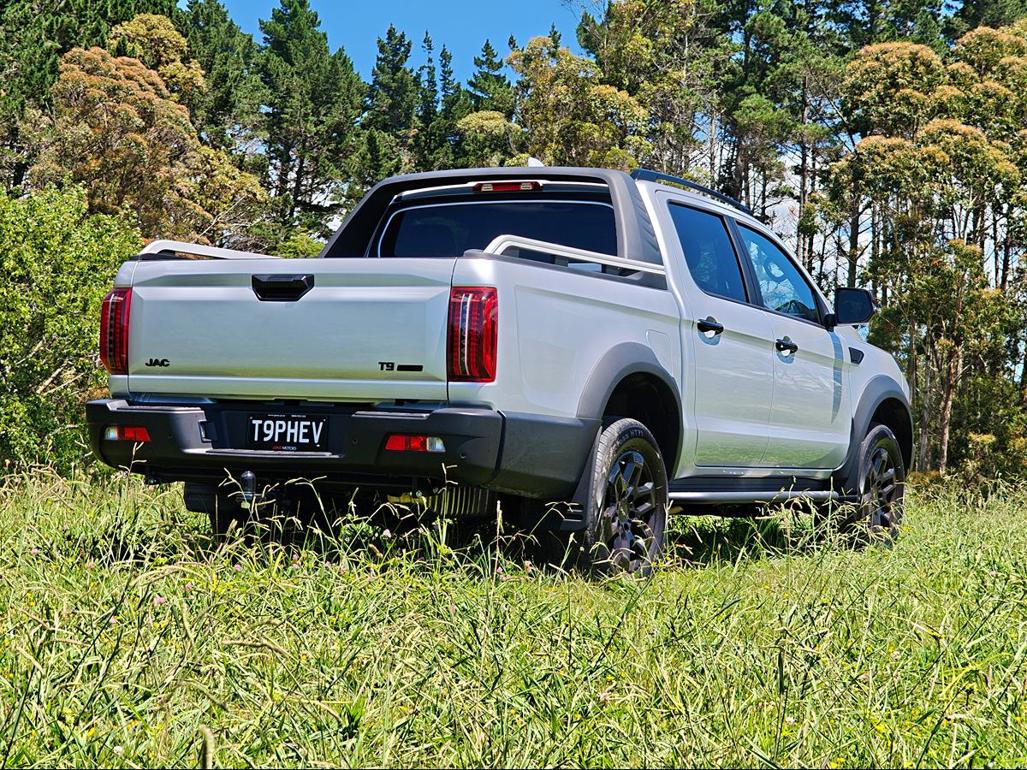
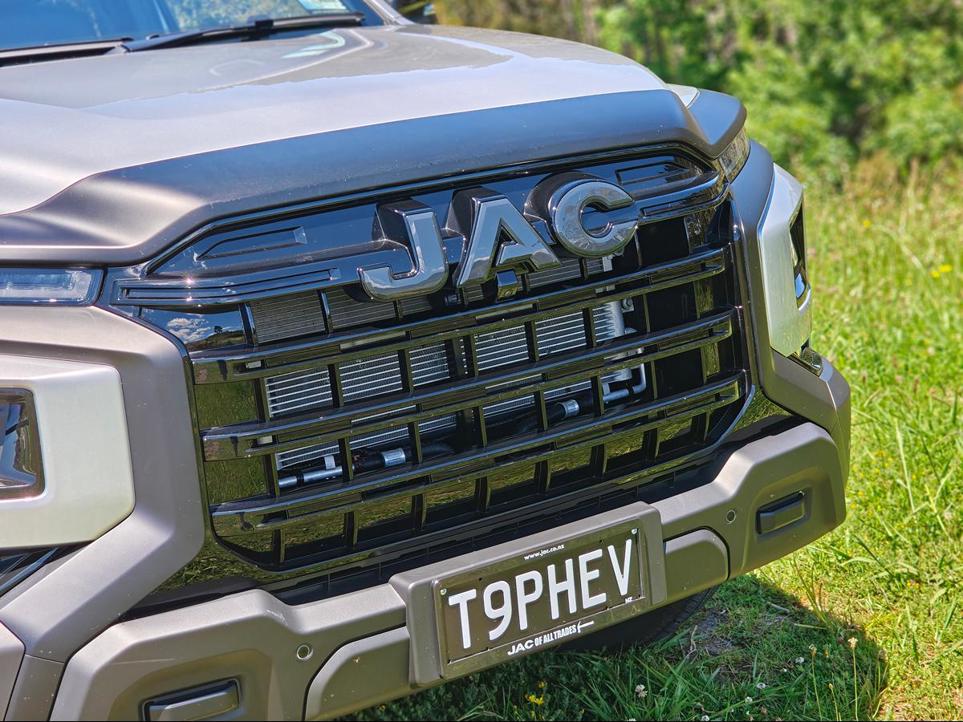
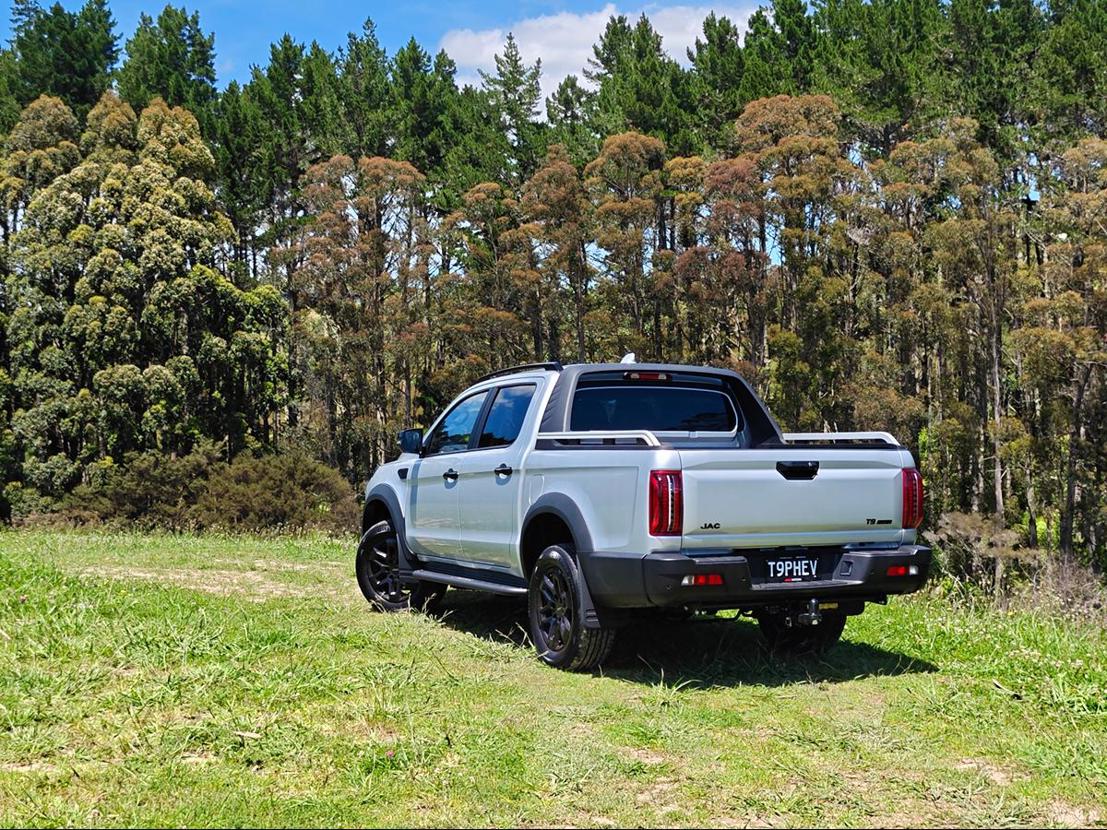
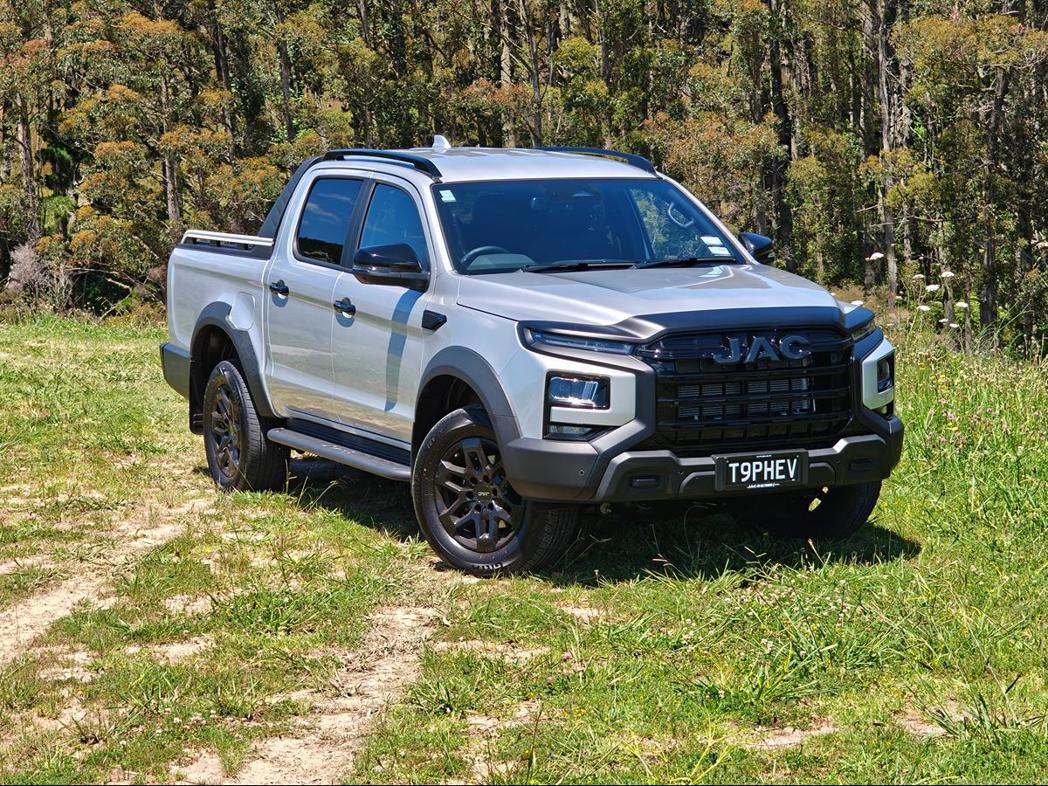
You would be hard pressed to pick the plug-in hybrid out from a regular diesel T9. Aside from a subtle PHEV badge on the tailgate, there are no obvious exterior changes, aside from the PHEV’s egg crate-style grille, as opposed to the diesel model’s trapezoidal affair, but given both are black it’s not something you notice immediately.
The cabin is notably quiet when the T9 is running on electric power, and when the petrol engine starts, it is usually little more than a distant hum from inside.
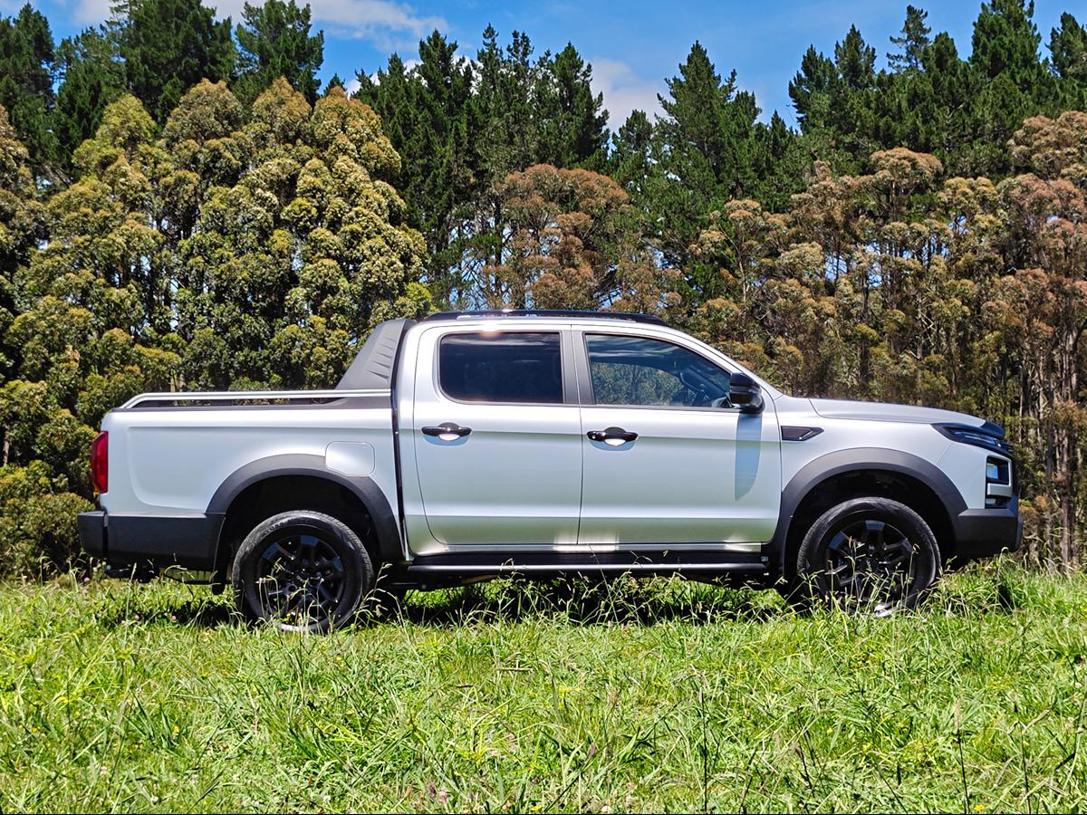
The rest of the design remains familiar rather than futuristic, and the T9 simply conforms to the traditional-ute look: big and tough, but less squared-off and overtly truck-like than some newer rivals like the Ranger and BYD.
OVERVIEW
| Price | $59,990 |
| Body style | Double cab ute |
| Wheels and tyres | 18-inch alloy wheels, 265/60 all-terrain tyres |
| Length | 5330mm |
| Wheelbase | 3110mm |
| Weight | 2555kg |
| Website | jac.co.nz |
On the inside: what's the Jac T9 PHEV's cabin like?
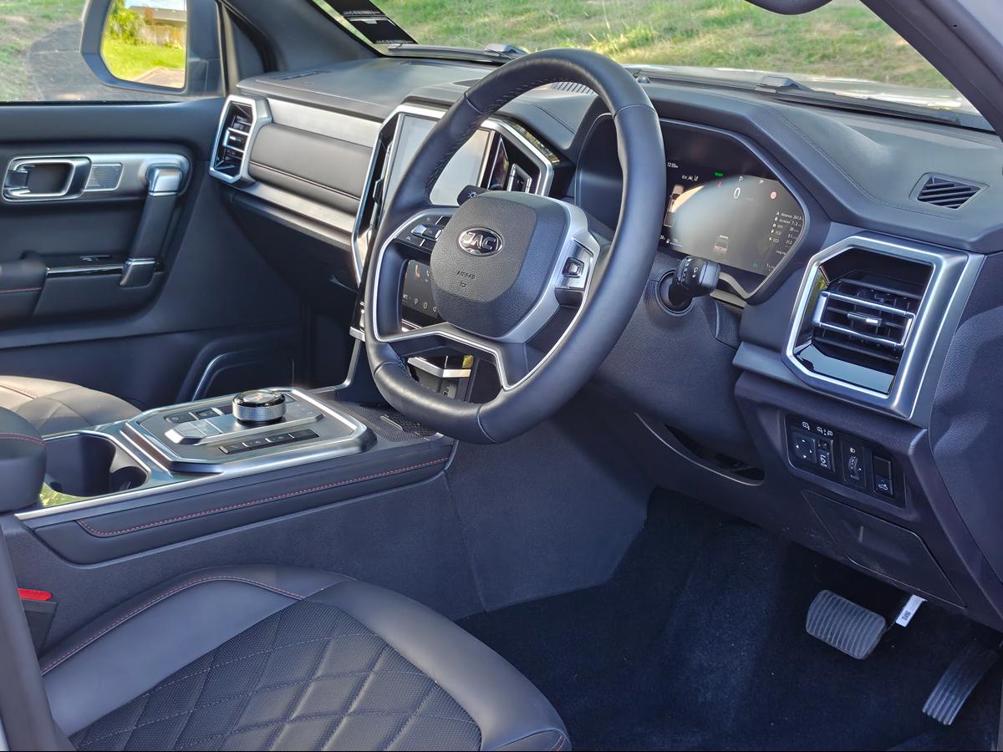
The cabin is comfortable and well appointed, with less hard plastic than you might expect in a ute. Its materials may not quite match the best in the segment, but they are in the same general territory as the Ford Ranger, and comfortably ahead of some more utilitarian rivals, with a more SUV-like feel than a bare-bones work-truck cabin.
The layout is straightforward, with an upright touchscreen set between two air vents. That arrangement feels a little old-school, but the controls and cabin are generally easy to make sense of. The screen is legible, though not especially responsive, and some of its icons and text are small enough to be fiddly when moving.
The cabin is notably quiet when the T9 is running on electric power, and when the petrol engine starts, it is usually little more than a distant hum from inside.
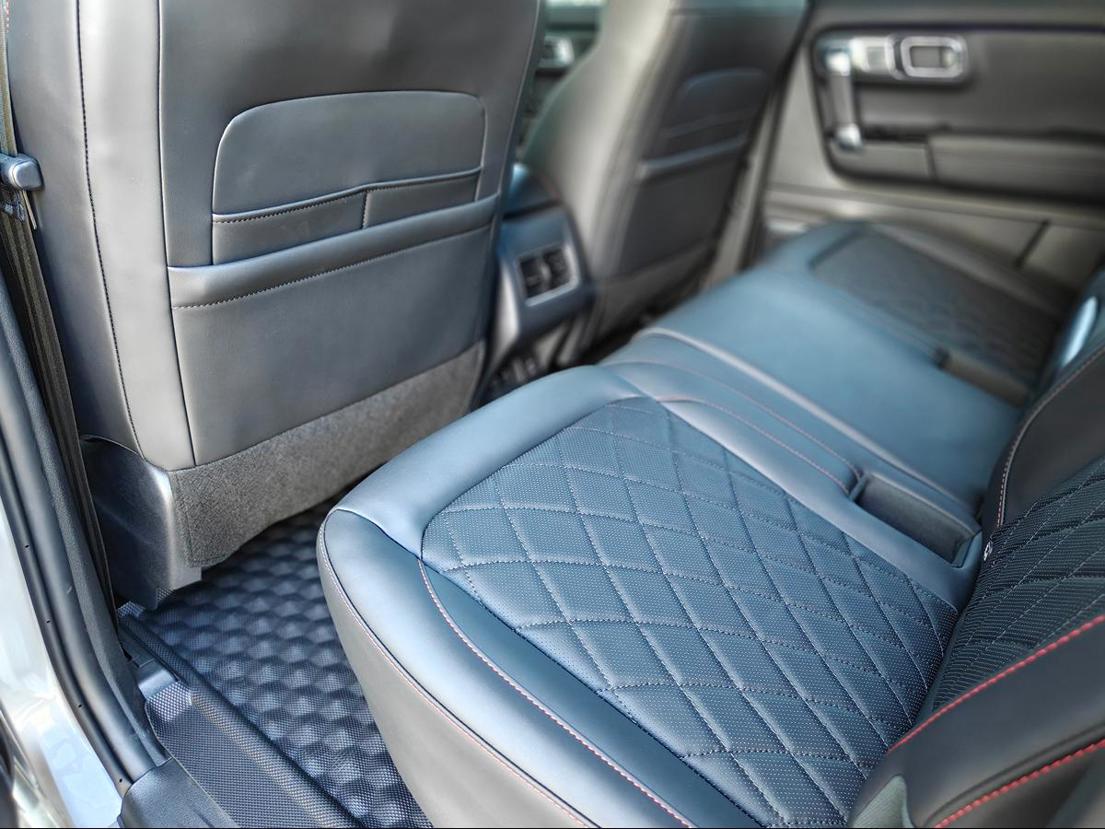
That quietness does make smaller irritations easier to notice though, with suspension rattles and wind noise being noticeable, as well as a passenger seatbelt buckle that twists and taps against the door trim.
While JAC’s big number claims make for an eye-catching headline, the T9 PHEV doesn’t feel like a ute with 360kW on tap.
Certainly not major flaws, but they do stand out in a cabin otherwise very well insulated from the powertrain.
INTERIOR
| Head-up display | No |
| Infotainment screen | 10.4 inches |
| Phone projection | Wireless Android Auto and Apple CarPlay |
| Wireless phone charger | One |
| USB ports | 2x USB-A and 1x USB-C front, 1x USB-A and 1x USB-C rear plus 220V power |
| Climate control | Dual zone |
| Front seat heating/ventilation | Yes/No |
| Front seat adjustment | 6-way power, driver and passenger |
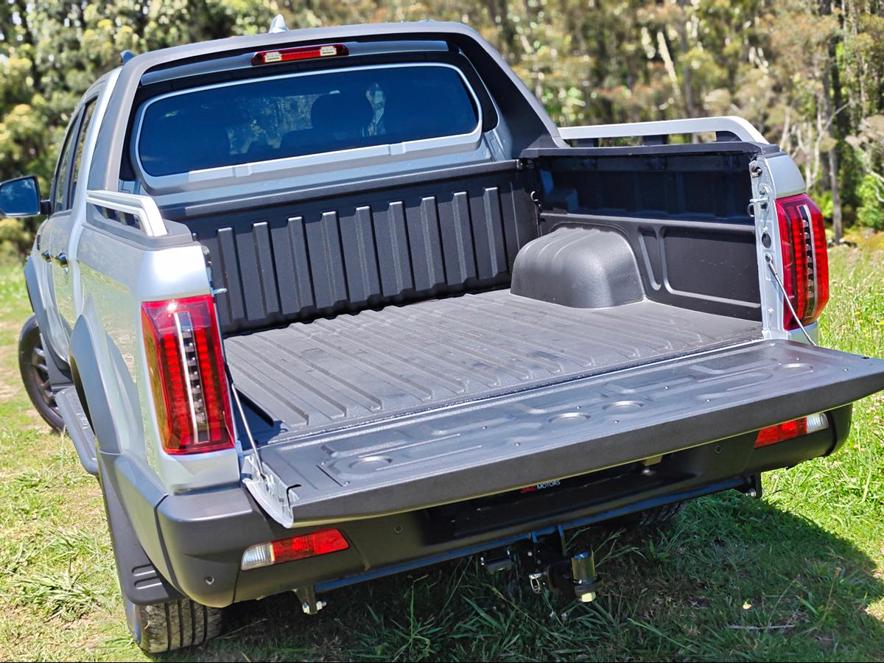
| Payload | 915kg |
On the road: what's the Jac T9 PHEV like to drive?
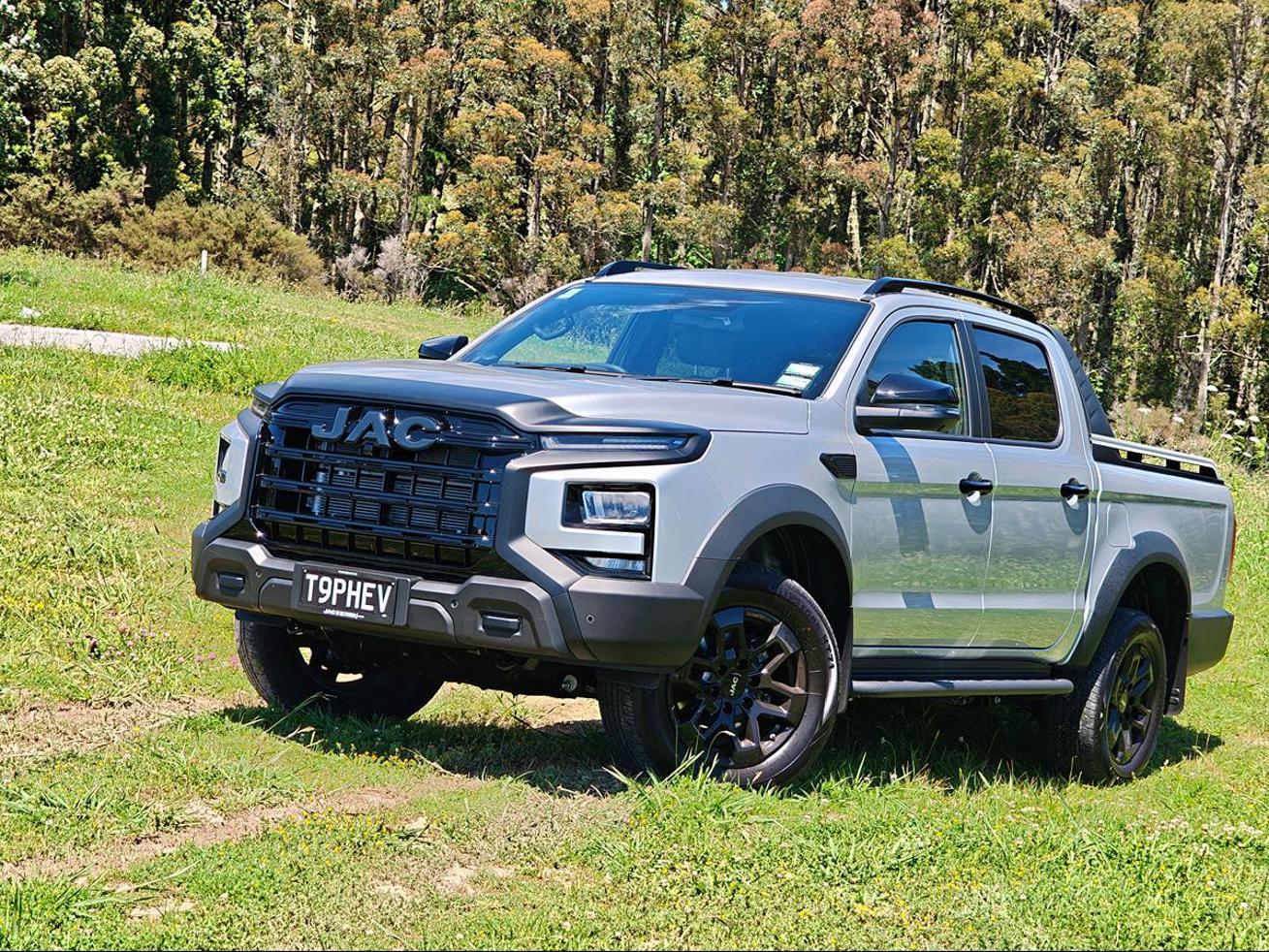
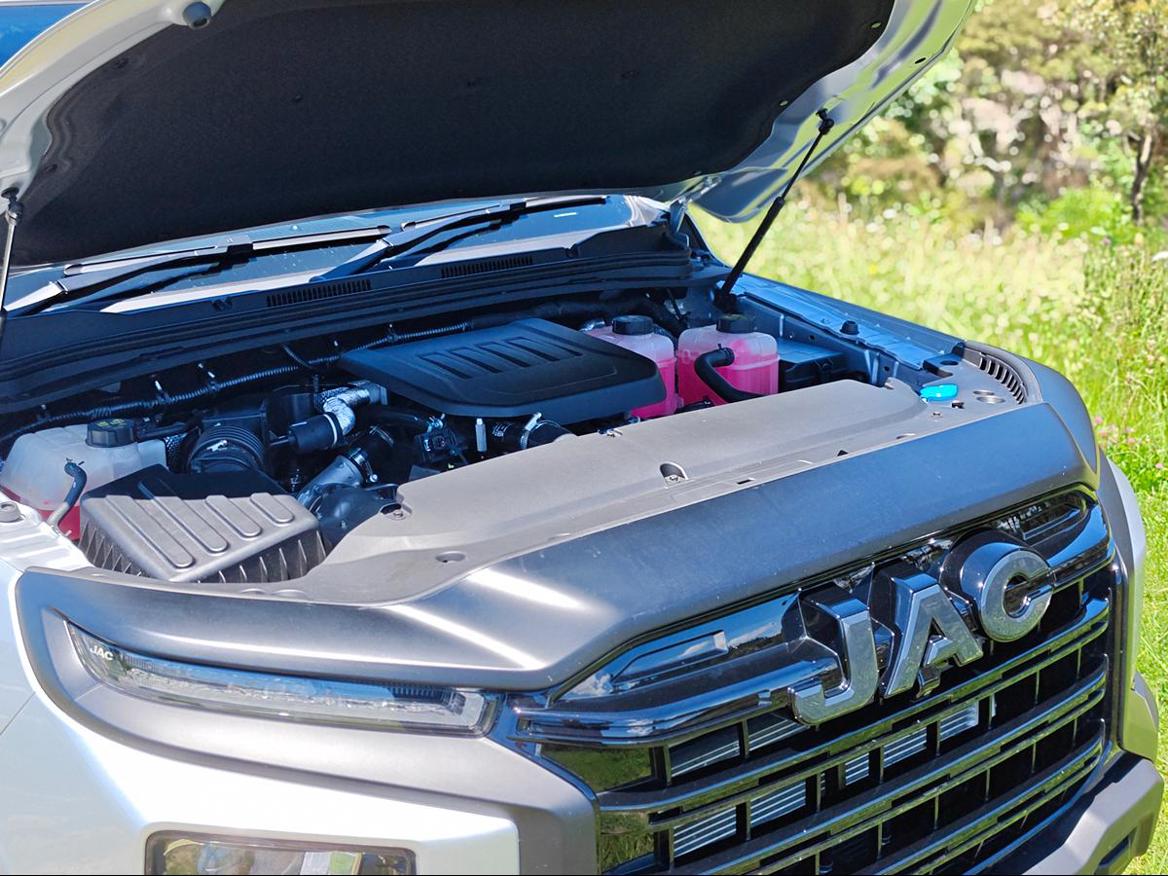
The T9 combines a 2.0-litre four-cylinder turbo petrol engine with a four-speed hybrid transmission that integrates the front electric motor to drive the front wheels and charge the 31.2kWH battery, while a second electric motor drives the rear wheels and handles the regenerative braking.
Still, “fast for a ute” is still more than fast enough for something sitting on a ladder chassis that can tow 3.5 tonnes and carry a 915kg payload in its tray…
When in pure electric ‘EV Max’ mode the T9 has a range of around 80 to 90km in real world terms and is propelled by the rear wheels only, while its electric priority (confusingly called “EV”) and petrol priority (equally confusingly called “HEV”) modes bring the front mounted units into play in increasing degrees of involvement.
While EV mode will use electricity until it has absolutely no choice, whether that be because the battery drops below 20 percent or you give it full throttle, the HEV mode uses every power source available to deliver maximum power, while there is also a ‘Smart’ mode that will hold whatever charge you choose between 20 and 70 percent.
In daily driving EV mode is arguably a better mode than EV Max, which shuts out the petrol assist entirely, noticeably dulling performance as a result. While it is perfectly serviceable for driving around town at gentle speeds, the responses off the line and anything in the way of meaningful acceleration much past 60km/h are limited.
If you want to access that maximum 360kW and 674Nm that JAC promises from the T9 PHEV, then you need to have it in petrol priority HEV mode and select the Sport drive mode, which unleashes full power.
While JAC’s big number claims make for an eye-catching headline, the T9 PHEV doesn’t feel like a ute with 360kW on tap, and that’s because of the way complex PHEV systems like this work - technically the power is all there, but the system is selective about where it channels it.
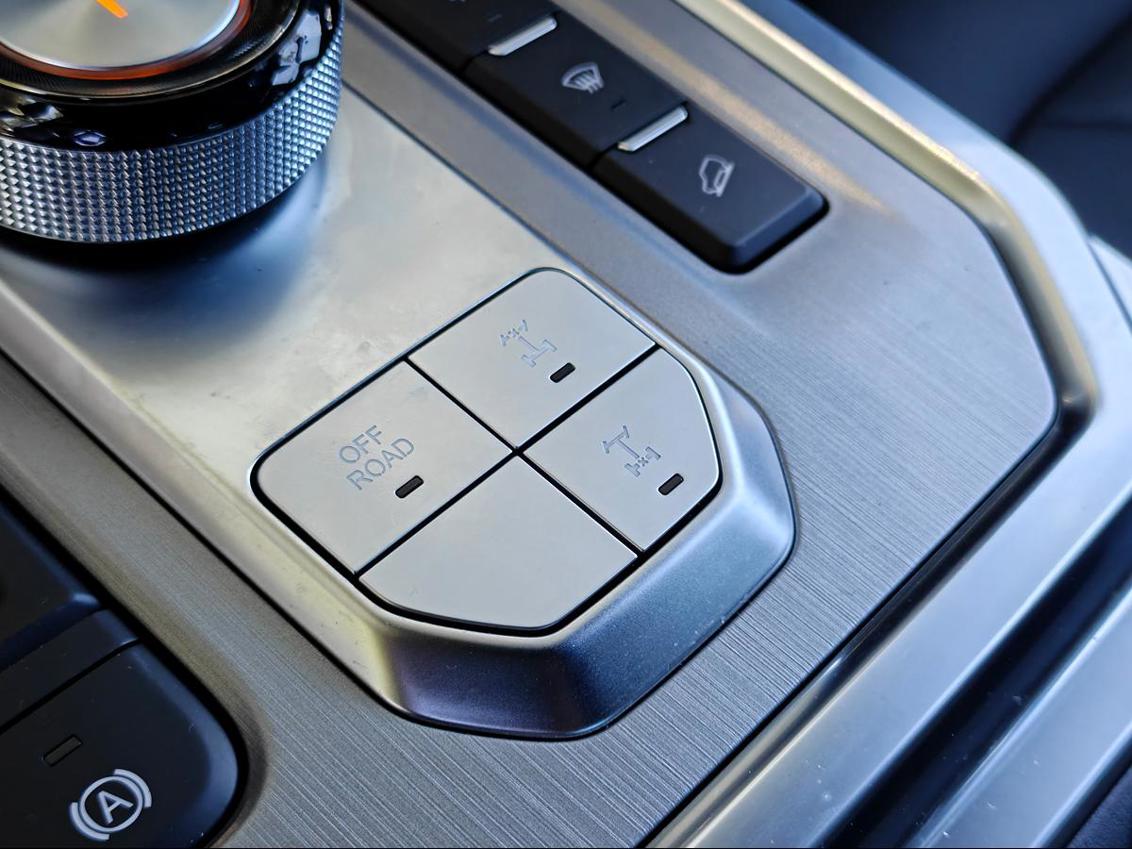
It relies on its electric motors in the same way the BYD Shark 6 does, but dropping the T9 into its off-road mode presents a noticeably more aggressively low range approach.
Basically that means that the T9 is fast for a ute, but doesn’t really feel like something that packs 300+ kilowatts. Still, “fast for a ute” is still more than fast enough for something sitting on a ladder chassis that can tow 3.5 tonnes and carry a 915kg payload in its tray…
When unladen, the T9’s suspension can feel firm, jiggly and a little brittle at low speeds (like all one-tonne utes, carrying a load in the tray will settle it down) which does make it feel less refined and SUV-like than the BYD Shark, while also not being as confident and polished one-tonner as the Ranger. It is, however, pretty much in keeping with the likes of the Mitsubishi Triton and Isuzu D-Max.
Because there is no mechanical linkage between the front and rear the T9 lacks a low range transmission, meaning it relies on its electric motors in the same way the BYD Shark 6 does, but dropping the T9 into its off-road mode presents a noticeably more aggressively low range approach.
Locking one or both diffs then takes things to a higher (or should that be lower?) level, with the tragically light off-roading we managed to do in it seeming utterly trivial to it.
SPECIFICATIONS
| Powertrain type | Plug-in hybrid |
| Capacity/battery | 1999cc/31.2kWh |
| Power | 360kW |
| Torque | 674Nm |
| Transmission | 4-speed, 4WD |
| Power to weight | kW/tonne |
| Adaptive suspension | No |
| Efficiency | 1.6 l/100km (manufacturer claim) |
| Tank size and fuel type, and range | 77 litres, 91 octane, 100km |
| Tow rating | 3.5 tonnes |
On ownership: what's the Jac T9 PHEV warranty and servicing situation?
The JAC T9 PHEV comes with a standard warranty of 5 years/200,000 kilometres, with an 8 year/200,000km warranty on the battery. The package also includes 24/7 roadside assist and service intervals are set at every 12 months or 15,000km.
On the whole: what do we think of the Jac T9 PHEV?
The JAC T9 Plug-in Hybrid adds a new twist to the PHEV ute segment with yet another different arrangement for delivering power to the wheels.
It is not the most refined option in the class ... but the T9’s appeal is in its balance.
While it comes across as a middle point between the Ford Ranger hybrid and BYD Shark 6, its closest competitor is actually the recently released GWM Cannon Hi4-T that packs the same PHEV powertrain as the larger Cannon Alpha.
While the Cannon focuses more on sheer mechanical off-road ability, arguably giving it the edge there, the Jac’s compromises in that area actually bring one big bonus in terms of daily driveability. This is because the Cannon lacks a full-time AWD feature, making the rather powerful RWD 2H setting something of a handful if you aren’t judicious with the throttle.
The JAC’s less traditional set up that drops the drive shaft allows for any and all wheels to get power at any stage making it considerably more flexible across all conditions, while retaining full payload and towing capacities, ladder-frame construction and a capable off-road system to keep it grounded in the practical demands of ute ownership.
Its combination of a useful all-electric range, genuine mechanical 4X4 aspects mixed with the advantages of electric motors, and a full complement of towing and payload figures, the T9 presents itself as a uniquely broadly capable entrant into the growing PHEV ute sphere.
It is not the most refined option in the class - the ride can be unsettled when unladen, and the occasional rattles and wind noise are noticeable - but the T9’s appeal is in its balance.
Jac T9 PHEV FAQs
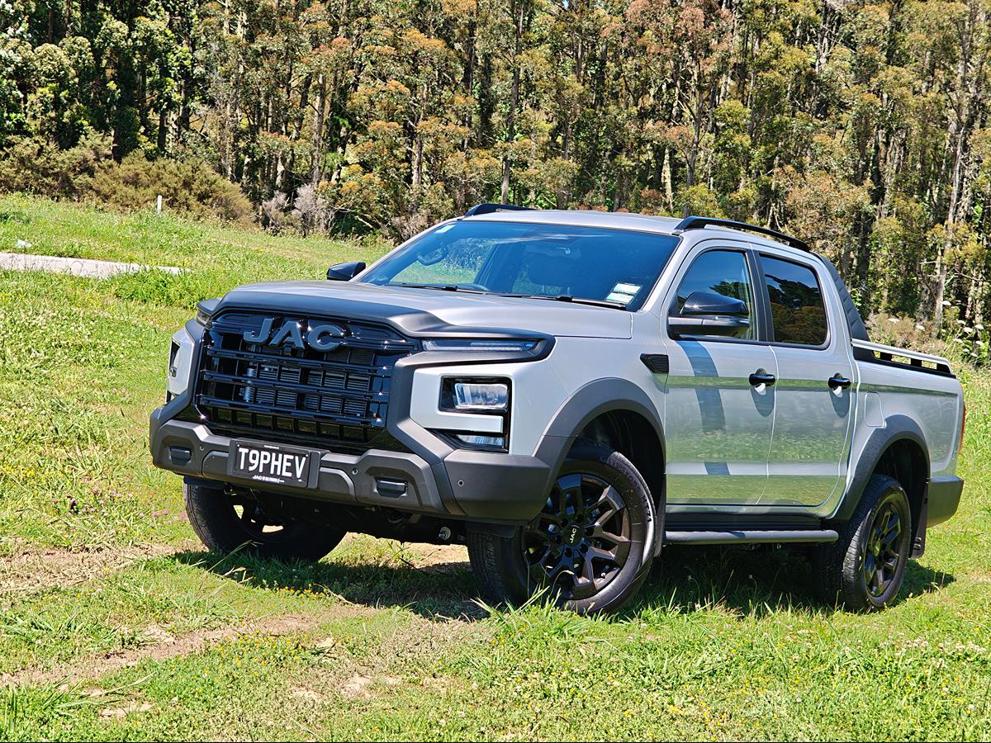
What kind of car is the Jac T9 PHEV?
A double cab wellside ute.
Does the Jac T9 PHEV have hybrid or EV technology?
The JAC T9 is a full plug-in hybrid, with a petrol engine and electric motor/4-speed DHT driving the front wheels and a second electric motor driving the rears.
What’s the fuel economy of the Jac T9 PHEV?
JAC quotes an NEDC combined average of 1.6L/100km and an all electric range of 100km, but real world driving is considerably different to those the outdated NEDC system returns - we saw between 3.1 and 9.2L/100km depending on whether the battery was fully charged or under 20 percent.
Is the Jac T9 PHEV safe?
The JAC T9 has a 5 star ANCAP safety rating that applies to both the diesel and PHEV models, while it packs a total of seven airbags, including dual front, side and curtain airbags, as well as a centre front airbag.
What safety and assistance features does the Jac T9 PHEV have?
| Intelligent lights | Adaptive automatic LED |
| Rain sensing wipers | Yes |
| Airbags | 7 |
| Adaptive cruise control | Yes |
| Driver attention monitor | Yes |
| Traffic sign recognition | Yes |
| Forward collision warning | Yes |
| Blind spot warning/assist | Yes/No |
| Lane departure warning/assist | Yes/Yes |
| Rear cross traffic alert/braking | Yes/Yes |
| Reverse collision braking | Yes |
| Parking sensors | 4x front, 4x rear |
| Camera system | 360 degree |
What are the Jac T9 PHEV's main rivals?
- GWM Cannon Lux Hi4-T ($58,990): Mirror each other in terms of spec, tech and ability.
- Ford Ranger Hybrid XLT ($74,990): Pricier, and less 'hybrid-y', but considerably more 'ute-y'.
- BYD Shark 6 Premium ($71,990): Slicker and much more refined, but more expensive and less capable.
- Geely Riddara RD6 ($69,990): A pure electric option, but with the same compromises as the BYD.
- Toyota Hilux SR5 Hybrid ($60,990): Not a PHEV, but you get a lot of 'Lux for your money.


