



If there's one thing that has become increasingly obvious of late, it's that the electrified ute space is heating up, and while giants like the Tesla Cybertruck, Ford F-150 Lightning and Rivian R1T dominate headlines overseas (albeit with varying degrees of sales success), here in New Zealand, the battle is just beginning.
While it is mainly in the PHEV space at this stage, with the likes of the Ford Ranger PHEV, BYD Shark 6 and the newly revealed JAC T9 PHEV and Chery Stockman, fully electric utes are on the menu across the board, with the Geely Riddara RD6 being the first serious contender to land here, while the Toyota Hilux BEV has also just touched down here.
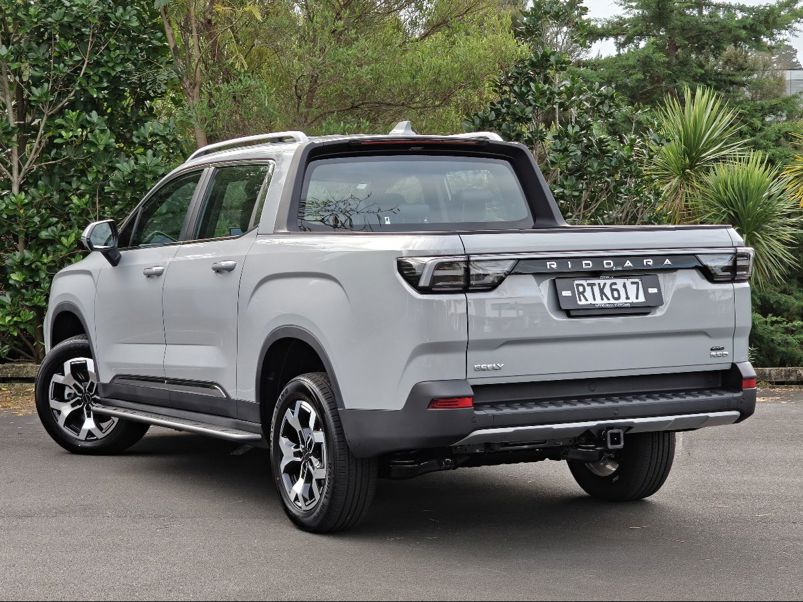
I say the Geely is the first "serious" contender because the dismal LDV eT60 EV was impossible to take seriously, so after that particular false start, the age of the electric ute is actually here. So was it worth the wait?
The RD6 is a vehicle from Geely's electric-focused brand, Radar (rebranded to Riddara for export markets due to a Singapore-based tyre company holding the global trademark for the name), and is based on Geely's Sustainable Experience Architecture (SEA) platform, the same one underpinning vehicles like the Volvo EX30 and Polestar 4.
Unlike the body-on-frame construction of traditional utes like the BYD Shark, the Riddara uses a car-like monocoque chassis, positioning it on paper not as a direct rival to the workhorse establishment, but rather as a lifestyle-oriented "ute-like SUV," a modern-day spiritual successor to the car-based utes of old, but for the electric age.
Think of it less as a rugged tough truck and more of a throwback to the days of Falcon and Commodore utes, just with four doors and a modern, all-wheel-drive stance.
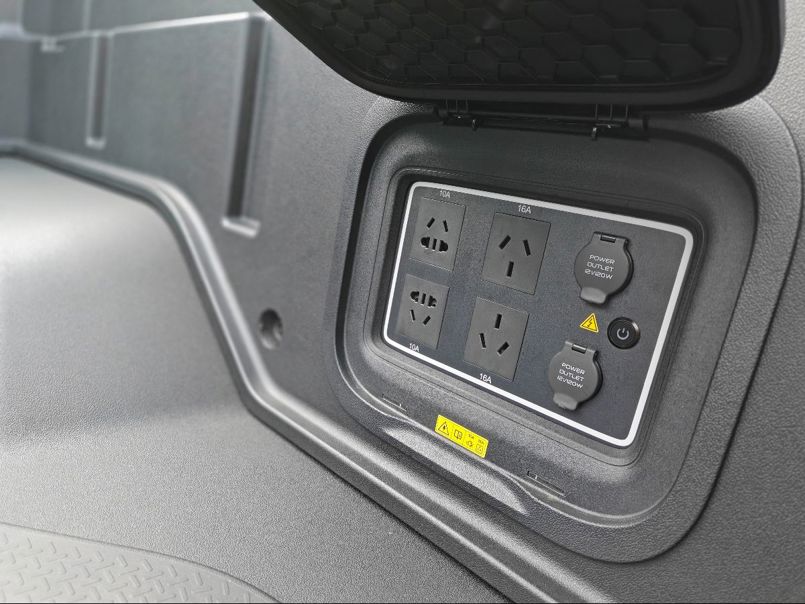
However, heading further down the spec sheet reveals a few numbers that may make those considering writing the Riddara RD6 off as a wannabe that isn't up to the demands of the workhorse ute segment reconsider - you see, the RD6 packs a 3000kg braked towing weight and an impressive 1030kg tray payload for good measure.
Another couple of numbers you may want to consider are 315 and 595 - you guessed it, that's the RD6's power and torque outputs respectively, both of which contribute to a frankly unnecessary last number: the RD6's 0 to 100 time of just 4.5 seconds. Yeah, it does that.
On the outside: what are the Geely Riddara RD6 Pro's main design features?
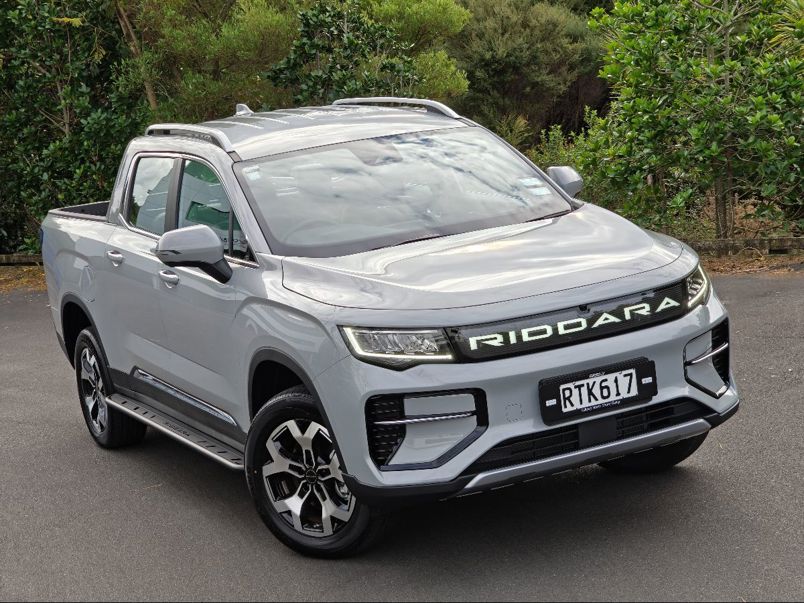
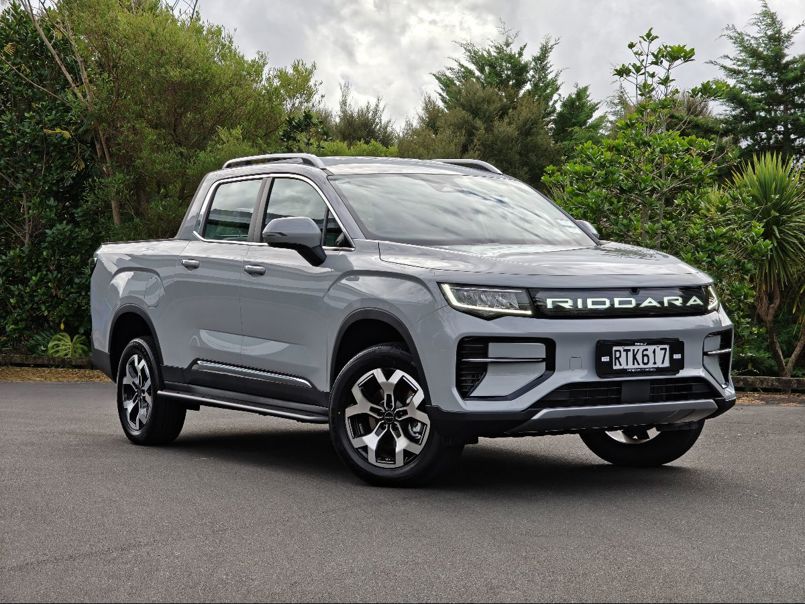
The Riddara RD6 doesn't follow the current trend of big, blocky, aggressive truck styling. Instead, it presents a softer, more aerodynamic face that can, from some angles, initially seem a bit awkwardly proportioned.
The wheels and tyres look a touch small for the body, and its pointy front end is a world away from the bluff, squared-off jawlines of its contemporaries. However, this departure from the norm could be a major drawcard for buyers who find modern utes a bit too in your face and unnecessarily intimidating.
The Riddara looks and feels like it is about half a size smaller than the dominant one-tonne players like the Ranger and Triton, giving it a unique presence on the road, even though it is only around 100mm shorter and fractionally narrower than the segment standard.
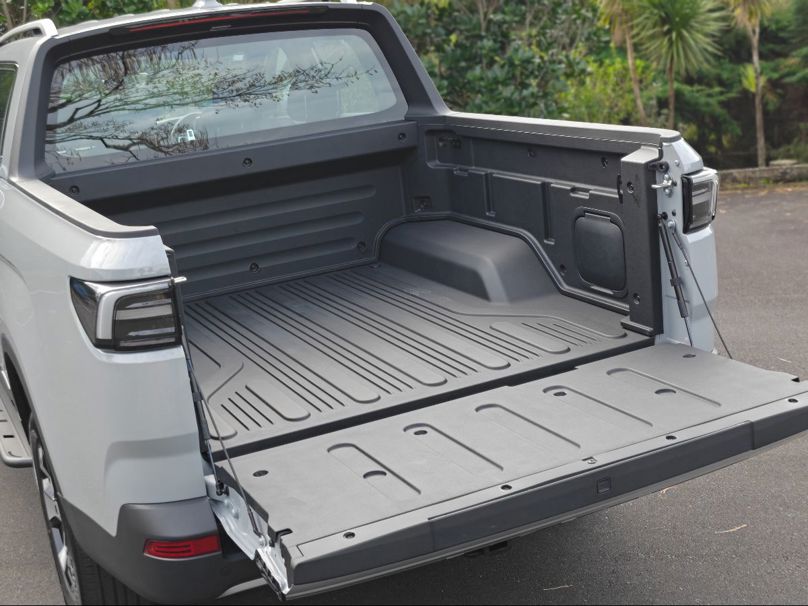
While it certainly leans more towards SUV styling that tough truck look, the RD6 is certainly not ugly; in fact, its looks tend to grow on you. Think of it less as a rugged tough truck and more of a throwback to the days of Falcon and Commodore utes, just with four doors and a modern, all-wheel-drive stance.
OVERVIEW
| Price | $69,990 |
| Body style | Double cab wellside ute |
| Wheels and tyres | 18-inch alloy wheels, 235/60 tyres |
| Length | 5260mm |
| Wheelbase | 3120mm |
| Weight | 2205kg |
| Website | geely.nz |
On the inside: what's the Geely Riddara RD6 Pro's cabin like?
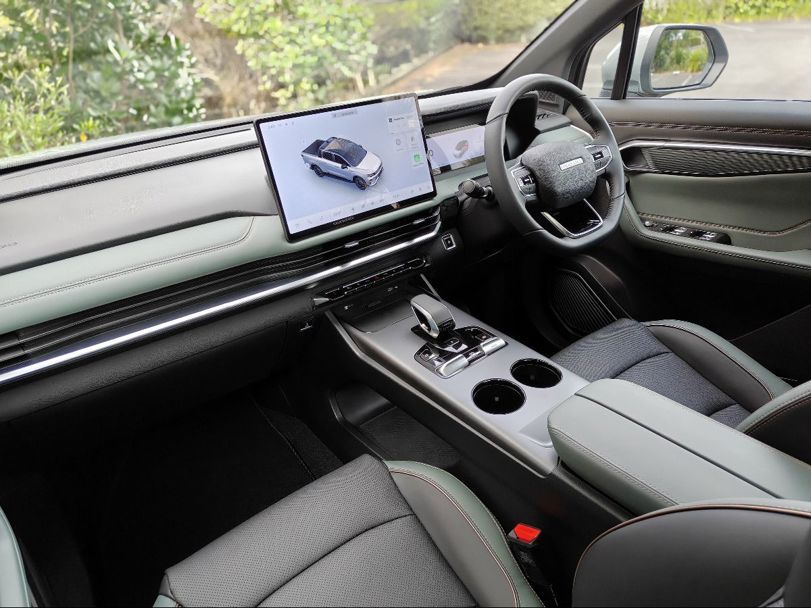
Step inside, and the RD6 makes a strong impression, similar to that of the BYD Shark 6. The quality is genuinely good, perhaps even a bit too plush for a muddy worksite, but that reinforces its positioning as a recreational vehicle for private buyers.
Much like the way it looks inside and out, the RD6 drives, for all intents and purposes, like an SUV.
The design is clean and largely traditional, avoiding the wilder styling experiments seen in some EVs, and while a large central touchscreen handles most functions, the RD6 thankfully retains a row of physical buttons for core climate controls.
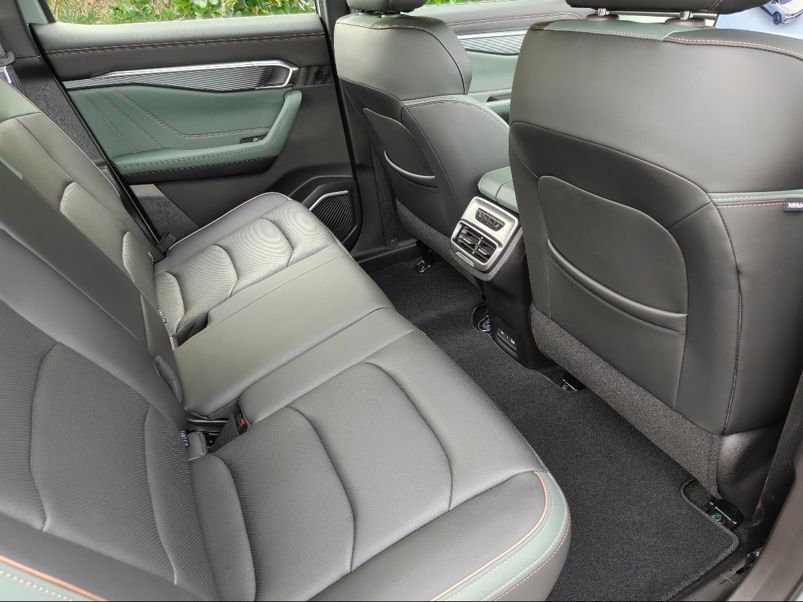
The infotainment system itself is a highlight; the on-screen menus feature large, clear icons that are easy to press accurately while on the move, and the layout is logical and intuitive. One peculiar specification is the inclusion of ventilated front and rear seats, but no heating function.
Much like the exterior styling, the cabin feels less like a ute and more like a quality mid-size SUV.
INTERIOR
| Head-up display | No |
| Infotainment screen | 14.6 inches |
| Phone projection | Wired and wireless Apple CarPlay |
| Wireless phone charger | One |
| USB ports | 1x USB-C front |
| Climate control | Dual zone |
| Front seat heating/ventilation | No/Yes |
| Front seat adjustment | 6-way power |
| Boot capacity | N/a |
| Rear seat split/fold | 60/40 |
| Power tailgate | No |
On the road: what's the Geely Riddara RD6 Pro like to drive?
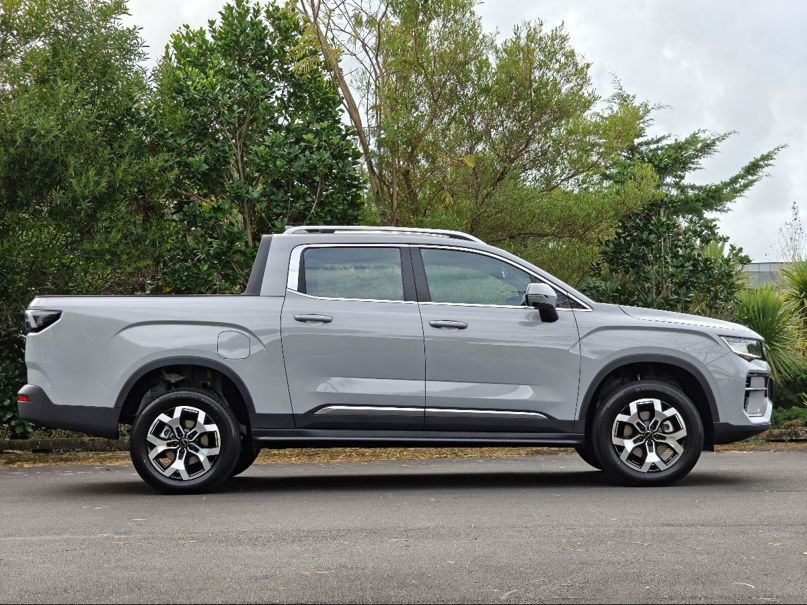
This is where the RD6's monocoque platform and MacPherson strut multi-link rear suspension pay dividends. Much like the way it looks inside and out, the RD6 drives, for all intents and purposes, like an SUV.
The ride is a little firmer than you might expect, a necessary compromise for its impressive three-tonne towing capacity and one-tonne payload, but it is vastly more comfortable and composed than any leaf-sprung ute on the market; there's none of the typical ladder-chassis jiggle here.
The steering, while a bit distant, is responsive and accurate, and the RD6 feels agile and easy to place on the road. It’s comfortable on long journeys and surprisingly quick - needlessly so, in fact, but its brisk acceleration is certainly fun.
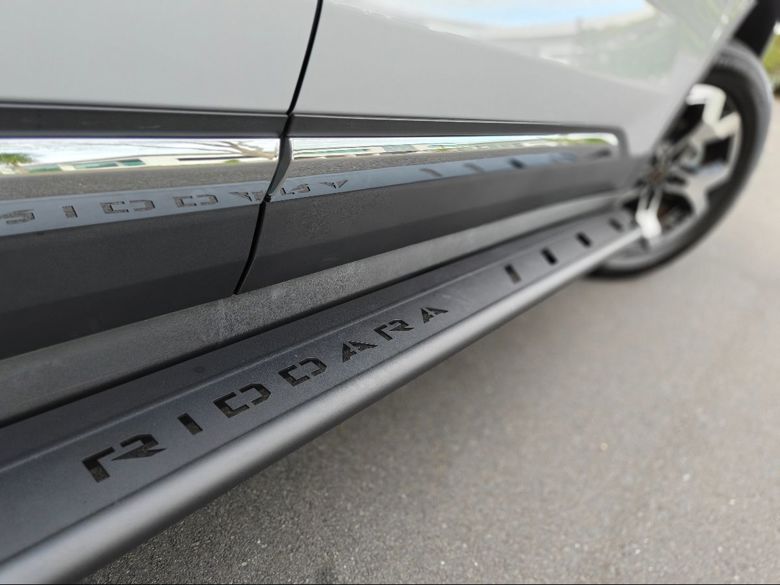
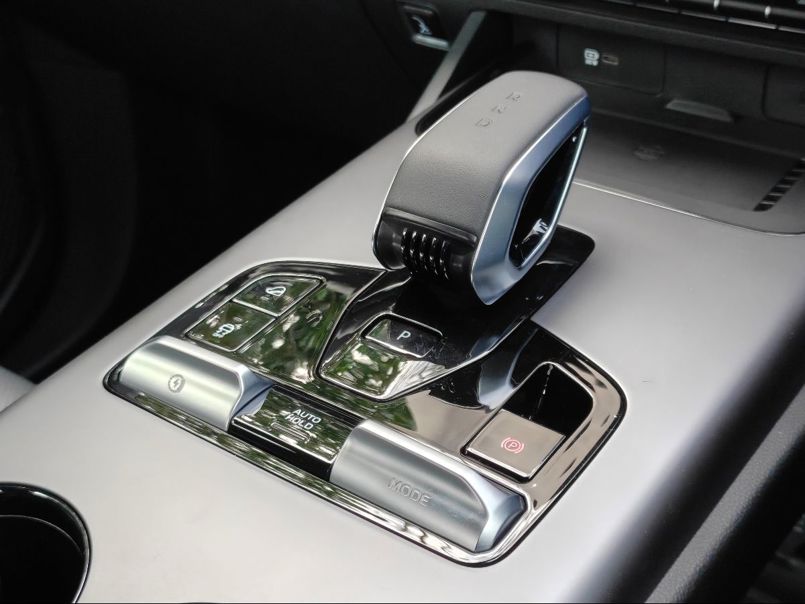
In terms of off-road ability, while the RD6 boasts an impressive 815mm wading depth, its selection of rather basic drive modes (Eco/Comfort/Sport/Sand/Mud/Off-road/Wading) and lack of any form of low range or locking diffs (less necessary on an EV, to be fair) limit it to off-road duty at the lighter end of the spectrum.
The driver assistance systems are also very well-calibrated, gently guiding the vehicle rather than aggressively tugging at the wheel, but the big - and I mean big - issue here is the noise it makes while doing it. The alert chime for everything - from lane departure to the cruise control disengaging to change lanes - is incredibly loud and the perfect pitch to be constantly irritating.
While the volume is slightly adjustable, it’s always too loud and persistent, encouraging you to turn the systems off entirely just for some peace and quiet. On the plus side, if you do turn the systems off, they stay off even after restarting the car, which is a rare and always welcome feature.
SPECIFICATIONS
| Powertrain type | Electric |
| Battery | 73kWh |
| Power | 315kW |
| Torque | 595Nm |
| Transmission | Single-speed, AWD |
| Power to weight | kW/tonne |
| Adaptive suspension | No |
| Efficiency | 20.2kWh/100km |
| Range | 360km |
| Tow rating | 3 tonnes |
On ownership: what's the Geely Riddara RD6 Pro's warranty and servicing situation?
Geely offers a 7 year/unlimited kilometre warranty on the Riddara RD6 Pro, as well as an 8 year/unlimited kilometre warranty on the battery.
The Riddara also comes with 3 years of roadside assist that can be extended up to 7 years if the vehicle is serviced at a Geely dealership for the balance of the warranty. Geely also includes 2 years of connected car services with 2GB of data a month for 24 months.
On the whole: what do we think of the Geely Riddara RD6 Pro?
The Riddara RD6 is a genuinely likeable and thoroughly capable ute, regardless of what is powering it. It successfully carves out its own niche in the burgeoning electric ute market by not trying to be a direct replacement for a diesel Ranger on a building site.
The RD6 is a compelling and well-executed alternative for someone who wants ute capability without the truck-like compromises. It’s a different take, and it works remarkably well.
Instead, it’s a comfortable, capable, and enjoyable-to-drive lifestyle vehicle that just happens to have a tray on the back. It offers the ride and handling of a good SUV with the payload and towing capacity to handle most recreational task and, as a bonus, most work tasks as well.
It’s a shame the intrusive alert noises mar an otherwise excellent suite of driver aids, and a set of larger wheels and tyres would probably do wonders for its stance, even at a slight cost to its respectable 360-380km real-world range.
But as a package, the RD6 is a compelling and well-executed alternative for someone who wants ute capability without the truck-like compromises. It’s a different take, and it works remarkably well.
Geely Riddara RD6 Pro FAQs
What kind of car is the Geely Riddara RD6 Pro?
A 4WD double cab ute.
Does the Geely Riddara RD6 Pro have hybrid or EV technology?
Yes, the Ridarra is fully electric.
What’s the energy economy of the Geely Riddara RD6 Pro?
The Riddara returns 20.2kWh/100km when unladen.
Is the Geely Riddara RD6 Pro safe?
The Riddara hasn't been tested by ANCAP so gets a 4 Star VSRR rating. It features six airbags, missing out on a centre airbag between the front seats, a feature that is becoming increasingly common.
What safety and assistance features does the Geely Riddara RD6 Pro have?
| Intelligent lights | Automatic LED with highbeam assist |
| Rain sensing wipers | Yes |
| Airbags | Six |
| Adaptive cruise control | Yes |
| Driver attention monitor | No |
| Traffic sign recognition | Yes |
| Forward collision warning | Yes |
| Blind spot warning/assist | Yes/Yes |
| Lane departure warning/assist | Yes/Yes |
| Rear cross traffic alert/braking | Yes/Yes |
| Reverse collision braking | Yes |
| Parking sensors | 4x rear |
| Camera system | 360 degree |
What are the Geely Riddara RD6 Pro main rivals?
- Toyota Hilux SR5 BEV ($85,990): Less range and more expensive, but it's a Hilux!
- BYD Shark 6 Premium ($69,990): Similarly SUV-like, but with tougher looks.
- JAC T9 PHEV ($59,990): Super Hybrid-style powertrain delivers EV-like driving.
- Ford Ranger Hybrid XLT ($82,990): Expensive, but does everything a diesel Ranger does.
- GWM Cannon Alpha PHEV ($69,990): Bigger, with exceptional off-road ability.


