


What’s this new car all about then?
The ute market is in the middle of an electrification revolution, and GWM is betting that there's plenty of life left in the traditional ladder-chassis workhorse with the widest range of powertrain options from any carmaker in New Zealand across its Cannon and Cannon Alpha range.
With diesel, hybrid and plug-in hybrid options already in its large Cannon Alpha line up, GWM has now taken the beefy plug-in hybrid powertrain already seen in the larger Tank models and Cannon Alpha and dropped it into the smaller, more "conventional one-tonne" Cannon dual-cab.
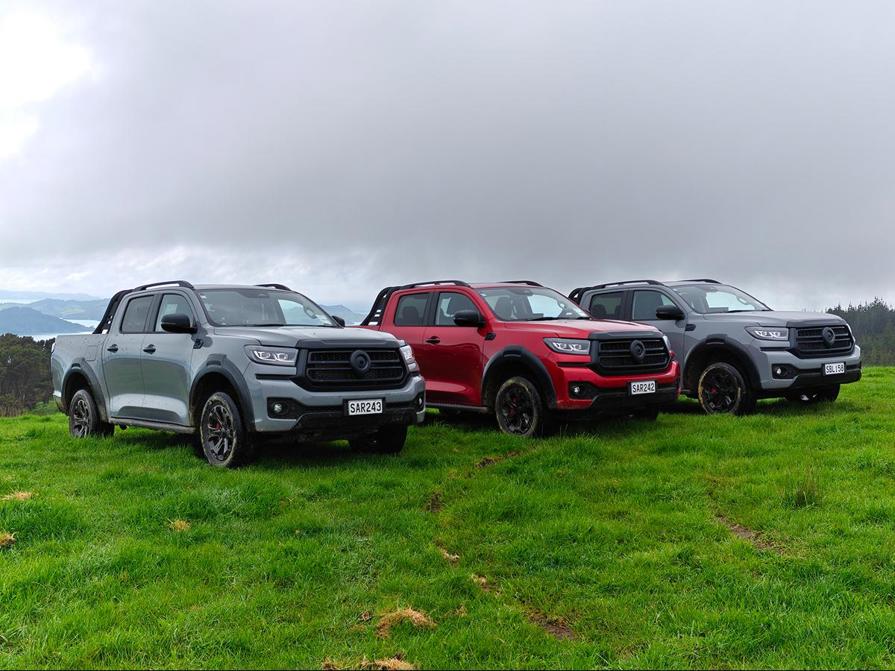
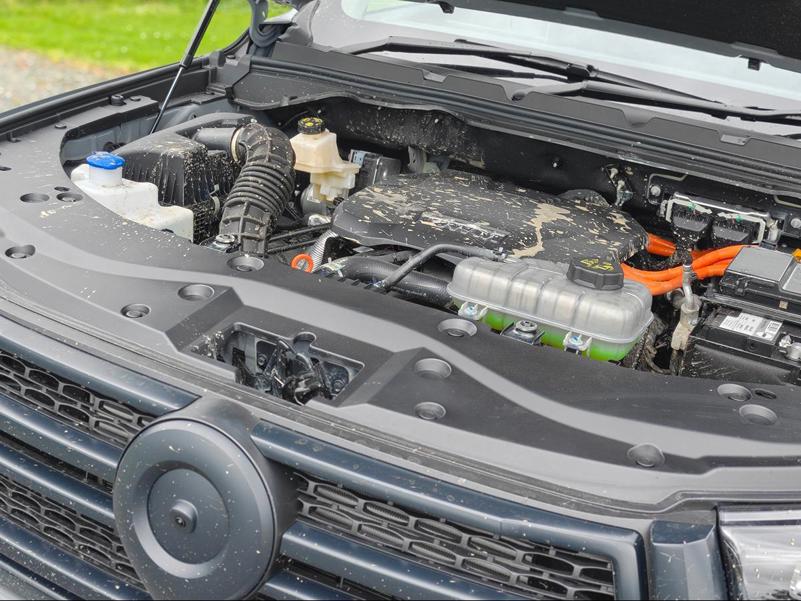
And there's a frankly ridiculous amount of power on offer, with the Hi4-T producing a combined 310kW and 750Nm from its 2.0-litre turbocharged petrol engine and electric motor, a considerable increase on the 2.4-litre diesel model's 135kW and 480Nm.
Unlike the more SUV-like BYD Shark 6, the Cannon retains a traditional ladder-frame chassis, a low-range transfer case and a mechanical rear differential lock - it's very much a conventional ute in its fundamental construction, just with a rather more modern approach to getting it down the road.
The new model will be offered in Lux and Ultra grades, with a 33.1kWh lithium iron phosphate (LFP) battery providing a claimed electric-only range of up to 115km on the NEDC cycle. GWM reckons around 100km should be achievable in real-world driving, which would be enough to cover a decent daily commute without using any petrol.
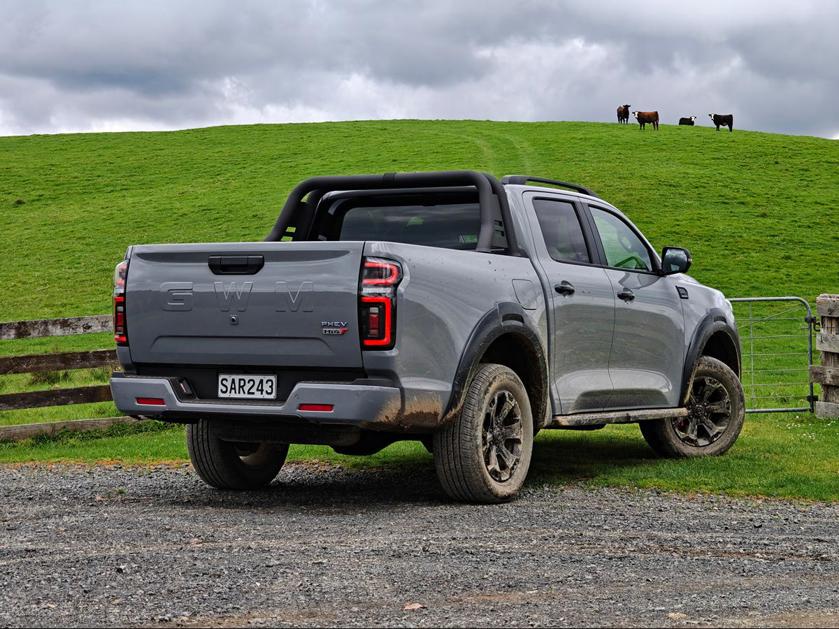
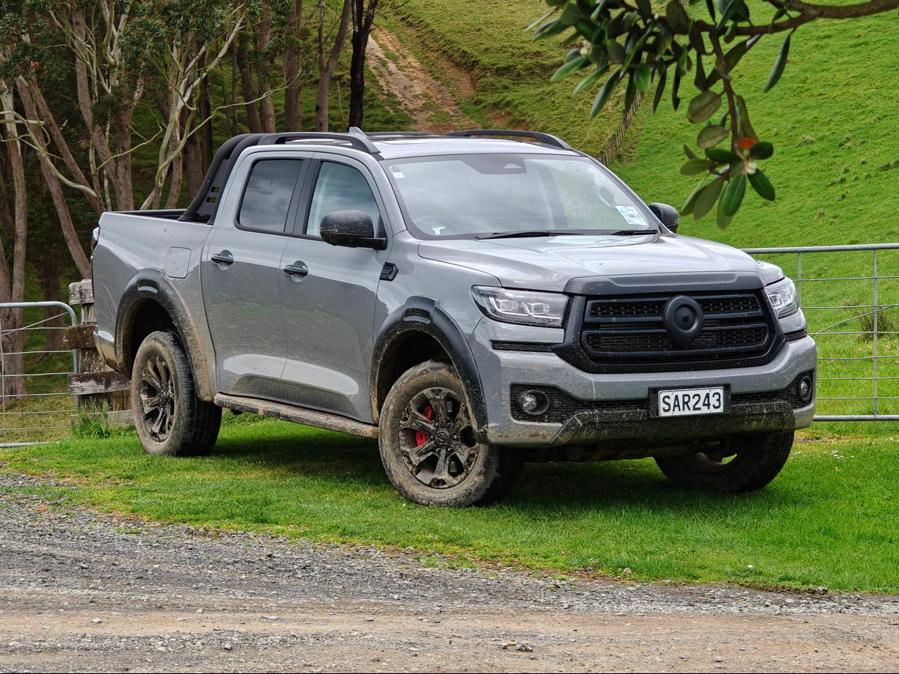
There are some styling tweaks to distinguish the hybrid, including black exterior trim, a black sports bar, red brake callipers and additional hybrid badging, but it otherwise retains the familiar Cannon look.
How much is it?
The PHEV models sit at the top of the Cannon range, with the Hi4-T Lux kicking off the plug-in range at $58,990, or a cool $15k more than the diesel Lux's standard price. It also sits $13k above the diesel Ultra model, while the Hi4-T Ultra drops in at $62,990 - $17k over the diesel Ultra.
While this is a significant jump over the diesel models, two things need to be kept in mind here: the PHEV models offer newer tech and considerably more grunt than the diesels, with a hefty 310kW and 750Nm on hand compared to the 135kW/480Nm of the diesel, while even the top spec Ultra PHEV drops in comfortably under its chief rival, that being the BYD Shark 6 that starts at $71,990.
What's it like to drive?

The first thing that strikes you about the Cannon Hi4-T is that it has an absolutely enormous amount of grunt for a ute.
With that 310kW and 750Nm on tap, the hybrid Cannon feels properly muscular, delivering its performance with an almost brutal immediacy. GWM claims a 0-100km/h time of 6.4 seconds, which is seriously quick for something designed to carry a load in the back and tow 3.5 tonnes.
In fact, there's enough torque to easily overwhelm the rear tyres on ordinary tarmac, particularly when accelerating out of corners in two-wheel-drive mode, and the traction control can intervene quite noticeably as it tries to keep everything pointing in the right direction.
That highlights one of the more important differences between the Cannon and some of its electrified rivals - while vehicles such as the BYD Shark and Ford Ranger have a more road-friendly automatic all-wheel-drive mode, the GWM retains a traditional selectable four-wheel-drive system.
Because of the sheer amount of power involved, this means traction can become an issue in 2WD. Selecting four-wheel-drive high range helps, but the system is designed for loose surfaces rather than permanent use on dry tarmac, where driveline binding can occur. So it isn't exactly an ideal solution around town on a wet day...
It's a reminder that the Hi4-T is still a proper old-school ute underneath all that hybrid technology, and you need to treat its four-wheel-drive system accordingly. As well as be particularly mindful of your throttle inputs as, while it won't ever go properly wrong, the traction control is particularly eager, often leaving you without any power coming out of a corner.
That said, the ride is surprisingly comfortable, with the Cannon managing to avoid the worst of the bouncy, agricultural behaviour that can afflict ladder-frame utes. The driver assistance systems are also relatively unobtrusive, which is always welcome when you're spending time behind the wheel.
Off the seal the Cannon is properly capable, thanks to its ladder chassis underpinnings, mechanical 4WD system and an array of drive modes to help out as well, but it does suffer from that same surfeit of power here too.
While it feels completely alien to me to describe a vehicle as having "too much power", this is an accurate description of the Cannon Hi4-T in high range 4WD, as it simply goes sideways if you give it a fraction too much power. While this is absolutely awesome for doing skids in a paddock, it does make easing it through a gap somewhat more fraught.
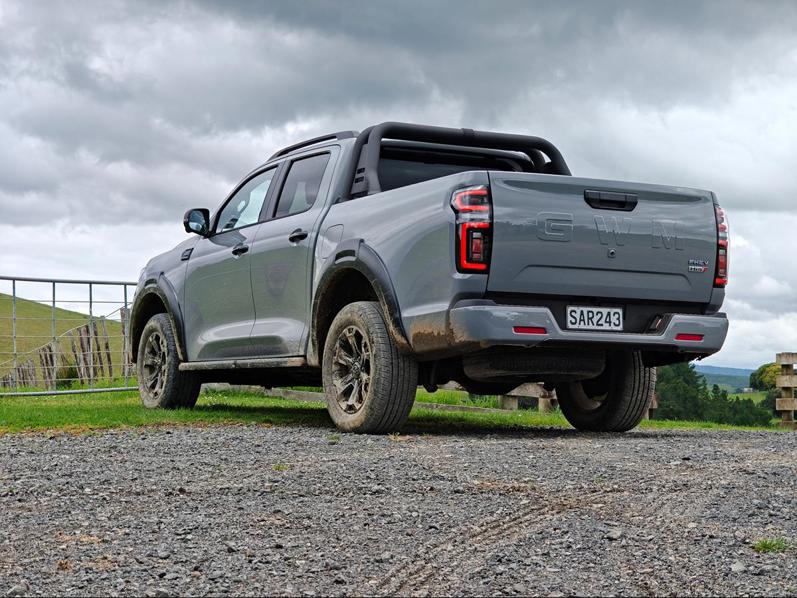
Fortunately, dropping it into low range sees it becoming utterly relentless, with the power being more usable. It all really comes down to you getting used to the power delivery and adjusting you throttle applications to suit, but you really can't just plant the throttle and expect to muscle your way through in high range.
What’s the pick of the range?
With both Lux and Ultra models using the same plug-in hybrid powertrain, the decision will largely come down to equipment and price.
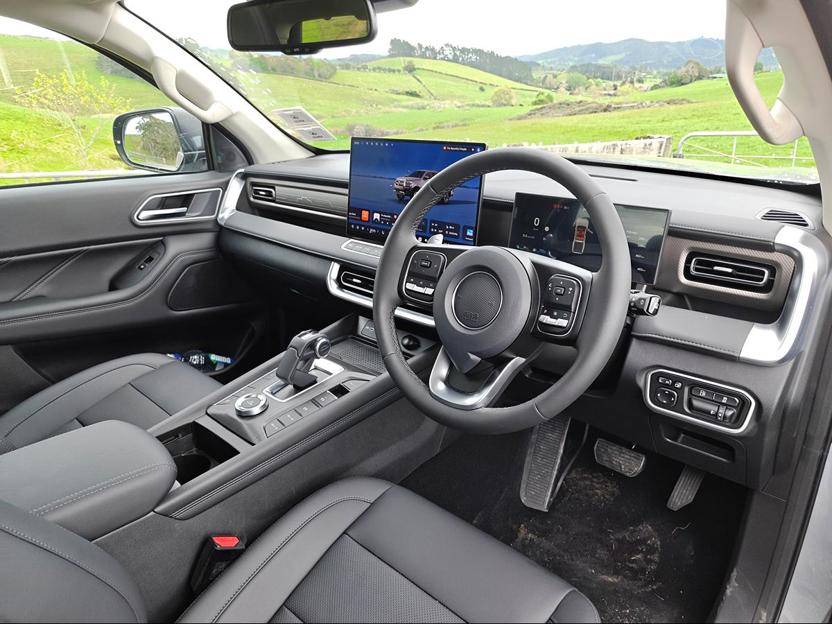
The Ultra is the more appealing choice on paper, particularly as the price differential between the two grades is just $4000, with the Ultra grade adding a sunroof, heated steering wheel, heating, cooling and electric adjustment for both front seats, ambient interior lighting, front parking sensors and a 360 degree camera to the package for relatively little money.
What other cars should I consider?
The obvious rival is the BYD Shark 6 ($71,990 to $78,990) which takes a rather different approach to the plug-in hybrid ute formula, being more refined and SUV-like in its on-road behaviour, with an electrified drivetrain that makes it feel less like a traditional workhorse. The GWM, by contrast, leans into its ladder-frame construction and mechanical four-wheel-drive hardware, making it the more conventional choice for buyers who regularly venture off-road.
The JAC T9 PHEV is another alternative worth considering, particularly with its aggressive launch price of just $59,990. It, however, takes a middle ground approach somewhere between the GWM and the BYD, with a petrol engine that acts as a generator, but is also capable of driving the front wheels along with the front electric motor. Rear power is solely provided by an electric motor, with no mechanical link between the two, so no mechanical locking diffs or conventional low range.
The nearest rival in a mechanical sense is the Ford Ranger Hybrid ($74,990 to $85,990) which is more expensive and offers less pure electric range but, well, is a Ranger. Moving slightly sideways, pure electric options consist of the Geely Riddara RD6 ($69,990) and Toyota Hilux BEV ($79,990 to $85,990).


