


It's fair to say Toyota New Zealand's first-ever new RAV4 with a plug has been a hit. The RAV4 was not just the top-selling plug-in hybrid electric vehicle (PHEV) in NZ in August, it was the most popular EV of any kind; eat your heart out, Tesla. Last month, RAV4 topped the PHEV charts again.
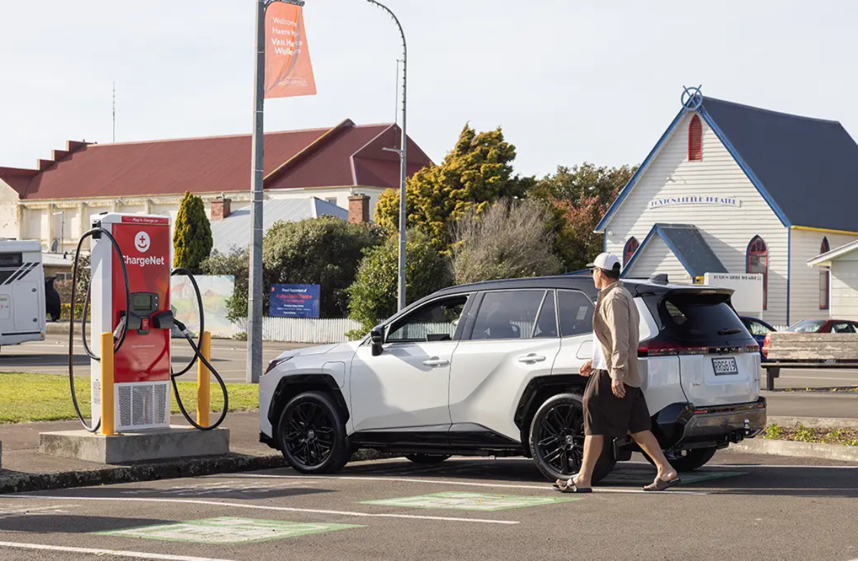
There are loads of PHEVs on the market now, many from Chinese "new energy" brands. But Toyota really getting into this tech puts a much stronger spotlight on it, because it's NZ's biggest brand by far. When Toyota does stuff, people take notice.
The RAV4 is arguably the biggest thing to happen to PHEV in NZ since the Mitsubishi Outlander over a decade ago. And that was the car that really introduced mainstream Kiwi buyers to the whole concept of plugging your family SUV in; it's still a pretty popular vehicle.
But now surpassed by the new-generation RAV4. We know the Toyota is making an impact. But the big question is how far it will go on a charge. That's always a tricky one with PHEVs, for reasons we'll explain in a minute. But it's especially complex with RAV4, because there's a lack of clarity around the official figures. We'll explain in a minute.

That's why we decided to go out and run this crucially important Toyota PHEV flat from a full charge. Once in strictly urban driving, then again on a motorway run. No extra calculations/extrapolations, just drive it until it dies. Although it didn't die of course. That's the beauty of a PHEV.
OVERVIEW
| Price | $62,990 |
| Powertrain | 2.5-litre petrol engine with plug-in hybrid system, 227kW (combined)/227Nm |
| Length | 4600mm |
| Wheelbase | 2690mm |
| Weight | 2030kg |
| Website | toyota.co.nz |
A quick refresher: like a conventional hybrid (Toyota is also a master of those), a PHEV combines a combustion engine with a battery and one or more electric motors. The only real difference between a RAV4 hybrid and a RAV4 PHEV is that the latter has a much bigger battery (at 22.7kWh, about 20 times larger in fact) that you plug in, meaning you can drive on electric power only for extended periods.
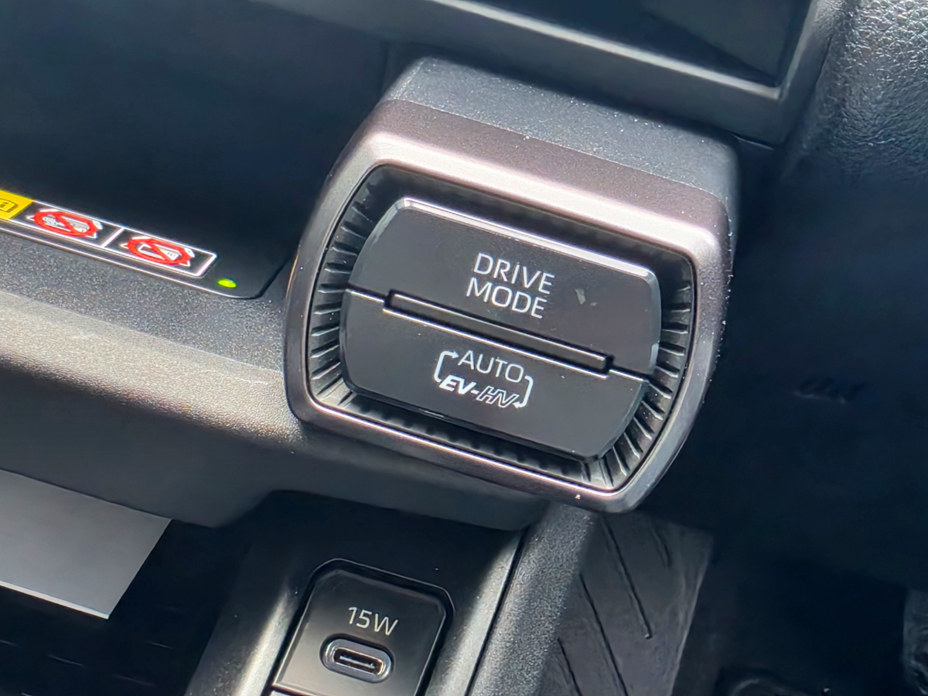
When the PHEV battery goes "flat", it actually has some in reserve and can operate like a normal hybrid until you can plug in again, recovering energy from braking/coasting and sometimes using the petrol engine to charge. But that all happens automatically, of course.
Toyota NZ offers three versions of the RAV4 PHEV. Our $62,990 XSE AWD is in the middle and arguably the most mainstream, because it's a medium-specification model and AWD like most regular RAV4 hybrids. But you can also buy a $57,990 GXL FWD (basically sans the rear e-axle) and the flagship RAV4, the $67,990 GR Sport, which has fancy styling and suspension. But the XSE has the same generous 227kW combined power as the GR Sport and can still do 0-100km/h in 5.8 seconds. Just saying.
As PHEVs go, the RAV4's tech is fairly conventional. It's not a "super hybrid" like so many new-gen Chinese models, which put the petrol engine in the background at all times. The RAV4 has a big battery with a certain amount of EV range, and when that's done the petrol engine steps up to be the main power source, using the electric bits to assist when appropriate.
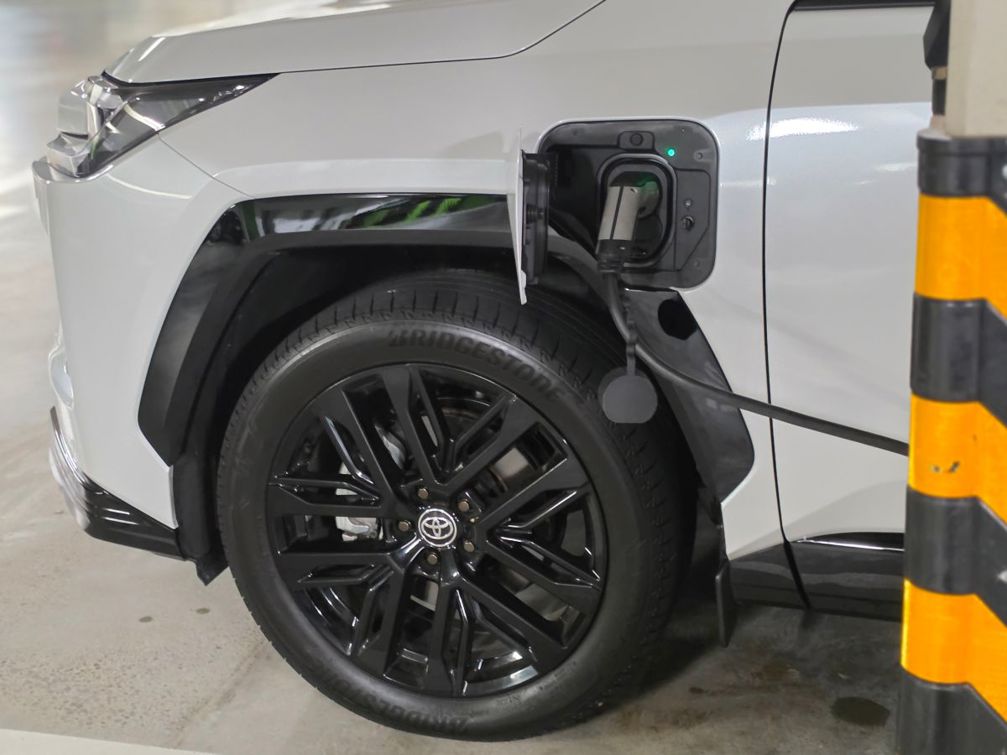
It also offers not only AC charging (with a domestic socket or wallbox-type home unit) but also DC, so you can use public stations to replensish the battery at up to 50kW.
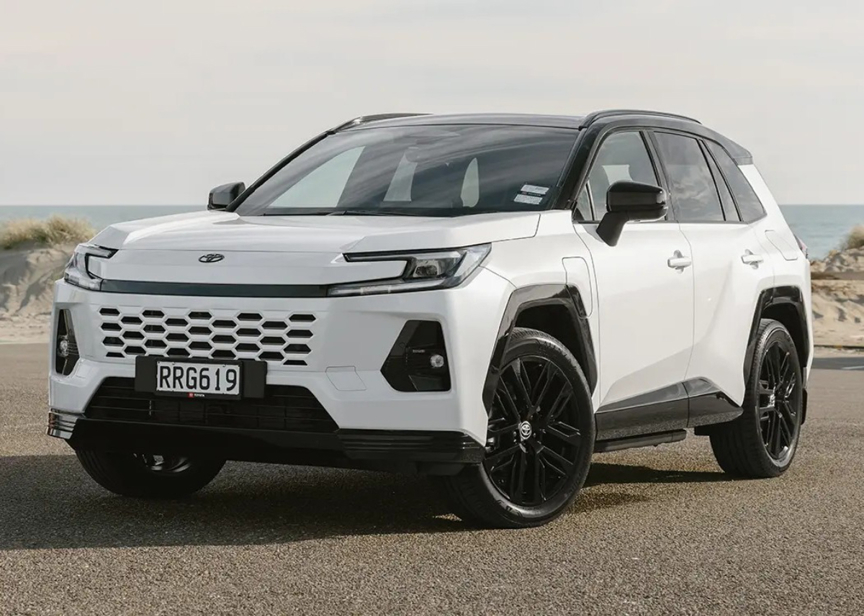
It's fairly conventional, but not failsafe. Toyota NZ recalled 2479 RAV4 PHEVs this month to recalibrate the motor generator computer. Apparenty there's a "low" chance of failure, but the vehicle may go into limp home mode or lose power completely. It takes about an hour to rectify at a dealership.
A glitch on the way to PHEV greatness, then. But all being well, the RAV4 PHEV is easy to drive and you can switch between HEV (hybrid) or EV modes with one button. Even in HEV, it will use the battery as much as possible, but in EV it locks the electric power in. Foot flat and it'll keep to EV power.
The RAV4 is so simple, it doesn't even have hold (enabling you to freeze the state of charge for later use) or charge (forcing the petrol engine to top up the battery) functions like many PHEVs. The previous model, which we sometimes see in NZ as a used import, did.
But back to that "extended period" of EV driving: how much is that exactly? There are official figures designed to enable you to compare the efficiency of similar cars, but the problem is there are also different "official" figures.
NZ's fuel efficiency ratings are created using European WLTP (worldwide harmonised light vehicle test procedure) numbers as a base. Our version, tailored more for Kiwi driving speeds, is called 3P-WLTP, and it's mandatory for fuel-economy labelling on new cars. They're the ones we quote in Driven Car Guide reviews whenever possible. You can check out the Government Rightcar website to find the figure for your car.
But for whatever reason, the Kiwi 3P-WLTP published figures don't include range for PHEVs. They do include overall fuel economy, which is 1.0l/100km for the RAV4 XSE PHEV. Calculated using a full battery charge, of course.
That's an outrageously good number but also not terribly helpful, because real-world efficiency very much depends on how often you plug in. What really matters is the EV range a PHEV offers, because that's the thing you want to maximise, to bring your overall fuel consumption right down.
Such figures do exist in the official realm. Many carmakers still quote older, less stringent NEDC (new European driving cycle) numbers, although they stopped being the legal baseline for NZ in April 2022. NEDC is still used globally and is still the foundation for ADR (Australian design rules) fuel efficiency figures; lots of Kiwi new-vehicle distributors have very close ties with Australia and some factories stipulate NEDC is still the one, even though every car on sale in NZ has a 3P-WLTP rating. Australia is bigger and more important, basically. The fact NEDC numbers look much better than WLTP certainly doesn't dent the appeal, either.
On its website, Toyota NZ will tell you that the RAV4 XSE PHEV has an official electric range of 144km. That's an NEDC figure, even though the actual fuel economy figure quoted below it (that's the 1.0l/100km one we just talked about) is the authentic 3P-WLTP calculation. Hmmm.
But you're excited we actually got to the point about how far this car is supposed to go on a charge, right?
And double hmmm, because a WLTP figure for the RAV4 PHEV's electric range does actually exist: 113km for the AWD model we've got here. Which is quite a lot less, but still pretty good.
So we know the legalities and we've tried to understand the advertising claims. But what we really want to know is the real-world range.
Our RAV4 PHEV urban drive cycle started in central Auckland at 1pm and covered almost exclusively urban driving, with the exception of a short hop on the Harbour Bridge to vary the scenery a bit. We went as far south as Drury and as far north as Albany, 99% of it at 50km/h or less.
It was... extremely boring. But this is where any EV is at its best: traffic, stop-start driving and gridlock, because no energy is wasted. The RAV4 kind of ruined the afternoon by covering 125.1km before the battery indicator read 0%. No special driving techniques, although we did activate Eco mode, because you don't need peak performance in traffic and the whole idea of a PHEV is to get as much electric running as possible.
We say the afternoon was ruined because it took nearly five hours; but at least we now know the average speed of Auckland urban traffic on a typical sunny Tuesday is 26km/h. You're welcome.
Back to the office for a full charge and the next day we hit the motorway for a lusty 100km/h loop. The powertrain was in Normal mode and we used adaptive cruise control for most of the journey; not the most efficient way to drive, but that's what real people do on a trip.
The expectation was motorway driving would decimate the range, but our car still covered 100.1km (that extra 100m was exciting) before the petrol engine fired up. Pretty, pretty good.
The idea was not to replicate any kind of official test; but if you average those two results you get 112.6km, which is almost exactly the WLTP figure. We're impressed with the RAV4 PHEV's electric-ability, but we're also doubly sure you should pay attention to the newer efficiency ratings.