


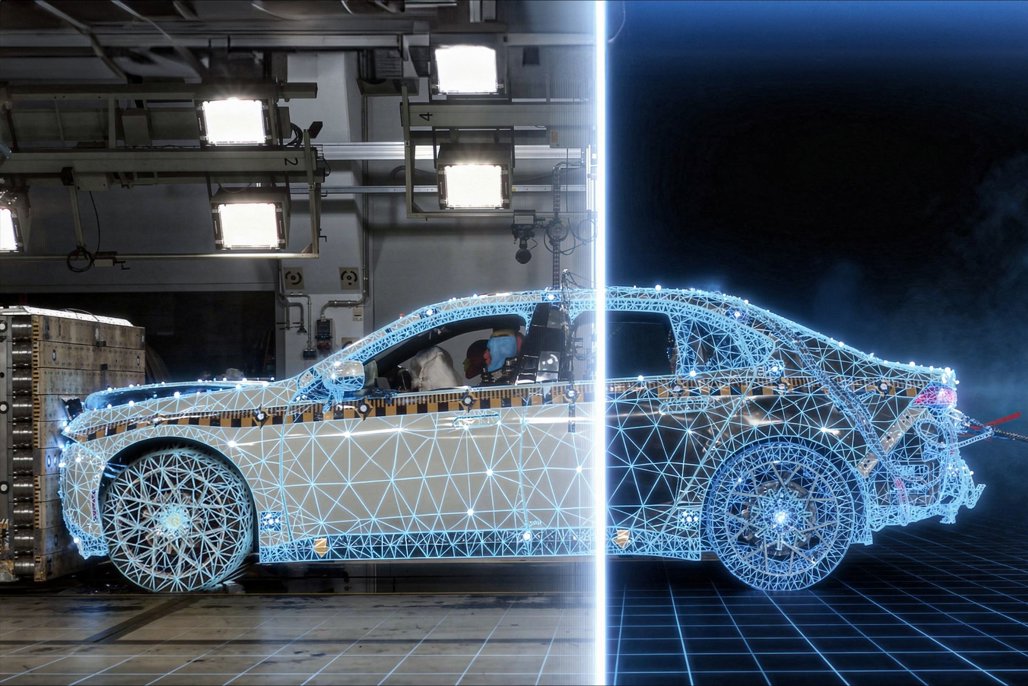

- BMW and Mistral AI are developing AI for crash simulation analysis.
- BMW’s historical crash simulation dataset exceeds one petabyte.
- Large Industry Models use engineering data for domain-specific AI.
BMW Group is working with Mistral AI to bring more specialised artificial intelligence into vehicle crash simulation, with the goal of making complex engineering work faster and more accurate.
The collaboration focuses on training AI using BMW’s industrial engineering datasets, rather than relying on general-purpose models. In plain English: less chatbot, more crash-test nerd with access to years of virtual smashed-car data.
“For the BMW Group, the use of industrial data is a key factor in translating artificial intelligence into value creation,” said Dr. Franz Decker, CIO and Senior Vice President of the BMW Group. “By combining our engineering datasets with Mistral AI’s model training capabilities, we are building specialized AI which supports complex development tasks.”
Petabytes meet crash physics
BMW says it runs thousands of virtual crash simulations every week, generating huge volumes of engineering data. Over time, that work has created a historical dataset of more than one petabyte.
That matters because crash simulation is not simple pattern-matching. It involves vehicle structures, material behaviour and safety testing scenarios where accuracy counts. BMW wants AI trained specifically on that domain, so engineers can analyse simulation results with more speed and quality.
“As Industrial AI becomes the new frontier for AI, we are proud to partner with the BMW Group” said Marjorie Janiewicz, Chief Revenue Officer of Mistral AI. “This collaboration shows how industry specific AI models can help solve complex engineering challenges such as crash simulation.”
Not your average AI model
The technical foundation is what BMW calls Large Industry Models, or LIMs. These are AI systems trained on industry-specific engineering and simulation data from vehicle development and safety testing.
Unlike broader AI systems, LIMs are built to embed domain knowledge directly into the model. BMW says that requires not just industrial data, but engineering expertise and development environments where AI systems can learn from real vehicle-development processes.
First step, wider plan
The crash-simulation project is being framed as an early step in scaling domain-specific AI into more areas of BMW’s vehicle development and broader value chain.
For carmakers, this is where AI starts to look more useful than flashy. Faster simulation analysis could mean engineers spend less time digging through results and more time solving actual safety and development problems.
BMW has not disclosed specific model roll-out timing, production impacts or measurable crash-development time savings yet. Still, the direction is clear: the next phase of AI in cars may be less about dashboard voice assistants and more about the engineering work customers never see.