



Despite all the hype around Samsung's newest incarnation of the Galaxy Z Fold 8 moving to a shorter, wider format (as you've no doubt heard, it's roughly the size and shape of a passport), no one seems to have asked the most obvious question we care about here at DRIVEN Car Guide: will it be any good in a car?
Well, after a brief hands-on of the new device at a presentation recently, I can confidently say... I'm still not sure. But the signs do look good, with the passport-sized phone having a few standout features that are promising for drivers and passengers - with one in particular that could be quite a surprise - plus a couple of potential downsides.
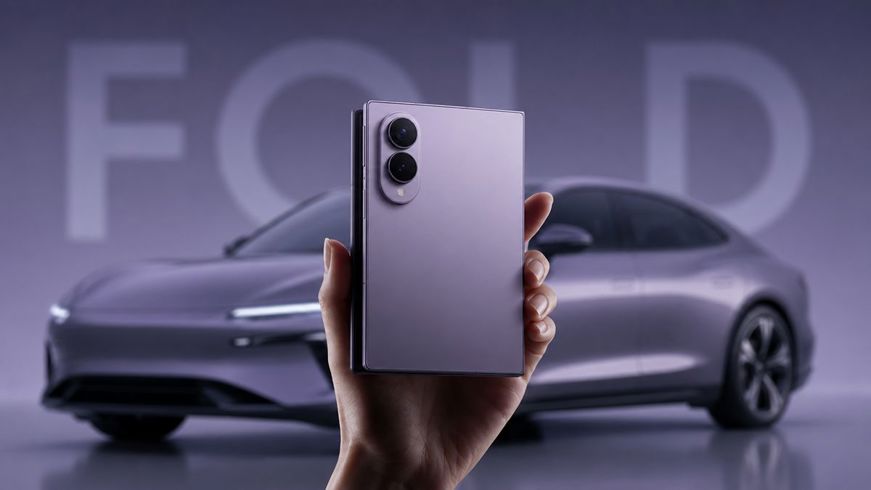
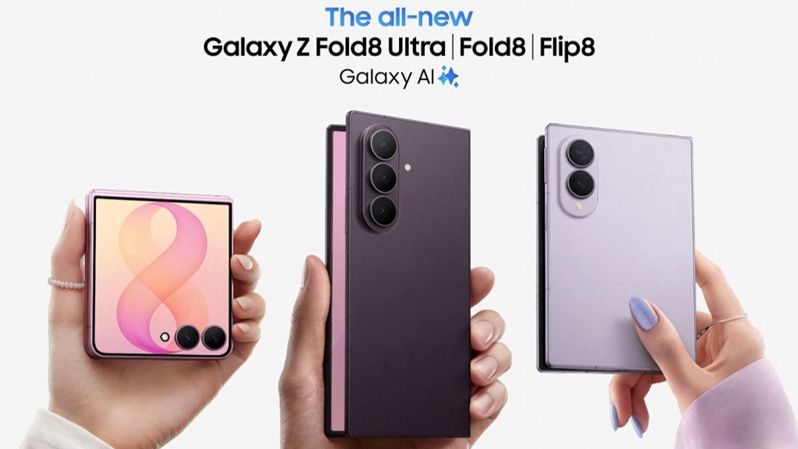
The Galaxy Z Fold range has split across two form factors, with the top-spec candy bar-shaped Z Fold 8 essentially staying that same size and shape as the current Z Fold 7, but now being called the Z Fold 8 Ultra, while the new passport-shaped phone gets the Z Fold 8 name. There is, of course, still the Z Flip 8 in the line up for an even smaller form factor.
The Z Fold 8 Ultra packs a Snapdragon 8 Elite Gen 5 for Galaxy (3nm) processor, the same chipset as the S26 Ultra, with a 5000 mAh battery, 45W super-fast charging, and a 200MP main, 50MP ultra-wide and 10MP telephoto camera set up, plus 10 MP selfie cameras inside and out.
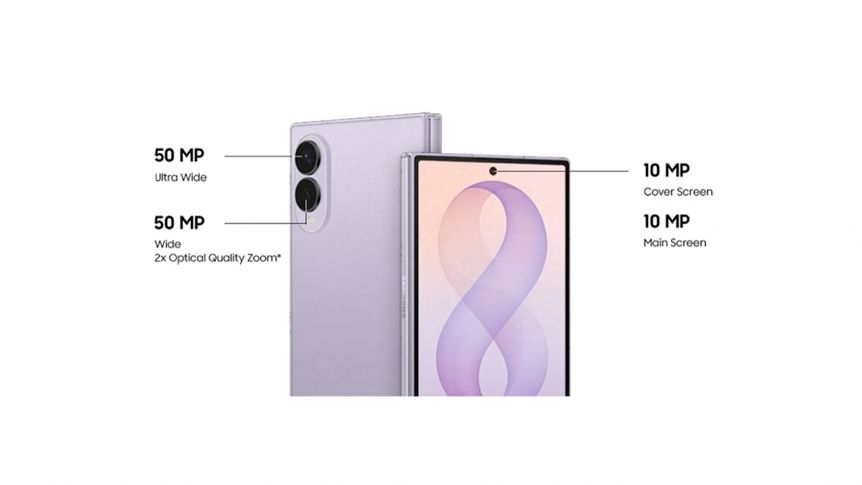
While the Z Fold 8 uses the same chipset, it gets a slightly smaller 4800 mAh battery and, sadly, a lesser camera array, with just a 50MP main and 50MP wide cover cameras, two 10 MP selfie cameras and no telephoto lens, meaning that S26 Ultra style long-lens shots of your car in a dramatic setting will be off the table for Z Fold 8 buyers.
However, the squarer aspect ratio of the cover screen will make the act of actually taking photos of cars better, simply by being easier to hold and operate horizontally, while the aspect ratio also makes it easier to compose shots too.
The new generation of Z Fold phones get Samsung's "Super Steady with Horizontal Lock" stabilisation system that essentially turns your phone into a GoPro-style action cam with a startlingly good horizontal lock system.
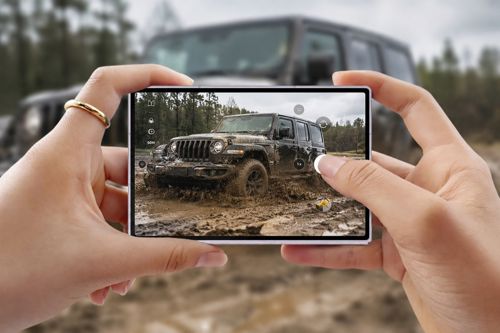
You probably won't want to mount several thousand dollars' worth of folding phone to the outside of your car, but as an in-car dashcam for a track day it's suddenly a rather compelling option.
Then there is object tracking, which Samsung calls "My FanCam" that can automatically track a selected subject and crop or reframe footage into different aspect ratios, which could make it surprisingly useful for motorsport events or just taking usable video of moving cars. It remains to be seen how effective this actually is with a fast moving subject, but both video features combined with the Z Fold 8's more pocketable shape could well see it become a surprisingly useful phone for the car enthusiast.
Creating art of your car aside, the 4:3 aspect ratio of the Z Fold 8 is considerably closer to the aspect ratio of car infotainment screens, meaning that apps like ChargeNet, PlugShare and Google Maps display better (much like on the previous-gen Z Fold 7), with more information able to be displayed.
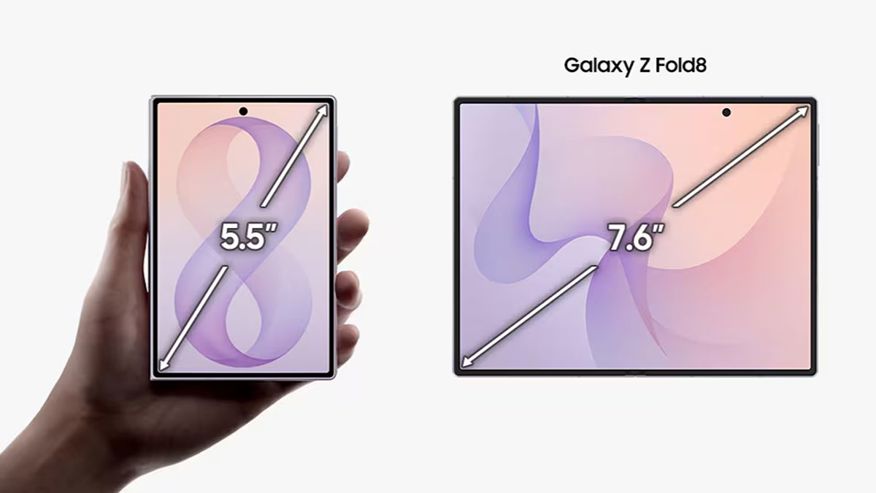
From a passenger perspective (well, one who doesn't get car sick, that is) the 10:9 cover screen is the perfect shape for scrolling through short videos, while the 4:3 aspect of the main screen is perfect for watching episodes of 80s and 90s sitcoms or playing emulated retro games from the same era. If that's what you like to do on long trips in the passenger's seat.
Widescreen video still suffers from the same issue as previous Fold models. The squarer display means 16:9 content is letterboxed with thick black bars, although native Android games make much better use of the available screen area, and watching widescreen content on the cover screen is actually a better experience.
Potential downsides? Well, the most obvious one is something that happens every time phone makers change the size of their devices - existing phone mounts may not accommodate the wider folded shape. Most spring-loaded mounts should still work, but fixed cradles could be a different story.
Likewise, some older cars simply don't have storage trays large enough for modern phones. Toyota, for example, took years to catch up with today's oversized handsets, so the wider Fold 8 may prove too much for some cabins.
Wireless charging in newer cars could well be a challenge too. Depending on where Samsung has placed the wireless charging coil in the Z Fold 8, it may not line up well with the coil in a wireless charging pad, depending on the car, while the shorter shape will likely see the phone sliding around more during driving, potentially moving it off the coil.
We'll need to spend proper time with the Z Fold 8 in a range of vehicles before passing judgement, but given that the Z Flip 7 is almost impossible to charge wirelessly in a car thanks to the fact that its coil is located very low down, wireless charging compatibility could be a genuine weak point. Then again, there's always USB-C...


