



Winter driving in New Zealand presents plenty of challenges, from heavy rain and thick fog to snow-covered alpine passes. But perhaps the most dangerous hazard is one you often can't see at all.
Black ice can appear without warning, catching out even experienced drivers. With current weather conditions perfect for the formation of black ice, it is timely to look at what black ice is and how to deal with it if you hit a patch. It could prevent a frightening - or even serious - crash.
What is black ice?
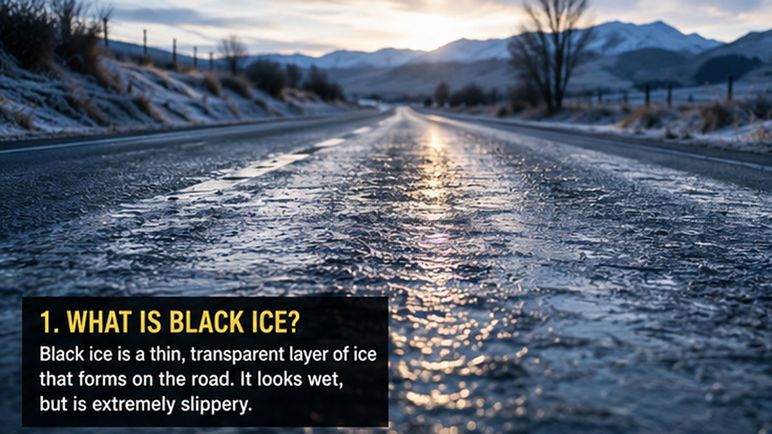
Black ice is a thin, transparent layer of ice that forms directly on the surface of the road. Unlike frost or snow, it contains very few air bubbles, making it almost invisible. Because the dark asphalt shows through the clear ice, the road often looks wet rather than frozen, which is where the name "black ice" comes from.
Although it may sound harmless, black ice offers very little grip for your tyres. Your car can lose traction almost instantly, with little or no warning, making it one of the most dangerous winter driving hazards.
Why does black ice form?
Black ice develops whenever moisture freezes onto a road surface. That moisture might come from overnight rain, melting frost, fog, condensation or water running across the road from nearby banks. If the road surface temperature falls below freezing, even briefly, the moisture can turn into a nearly invisible sheet of ice.
Road surfaces often cool more quickly than the surrounding air, which means black ice can form even when your vehicle's outside temperature display is showing two or three degrees above zero.
Where is black ice most common in New Zealand?
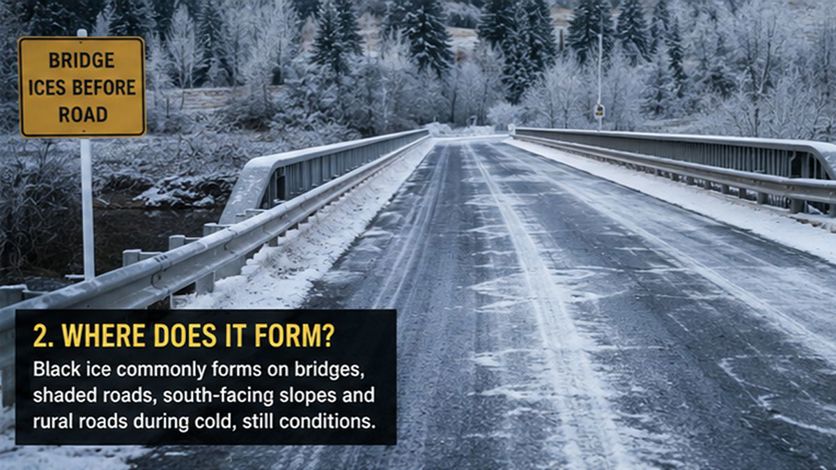
While black ice can occur almost anywhere during winter, some locations are much more susceptible than others. Bridges and overpasses are among the first places to freeze because cold air circulates above and below the road deck. Shaded sections beneath trees or beside steep hillsides can also remain icy long after other roads have thawed, while south-facing roads that receive little direct sunlight often stay colder throughout the day.
Drivers should also take extra care on rural roads, mountain passes and in valleys where cold air settles overnight. Areas such as Central Otago, the Mackenzie Basin, Canterbury's inland highways, the Central Plateau and the Desert Road are all well known for winter ice, but black ice can occur almost anywhere in New Zealand when temperatures drop low enough.
The greatest risk is usually in the hours before sunrise, although icy patches can reform quickly after sunset.
Can you spot black ice?
The frustrating answer is that you often can't. That's exactly what makes it so dangerous.
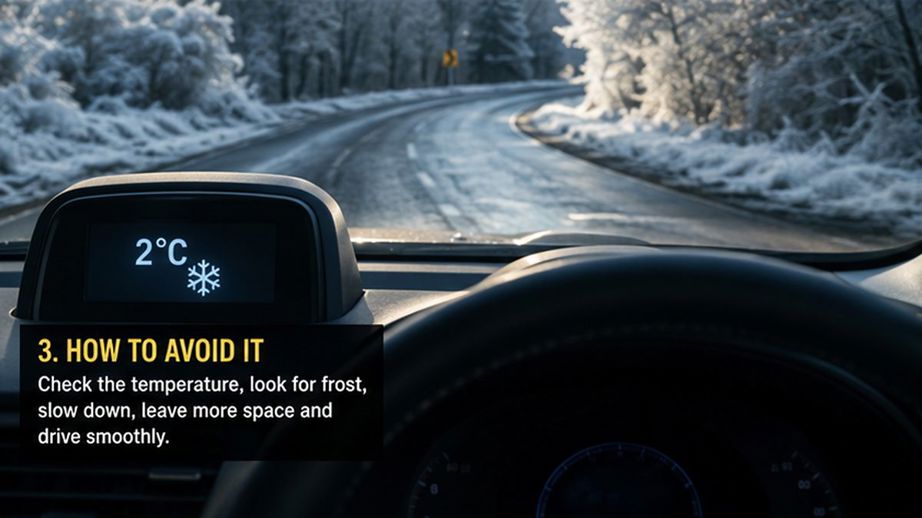
However, there are clues that should make you more cautious. If frost is covering nearby grass, fences or parked cars, or the temperature is hovering around three degrees or lower, conditions are suitable for black ice. Likewise, if the road appears unusually glossy or wet despite there being no recent rain, it may actually be covered in ice.
Many modern vehicles display an ice warning symbol when outside temperatures approach freezing. While this doesn't mean black ice is definitely present, it should be treated as a reminder to drive accordingly.
What should you do if you hit black ice?
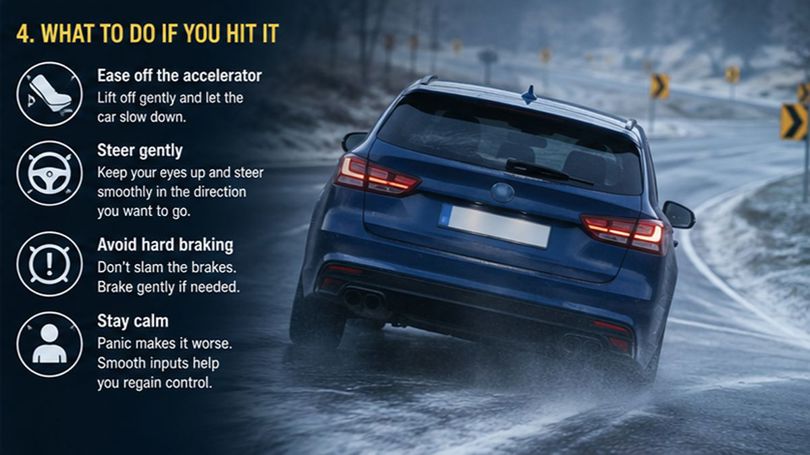
If your vehicle suddenly loses traction, the most important thing is to remain calm.
Ease off the accelerator smoothly and keep your eyes focused on where you want the car to travel rather than on any obstacle you are trying to avoid. Resist the temptation to slam on the brakes, as harsh braking can make the loss of control even worse.
Instead, allow the vehicle to slow naturally while making only small, gentle steering corrections. If the rear of the car begins to slide, steer carefully in the same direction that the rear is moving until the tyres regain grip. Once traction returns, straighten the steering smoothly to avoid the vehicle snapping into a slide in the opposite direction.
Vehicles equipped with anti-lock braking systems (ABS) should still be braked firmly if an emergency stop is unavoidable, allowing the system to pulse the brakes automatically. However, even the most advanced braking system cannot overcome the complete lack of grip on solid ice.
Can modern safety systems help?
Electronic Stability Control (ESC), traction control and ABS are among the most important safety technologies fitted to modern vehicles and can significantly improve stability when grip begins to disappear.
However, these systems work by managing the grip that is available. If all four tyres are sliding across a sheet of ice, there may simply not be enough traction for them to work with. Technology can improve your chances of recovering from a slide, but it cannot overcome the laws of physics.
Are electric vehicles better on black ice?
Electric vehicles don't necessarily offer more grip than petrol or diesel cars, but many benefit from excellent weight distribution thanks to their battery packs being mounted beneath the floor. This can make them feel more stable during normal driving.
However, the instant torque delivered by electric motors means drivers still need to be gentle with the accelerator on slippery roads. Thankfully, most EVs have highly sophisticated traction control systems that carefully manage power delivery in low-grip conditions.
Regardless of what powers your vehicle, tyre quality and careful driving remain the biggest factors in maintaining control.
The bottom line
Black ice is dangerous because it hides in plain sight. A road that looks merely damp may actually be covered by an almost invisible layer of ice capable of sending a vehicle into a skid within seconds.
If temperatures are close to freezing, particularly on bridges, shaded roads, rural highways or alpine routes, it's worth assuming black ice could be present. Slowing down, increasing your following distance and making smooth, deliberate control inputs are simple habits that can dramatically reduce your risk.
Frequently asked questions
What is black ice?
Black ice is a thin, transparent layer of ice that forms on road surfaces. Because it is clear, it often looks like wet tarmac even though it is extremely slippery.
At what temperature does black ice form?
Black ice forms when the road surface reaches around 0°C or below. Because roads cool faster than the surrounding air, it can develop even when the outside temperature is showing a few degrees above freezing.
Where is black ice most likely to occur?
Black ice is most commonly found on bridges, overpasses, shaded roads, mountain passes and rural roads during cold winter mornings and evenings.
Can four-wheel drive prevent skidding on black ice?
No. Four-wheel drive may improve traction when accelerating, but it does not increase the amount of grip available for braking or cornering on ice.
Do winter tyres make a difference?
Yes. Winter tyres remain more flexible in low temperatures and generally provide significantly better grip on icy roads than conventional tyres, although they are still no substitute for careful driving.


