



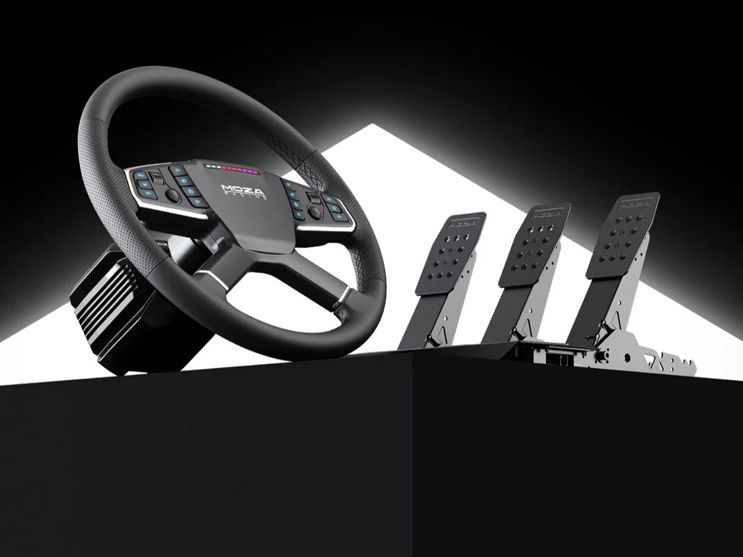
When Moza Racing told me it was sending over one of its latest simulator setups, I assumed I knew what was coming. A racing wheel, presumably, given that most of my experience with simulator hardware has involved driving cars quickly. So when a rather large box arrived containing the Moza R5 Pro Truck Driving Simulator bundle, it was something of a surprise.
This clearly wasn't the racing wheel I had expected. Instead, there was the expected 6Nm wheelbase and a set of pedals, but instead of Moza's small (slightly too small for some) standard 280mm ES racing wheel, there was a thoroughly massive 400mm steering wheel designed for the considerably more agricultural business of driving trucks. And that immediately got me thinking about SnowRunner.
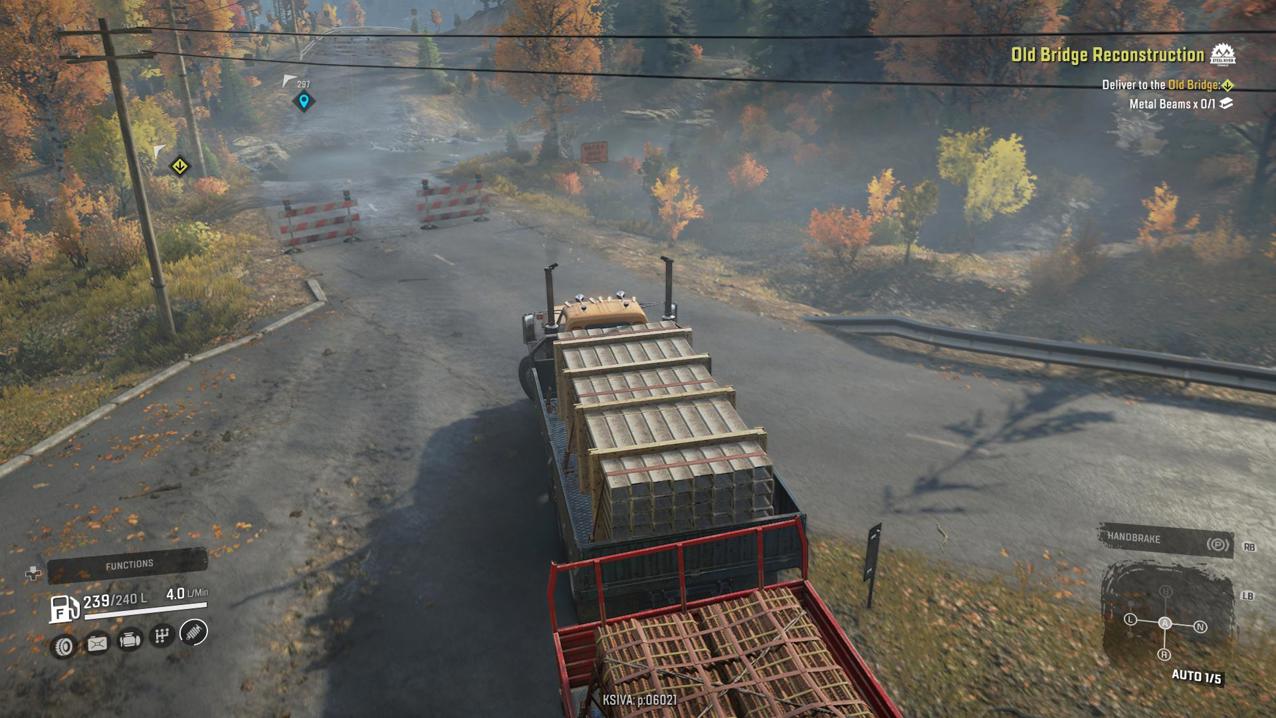
SnowRunner was my COVID-era obsession. While a lot of people took shelter from the pandemic-splattered reality of the outside world in cosy games like Animal Crossing, I spent far too many hours grinding enormous trucks across impossible terrain, hauling improbable loads ridiculous distances and experiencing previously unheard-of levels of frustration when everything went wheels-up at the last bend. The highs were correspondingly ridiculous, particularly when a well-timed winch saved hours of hard work.
So that's where I ended up spending most of my time with the R5 Pro, rather than the more obvious Euro Truck Simulator 2 or American Truck Simulator. As it turns out, a truck simulator wheel makes an awful lot of sense for a game where the objective is often less about getting somewhere quickly and more about persuading a 12-tonne truck up a muddy hill without burying it axle-deep in a swamp.
That's a big wheel
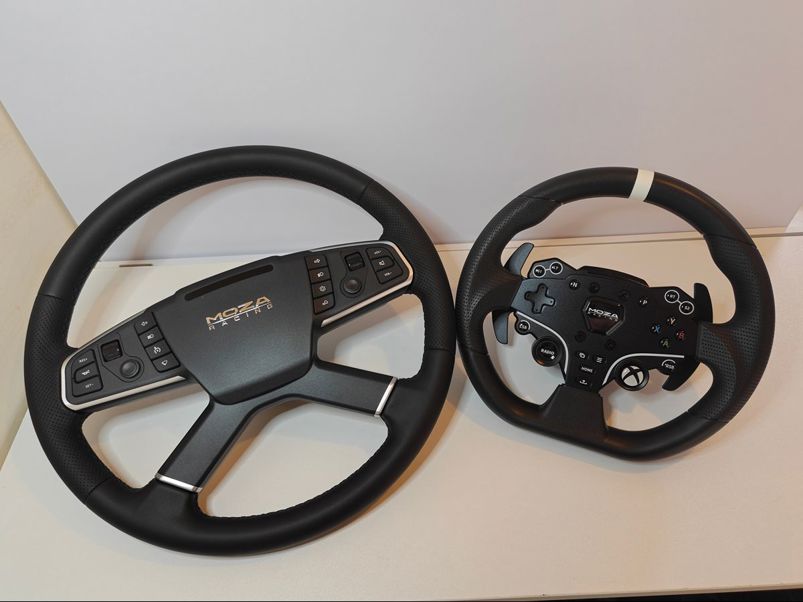
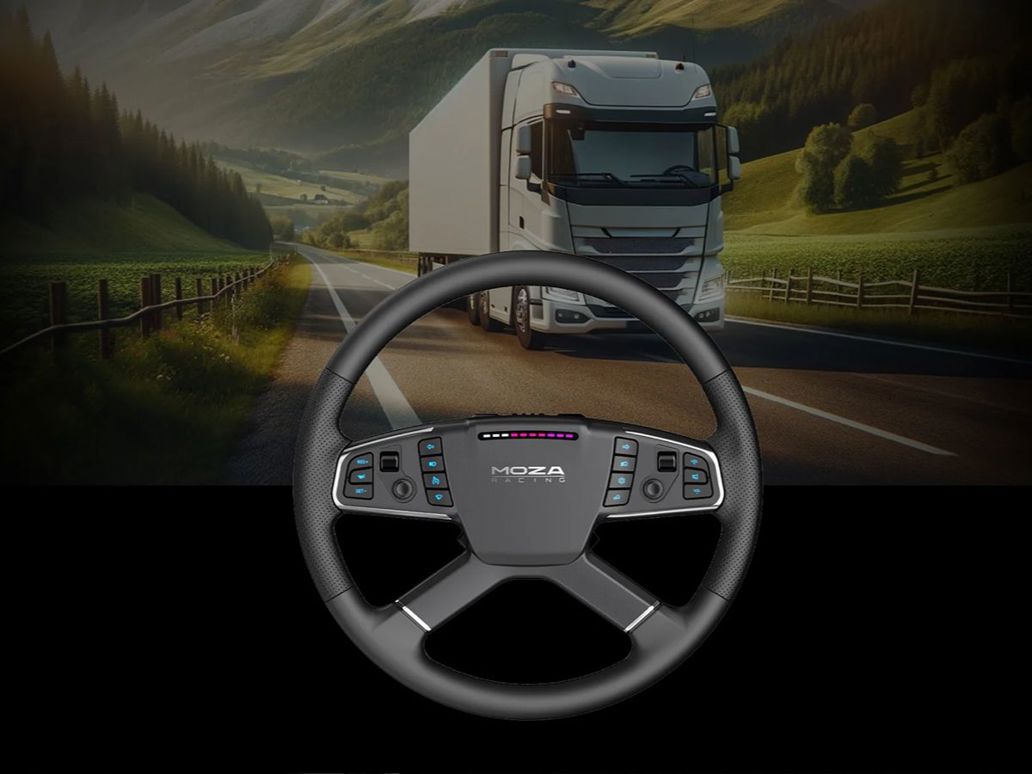
The first thing you notice about the Moza setup is just how enormous that truck wheel is. At 400mm, it's considerably larger than the wheels normally found on racing simulator setups and, sitting on a desk, it initially looks almost comically big. Once you start using it, though, the size makes perfect sense.
The larger wheel makes steering a heavy virtual truck feel much more natural. In SnowRunner you're constantly making small corrections as the terrain tries to drag the truck off course, and a conventional racing wheel can make those inputs feel overly sensitive. The big Moza wheel encourages you to feed the wheel through your hands rather than flicking it from side to side, much more like you would with a real truck.
The R5 Pro's force feedback adds another layer. Hit a rut, climb over rocks or get a front wheel onto an awkward slope and you can feel the steering fighting back. You start paying more attention to where the front wheels are pointing and how the terrain is affecting them, rather than simply steering towards the next waypoint and hoping for the best.
For a game that is essentially about making very slow progress while constantly trying not to get stuck, that's rather useful.
So what's new?
The R5 Pro isn't an entirely new system, but an updated version of Moza's existing R5. The wheelbase now produces 6Nm of force compared with 5.5Nm for the original, while Moza has also upgraded the electronics and force-feedback system. The R5 Pro gets a 21-bit magnetic encoder and the company's newer NexGen Force Feedback 5.0 system, while the new SRP Lite2 pedals replace the previous set.
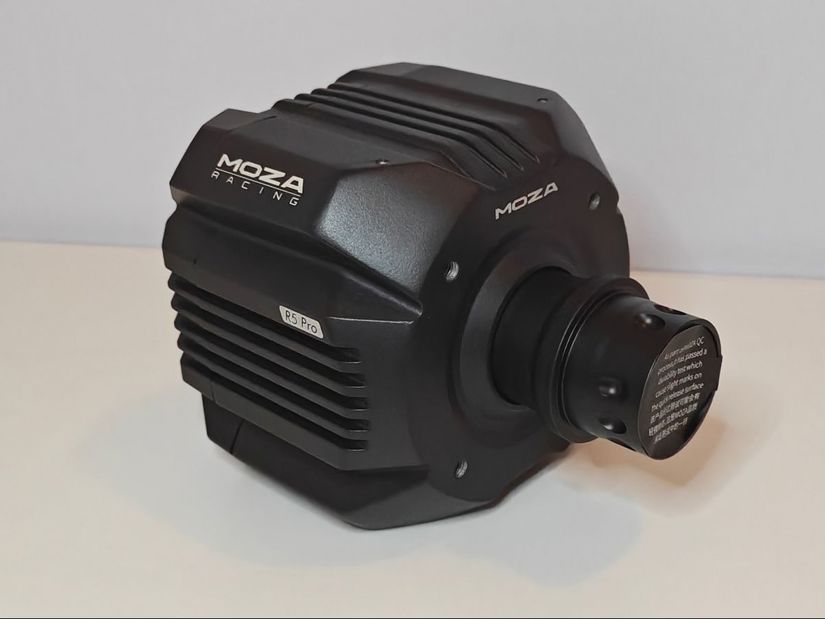
Without getting deeply nerdy about specs, the important thing is that the R5 Pro feels precise and natural, with the force feedback doing a good job of communicating what is happening at the front of the truck. The improvements over the original R5 are evolutionary rather than revolutionary, but they make an already capable setup feel more polished.
I've previously used the cheaper R3 in a racing setup, and the R5 Pro provides a small but significant increase in detail and progressive feel. For someone buying their first serious simulator setup, I think the extra spend over the R3 is worthwhile. If you already own an R5, however, there's probably not enough here to make you rush out and replace it.
Made for trucks
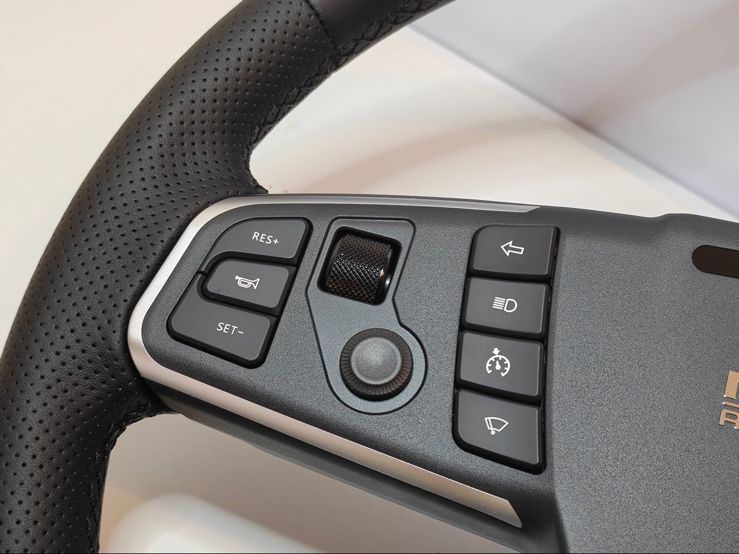
The steering wheel has enough buttons and switches to initially make you wonder whether you've accidentally bought the controls for a small aircraft. In this case, though, the button overload actually makes sense.
Truck simulators have an absurd number of functions: lights, indicators, wipers, cruise control, horn and cameras, while SnowRunner adds things such as the winch, differential locks and drivetrain settings. Having those controls directly on the wheel means you don't constantly have to reach for a keyboard, which makes the whole experience feel considerably more coherent.
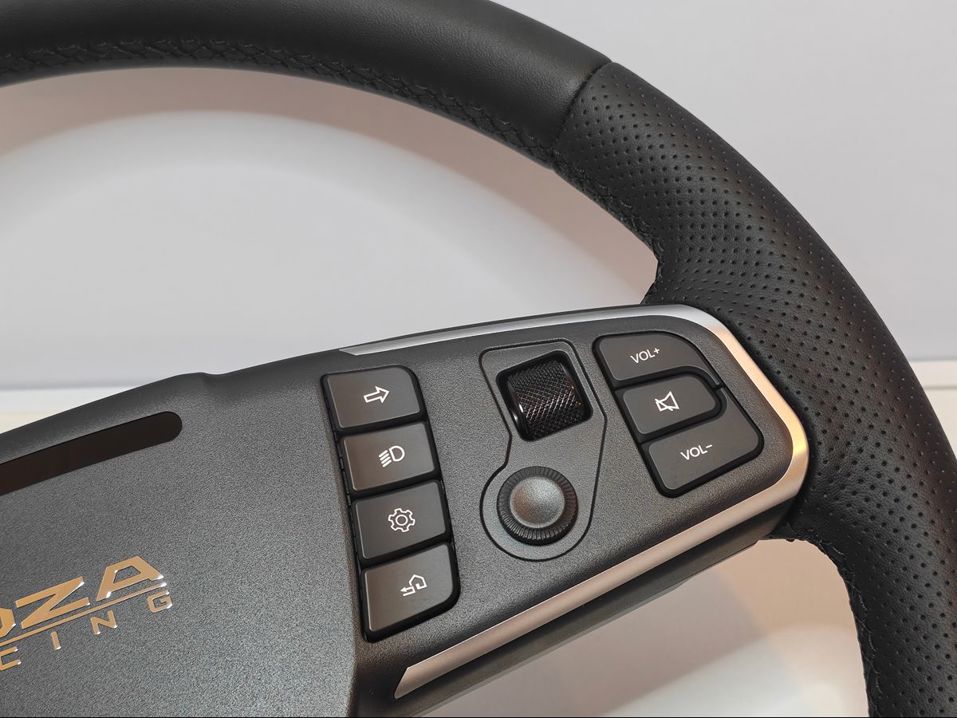
There is some setup involved, though. SnowRunner doesn't natively support the Moza truck wheel in the same straightforward way that it supports a conventional racing wheel, so you'll need to assign the controls yourself. It isn't especially difficult, but remembering which button you've assigned to which function takes some time. At least it did for me…
The SRP Lite2 pedals are arguably the weakest part of the package. They're perfectly functional and give you much more control over throttle and braking than a keyboard or gamepad, which is particularly useful in SnowRunner. When you're crawling through mud, too much throttle can simply dig you deeper into trouble, so being able to carefully feed in power makes a noticeable difference.
The problem is that in operation they feel like exactly what they are: entry-level pedals. The spring-loaded brake in particular lacks the resistance and progressive feel of the more sophisticated load-cell pedals available with the likes of the Logitech RS50. That's not a huge problem for trucking sims, where you're not constantly standing on the brakes for hairpins, but it is a noticeable weak point in an otherwise impressive package.
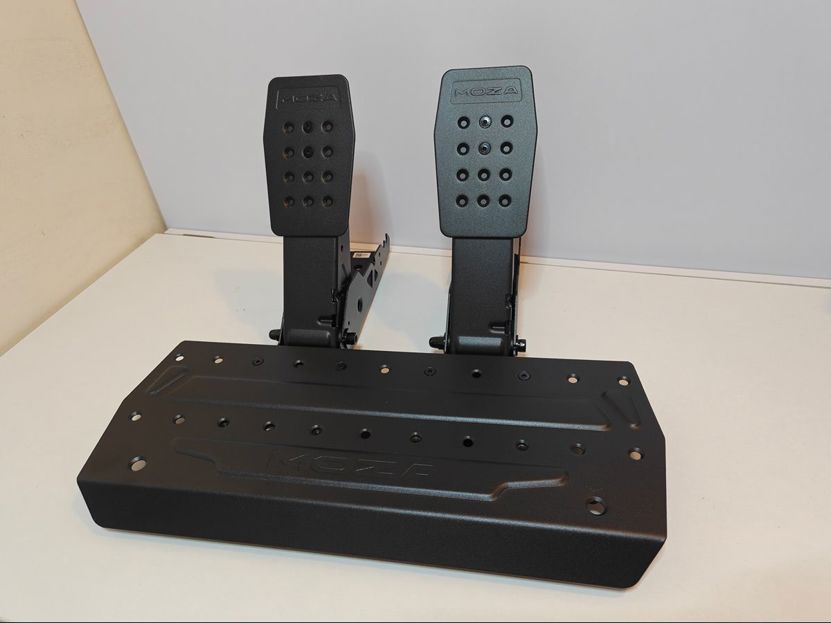
Moza offers a Performance Kit to improve the pedal feel, but that's another extra purchase - albeit at $79, not an overly expensive one - I'd have preferred the standard pedals to feel a little more special given how impressive the rest of the setup is. Another new wrinkle is the recently released haptic feedback modules that add realistic vibrations and feedback to Moza pedals, which promise to make things even more immersive on the pedal front.
The funny thing about this whole review is that I went into it expecting to spend my time driving cars very quickly. Instead, I ended up spending hours driving trucks very, very slowly through the wilderness, and I'm rather glad I did.
There's something almost therapeutic about playing SnowRunner with the R5 Pro. You make a steering input, feel the resistance build, ease the wheel back as the truck finds traction, add a little throttle and try not to roll into a ditch. It sounds ridiculous until you've spent a couple of hours doing it, at which point you realise that SnowRunner might actually be one of the best games for demonstrating why a proper truck wheel makes sense.
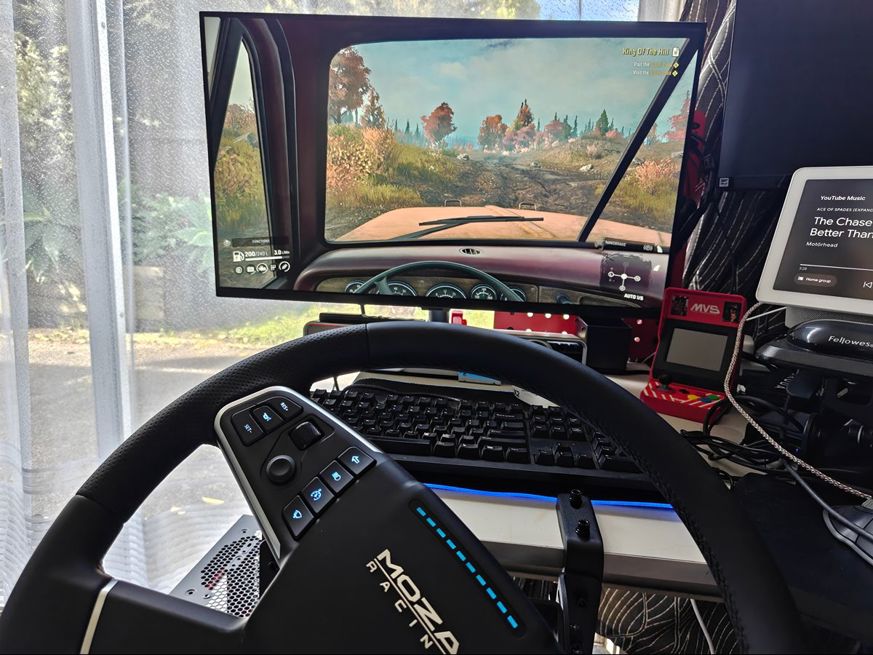
The huge wheel changes your relationship with the game. SnowRunner is already deliberately slow, but with the R5 Pro that slowness becomes an even larger part of the appeal. You're making small, measured inputs and trying to work with the terrain rather than simply pointing the truck towards the next waypoint.
That also makes going back to a controller surprisingly difficult. SnowRunner is perfectly playable that way, but after spending time with the R5 Pro and truck wheel, the controller feels disconnected from what the truck is doing. The wheel gives you another layer of involvement that makes the whole experience feel more like actually driving the thing.
Is it worth it?
If you're primarily interested in racing games, I'd stick with a conventional racing wheel - the R5 Pro wheelbase is fully compatible with Moza's wheel ecosystem, so all other wheels, including the affordable ES racing wheel, just snap right on for when you feel like high speed thrills instead of chugging through mud.
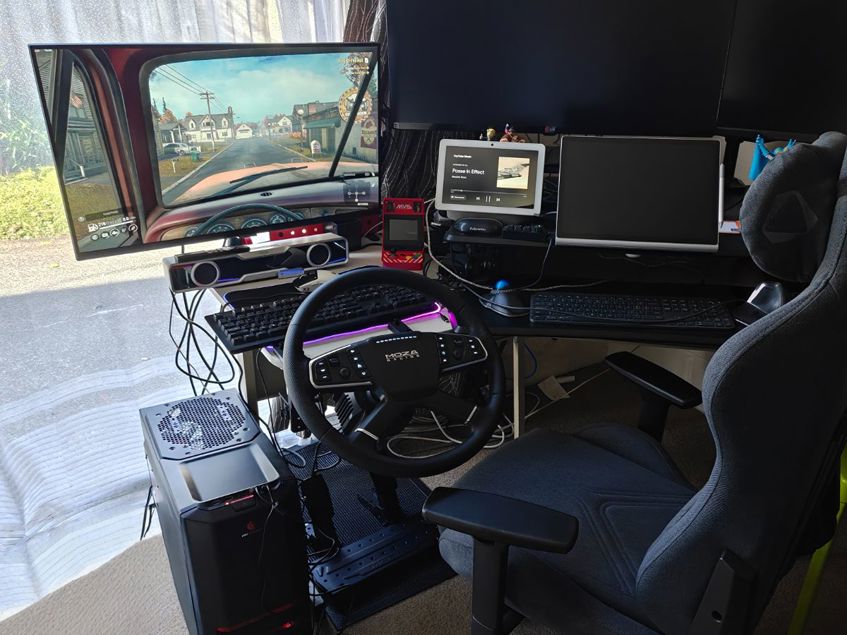
But if you play SnowRunner, Euro Truck Simulator 2, American Truck Simulator or other heavy-vehicle games, the R5 Pro Truck bundle makes a very convincing case for itself.
The R5 Pro's upgrades over the original R5 aren't revolutionary, but they add up to a more refined package, particularly for someone buying into this sort of setup for the first time. Priced at $1199, the Trucking Bundle isn't quite an entry level proposition, but given the level of quality and the flexibility of Moza's ecosystem it is arguably the ideal place to start.
While the R3 racing bundle lands at around $600, and the TSW truck wheel will cost a further $500 or so, the R5 Pro truck bundle for $1200 makes a lot more sense, and you can always add an ES racing wheel for around $250 later on if you feel the need for speed.
Arguably the most impressive aspect of the trucking bundle is how it changes the pace of a game like SnowRunner. You're no longer just trying to get the truck from A to B; you're actually driving it, feeling your way through the mud and rocks and trying to keep the whole thing pointing in vaguely the right direction.
And that's something I wasn't expecting when the box arrived. I expected Moza to send me a racing wheel. Instead, it sent me a truck.
After spending most of my time driving through mud, rocks and forests in SnowRunner, I'm rather glad it did.


