



What’s this new car all about then?
Radical change, but in a non-confrontational way; that’s pretty much exactly what the Suzuki e Vitara is all about. Suzuki's first EV is a big change for the brand, but one that feels instantly familiar.
Developed by Suzuki with a bit of help from Toyota (which sells a rebadged version called the Urban Cruiser) and batteries supplied by BYD, the e Vitara is the Japanese company’s first fully electric compact SUV, positioned as a practical, city-friendly EV with modern styling and a focus on affordability and efficiency.
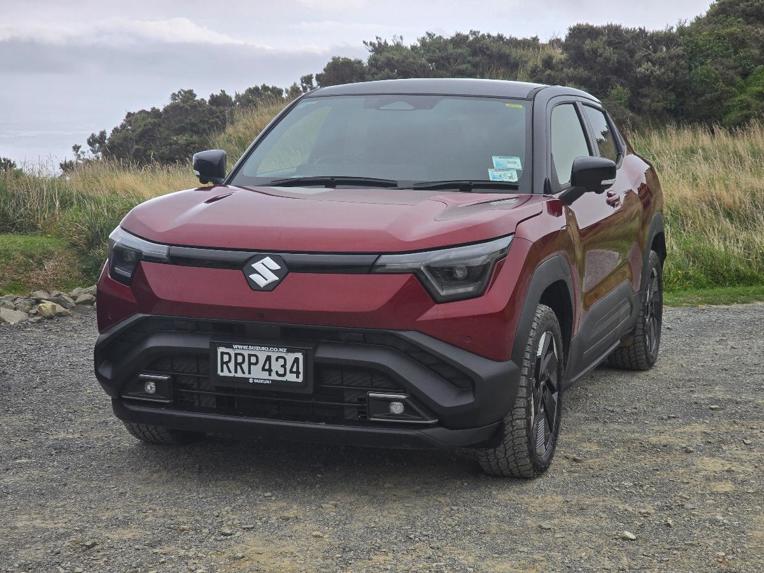
Built on a dedicated "Heartect- e" EV platform that incorporates a 61kWh lithium iron phosphate (LFP) Blade battery and an integrated “eAxle” drive unit - a motor, reduction gear and inverter in one unit co-developed with Toyota - that Suzuki says aids its compact packaging, efficiency, and noise reduction by isolating frequencies and leveraging the battery pack as part of the structure.
The e Vitara and its Toyota sibling are built in India by Maruti Suzuki, with the e Vitara going on sale alongside a refreshed hybrid Vitara in some markets, including Australia. However, Suzuki New Zealand is going all in, with the EV replacing the popular hybrid Vitara here.
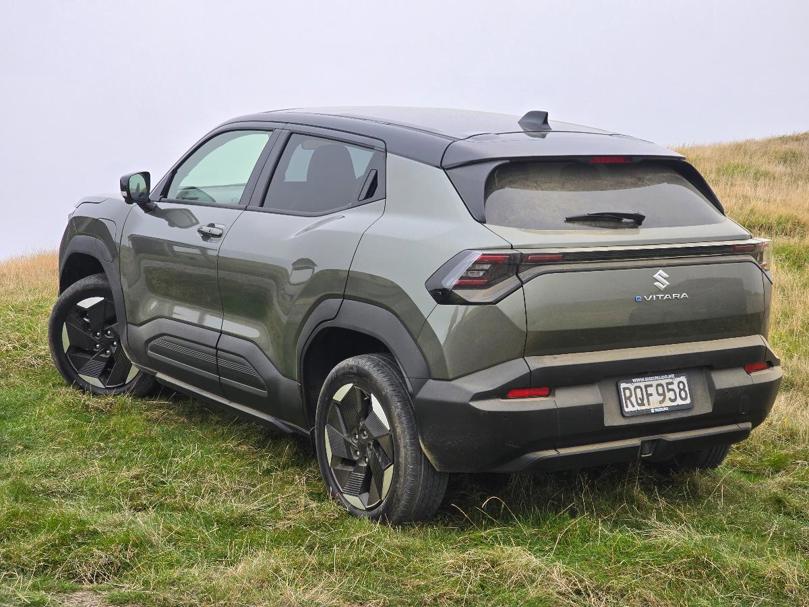
While the e Vitara is fractionally larger than the hybrid (90mm longer, 25mm wider and 35mm taller), its wheelbase is a massive 200mm longer, making it the longest-wheelbase vehicle the company has ever built, but with significantly shorter overhangs that give the e Vitara a satisfying “wheel at each corner” stance.
This means drastically larger interior space, with a notable increase in rear legroom, although at just 306 litres the boot is smaller than the hybrid it replaces by around 70 litres.
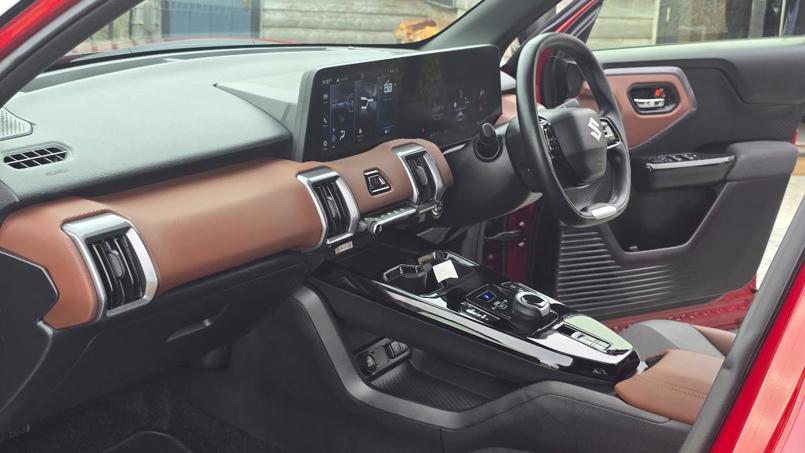
The interior is arguably the highest quality that Suzuki has ever produced as well, with a modern, stylish design that is packed with standard equipment, including a 10.1-inch touchscreen, 7-speaker Infinity sound system with subwoofer, 12-colour ambient lighting, wi-fi and wireless Android Auto/Apple CarPlay and a customisable 10.25in digital instrument panel.
Standard safety tech includes adaptive cruise control, lane keeping assistance, autonomous emergency braking, blind-spot monitoring, rear cross-traffic alert, a 360-degree camera, seven airbags, and structural protection around the battery and high-voltage components.
As far as 'first goes' stand, the e Vitara is an exceptionally good one.
The e Vitara scores a solid but unspectacular 4 Star rating in Euro NCAP testing, with highlights being 77% in adult, 85% in child occupant protection, and 79% in pedestrian protection, but a lower score of 72% in safety assists. While ANCAP confirmation is pending, Suzuki NZ expects the Euro rating to carry over locally.
How much is it?
Suzuki is launching the e Vitara into New Zealand as a single high-spec model with a choice of FWD and AWD powertrains.
Both powertrains consist of a 61kWh Blade battery (courtesy of BYD). The front-wheel drive e Vitara packs a single 128kW/189Nm electric motor on the front axle, with prices starting at $56,990 for the single colour model, with a $1000 premium for two-tone paint.
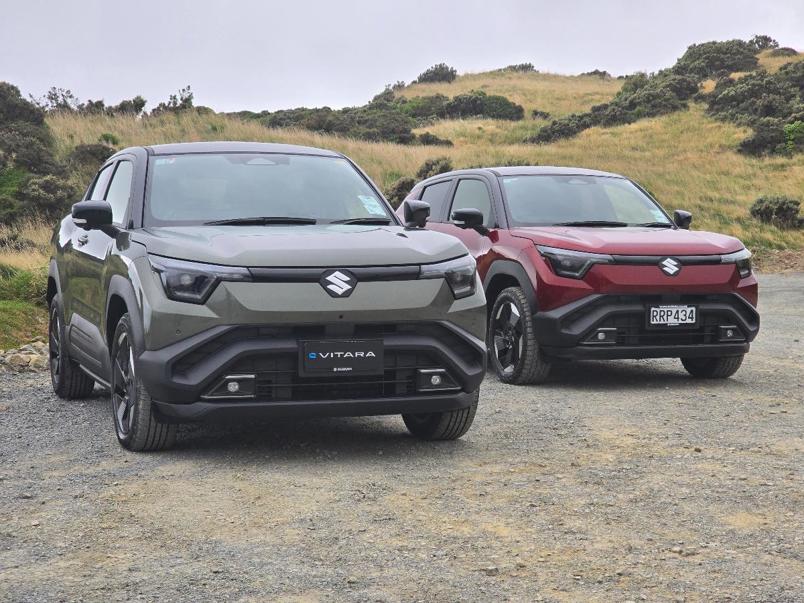
The all-wheel drive model starts at $64,990, also with a $1000 two-tone premium, and adds a second 48kW motor on the rear axle increasing the total output to 135kW and 300Nm.
Tip it into a corner and there is a small amount of well-controlled body roll and surprisingly accurate turn in.
Special introductory pricing reduces the FWD to $54,990 and the AWD to $62,000 for a limited period, with the exact duration of the $2000 saving still being finalised, but indicated at around three months.
Suzuki is also including an 8-year/160,000km battery warranty, alongside a new 8-year/160,000km general warranty and up to 5-years roadside assistance coverage.
What's it like to drive?
The e Vitara is an impressively accomplished small EV from a company that has never played in the all-electric segment in a significant way before.
And as far as 'first goes' go, the e Vitara is an exceptionally good one from a ride, refinement and handling perspective.
The level of grip that even the FWD e Vitara offers is genuinely impressive. And surprising, as you usually don’t see this sort of composure in the segment.
While it has a relatively hefty 1700kg kerb weight (that’s for the FWD model, the AWD one lands at more than 1900kg), and despite weighing around 500kg more than the departing ICE Vitara, the e Vitara feels impressively agile.
With modest but respectable power on tap, the FWD e Vitara will scamper to 100km/h from a standing start in 8.7 seconds, while the more powerful AWD does it in 7.4 seconds.
Tip it into a corner and there is a small amount of well-controlled body roll and surprisingly accurate turn in. While it will eventually default to progressive and predictable understeer, you really have to be pushing it hard to achieve this, and the level of grip that even the FWD e Vitara offers is genuinely impressive. And surprising, as you usually don’t see this sort of composure in the segment.
Ride quality is equally impressive, with a composed and genuinely flowing feel to the chassis as it soaks up small imperfections and behaves in a remarkably benign way over larger bumps and potholes. And even the e Vitara's driver assists are excellent, being present and useful, but totally inobtrusive in their operation.
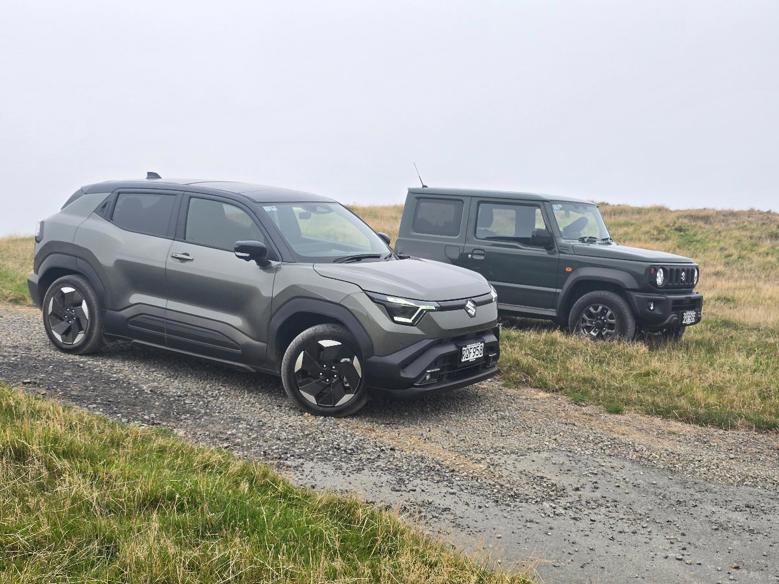
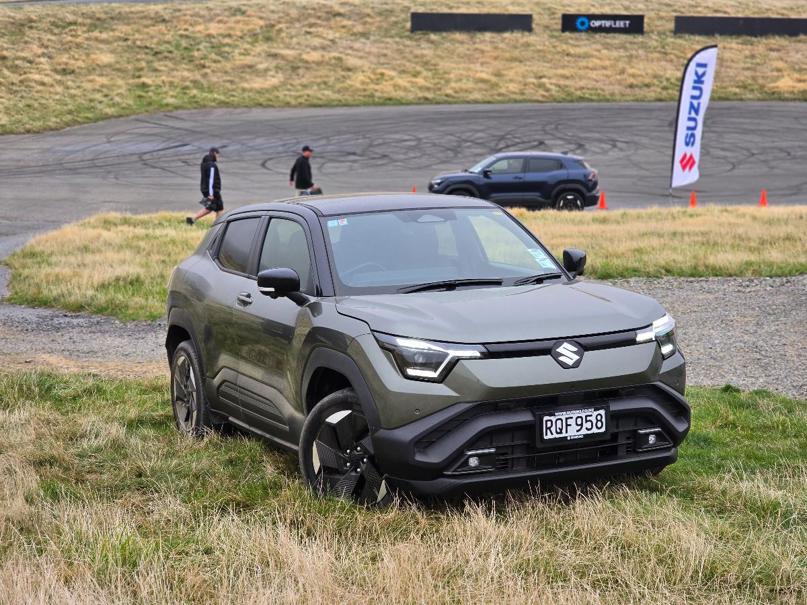
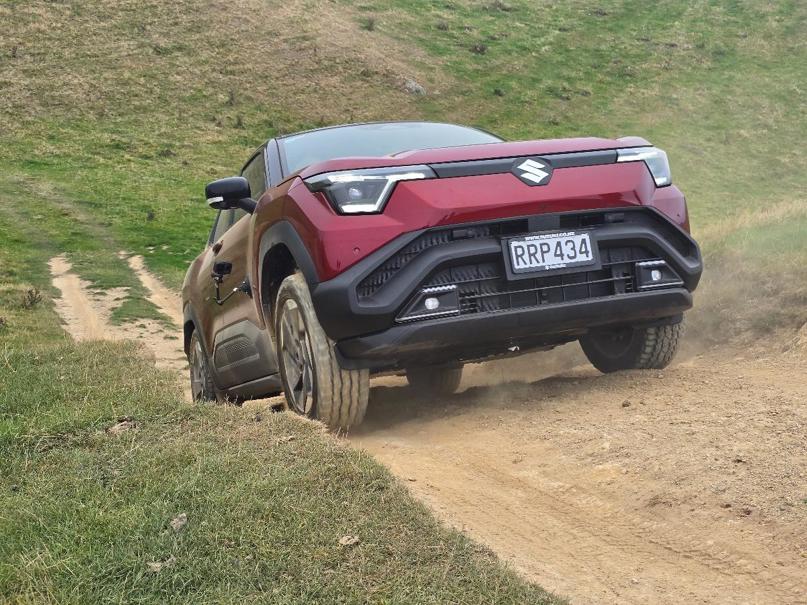
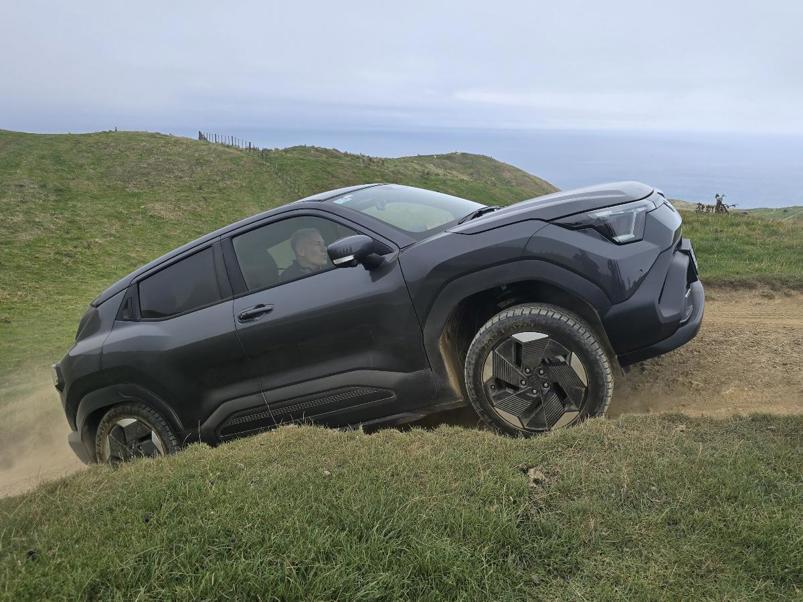
And guess what; the AWD is actually quite good off-road too. While you’re not going to tackle the Rubicon Trail in it, the AWD e Vitara makes the most of its 180mm of ground clearance with standard hill descent control, AllGrip-e AWD system and dedicated low grip modes, including Trail Mode, which applies brake-locking differentials to send torque to wheels with grip, and a Snow Mode for improved traction on slippery surfaces.
Suzuki NZ expects the FWD model to account for the majority of sales, and we reckon that it is the sweet spot in the range.
Both on and off the road the e Vitara is an impressive, well-rounded package that is genuinely enjoyable to drive regardless of what is powering it, making that transition to electric for Suzuki’s traditional buyers a largely seamless experience.
What’s the pick of the range?
Suzuki NZ expects the FWD model to account for the majority of sales, and we reckon that it is the sweet spot in the range. It offers a healthy 400km-plus of range, lower weight, and genuinely engaging handling, with a comfortable ride and excellent practicality, although that smaller boot may be a catch for some.
In terms of bang for your buck, however, the AWD sets itself apart as being the most affordable AWD all-electric SUV on the market, making it deeply attractive to drivers in regions with frequent wet, gravel, or hilly conditions, or those who head off the beaten path. However, with both variants sharing the 61kWh battery and top specification, the choice comes down to what you want to use it for.
What other cars should I consider?
The FWD e Vitara will go head to head with the likes of the 60kWh BYD Atto 3 Superior ($55,990) and 58kWh Kia EV3 Light ($55,520), both of which offer more power (150kW for both) and similar ranges (420km for the BYD and 436km for the Kia), while the RWD 62kWh MG S5 EV ($50,990 to $54,990) will also be in the mix.
The AWD presents a totally different proposition in the segment, with no real direct competition in the AWD space, and only more expensive options like the Toyota bZ4X AWD ($66,990 to $67,990), Volvo EX30 Twin Motor ($69,990), Zeekr X AWD ($69,990), Xpeng G6 AWD ($72,990) and Smart #1 Brabus ($74,990) offering AWD, albeit with significantly more performance on tap as well.
Strangely, perhaps the closest competitor the AWD e Vitara has in terms of drivetrain and price is the utterly mad and not-at-all-off-roady MG4 Xpower that drops in at $59,990, which - as Suzuki rightly points out - makes the $64,990 e Vitara the cheapest AWD electric SUV available in New Zealand at the moment.


