


BMW Motorrad has long been aware that not everyone wants to buy a heavyweight adventure touring bike like the highly successful R1300 GS. It first surprised us with a “baby GS” 10 years ago when it released the underwhelming single-cylinder G310 GS in collaboration with its Indian partner, TVS, a decade ago.
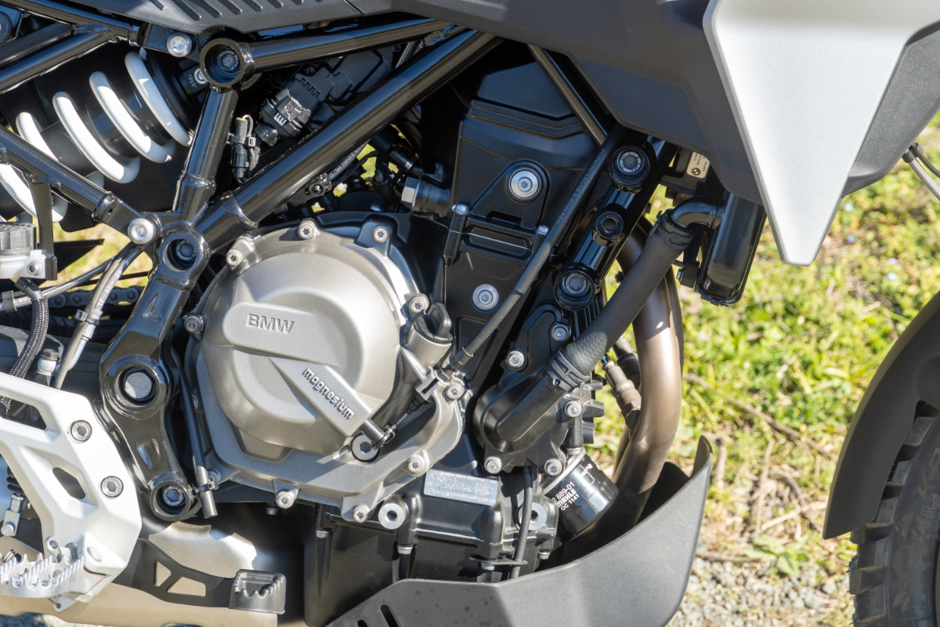
Now TVS and BMW have gone back to drawing board and built us a new twin-cylinder F450 GS with what feels like twice the horsepower. They’re taking the burgeoning lightweight ADV segment a lot more seriously this time. If only this brilliant 178kg bundle of riding fun had been the baby GS model that they released a decade ago.
Perhaps because of the damage the G310 did to the GS brand, BMW hasn’t held back on the new technology it's incorporated into the new 450. There’s a new 420cc parallel twin with a unique 135-degree crankshaft, bringing a new inline twin-cylinder engine sound into a segment where Chinese twins favour 270-degree cranks because YouTubers keep telling the market they’re the best, and Japanese twins use 180-degree cranks because they rev more freely.
Perhaps BMW should call this a 225-degree parallel twin. The piston of one cylinder reaches top dead centre (TDC) when the crankshaft has rotated 135 degrees, while the other does the same when the crank reaches 225 degrees of rotation.
Calling it a 225-degree crankshaft positions the new layout nicely between the 180-degree and 270-degree twins of the BMW’s most direct rivals. Which is exactly how this lively new engine feels and sounds. It emits a gruffer exhaust signature than a 180-degree twin and is keener to rev out than a 270-degree motor. It represents the best of both crankshaft designs, I say.
Next up, the ERC automatic clutch, fitted to the $14,490 Trophy model that is the flagship of the range. It’s standard equipment on the most expensive F450 GS, along with proper under-engine protection, handlebar risers, an extra riding mode for extreme off-road use, and rebound and compression damping adjusters added to the beefy 43mm front fork. It’s odd that the ERC is only standard on the priciest F450 GS, as it’s a feature most useful to rookie riders rather than those more experienced.
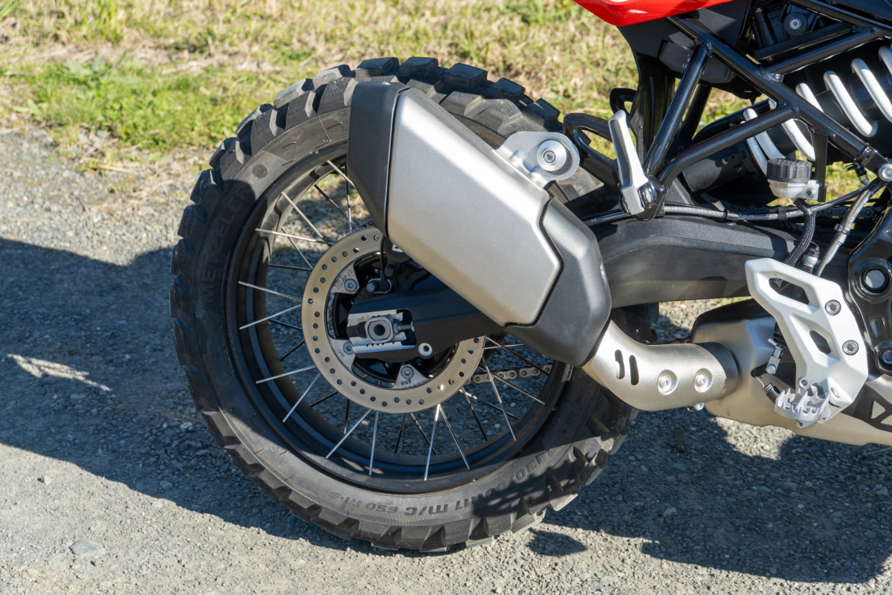
Want the rest of the stuff fitted to the Trophy but not the ERC, the fancy paint, nor the alloy bashplate? Buy the $13,890 Sport version of F450 GS you see here. The $600 saving can then be put towards a set of cross-spoked wheels like the red test bike’s, an off-road durability enhancement that could cost as much as $2000 when the price is settled.
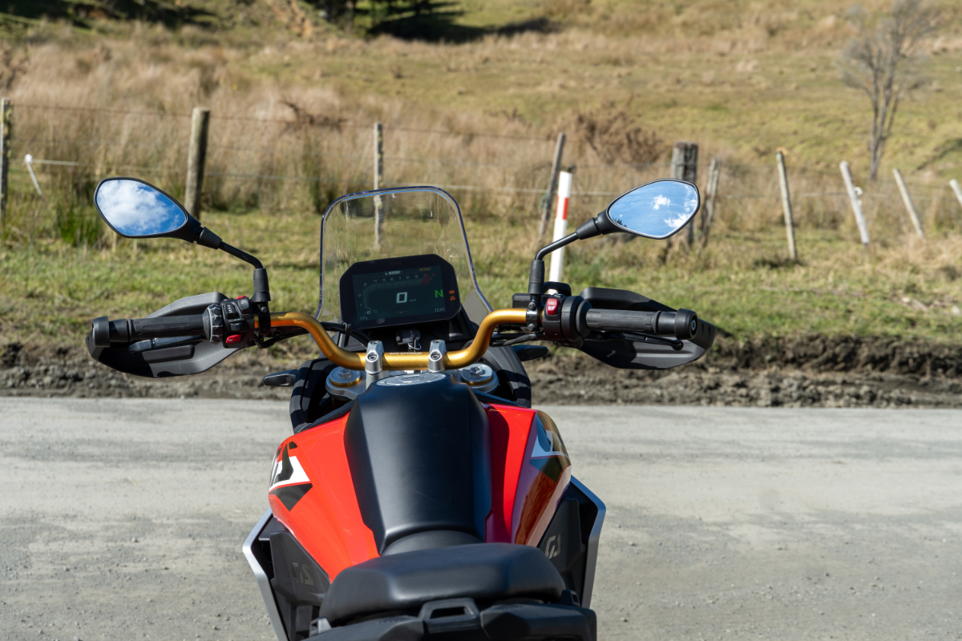
Sitting at the bottom of the F450 GS range is the $13,490 Exclusive, which is still a well-equipped bike by lightweight ADV standards despite the entire range lacking cruise control. For it comes with BMW’s easy-to-read 6.5-inch TFT screen and all the brilliant switchgear design worthy of the badge. There’s IMU-enhanced traction control and ABS Pro, a decent selection of riding modes (minus Enduro Pro), adjustable hand levers, and a Type C USB socket.
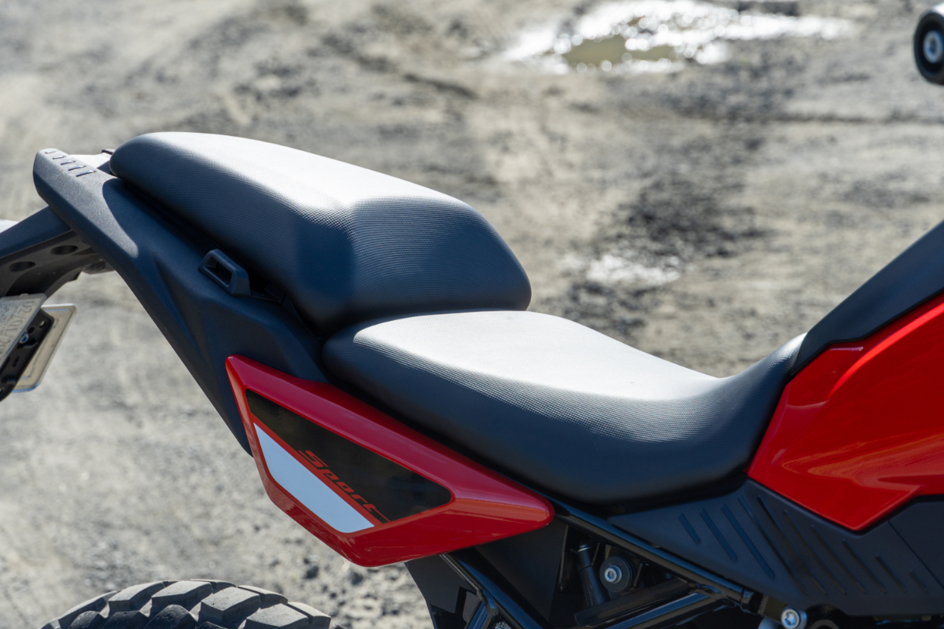
Excellent ergonomic tailoring is a feature of all three models. The seat height might look a bit daunting on paper at 845mm, but in practice it’s an easy bike to swing a leg over. The narrow width of the bike and the tapering of the rider’s seat towards the fuel tank make it easy to find a foothold when coming to a halt.
Where the F450 GS really shines and justifies pricing that is a cut above many rivals, is its light, easy-to-ride dynamics. As a Learner-Approved Motorcycle the engine can’t make more than 48bhp, but the 178kg fully-fueled weight makes those brake horses feel like a team of thoroughbreds. There’s none of the top-heaviness that blights the handling of other welterweight ADVs.
Not only is there about 20kg less mass than rivals like the Royal Enfield Himalayan 450 and the CF Moto 450MT, the BMW carries more of its mass lower. It feels beautifully balanced, both front to rear and top to bottom.
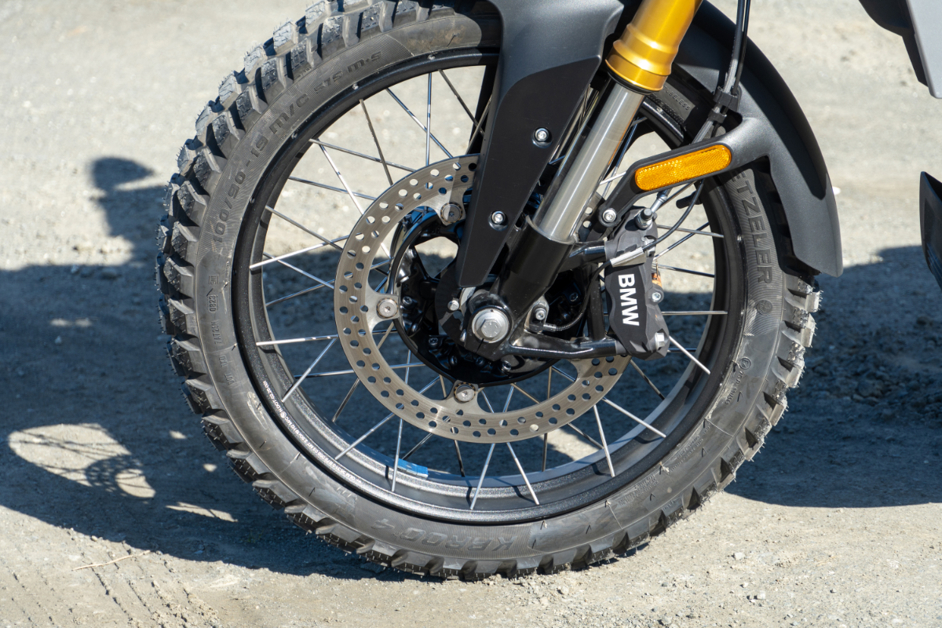
Capping it off are the quality suspension and brakes. The former makes the most of the modest 180mm of wheel travel, the firm springs preventing it bottoming out on the big hits, and robust damping keeps the springs under control. Helped by radial caliper mounts and braided brake lines, the single front disc produces better stopping performance than the twin discs fitted to my Honda CB500X.
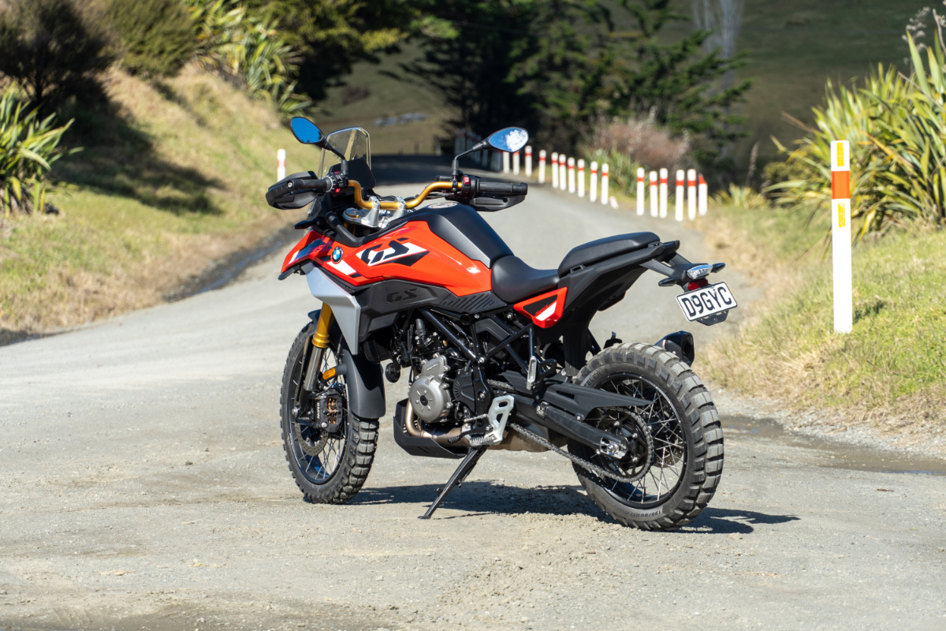
Buy the Sport to get arguably the most value in the new F450 GS range, but don’t sweat the decision too much. Any of these three models makes a mighty fine “baby GS”.


