



The John Bloor-led revival of Triumph really kicked up a gear in the mid-2000s when the born-again brand released the Street Triple 675. The original ST was good-looking, had just enough performance to prevent a Ducati eating its lunch, and was a price-leader in the streetbike sector. These are values inherited by the latest middleweight streetbike from Triumph - the Trident 800.
Which is fortunate, because the inevitable evolution of the Street Triple over ensuing decades made it a more demanding motorcycle to own and ride. The three-cylinder engine got increasingly more powerful, the chassis became more track-oriented and sophisticated, and these upgrades sent the price into orbit.
Triumph tried to bring things earthward again with the slightly stripped Street Triple R, but so many buyers opted for the extra sporting prowess of the RS version globally that Triumph has now stopped making the R (it’s still part of the New Zealand range, priced at $18,990).
This deletion from the production line made room in Triumph showrooms for a higher-performance version of the existing Trident 660.
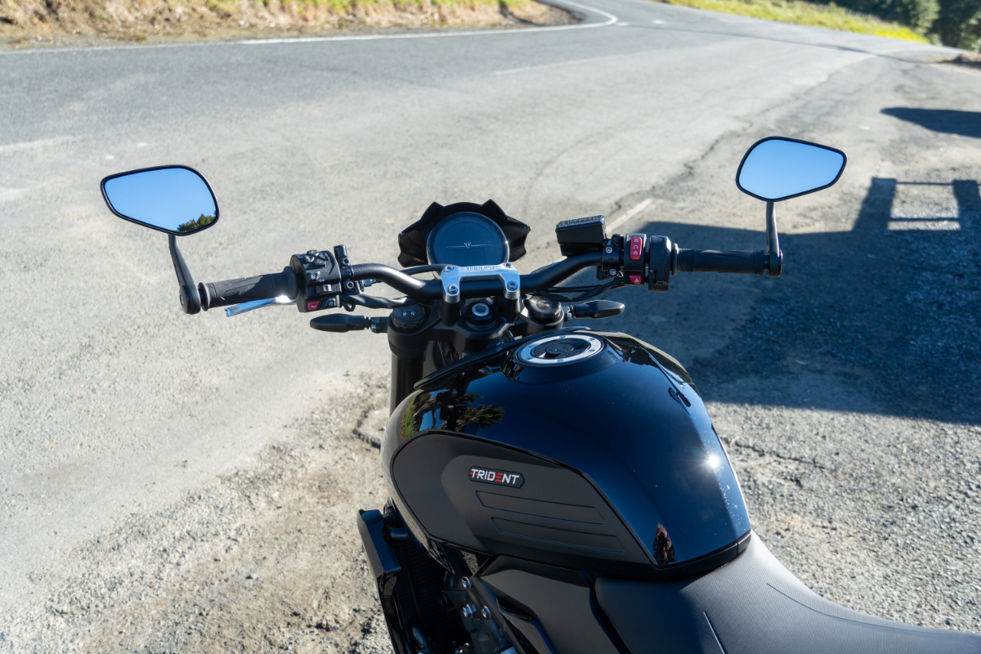
The new $17,490 113bhp Trident 800 sits neatly between the bookends of the brand’s middleweight three-cylinder streetbike range – the $15,990 94bhp unrestricted version of the Trident 660 (a 55bhp LAMS-approved version is also available for the same price) and the $20,990 118bhp Street Triple 765 RS. That the new 800 is a Trident and not a Street Triple is a plus. It means it’s more comfortable to ride and has an attractive neo-classic design theme instead of looking insectoid.
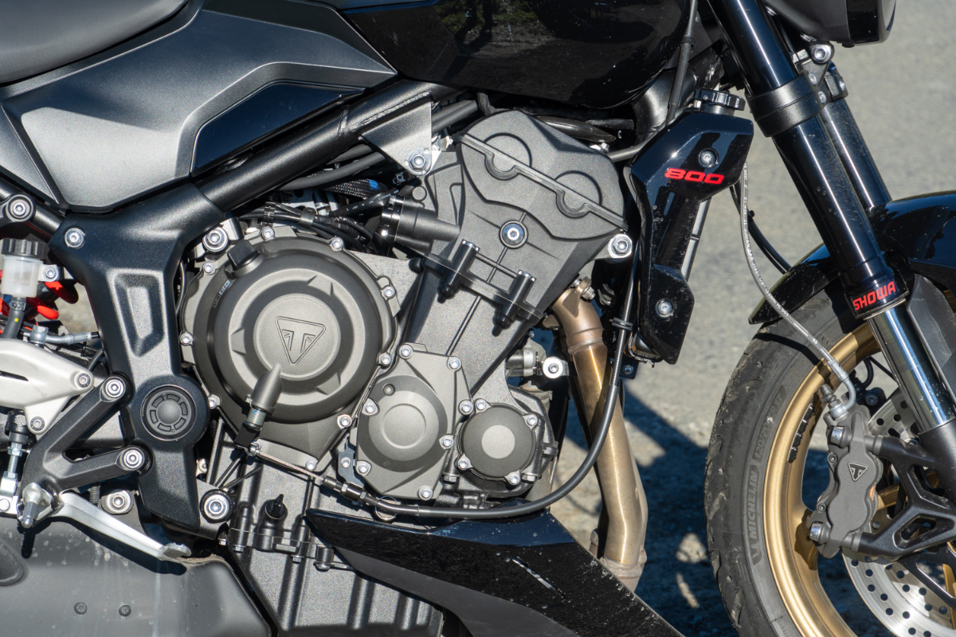
Beneath the slightly retro clothes and more user-friendly riding position lies all the DNA of the original Street Triple from 20 years ago. Motorcycles are defined by their engines, and the smaller-capacity triples represent Triumph at peak excellence. They power a wide variety of bikes from Daytona sportsters to Tiger adventurers to Street Triples and Trident roadsters and even entertain MotoGP fans as the designated powerplant for the Moto2 support class.
The 789cc version at the heart of the Trident 800 is as smooth, characterful and refined as the 675cc and 765cc versions. It delivers its 113bhp at 10,750rpm, and 84Nm of riding force at 8500, with a gruff howl from the airbox that reminds me of a Porsche 911 GT3 nearing peak revs. Although there’s a step upwards in performance at 7000rpm, the Trident 800 has plenty to tap into at lower revs. With the bike weighing just 195kg with the 14-litre fuel tank fully brimmed, it is always a frisky and willing ride.
The chassis also adheres to the “light and agile” design brief, despite the steering feeling not quite as racy as that of a Street Triple RS. Where the latter accelerates the rate of turning into corners the more it leans over, the Trident roll-rotates more neutrally. It’s calm and unruffled, yet still highly biddable and obedient to the rider’s chosen cornering line. The more you lean it over, the clearer the tactile feedback from the tyres.
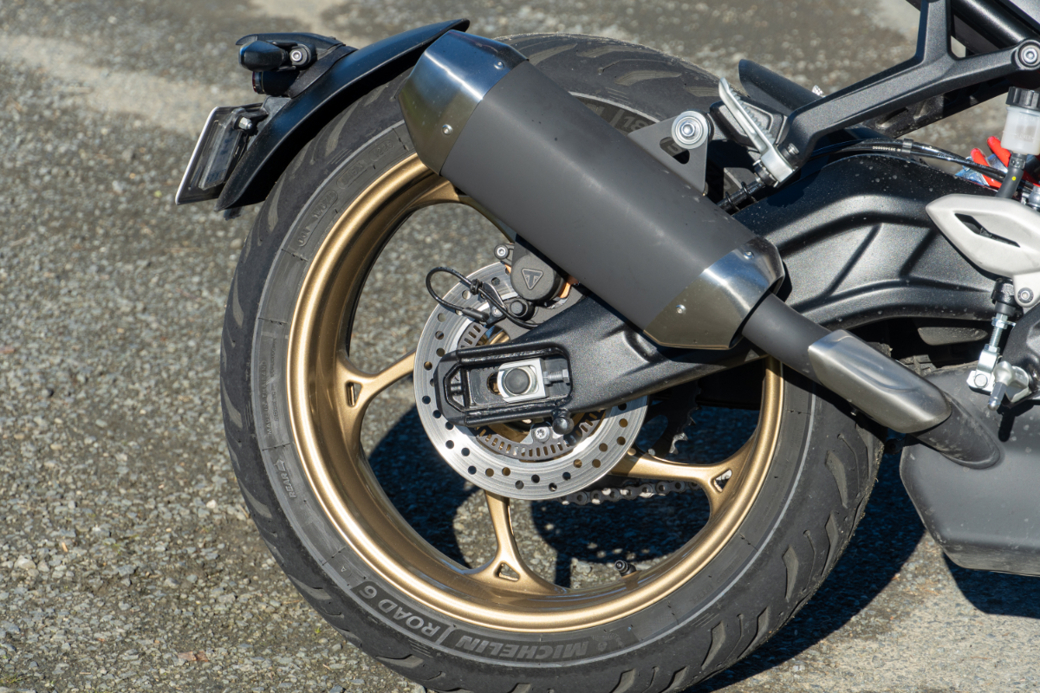
It’s a highly inspirational corner-carver, helped by a set of tyres that are the perfect choice for the wet and cold surfaces of NZ roads in winter – Michelin’s deeply treaded Pilot Road 6 sports-touring radials.
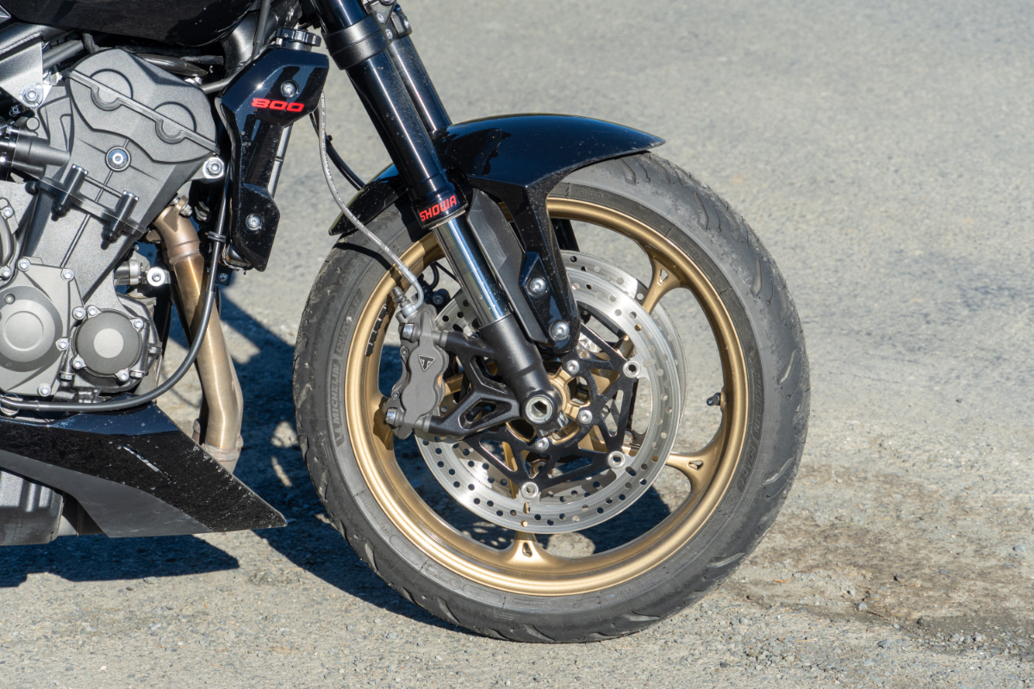
The supporting roles played by the Trident’s suspension and brakes unfortunately aren’t going to win accolades. The J.Juan calipers and disc rotors do a decent job, as do the Showa forks and rear shock, but the better-performing equivalents of a Street Triple RS are the best reason to spend more on that Triumph streetbike. That said, the Trident’s 41mm forks and rear shock do come with damping adjustment as well as spring preload, and they respond well to a little more rebound control.
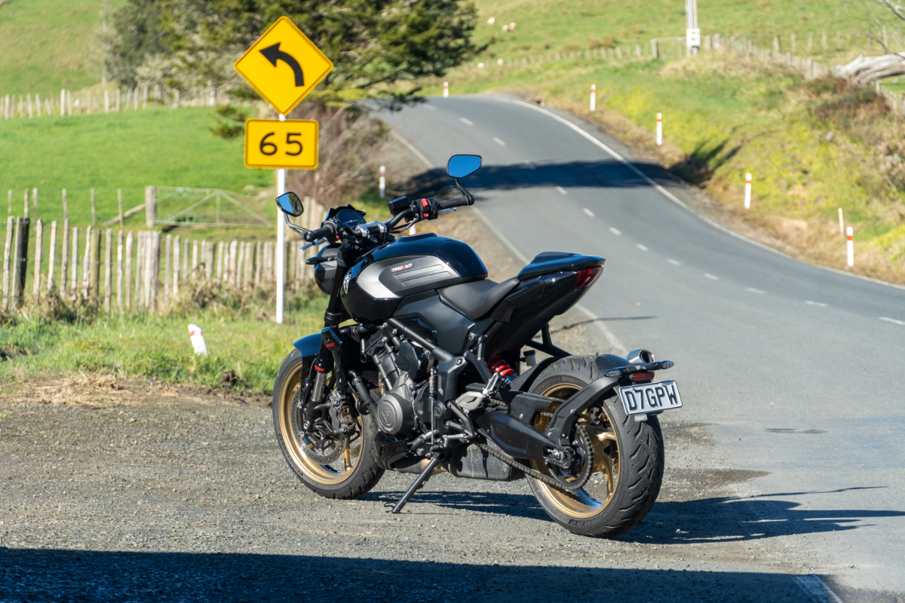
The Trident 800 comes loaded to the gunwales with desirable stuff. There’s cornering ABS and traction control, the latter defeatable so that mono-wheeling is a riding option. There’s Triumph’s simple one-button cruise control and three riding modes – Sport, Road, and Rain. There’s also one of the best quick-shifters on the market, throttle-matching the downshifts and upshifting the excellent six-speed in milliseconds. It all adds up to one of the best-equipped bikes at the price.
So welcome back a Triumph Trident with 750 cee-cees. The original T150 Trident 750 of 1970 instantly became sales cannon-fodder for Honda’s game-changing CB750 four. This ultra-fine Trident 800 deserves to enjoy a far better fate.