



The new-generation Hyundai Palisade has cleaned up for New Zealand: the old diesel powertrain is no more, replaced by a petrol-electric hybrid powertrain. Yes, just like the smaller Santa Fe, but this one is much larger capacity (2.5 litres compared to 1.6).
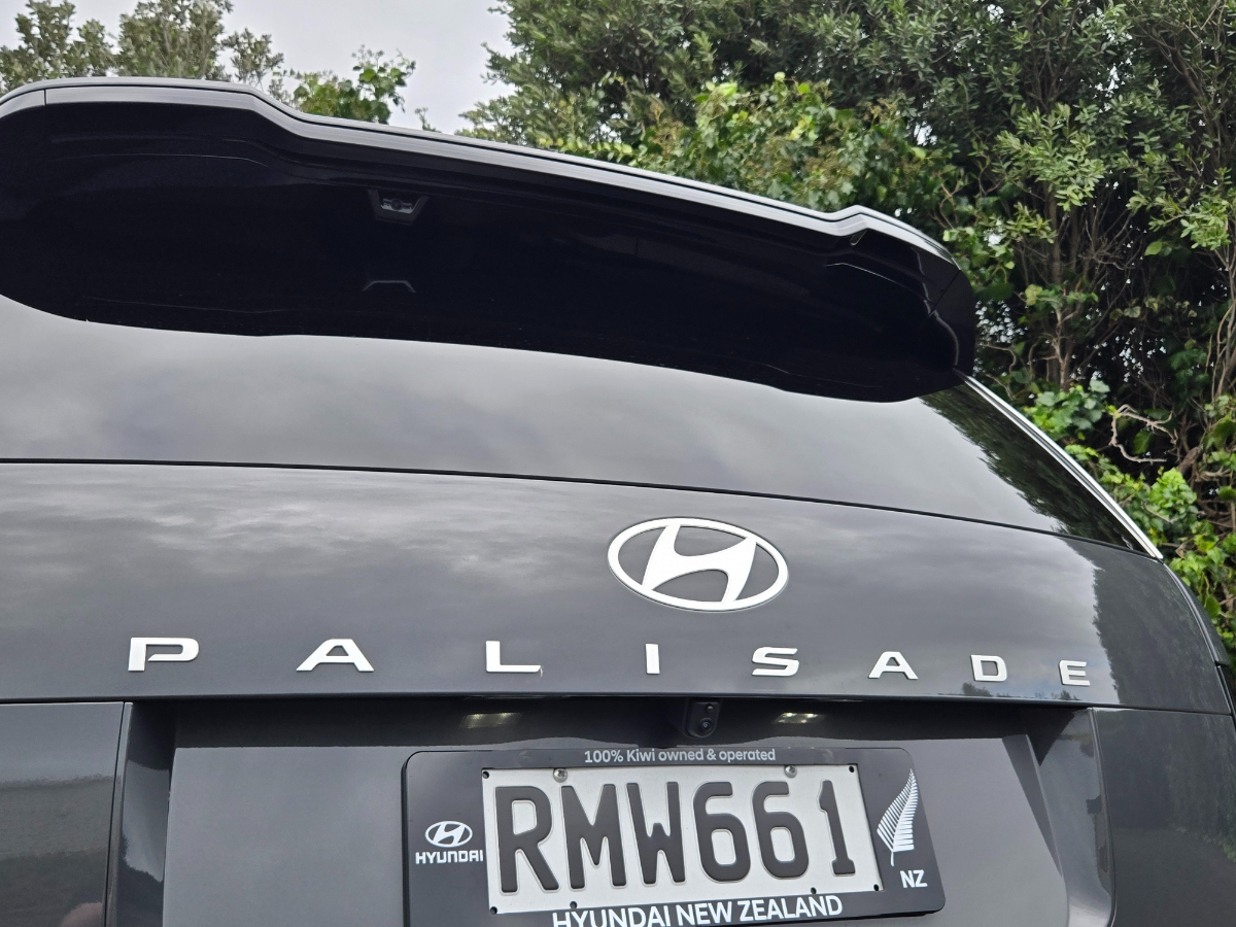
The new-generation Hyundai Palisade has also gone upmarket for NZ. It's now only available in range-topping Calligraphy form, at a whopping $129,990 ($34k more than a Santa Fe Calligraphy). So it has some work to do to impress potential buyers.
On the outside: what are the Hyundai Palisade Calligraphy's main design features?
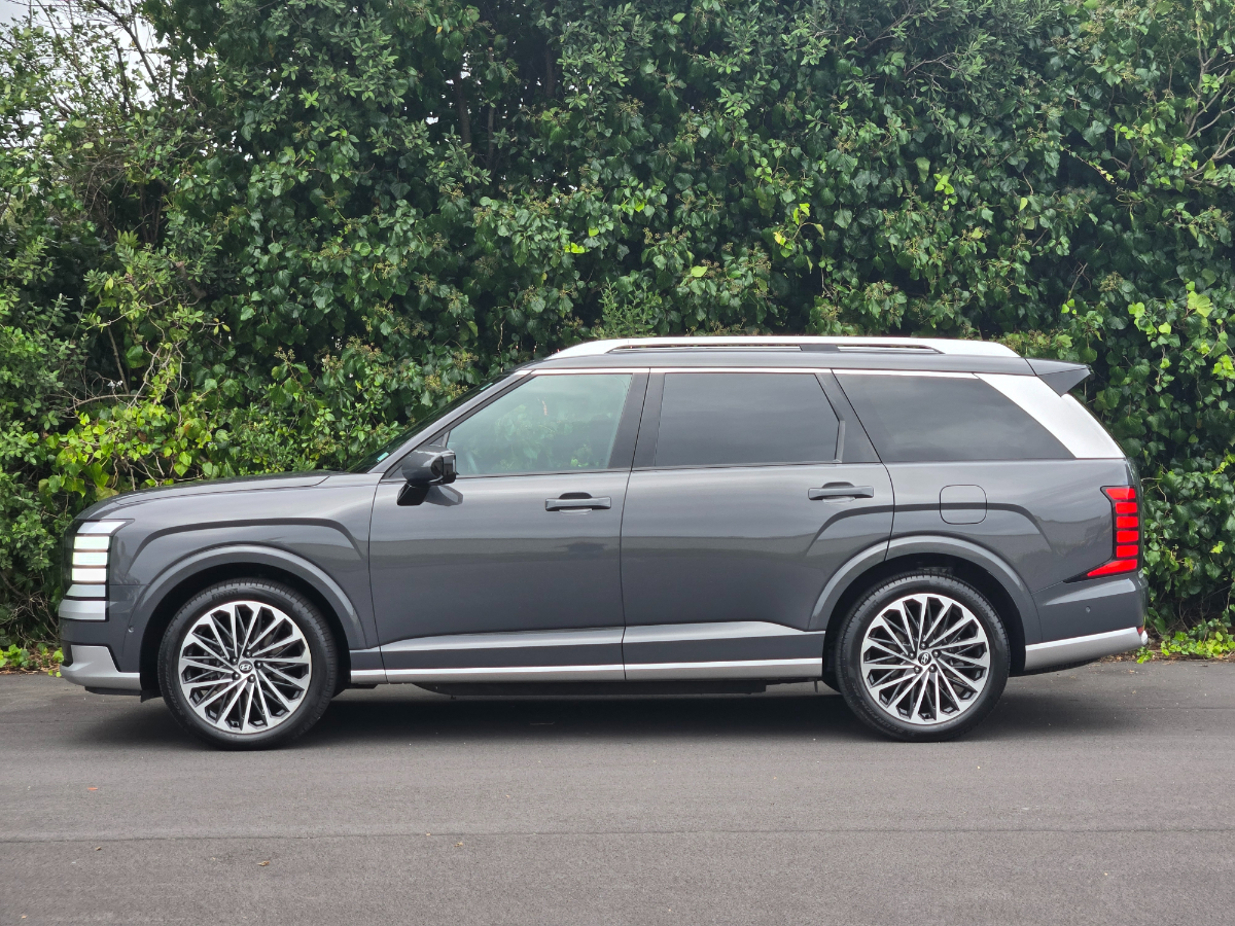
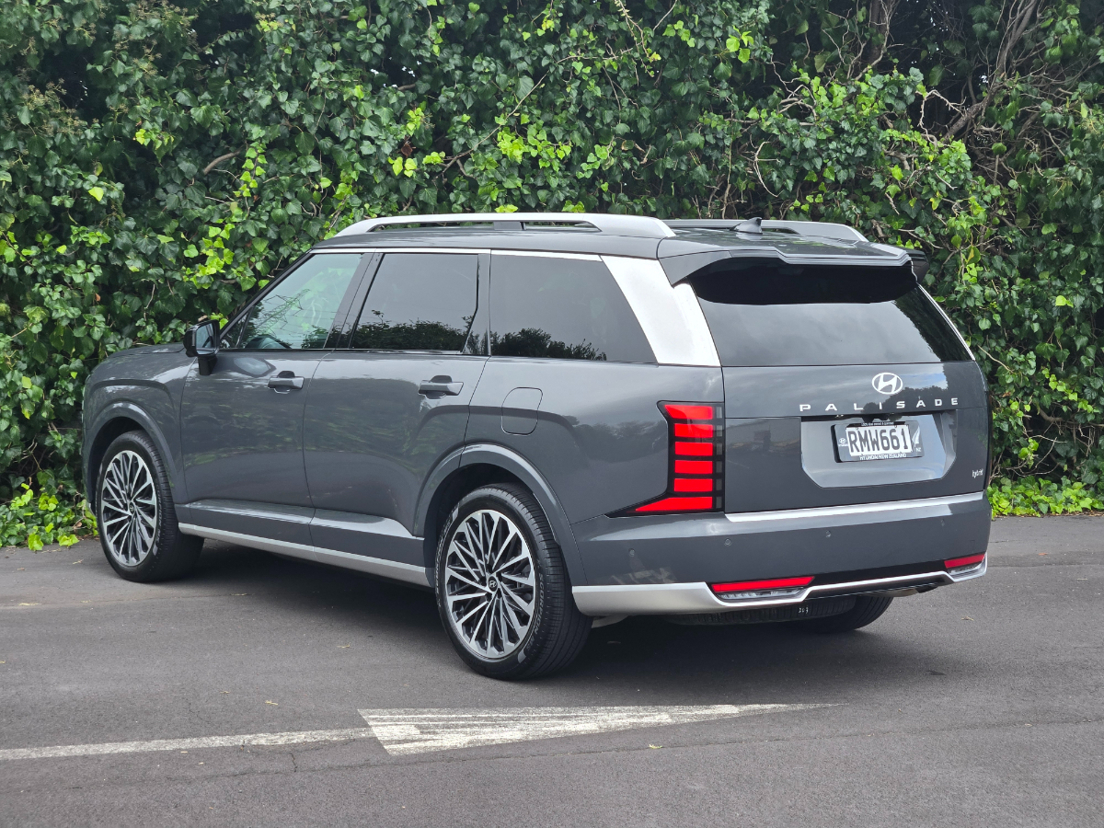
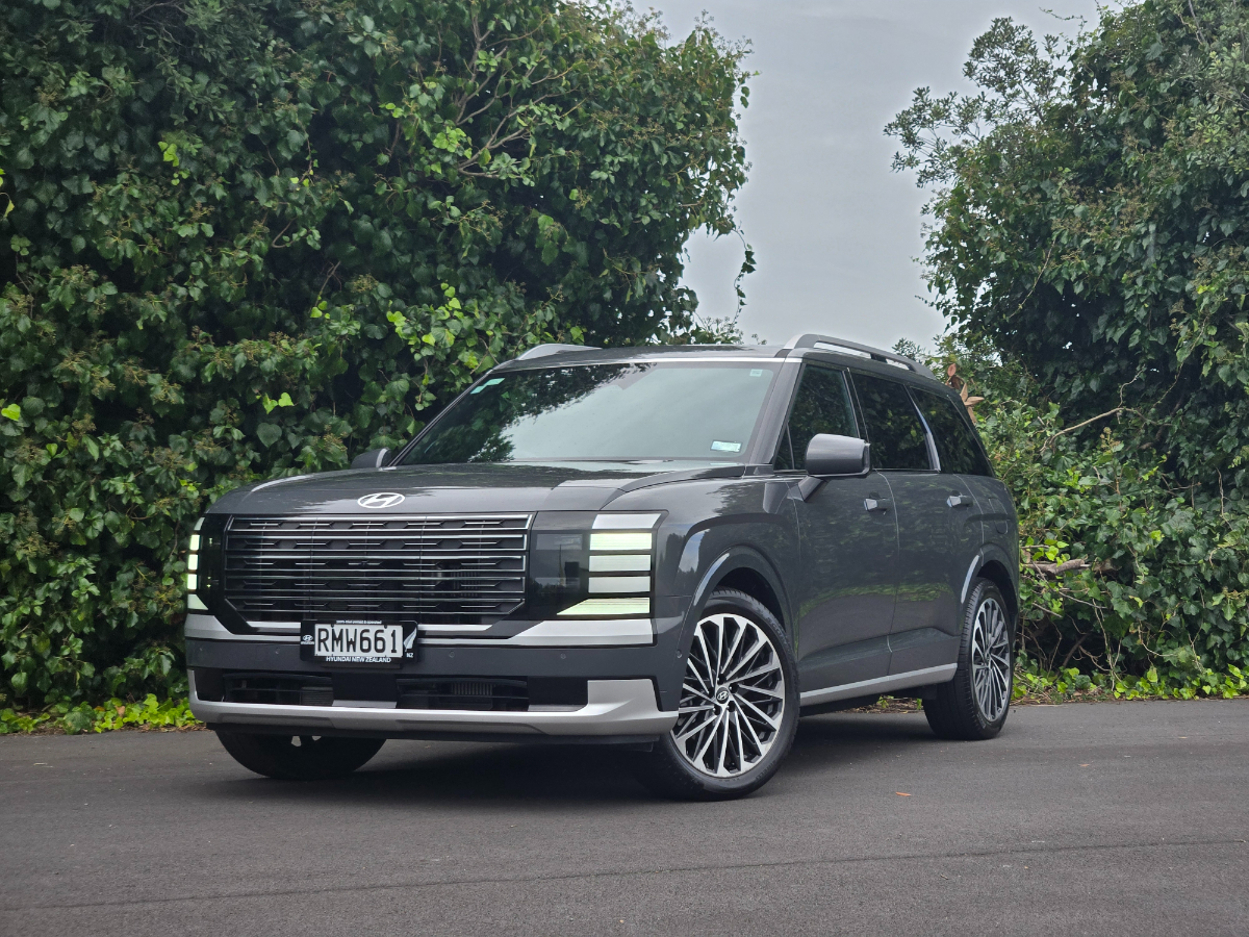
It certainly scores on visual presence. It's probably not quite as big as it looks, with that broad bonnet and rear overhang: but it's still over 5 metres in length and nearly 2m wide.
The Palisade has gone further upmarket for NZ. It's now only available in range-topping Calligraphy form, at a whopping $129,990, or $34k more than a Santa Fe Calligraphy.
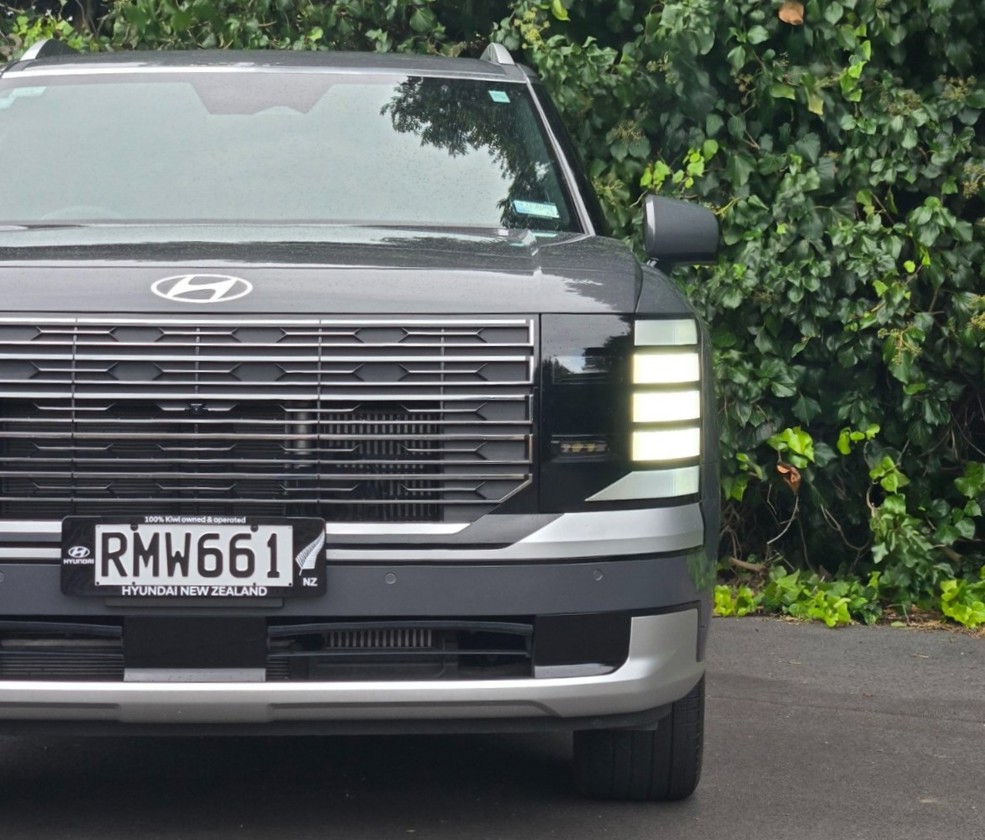
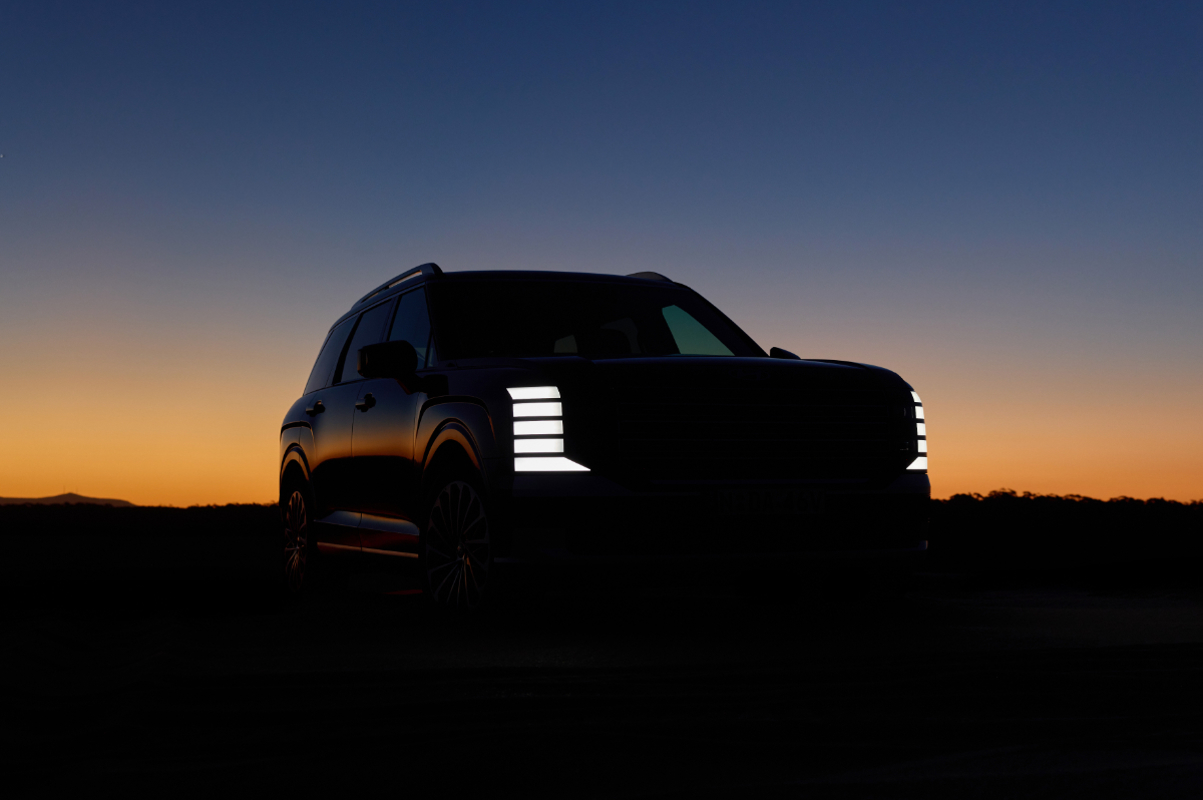
The distinctive daytime running lights add to the impression of width, but they also give the Palisade an other-worldy look on the road. They're not actually the headlights, mind: in classic Hyundai style, the main lights are tiny, nestled in between the DRLs and grille. You can't really see them unless they're on.
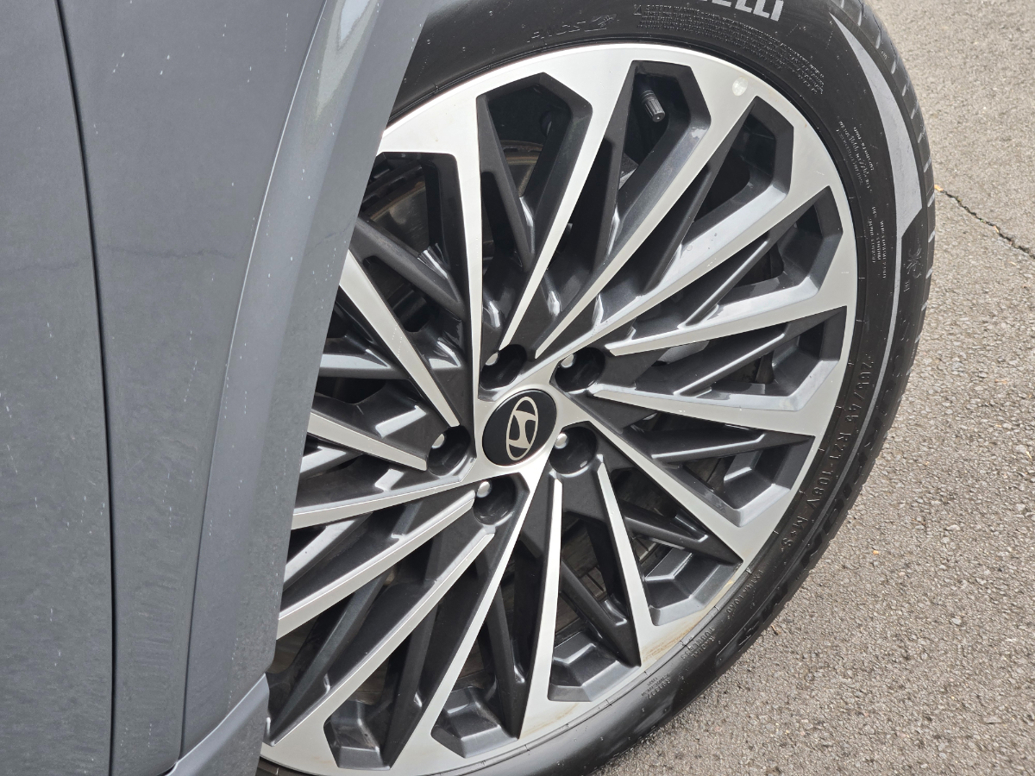
It's quite an ornate-looking thing overall, but done in the best possible taste. The silver trim elements tone down the heaviness of the design and the masssive 21-inch wheels help with the sense of styling proportion.
You wouldn't mistake it for a Santa Fe, or indeed anything else in the Hyundai lineup. The Korean brand has a thing about making each of its model lines look completely different.
OVERVIEW
| Price | $129,990 |
| Body style | 5-door SUV |
| Wheels and tyres | 21in alloy wheels, 265/45 Pirelli Scorpion tyres |
| Length | 5065mm |
| Wheelbase | 2970mm |
| Weight | 2184kg |
| Website | hyundai.co.nz |
On the inside: what's the Hyundai Palisade Calligraphy cabin like?
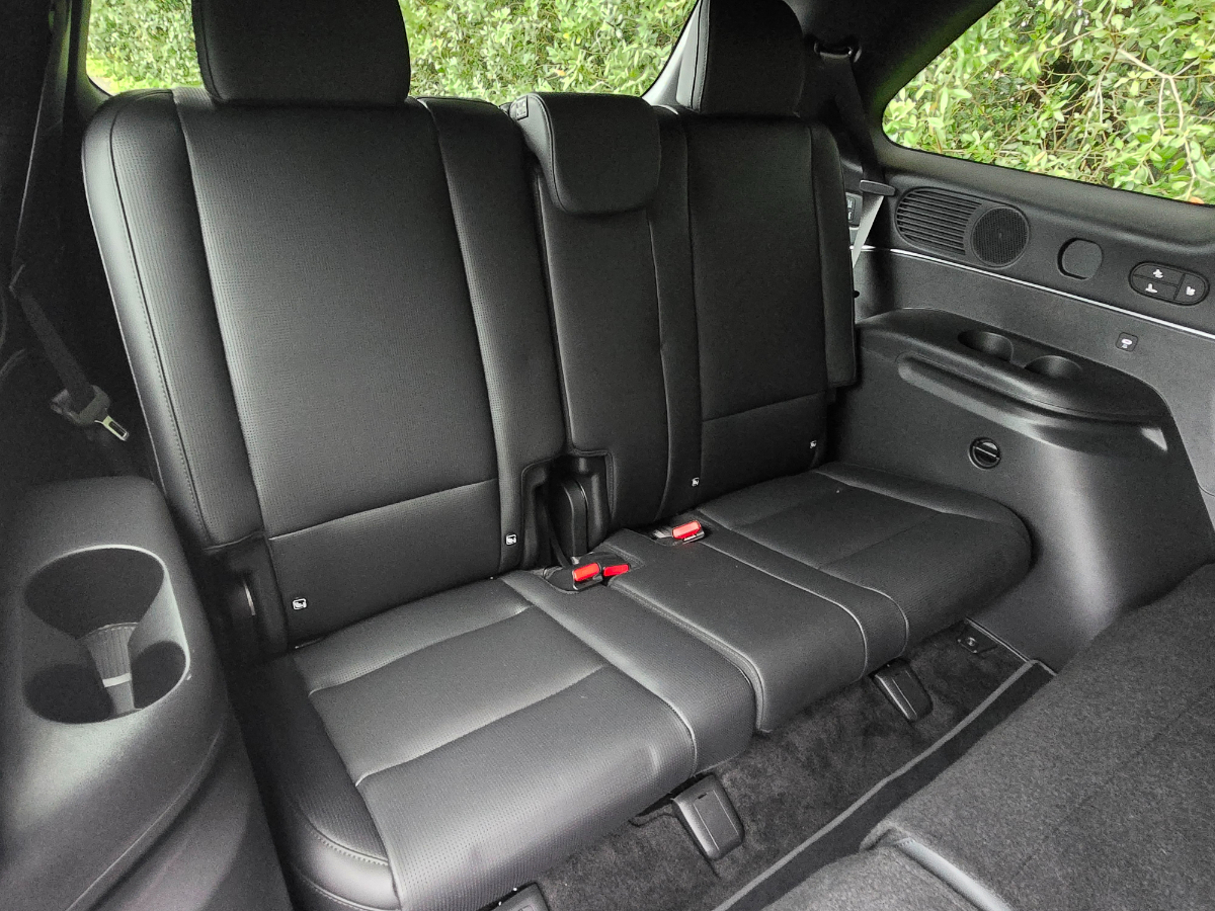
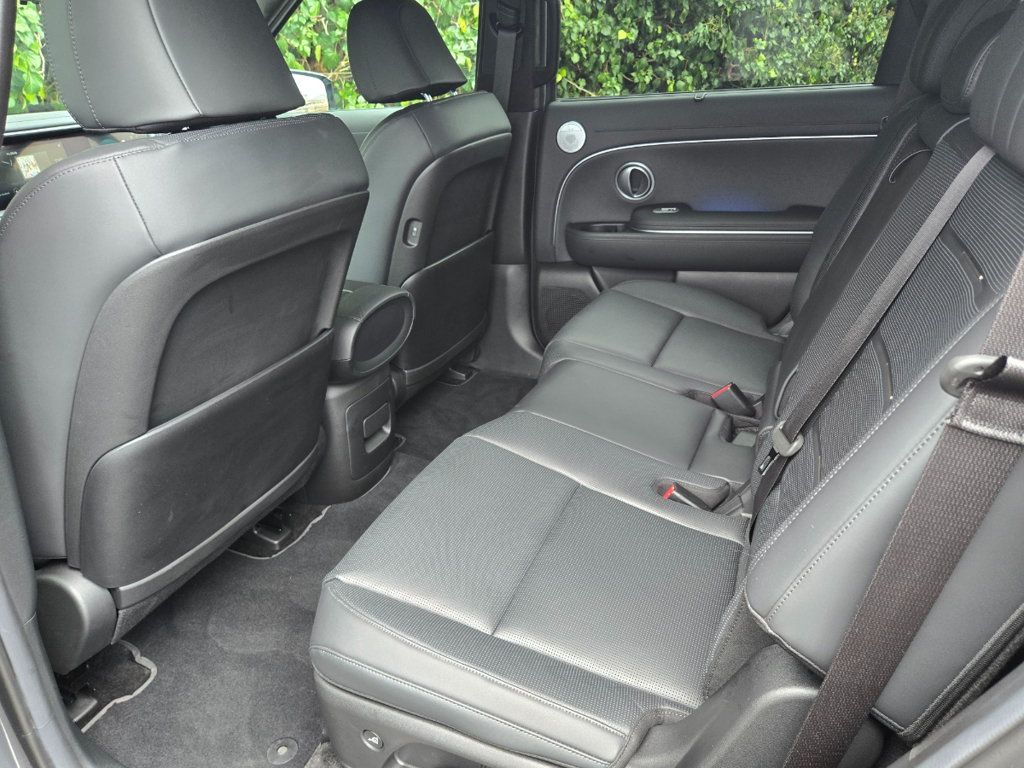
It seems right to start at the back here, because the Palisade's USP is that if offers seating for 8. You can also also order it as a 7-seater, with captain's chairs in the second row, but that's another $1000; because less is more luxurious.
We remain baffled by what to do with the cargo cover, which must be removed to raise the 3rd row. There's no storage and it's too wide to sit flat in the boot, so...?
To be honest, you'd be hard presssed to squeeze 3 across the 3rd row in a Palisade; maybe a trio of pre-teens. It'll take two adults pretty well, albeit with a knees-up seating position. Speak nicely to the 2nd row and they can slide their bench forward to give you more legroom.
The 3rd row seats are electrically powered. You also get cupholders, USB ports and well-placed air-con vents. No separate climate control, but there's a panel on the roof amidships; so again, speak nicely to the 2nd row.
The 2nd row is not powered. Sorry about that. It is when you have the captain's chairs, though.
Space is vast in the middle of course. Access to the back row is provided with one click on the seat base either side that relases and pivots the squab forward. It's still a bit of struggle to get through there, but this is an SUV, not a people-mover. The larger section of the 60/40-split 2nd row is on the kerb side.
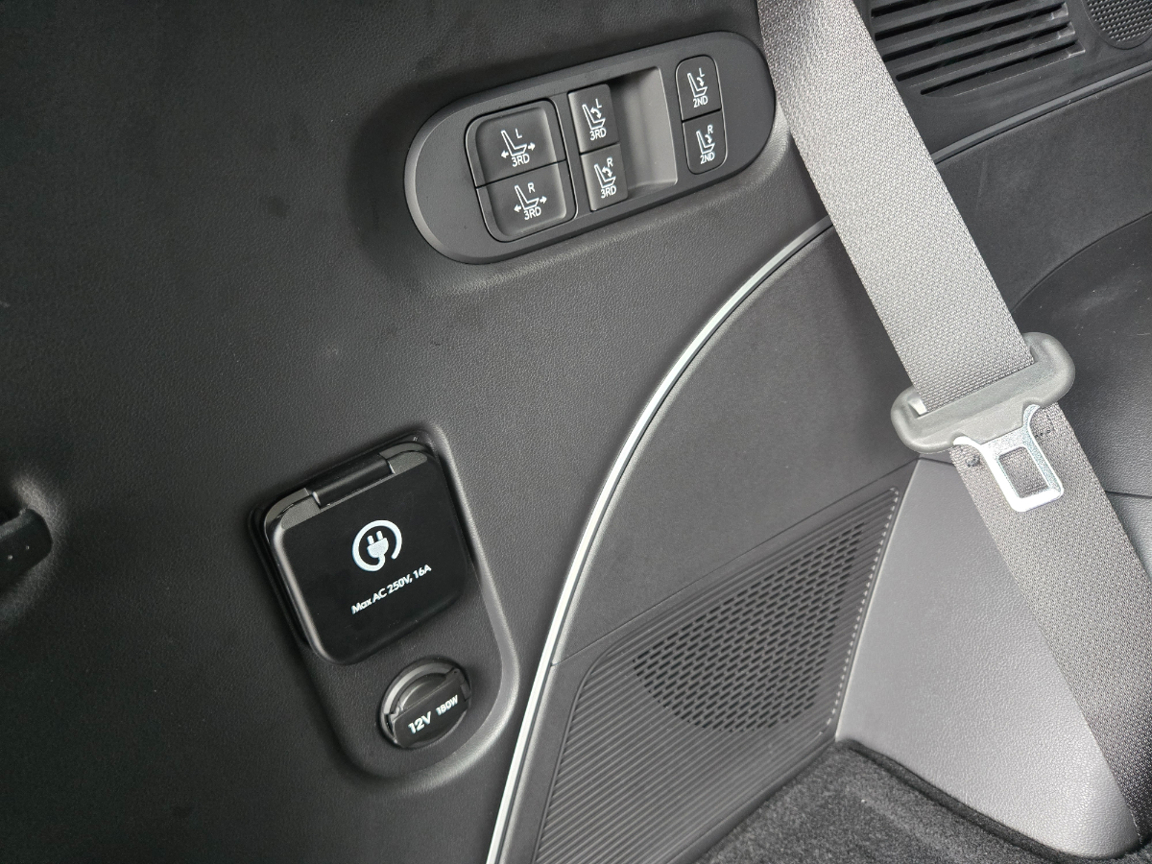
The cargo area is vast in 5-seat configuration, at 712 litres, and actually pretty decent even as an 8-seater: 348l, or about as much as your average compact-SUV. But we remain baffled by what to do with the cargo cover, which must be removed to raise the 3rd row. There's no storage and it's too wide to even sit in the boot, so...?
There are power controls to lower and raise the 3rd row in the boot, as well as electric release latches to drop the 2nd row. So you can go full-cargo from one spot, although you have to manually raise the 2nd row again if you want the seats back.
We can't discuss the Palisade's seating without mentioning the fatal accident that occured in the US in March, when a 2-year-old was tragically trapped by the 3rd-row folding mechanism. The car was recalled and changes were made, including: removal of the ability to fold/stow the seats from the infotainment screen, a requirement to press and hold the seat switches while folding is under way, and an open tailgate for the cargo-area seats switches to work.
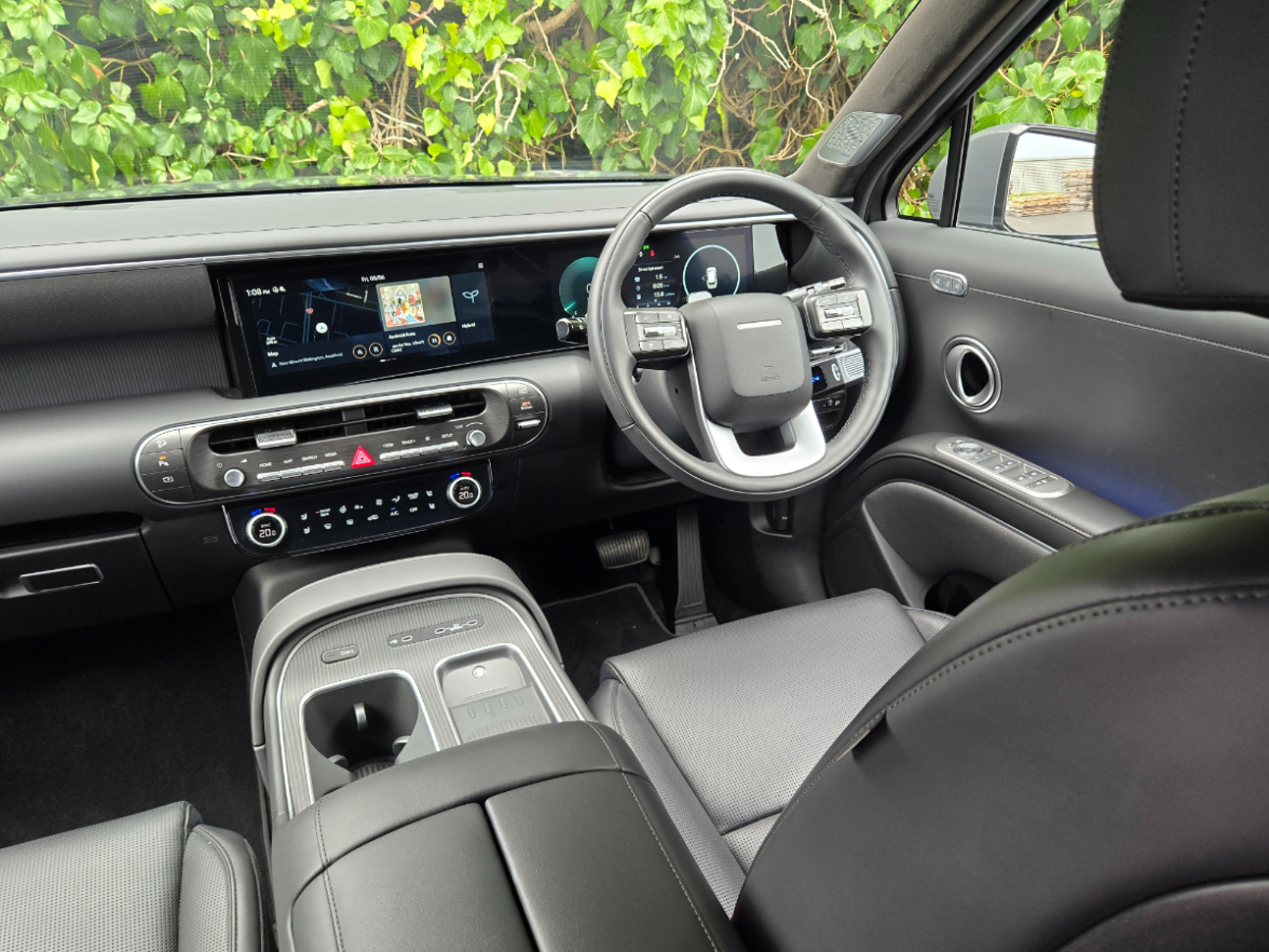
Up front? The Palisade's cabin design is super-stylish and goes for style over practicality in some respects. The huge dashboard could be packed with storage, but Hyundai instead decided to give it an extravagant "folded" concave design which imparts a sense or luxury.
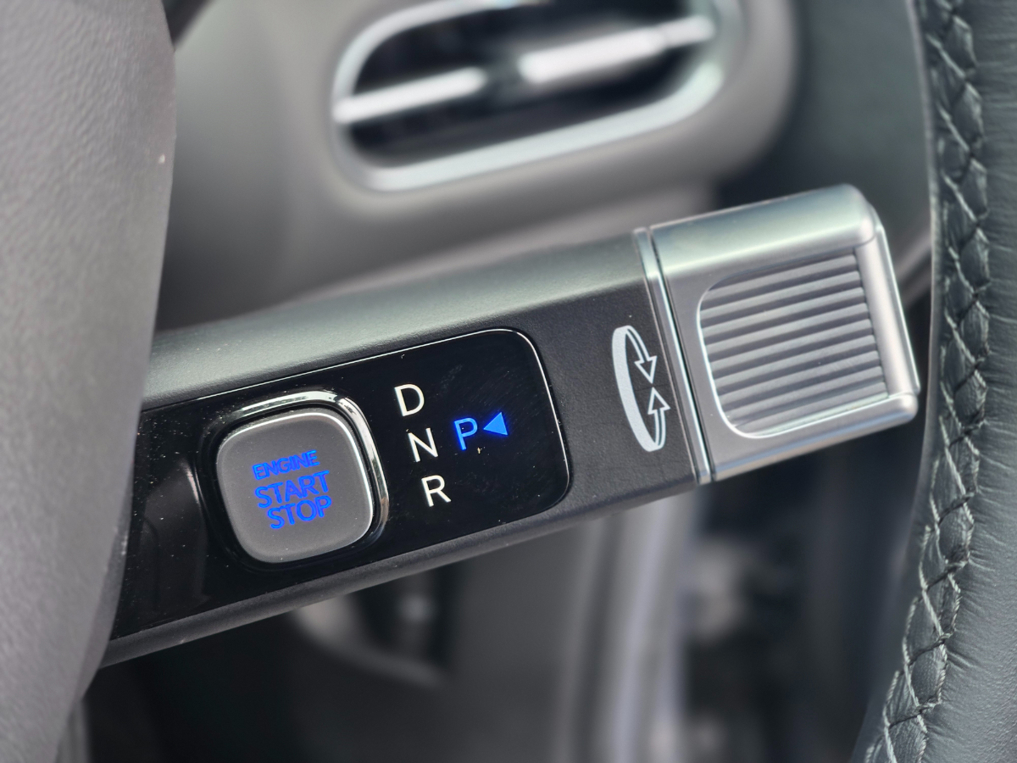
That's not to say the cabin is short on storage. The EV-like column-mounted gear selector frees up console space and there's a huge storage bin between the front seats, plus extra underneath.
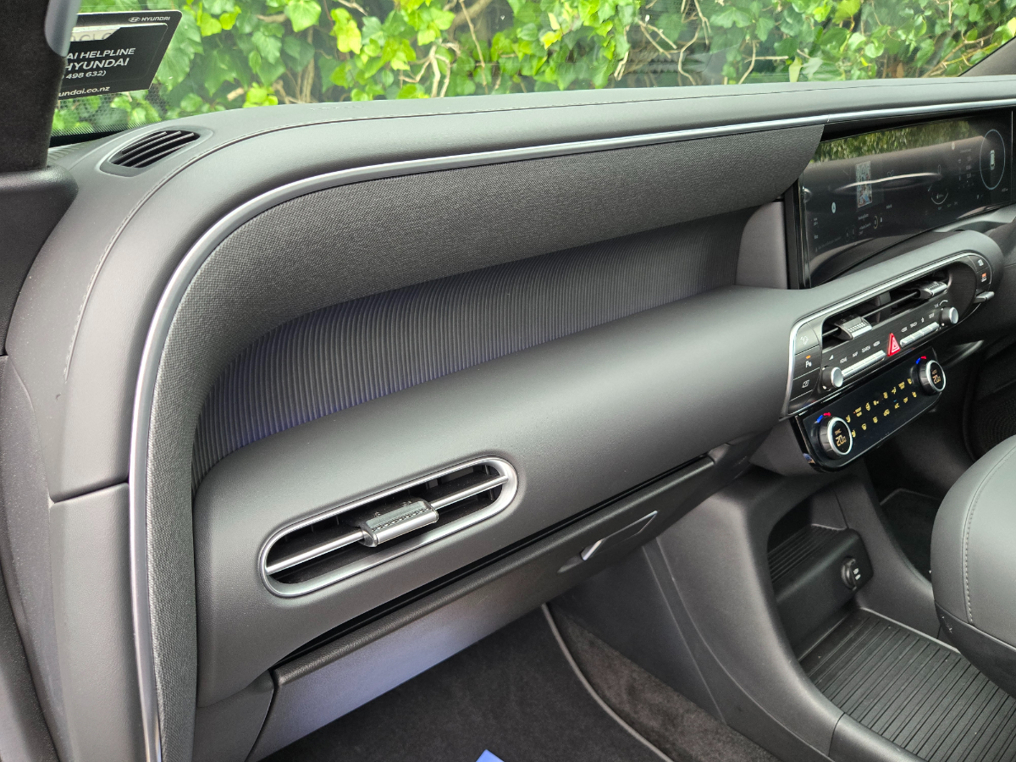
The displays are digital-centric, with a huge curved dual-display (twin 12.3in screens) wrapping around the driver, but Hyundai also likes its physical controls. There are plenty of those on the centre console, for audio, climate and even a few shortcuts for the infotainment screen.
INTERIOR
| Head-up display | Yes |
| Infotainment screen | 12.3 inches |
| Phone projection | Specify Android/Apple, wired or wireless |
| Wireless phone charger | Single |
| USB ports | 2x USB-C front centre console plus 12-volt, 2x USB-C side of front seats, 2x USB-C 3rd row side panels, V2L 3-pin plus 12-volt in cargo area |
| Climate control | 3-zone (separate control for rear in roof) |
| Front seat heating/ventilation | Yes/yes first and second row (outboard), heated 3rd row |
| Front seat adjustment | Power, 18-way driver and 12-way passenger |
| Boot capacity | 712 litres |
| Rear seat split/fold | 60/40 2nd row, 50/50 3rd row |
| Power tailgate | Yes |
On the road: what's the Hyundai Palisade Calligraphy like to drive?
The Palisade's hybrid system is partly about efficiency, but it's all relative: it's about power too, with an impressive 245kW combined from the powertrain. On 91-octane fuel, too.
The powertrain is about delivering lots of power as efficiently as possible, rather than just sheer thrift.
In Hyundai/Kia hybrid tradition, the electric motor is housed inside the 6-speed transmsision, so the driving experience is pleasingly conventional: you have actual gears, even when the vehicle is running in EV-only mode.
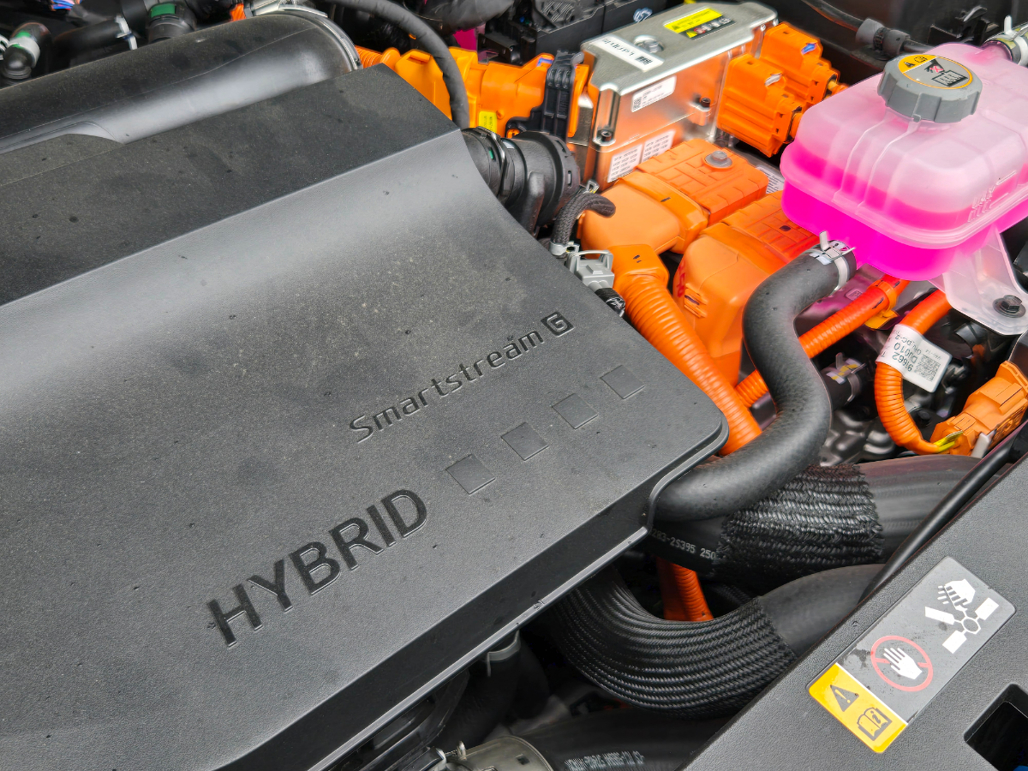
It's plenty punchy when you consider that this is a 2.2-tonne vehicle. The 4-cylinder engine isn't the most sonorous thing for a luxury vehicle when it fires up, but you can't deny it delivers decent performance.
Fuel economy is a mixed bag and to be fair, the powertrain is as much about delivering lots of power as efficiently as possible, as it is about sheer thrift. The official Kiwi 3P-WLTP figure is 7.6l/100km and we struggled to achieve that, but the big fella settled on 8.6l/100km by the time we took it back.
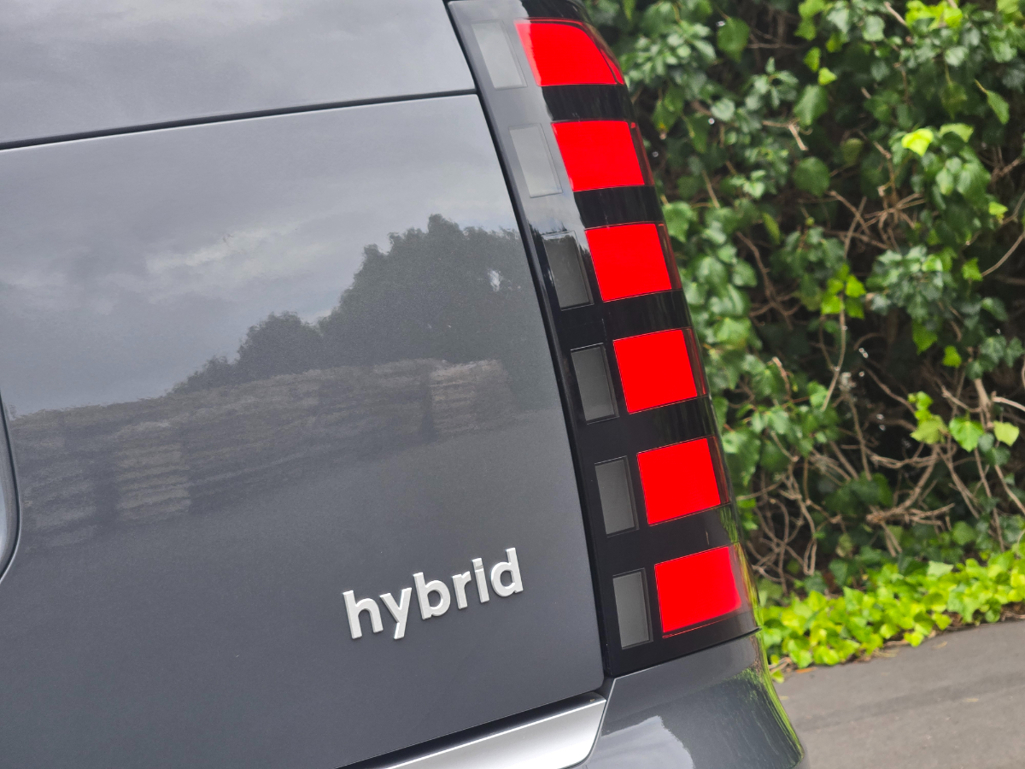
Not terrible, but it's safe to say some will be disappointed with that given the "hybrid" badge on the back. We reckon it'd do better with a larger hybrid battery, to store more EV driving range. At 1.67kWh it's not huge for a big vehicle; the Nissan Qashqai e-Power compact-SUV we had on test at the same time has a 2.1kWh battery, for example.
But the Palisade is certainly well-sorted from a ride and handling point of view, thanks partly to tuning work in Australia. It's comfort-oriented (as it should be), but the body control is good on winding roads and it feels unfussed in brisk driving, despite body roll.
When Hyundai NZ launched the current Santa Fe hybrid back in 2024, it copped a lot of flack for the modest tow rating of 1.6 tonnes. One of the responses was (we're paraphrasing, of course) 'if that's crucial, you can buy a Palisade'. Which had a 2.2-tonne rating.
That argument is not as strong now that the Palisade starts at $130k and it's lost 200kg; the new model is rated at 2 tonnes neat.
SPECIFICATIONS
| Powertrain type | Petrol with full hybrid system |
| Capacity | 2497cc, 1.65kWh battery |
| Power | 245kW (combined) |
| Torque | 460Nm (combined) |
| Transmission | 6-speed, AWD |
| Power to weight | 112kW/tonne |
| Adaptive suspension | No |
| Efficiency | 7.6l/100km (3P-WLTP) |
| Tank size and fuel type, or range | 72 litres, 91 octane |
| Tow rating | 2 tonnes |
On ownership: what's the Hyundai Palisade Calligraphy warranty and servicing situation?
Warranty cover is 3 years/100,000km; an additional 2 years/50,000km can be activated with a service plan. Servicing is required every 15,000km/12 months.
On the whole: what do we think of the Hyundai Palisade Calligraphy?
The previous Palisade looked and felt a lot like a larger version of the contemporary Sante Fe. The new one is a much more singular product, but also now almost in a class of one for NZ: in Calligraphy specification it's a lot more expensive than the top tier of 3-row SUVs from Japan and China (and it's hard to ignore the $90k price in Australia), but also a lot cheaper than similarly configured models from premium European makers.
Stuck in the middle, then? Not necessarily. You could argue it draws enough from both segments (metal for your money, a real sense of luxury and presence) to be a compelling proposition if you truly need an SUV of this scope... especially with the ability to carry eight.
Hyundai Palisade Calligraphy FAQs
What kind of car is the Hyundai Palisade Calligraphy?
A large 8-seat SUV.
Does the Hyundai Palisade Calligraphy have hybrid or EV technology?
It's a full hybrid (HEV).
What’s the fuel economy of the Hyundai Palisade Calligraphy?
It returns 7.6 litres per 100km in NZ's 3P-WLTP protocol.
Is the Hyundai Palisade Calligraphy safe?
It's rated 5 stars by ANCAP, valid until December 2031
What safety and assistance features does the Hyundai Palisade Calligraphy have?
| Intelligent lights | LED |
| Rain sensing wipers | Yes |
| Airbags | Dual front, front-centre, driver's knee, 1st and 2nd row side, side curtain |
| Adaptive cruise control | Yes |
| Driver attention monitor | Yes |
| Traffic sign recognition | Yes |
| Forward collision warning | Yes |
| Blind spot warning/assist | Yes/yes |
| Lane departure warning/assist | Yes/yes |
| Rear cross traffic alert/braking | Yes/yes |
| Reverse collision braking | Yes |
| Parking sensors | Front and rear |
| Camera system | 360 degree |
What are the Hyundai Palisade Calligraphy's main rivals?
- Mazda CX-90 Takami ($92,990): This mainstream brand does posh pretty well, and the 3rd row is generous.
- Volvo XC90 Ultra ($119,990): Premium brand with mild-hybrid power and super-practical cabin features.
- Land Rover Discovery Dynamic SE ($153,900): Even more costly, but another brilliant SUV that puts the emphasis on pasengers.
- Kia EV9 Earth ($120,790): Another full-size SUV from Hyundai's wider family, but pure-electric.
- Cadillac Vistiq ($127,370): Another EV, truly fancy... but with just 6 seats, two chairs down on Palisade.