


After the stylistically outstanding, silly-expensive Honda e city car, and the adequate-if-underwhelming e:N1, the Super-One represents Honda coming at the EV thing from a different angle.
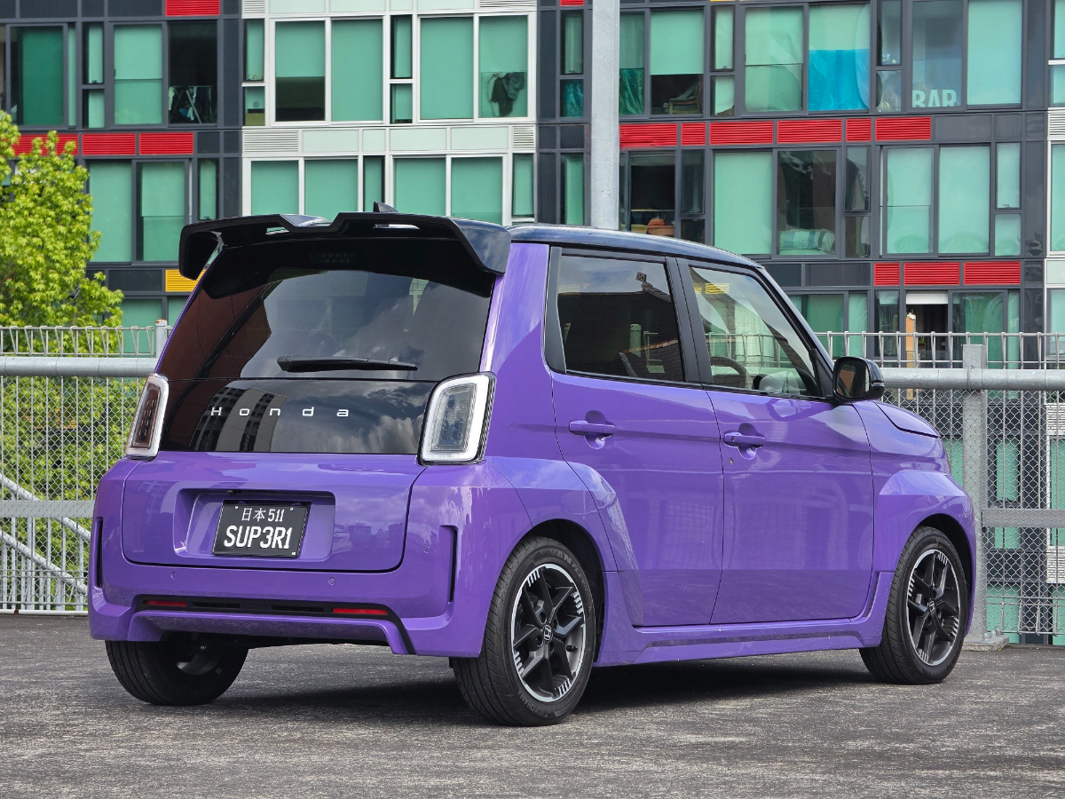
Both the Honda e and e:N1 were based on bespoke platforms (even if the latter looked like an HR-V) and aimed to be quite grown-up. The Super-One is essentially an electrified version of a Japanese-market kei-car, the N-One, but hotted up. It's a simpler approach, but it also puts nerdy fun at the forefront of the buying proposition.
At $44,900 for this Kuro Edition, the Super-One is also pretty expensive for a tiny hatch with a tiny range. But the minuscule size is supposed to be part of the appeal. It's not something you're going to assess on value for money alone. You're supposed to look at this and want it. Heart over head.
Kei jidosha ("light automobile") is a micro-car class in Japan that stipulates maximum length of 3.4 metres, width of 1.48m and no more than 47kW peak power. The Japanese N-One (petrol or electric) fits into that template.
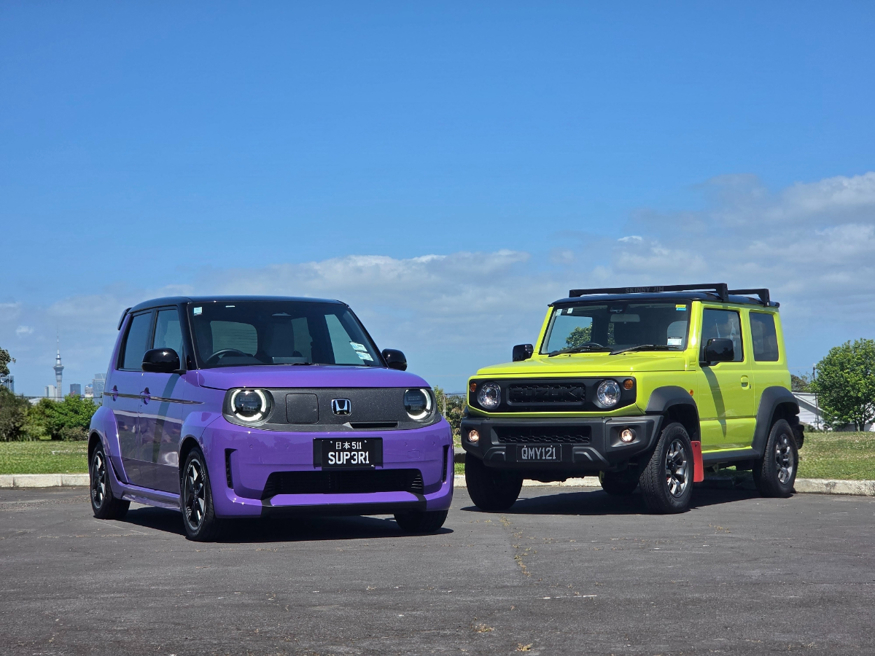
But the Super-One is upsized for export markets, with a length of nearly 3.6m thanks to chunky bumpers, and width of 1.6m thanks to a 50mm-wider track and flared wheelarches. The EV powertrain sticks to 47kW in Normal mode, but can be switched to 70kW at the touch of button with a Boost setting.
Super-One makes a trip to the corner dairy a joyous occasion. It's a toy, albeit one with a few surprisingly functional touches.
The only other vehicle on sale here that's similar in concept is the Suzuki Jimny 3-door. In Japan, shorn of its flared guards and upsized engine, it's also a kei-car. In New Zealand specification, both the Honda Super-One and Suzuki Jimny are too big and too powerful to be authentic kei machines.
That's right, we just used the phases "too big" and "too powerful" in the same sentence as "Honda Super-One" and "Suzuki Jimny".
On the outside: what are the Honda Super Kuro Edition's main design features?
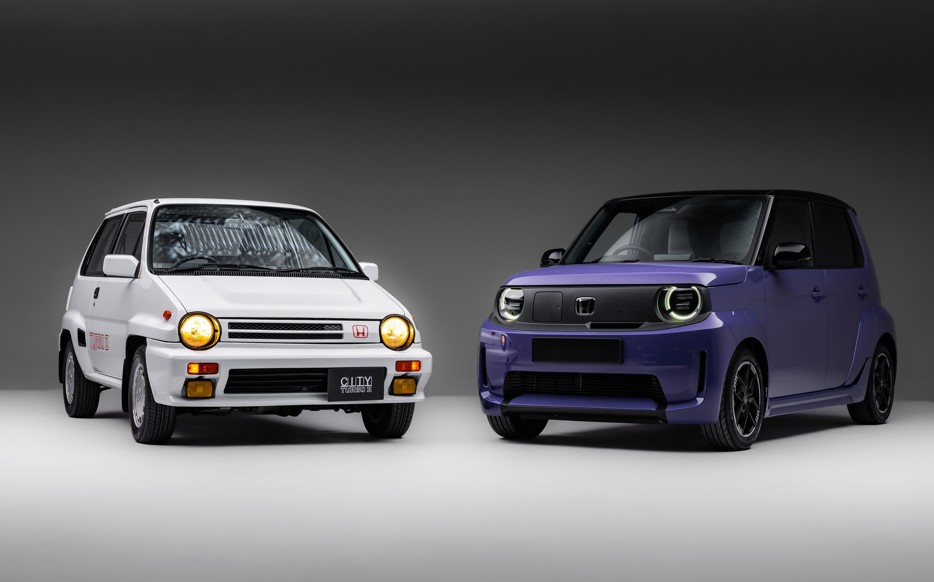
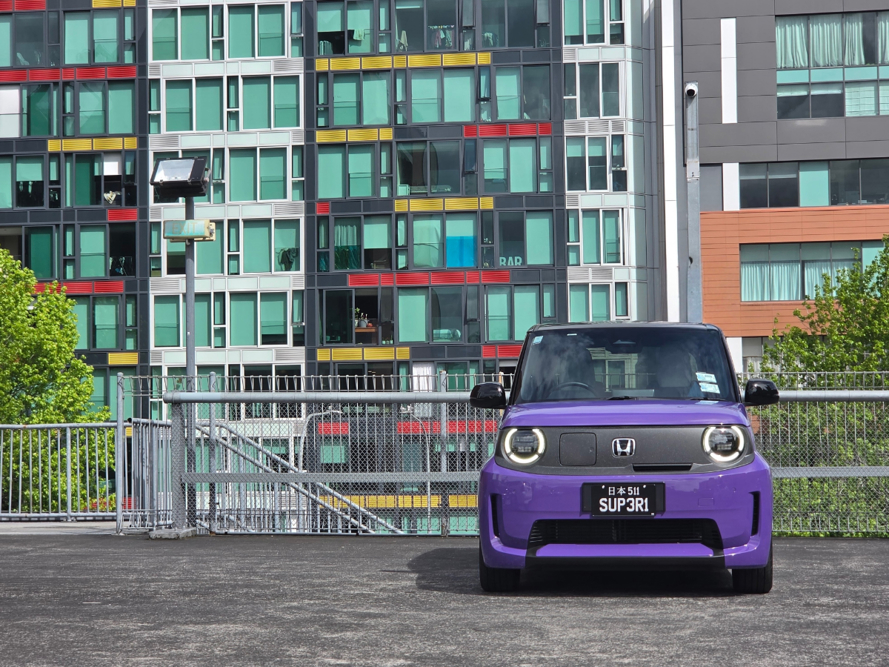
Like all kei-based cars, the Super-One is a box, because it has to take maximum advantage of its maximum allowed dimensions. It's also as cute as a button, with its gym-spec bumpers and wider track; some styling detail is inspired by the 1980s City Turbo II.
The benefits of a small battery are lighter weight (this thing doesn't weigh much more than a Mazda MX-5) and quick charging times.
You can have the $41,900 Super One in Mono Grey, Crystal Black Pearl or Boost Violet Pearl. But if you want the $44,900 Kuro Edition (it just means "black") with the two-tone finish, black mirrors/antenna and large roof spoiler, it has to be the purple. And yes, $3k does seem like a lot for that.
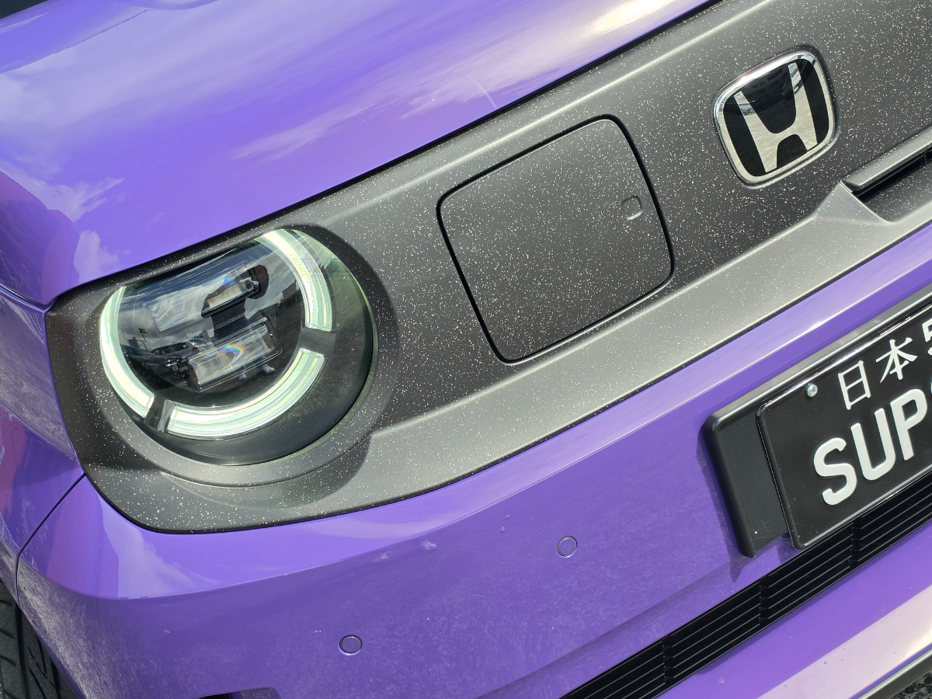
Check out the speckly front panel (which is where the charge port is housed), made of recycled plastic from end-of-life Honda bumpers.
OVERVIEW
| Price | $44,900 |
| Body style | Like a 5-door hatchback, but smaller |
| Wheels and tyres | 15in alloys wheels, 195/55 Yokohama Advan Fleva tyres |
| Length | 3582mm |
| Wheelbase | 2520mm |
| Weight | 1093kg |
| Website | honda.co.nz |
On the inside: what's the Honda Super Kuro Edition cabin like?
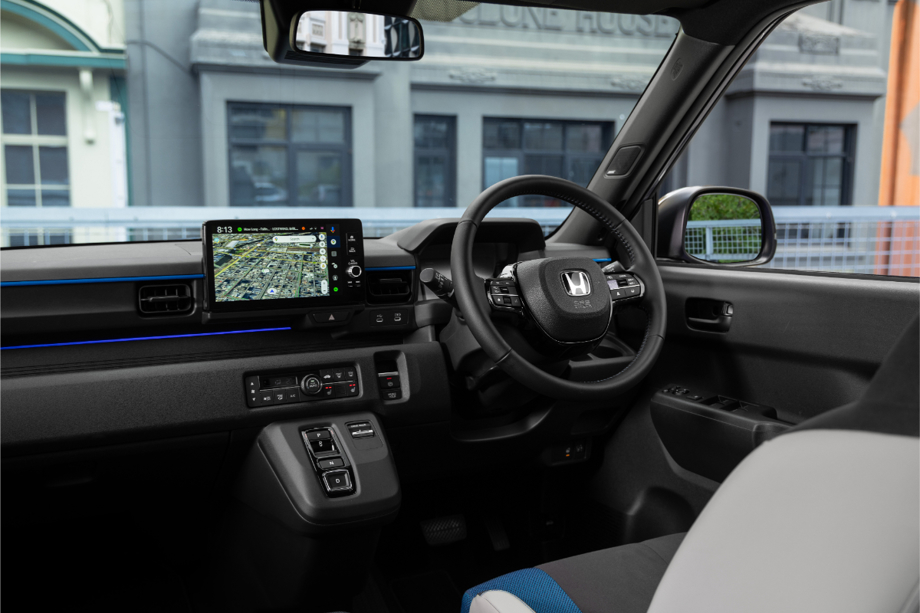
The cabin architecture betrays the Super-One's cheap-kei-car origins: lots of hard plastic and not much storage space. You'll struggle to find a place to put your phone where it won't slide around, for example.
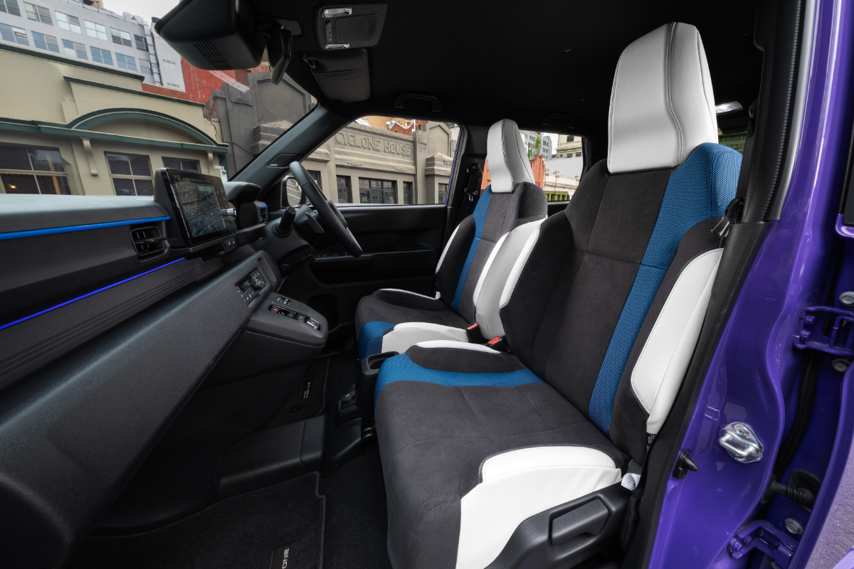
The Super-One boasts Honda's full Magic Seat setup as per the Jazz, which allows you Ultility, Long orTall modes.
But it does get a lift with bright seat trim and ambient lighting, the latter switching colour to purple when you go into Boost mode. And you can also feel eco-smug in here, because recycled PET bottles are used for the carpet fibres and Honda factory work uniforms are repurposed as cabin insulation. Plant-based bio-resin
is used for some interior trim.
The infotainment screen is pretty much the same as other Honda's, with no EV-specitic information for example. But it does have Google built-in, and because the Super-One is live you can also use the Honda Connect app on your phone, which allows everything from Digital Key to charging schedules.
Full marks for the audio though, which is a grunty Bose system with subwoofer.
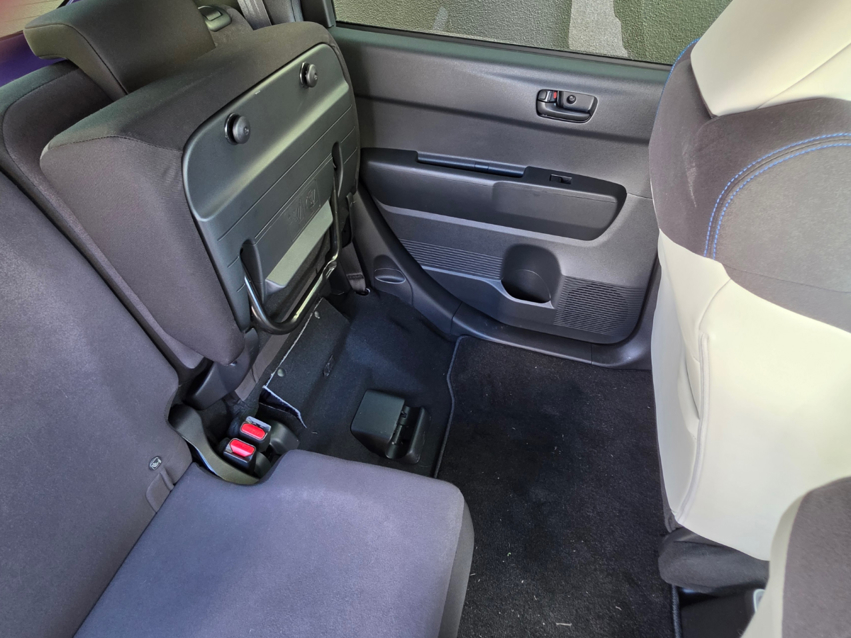
It's only a 4-seater and the rear bench is far from comfy, but there's plenty of leg- and headroom back there for adults. More importantly, the Super-One has Honda's full Magic Seat setup as per the Jazz, which allows you to fold the 50/50 seatbacks completely flat, because the squabs kneel as the back collapses (Ultility mode, up to 967 litres), drop the front passenger seat back to create an extended loadspace (Long mode) or flip the rear bases upwards to carry tall items (yep, that's called Tall mode).
INTERIOR
| Head-up display | No |
| Infotainment screen | 9.0 inches |
| Phone projection | Wireless Android Auto and Apple CarPlay |
| Wireless phone charger | No |
| USB ports | 2x USB-C front plus 12-volt |
| Climate control | Single zone |
| Front seat heating/ventilation | Yes/No plus heated steering wheel |
| Front seat adjustment | Manual |
| Boot capacity | 162 litres |
| Rear seat split/fold | 50/50 |
| Power tailgate | No |
On the road: what's the Honda Super Kuro Edition like to drive?
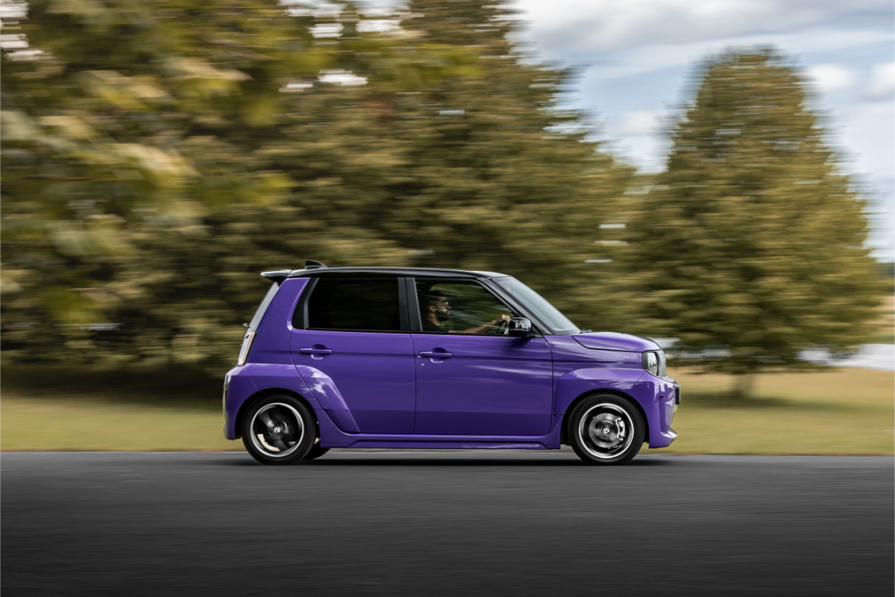
It feels appropriately furious, just not all that fast. The Super-One is quite perky even in Normal kei-mandated 47kW mode thanks to instant EV torque, although it runs out of puff pretty quickly. It'll do 0-100km/h in 14.5 seconds, but in Boost mode we're talking more like 8.5sec, which is at least enough to keep pace with a standard family SUV.
A kei-car really is just for doddling around town, but the Super-One has chassis-cred with quicker steering, stiffer suspension and an uprated rear torsion beam.
And who cares about any of that? You're having such a good time and different drive modes also mean a genuinely different driving experience, which is not often the case in modern cars. City activates one-pedal driving, while Normal gives you the option to use the steering wheel paddles to adjust the regen.
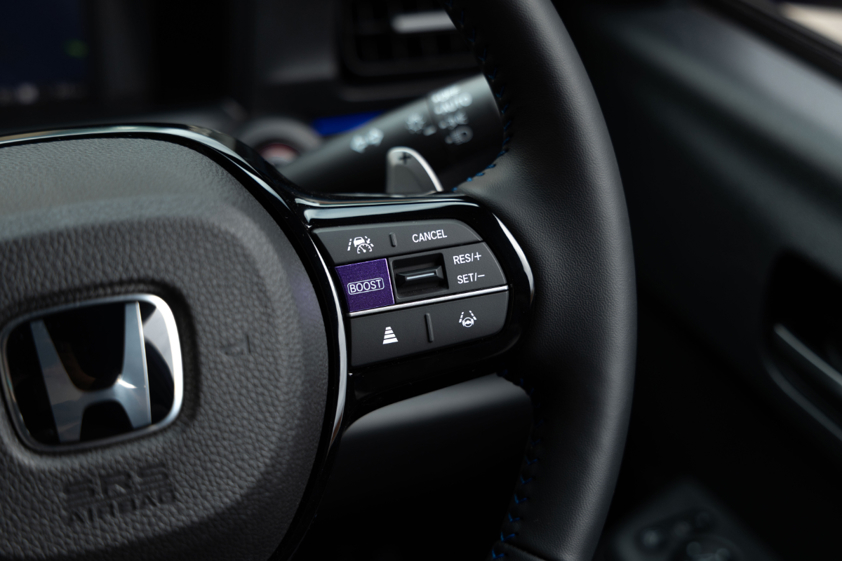
Press the purple Boost button and those paddles become faux-gearshifters, to help you manage that epic 70kW. Boost also goes hand-in-hand with fake engine noise, which Honda says is inspired by past performance models like Integra and City Turbo II. It's... okay and not super-intrusive (it'll even do little fake-downshift blips under braking), but it'd be nice to also enjoy the full performace without the silly noises.
It does handle, in a point-and-squirt kind of way. A kei-car really is just for doddling around town, but the Super-One has chassis-cred with quicker steering, stiffer suspension components including lightweight forged arms up front, and an uprated rear torsion beam.
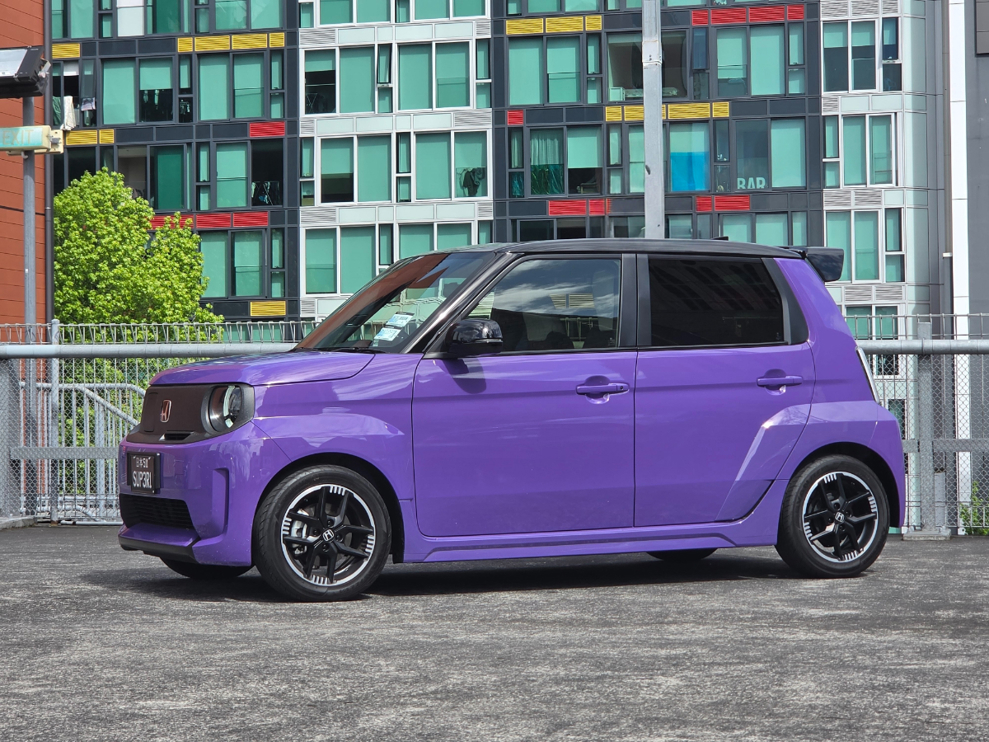
It doesn't shy away from motorway driving: the wide track and redesigned suspension give it stability at 100km/h that belies its alarmingly narrow appearance. It's also got enough get-up-and-go to keep up with traffic and dive into gaps when required.
Take it out on the open road and it will still bounce around on mid-corner bumps because it's so tiny, but the chassis is keen to do your bidding and you get many smiles per kilometre. But it's even more fun simply charging around town.
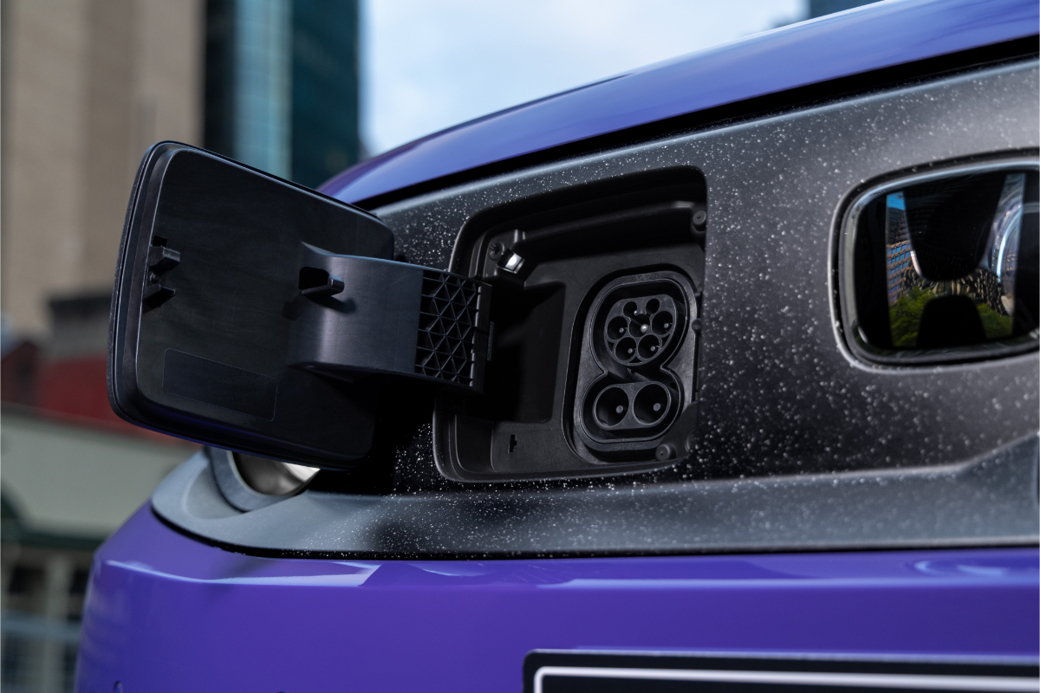
Faster driving is no friend of Super-One range. After a day of 100km/h-ish running around on various Driven-related chores, we plugged it in again and when charging was complete, the dynamic range indicator had recalibrated to 141km for the full 100% battery. Gulp.
Honda NZ cheekily quotes NEDC range (no longer relevant for NZ legislation) for the Super-One, which is 253km. But the WLTP figure is 206km and it'll certainly do that around town. Bank on 160-170km in mixed driving.
That's fine with us, because this is not claiming to be anything other than a city car, and the benefits of a small battery are lighter weight (this thing doesn't weigh much more than a Mazda MX-5) and quick charging times. Even on an AC home wallbox it'll go from flat to full in just over 4 hours. The DC charge rate is only 50kW, but half an hour on a public station and you'll be back up to 80%, easily.
Given regular and flat-to-full charging are likely to be part of this car's everyday life, it does seem a shame Honda has gone for NMC battery chemistry when LFP is much more suited to this kind of car.
SPECIFICATIONS
| Powertrain type | Battery electric |
| Battery | 29.6kWh |
| Power | 47kW or 70kW in Boost mode |
| Torque | 162Nm |
| Transmission | Single-speed, FWD |
| Power to weight | 64kW/tonne (Boost mode) |
| Adaptive suspension | No |
| Efficiency | 12.1/kWh/100km (NEDC) |
| Range | 206km (WLTP) |
| Tow rating | Not rated |
On ownership: what's the Honda Super Kuro Edition warranty and servicing situation?
The vehicle is covered for 5 years/unlimited kilometres, while the high-voltage battery and components come with an 8 year/160,000km warranty.
Servicing is required every 12 months/15,000km.
On the whole: what do we think of the Honda Super Kuro Edition?
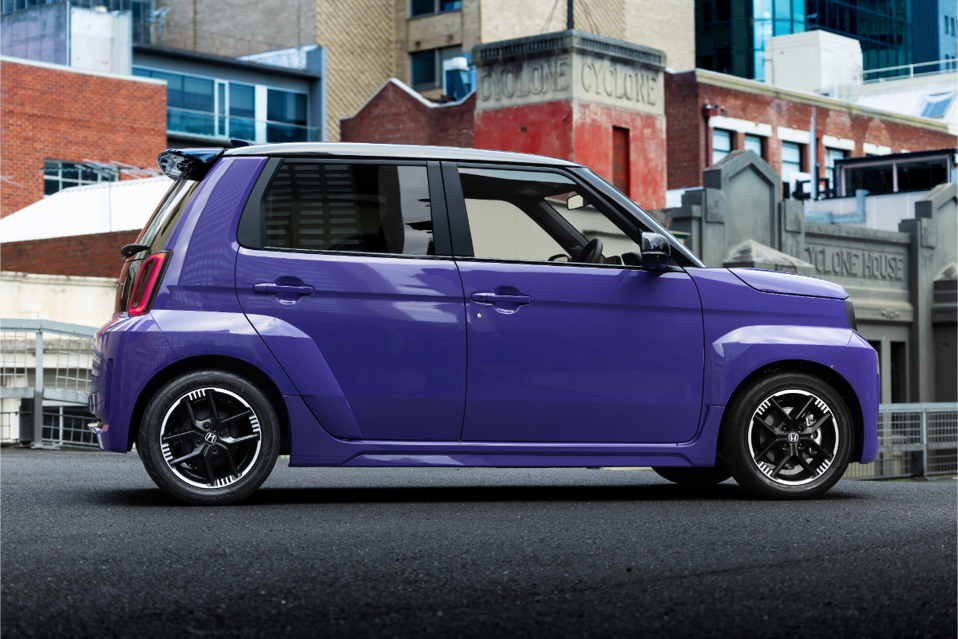
The Super-One doesn't make a lot of sense on paper, and if that bothers you... well, there are a lot of sub-$40k EV hatches out there with really good range. This might not be for you.
But it's the kind of car that makes a trip to the corner dairy a joyous occasion. It's a toy, albeit one with a few surprisingly functional touches: generous cabin space and Magic Seat, for example.
Now, what were we saying about need and want? Let's have another think. Want.
Honda Super-One Kuro Edition FAQs
What kind of car is the Honda Super-One Kuro Edition?
A city hatchback (a tiny one).
Does the Honda Super-One Kuro Edition have hybrid or EV technology?
It's pure electric.
What’s the efficiency of the Honda Super-One Kuro Edition?
It returns 12/1kWh/100km in the NEDC cycle and is rated for 206km range under WLTP.
Is the Honda Super-One Kuro Edition safe?
The Super-One has not been tested by ANCAP and NZ's Rightcar does not list a safety rating for the model.
What safety and assistance features does the Honda Super-One Kuro Edition have?
| Intelligent lights | LED |
| Rain sensing wipers | Yes |
| Airbags | Dual front and side, side curtain |
| Adaptive cruise control | Yes |
| Driver attention monitor | No |
| Traffic sign recognition | No |
| Forward collision warning | Yes |
| Blind spot warning/assist | No |
| Lane departure warning/assist | Yes/yes |
| Rear cross traffic alert/braking | No |
| Reverse collision braking | No |
| Parking sensors | Front and rear |
| Camera system | Rear with 3 angles and dynamic display |
What are the Honda Super-One Kuro Edition's main rivals?
- BYD Atto 1 Premium ($36,990): Not as sporty, but arguably even stranger looking. And still fun.
- Geely EX2 Inspire ($37,990): More sensible than silly-fun, but it is rear-drive.
- Jaecoo J5 ($42,990): Much larger and more grown-up, but check out the Temu Range Rover styling.
- MG4 XPower ($51,990): Much more expensive, but comically rapid.
- Suzuki Jimny 3dr Sierra automatic ($39,990): A totally different thing, but kei-adjacent like the Honda.