



- Toyota will enter a fuel-cell-electric Hilux in Dakar 2027’s Future Mission 1000 challenge.
- The DKR GR FC Hilux replaces its petrol engine with Toyota’s fuel-cell system.
- Development work in Belgium is targeting cooling, durability and energy management under rally conditions.
Toyota is taking its hydrogen ambitions into one of motorsport’s least forgiving environments: the Dakar Rally.
The company’s racing arm will enter the DKR GR FC Hilux in the 2027 edition of the event’s Future Mission 1000 programme, using the project to test a fuel-cell-electric take on its established Dakar challenger.
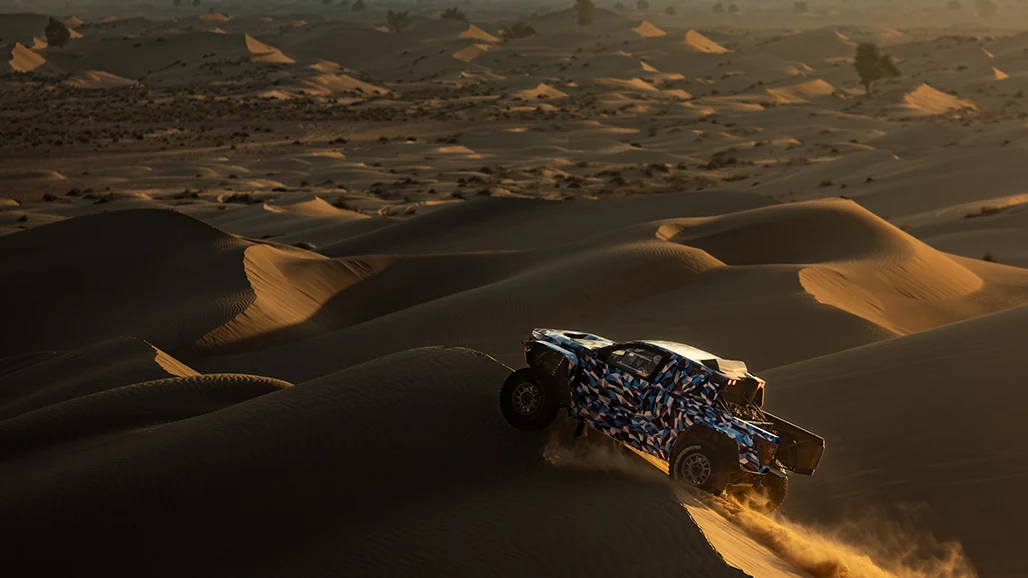
It is not a lightly revised Hilux. Toyota says the project replaces the DKR GR Hilux’s petrol engine with its fuel-cell system, creating a vehicle intended to emit only water from its tailpipe while tackling the heat, sand and long stages that define Dakar.
A different kind of Dakar test
Toyota is treating the programme as a development exercise rather than a conventional bid for outright Dakar honours. Its engineers are concentrating on reducing the size of the fuel-cell hardware, improving cooling, proving durability and managing energy across desert conditions.
That matters because a hydrogen powertrain has a very different set of challenges from a petrol rally-raid car. The team must balance thermal control, packaging and energy use while retaining the toughness needed to survive sustained punishment far from a service park.
Toyota says construction and testing have already begun in Belgium, ahead of the event in Saudi Arabia from 1 to 15 January 2027.
Toyota’s hydrogen proving ground
The Future Mission 1000 category is designed to give alternative-energy vehicles a competitive but developmental stage at Dakar. For Toyota, the DKR GR FC Hilux will be a public test of whether its fuel-cell technology can cope with the uniquely harsh demands of rally raid competition.
No power output, hydrogen-storage specification or road-car production plan has been disclosed. There is also no confirmation of New Zealand availability for any related fuel-cell Hilux.
Still, the project gives Toyota a useful real-world benchmark: if a fuel-cell Hilux can keep moving through Dakar’s sand and heat, it will have answered some meaningful questions about the technology’s durability.
