


- Mercedes is developing LED window displays that show warnings and become nearly invisible when inactive.
- Holographic windscreen research separates viewing angles so drivers can't see content for passengers.
- Separate power converter research uses programmable microconverters to manage energy flows within battery cells.
A Mercedes rear window could eventually do more than provide a view behind the car.
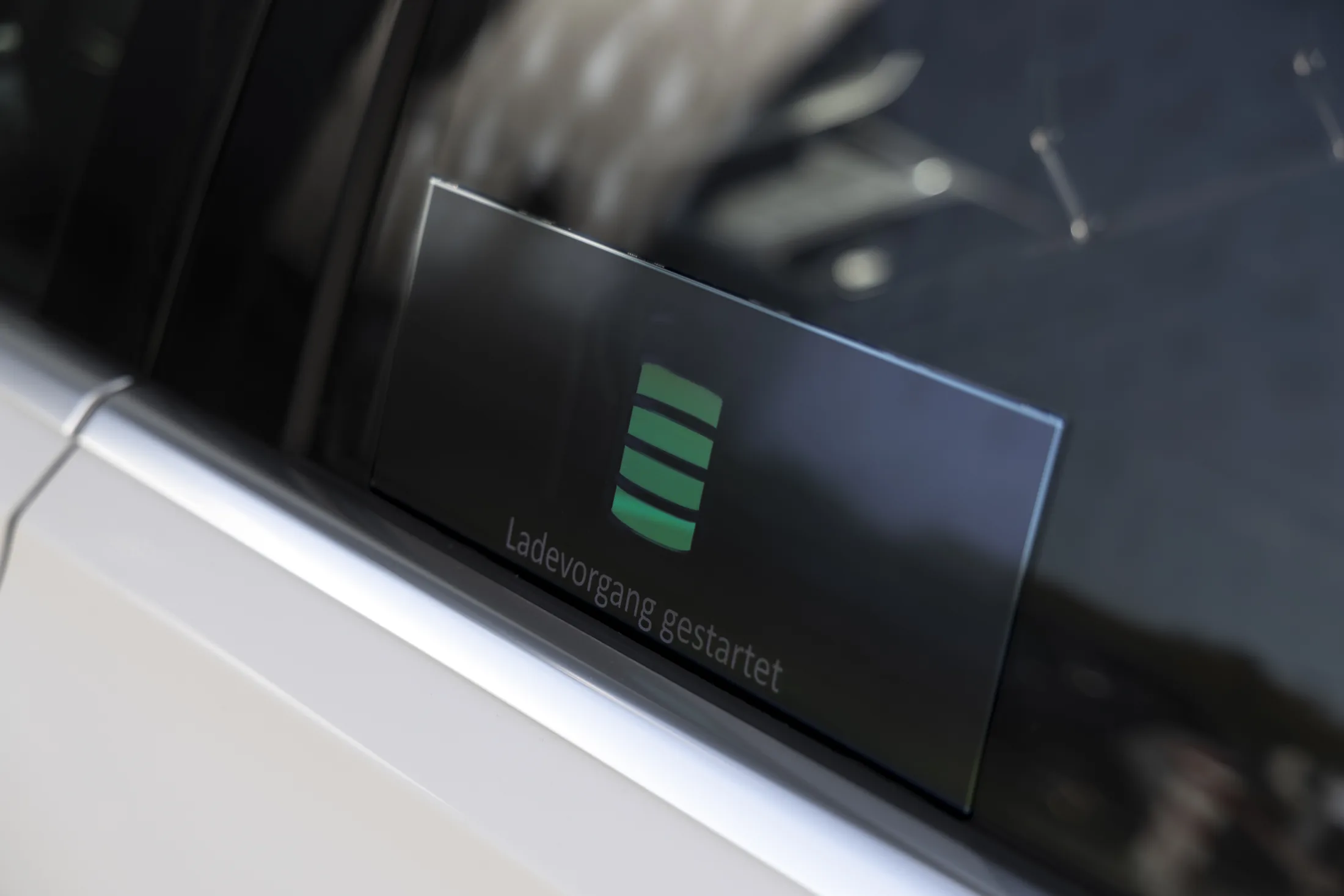
The company is developing glass with embedded LED displays that can show warnings, safety symbols and traffic information to other road users.
The display elements are laminated into the window and become almost invisible when switched off. Mercedes is investigating mini-LED technology for larger areas such as the rear glass, while higher-resolution micro-LEDs suit smaller surfaces and more detailed content, including animations.
The work forms part of a research update that also details a holographic windscreen display and separate developments in battery power electronics.
Different views through the same glass
For the windscreen project, a dashboard-mounted projector sends an image towards a transparent film laminated into the glass. Holographic optical elements in that film selectively reflect the projector's wavelengths. Mercedes says the resulting image remains visible in sunlight.
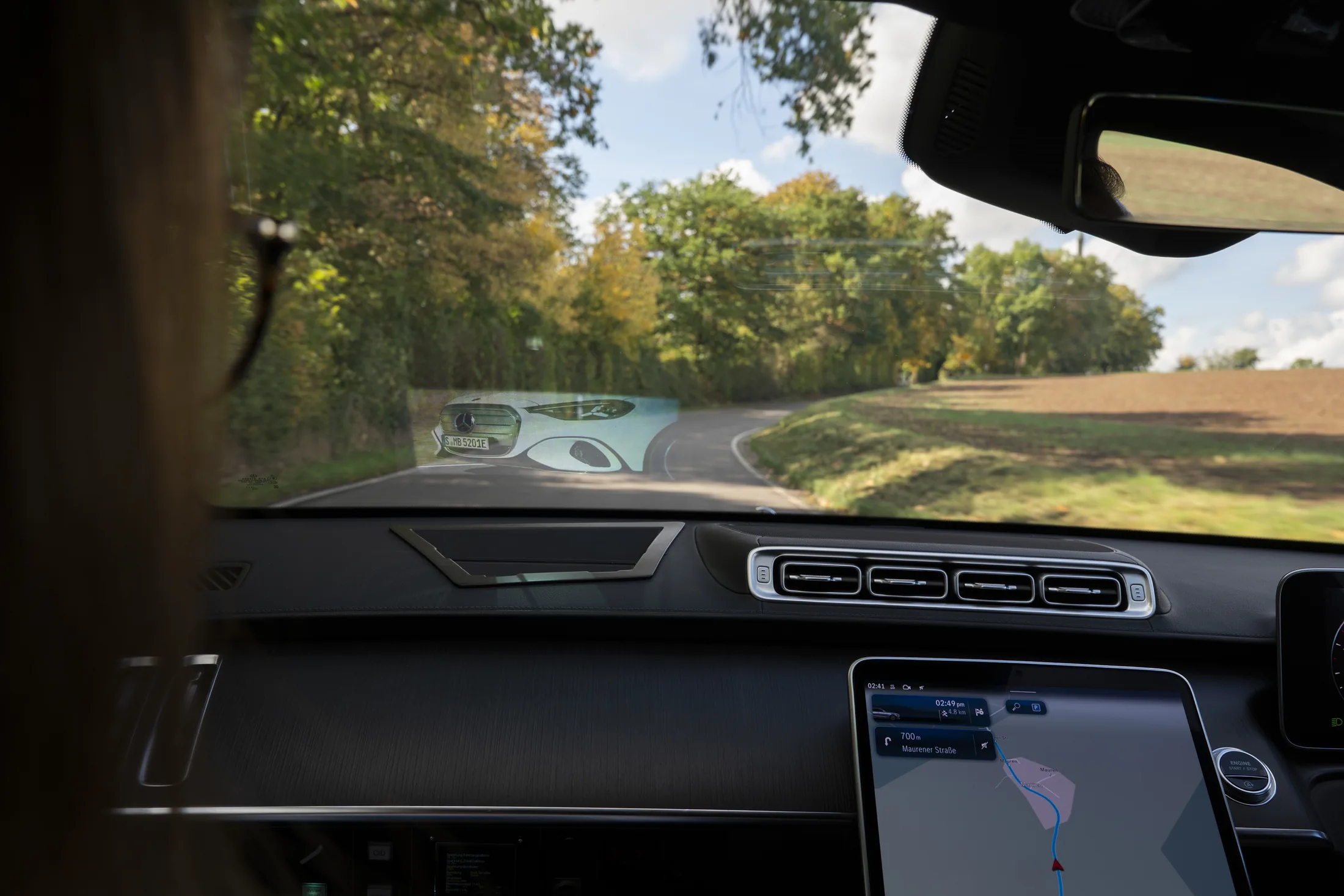
The arrangement also limits where that image can be seen. Drivers cannot see content presented on the passenger side, and passengers cannot see the driver's display. Potential applications include navigation, information about nearby places and passenger entertainment, with content appearing only when needed.
These remain development projects. Mercedes has not announced a production model or introduction date for the displays.
A separate battery project
The company's Power Converter research addresses a different problem: managing electrical energy at individual battery-cell or cell-group level.
Programmable microconverters can provide a stable supply of up to 800V regardless of the cells' charge level or age. The current converter generation handles up to 3kW and supports AC and DC applications. That figure describes converter capability, rather than a vehicle's motor output or charging speed.
Modules operating in parallel could allow the system to scale for different requirements. Mercedes sees potential for combining functions now handled by separate components, supporting bidirectional charging and improving efficiency. Those are prospective benefits; the update provides no measured increase in vehicle range.


