



Some cars don’t just transport people. They signal status. The Mercedes-Benz 300 did exactly that.
Now, 75 years after its debut, the W186-generation “300” is back in focus at the Mercedes-Benz Museum, celebrated as the brand’s flagship model of the early 1950s and a benchmark for luxury in post-war Europe.
Nicknamed the “Adenauer” after Germany’s first post-war Chancellor, the stately saloon quickly became synonymous with political power and business success.
Built to impress, and to last
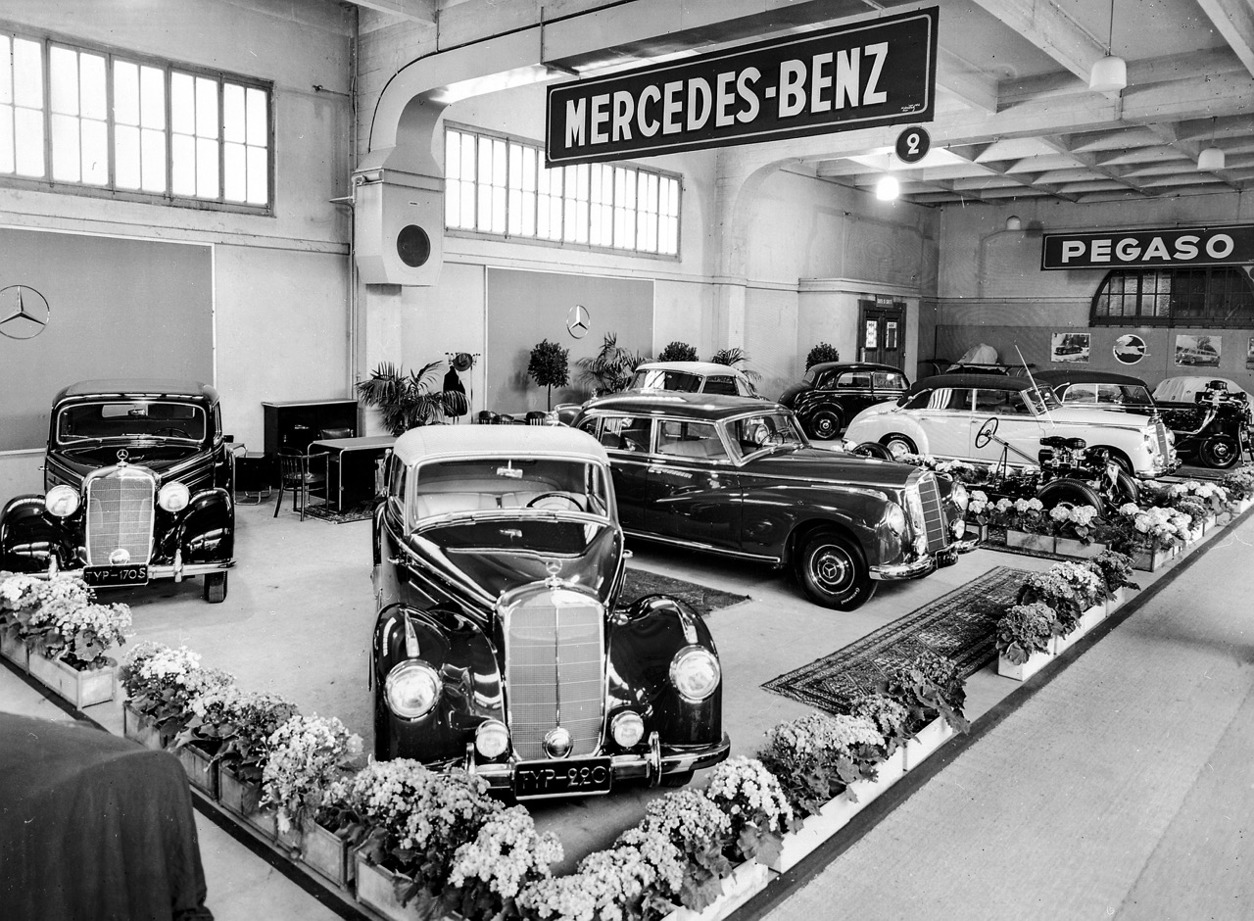
Launched in 1951, the Mercedes-Benz 300 was the largest and fastest production car in Germany at the time.
Under the bonnet sat a 3.0-litre inline six-cylinder engine producing 85kW, enough for a top speed of around 155km/h, and giving strong performance for a car designed as much for comfort as for pace.
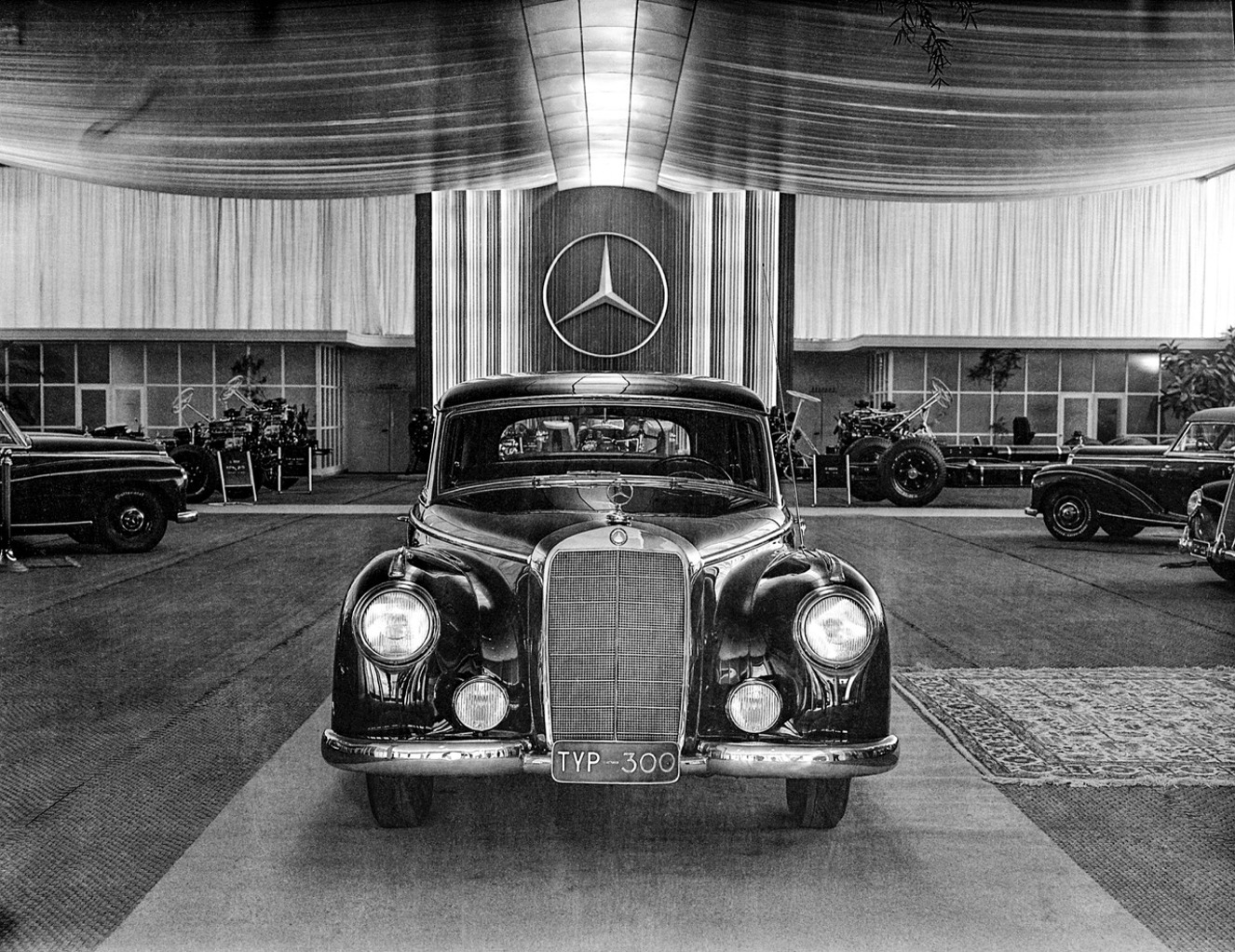
But raw numbers only tell part of the story.
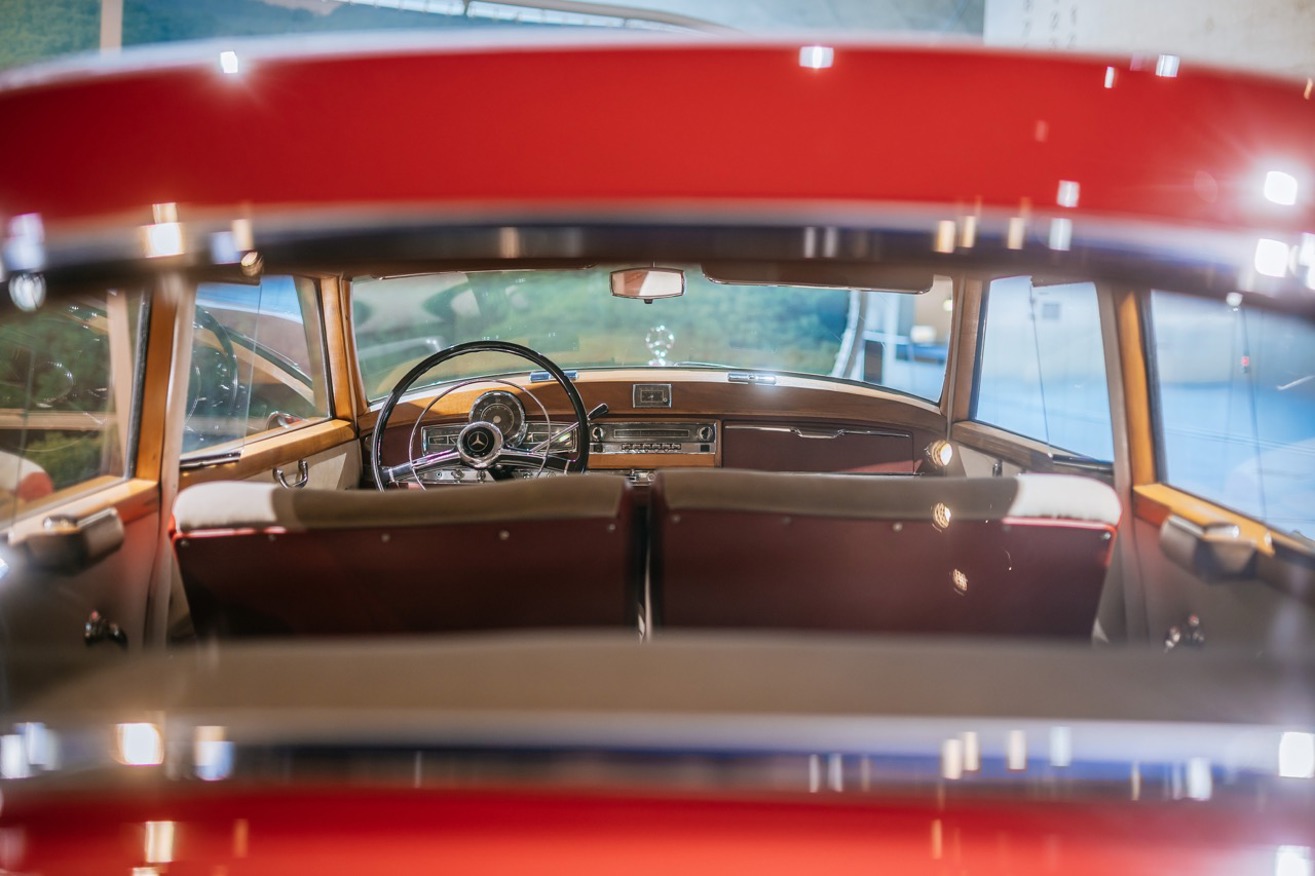
The 300 combined advanced engineering with a level of craftsmanship that set it apart. Inside, materials such as fine fabrics, imitation leather and wood trim created a refined environment, while chrome detailing extended even to the smallest controls.
Comfort was also a priority. Adjustable seating systems, including early tilt mechanisms, offered a level of personalisation that was rare for the time.
Style with substance
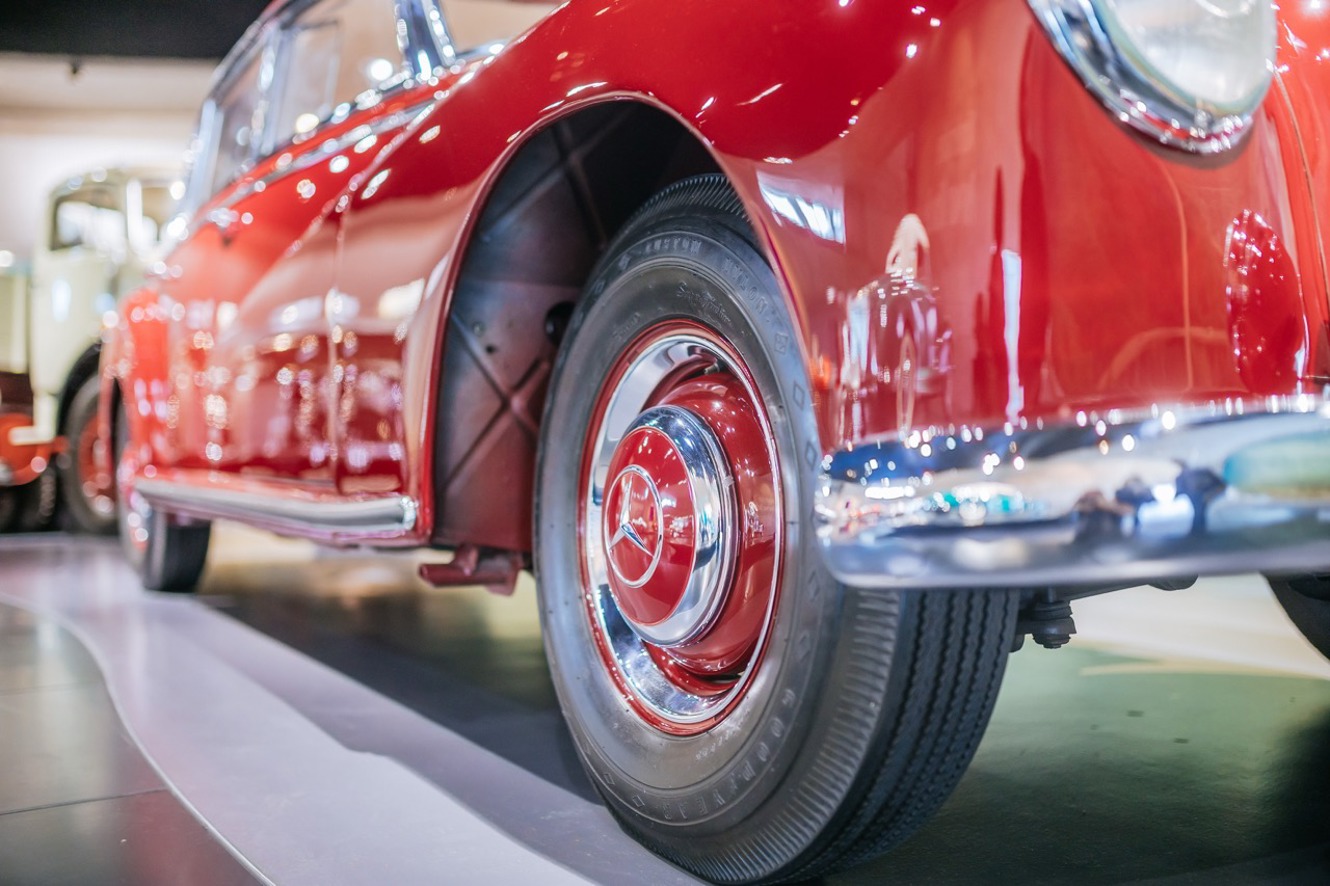
Visually, the “300” struck a careful balance between presence and restraint.
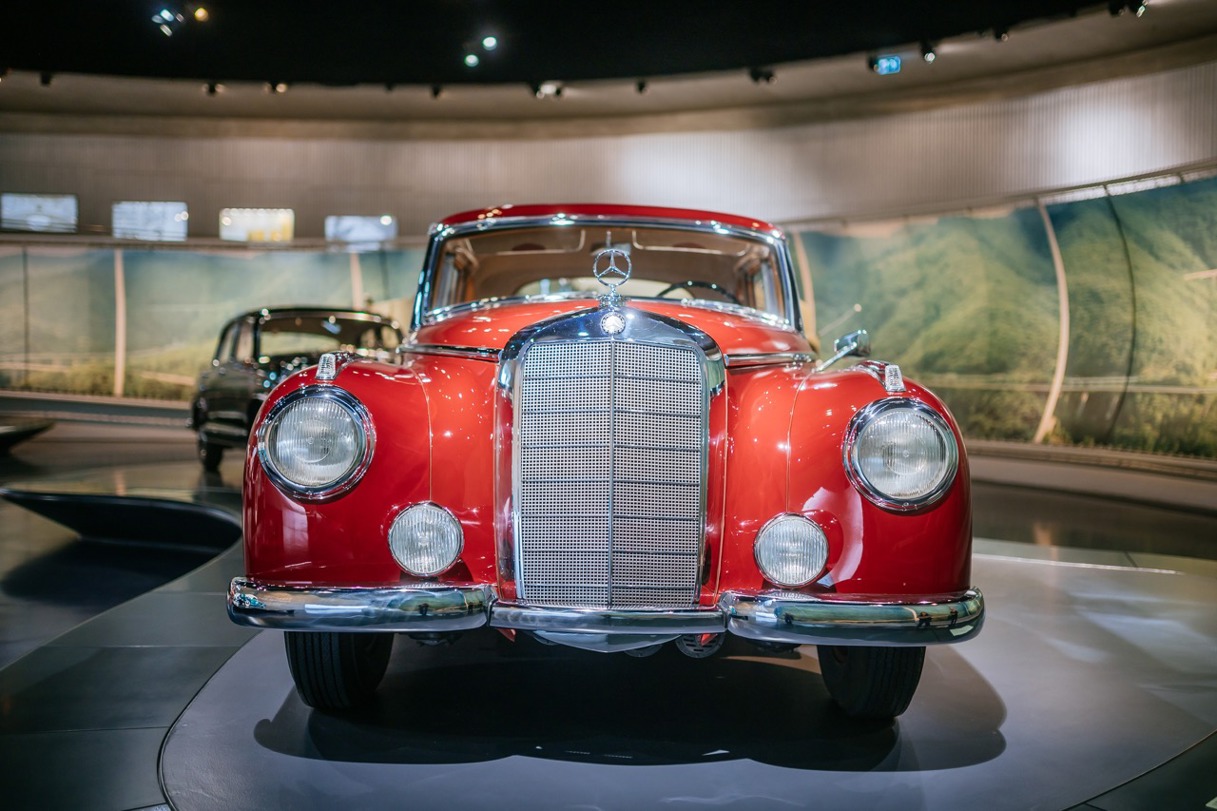
Its flowing lines and extended front wings gave it a sculptural quality, while subtle design touches such as clear indicator lenses and chrome accents added a sense of understated distinction.
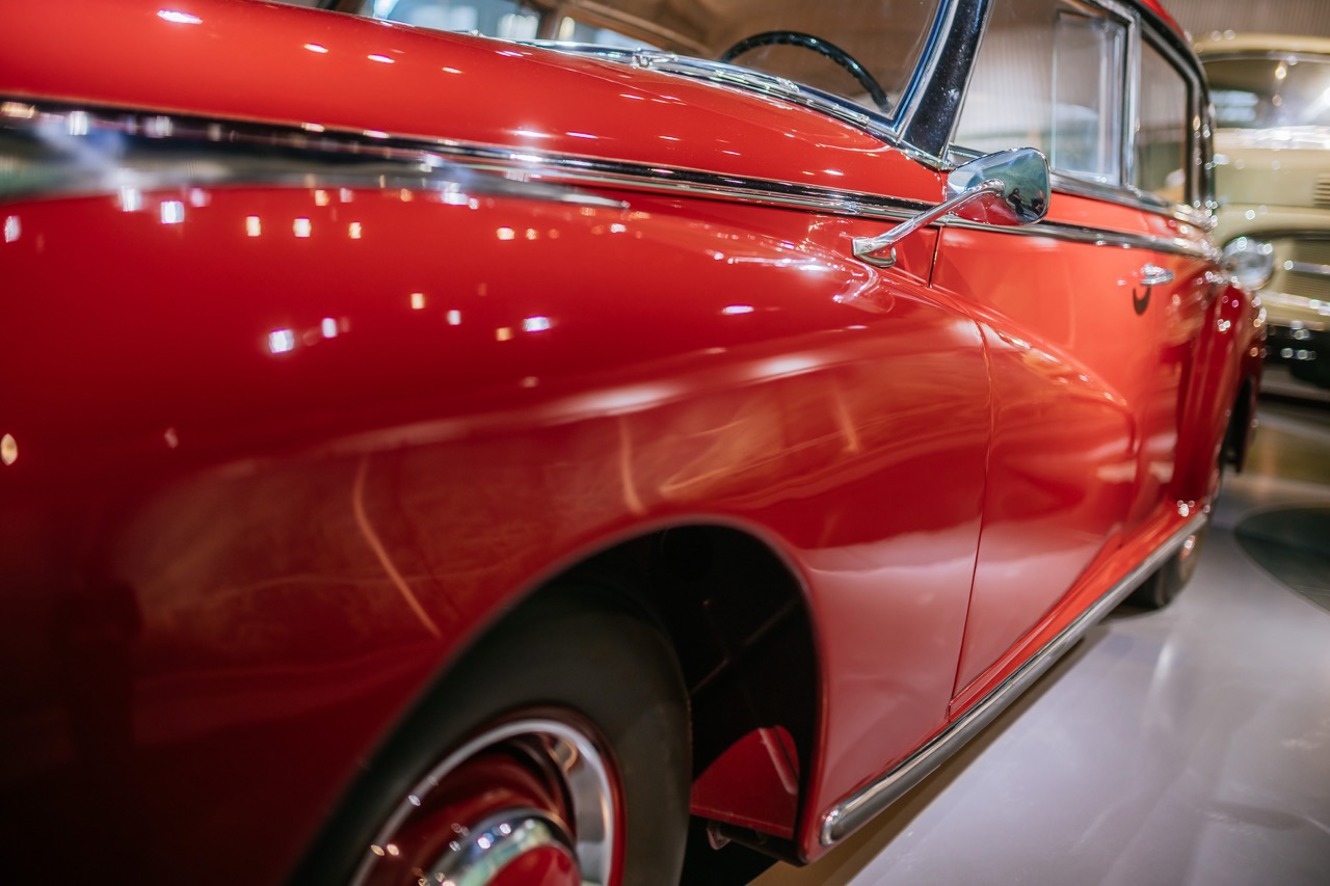
Most examples were finished in muted tones, making the museum’s red display car a rare and eye-catching variation.
Practicality wasn’t overlooked either. A large boot with a low loading sill and twin spare wheel compartments made the car suitable for long-distance travel, an important consideration in an era when road trips were becoming more common.
More than just a car
Over its production run, the Mercedes-Benz 300 evolved through multiple variants, spanning carburettor and fuel-injected versions between 1951 and 1962.
Throughout that time, it built a reputation as one of the world’s leading luxury cars. Contemporary reviews praised its engineering and design, noting its ability to combine comfort, performance and prestige in a single package.
A symbol of progress
Perhaps more than anything, the “Adenauer” captured the mood of its time.
In the years following World War II, it represented recovery, ambition and a return to prosperity. For many buyers, it wasn’t just a car, it was proof that progress was possible.
Seventy-five years on, that sense of occasion still lingers.


