


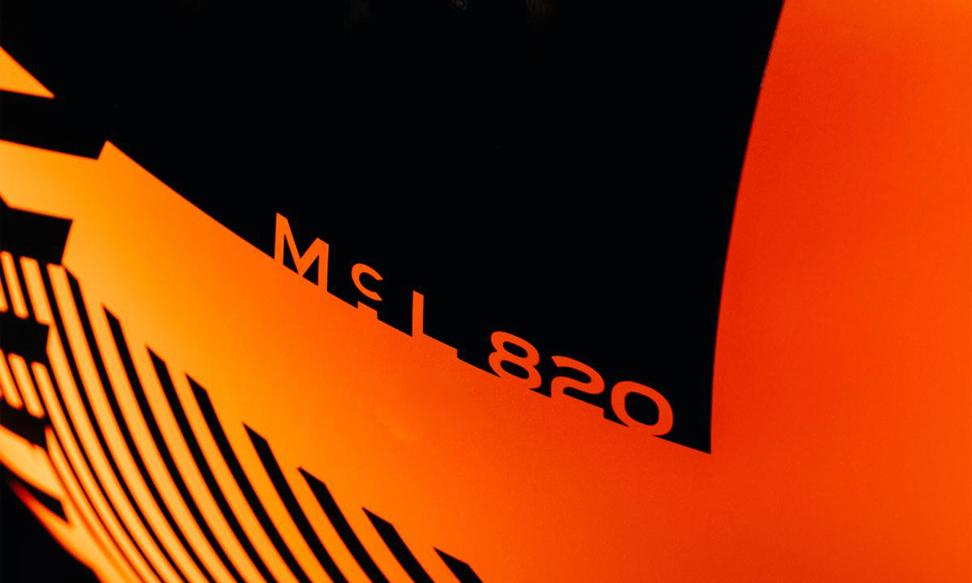
- McLaren has revealed the name of its next supercar: the McL 820.
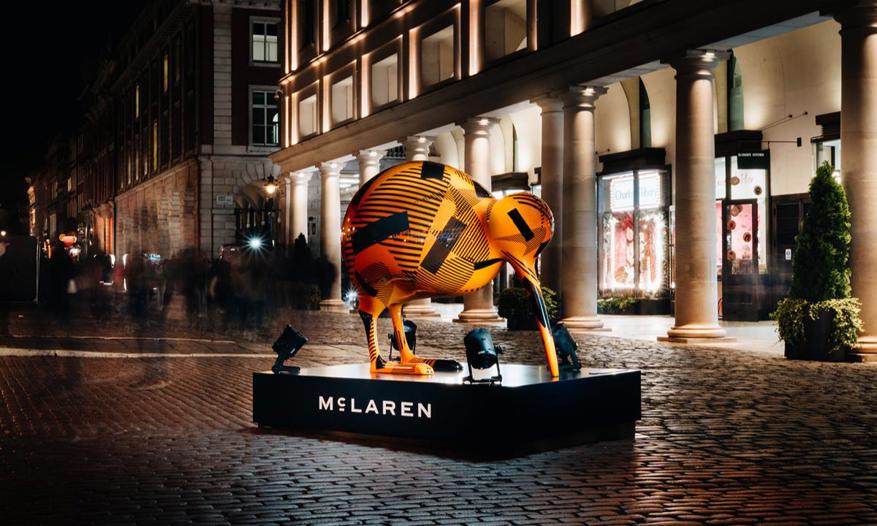
- The name was revealed on the side of a large kiwi sculpture in London's Covent Garden.
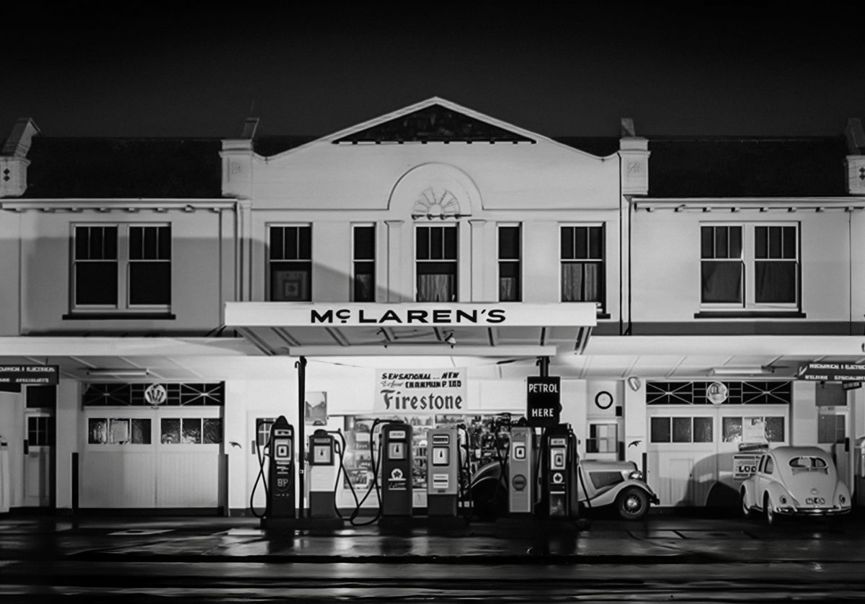
- McLaren is emphasising its New Zealand origins, with a recent rebrand taking inspiration from the McLaren family service station in Auckland.
McLaren has announced the name of its next-generation supercar - and emphatically reinforced its New Zealand origins - with the unveiling of a giant kiwi sculpture in London's Covent Garden.
The British supercar maker revealed the upcoming successor to the 750S will be called the McL 820, and while McLaren has yet to release technical details of the car, the 820 designation likely refers to its expected output of 820PS (603kW), suggesting a sizeable increase over the current 750S.
The new model is due to arrive next year and will be the first new series-production car from McLaren since its acquisition by Abu Dhabi investment group L'IMAD. It will also mark an important step in the company's evolving product strategy, which includes a the naming convention and a renewed emphasis on its founder's New Zealand heritage.
The McL 820 follows the recently revealed McL 6GT, a manual supercar inspired by Bruce McLaren's original ambition to build his own road car.
The use of the McL prefix appears to signal a more unified naming approach across McLaren Automotive and McLaren Racing, although the company has yet to outline precisely how the convention will be applied across its future range.
The new naming structure is part of McLaren's updated branding identity, which is arguably one of the most interesting automotive rebrands of recent years, particularly from a New Zealand perspective.
Its centrepiece is a new wordmark inspired by the original signage above the McLaren family service station in Remuera. The lettering has been reworked into a contemporary typeface called McLaren Sans, but retains the character of the original sign, including a small line beneath the letter 'c', something that has carried over into the model naming convention and badging.
The famous "Speedmark" (long rumoured to be an evolution of the Speedy Kiwi, but actually a disguised version of the Marlboro chevron for a non-tobacco sponsorship age) remains, as does the signature papaya colour associated with its racing cars.
Meanwhile, an expanded colour palette also introduces shades inspired by significant moments and places in McLaren's history, while the Speedy Kiwi and Heritage Shield have been retained as references to its origins.
McLaren's original kiwi crest was created in 1964 by motorsport artist Michael Turner, and it eventually evolved into the more stylised 'Speedy Kiwi', which appeared on McLaren's racing cars throughout much of the 1970s.

The team's visual identity subsequently changed considerably, with a new logo being introduced in the early 1980s reflected the influence of its Marlboro sponsorship, before the familiar Speedmark – the distinctive swoosh-like symbol – arrived in 1997.
The Speedmark became one of the most recognisable elements of McLaren's identity, but the kiwi never completely disappeared. It has continued to feature in heritage material and special celebrations, maintaining a visual connection to the company's founder.
McLaren's latest branding refresh, unveiled in September, makes that connection more explicit than it has been for some time, and the heritage push comes as McLaren prepares for a substantial expansion of its operations and product range.
The company has announced a £500 million investment in its UK manufacturing and engineering operations, which is expected to create around 1000 new jobs by 2032. The investment will support expanded research and development, a new vehicle production facility and the development of in-house engines and transmissions.
But the biggest change on the horizon is McLaren's first performance SUV, which will take the company beyond its traditional two-seat sports and supercar territory. The new model is expected to use hybrid power, although McLaren has yet to reveal detailed specifications.
The McL 820, meanwhile, will carry the company's traditional supercar formula into its next generation, with more details expected to emerge ahead of its arrival next year.
The 750S successor is expected to use one of two new hybrid powertrains being developed in-house by McLaren, with the company's future engine strategy moving towards greater control over its own powertrain technology.


