



- Substantially longer and wider than current PV5.
- Much more power, bigger battery.
- Dual-motor AWD option is in the product plan.
Kia has revealed the PV7 all-electric van at the IAA Transportation 2026 exhibition in Hannover, Germany. The PV7 is the second model in the manufacturer's dedicated Platform Beyond Vehicle (PBV) lineup, expanding upon the smaller PV5.
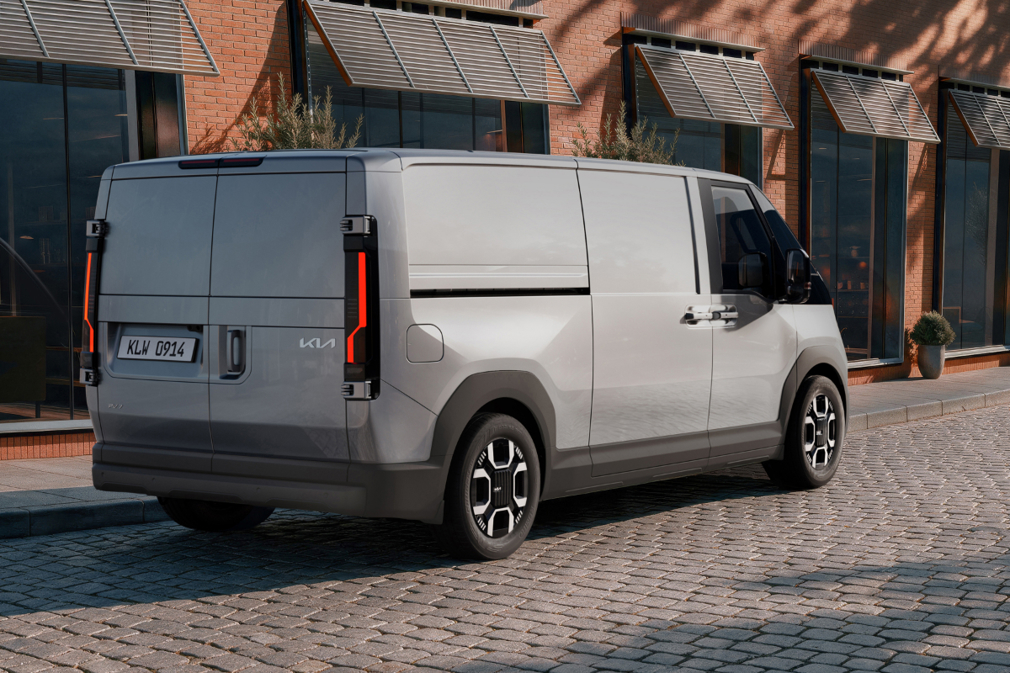
Like the PV5, the PV7 is designed with commercial and passenger variants in mind, and is scheduled to enter production and launch in Korea and Europe in the second half of 2027, with rollout to additional global markets planned afterward.
The PV7 is constructed on Kia’s dedicated E-GMP.S electric architecture and measures 5350mm in length, 1995mm in width, and 1990mm in height, with a 3500mm wheelbase.
This makes the PV7 significantly larger than the PV5 in all dimensions, adding 655mm in overall length, 100mm in width, and 505mm to the wheelbase, which also sees a major increase in volume and payload capability.
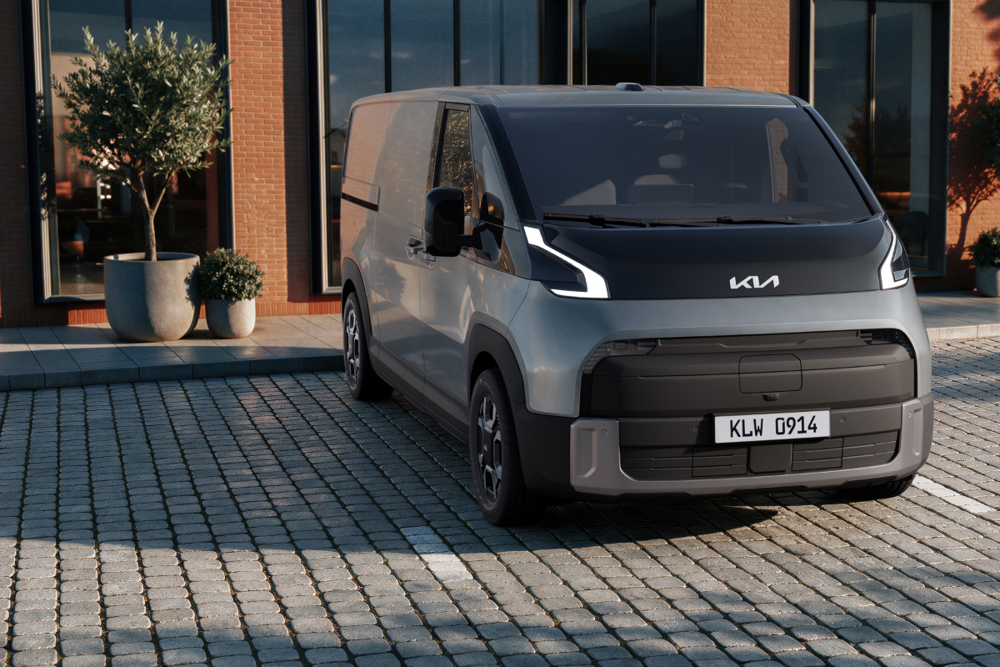
While the PV5 Cargo provides between 4.0m³ and 4.42m³ of cargo space with a maximum payload rating of 740kg to 790kg, the PV7 Cargo Long provides 6.1m³ of load volume, expanding to 8.0m³ in the High Roof variant, while payload capacity increases to between 1,165kg and 1,200kg.
The PV7 packs a substantial upgrade in output and charging performance over the PV5, replacing the PV5's 120kW motor and 250Nm front-wheel-drive setup with a 200kW/420Nm front motor, along with a planned future all-wheel-drive option.
The PV7 also gets a bigger battery option with 71.5kWh and 96.2kWh nickel cobalt manganese packs, compared to the 51.5kWh and 71.2kWh batteries available in the PV5. Most notably, the PV7 moves from the PV5’s 400-volt system to an 800-volt electrical architecture and introduces dual charging ports, which reduces 10-to-80 percent DC fast charging time to the mid-20-minute range using a 350kW charger.
Kia is releasing the PV7 in two forms: Cargo and Passenger. The PV7 Cargo variant is targeted at logistics and delivery operations, with the Cargo Long model offering up to 6.1 cubic meters of load volume, and the Cargo High Roof variant increasing this to 8.0 cubic meters.
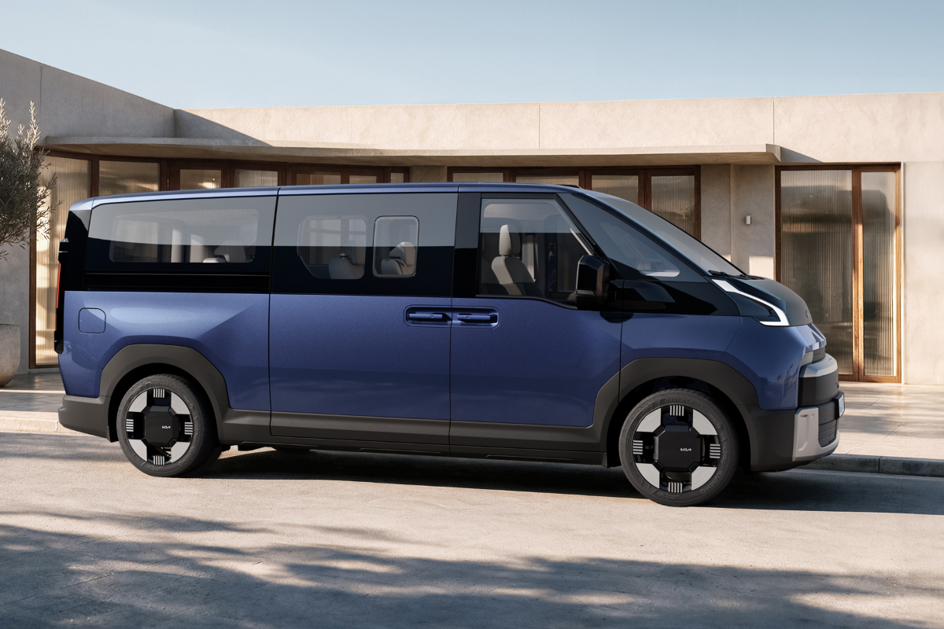
The PV7 Passenger variant seats up to nine occupants and uses an adjustable rail-mounted seating system. Kia intends to expand the PV7 range to 23 total variants, including Chassis Cab models and specialised conversions produced at its dedicated Hwaseong EVO West PBV Plant.
The PV5's cabin features 12.9-inch and 14.6-inch digital displays running the Pleos Connect operating system, which is built on Android Automotive OS and includes voice command features. An integrated Vehicle-to-Load (V2L) system allows external tools and electronic equipment to draw power from interior and exterior outlets, while fleet management functionality is integrated via standard software APIs and the Kia Business Solutions Portal, offering operators real-time diagnostic monitoring and tracking.
Safety equipment includes a seven-airbag system, Pedal Misapplication Safety Assist 2.0, Forward Collision-Avoidance Assist, Lane Keeping Assist 2.0, Highway Driving Assist 2.0, and Surround View Monitor.
Kia is showcasing the PV7 alongside other PBV lineup models to the public at the Hannover Fairground through September 20, 2026.


