



- Hyundai says NOVA Lab can uncover up to 200 vehicle issues before prototype assembly.
- Its full-scale wire-car benches test circuits, controllers, functions and diagnostics.
- Dynamometer and hardware-in-the-loop systems reproduce driving loads, virtual roads and projected radar scenarios.
Modern cars carry a bewildering amount of invisible traffic. Hundreds of electronic controllers can exchange thousands of signals, with each message helping to run everything from basic functions to advanced driver-assistance systems.
Hyundai Motor and Kia are trying to catch problems in that electrical web before a physical prototype is assembled. Their NOVA Lab uses full-scale wire-car test benches, laying out the vehicle’s electronics so engineers can test circuits, controller communication, functions and diagnostic processes as one connected system.
Hyundai says the facility can identify up to 200 issues ahead of prototype assembly. That is an upper-end claim, rather than a promise that every fault will be eliminated, and the company has not linked the figure to a named production model.
How the wire car faces the road
The bench is not limited to checking whether components can talk to each other. A Torque Wheel Dynamometer reproduces the loads a vehicle would encounter while driving, allowing engineers to assess how the electronic systems react under more realistic conditions.
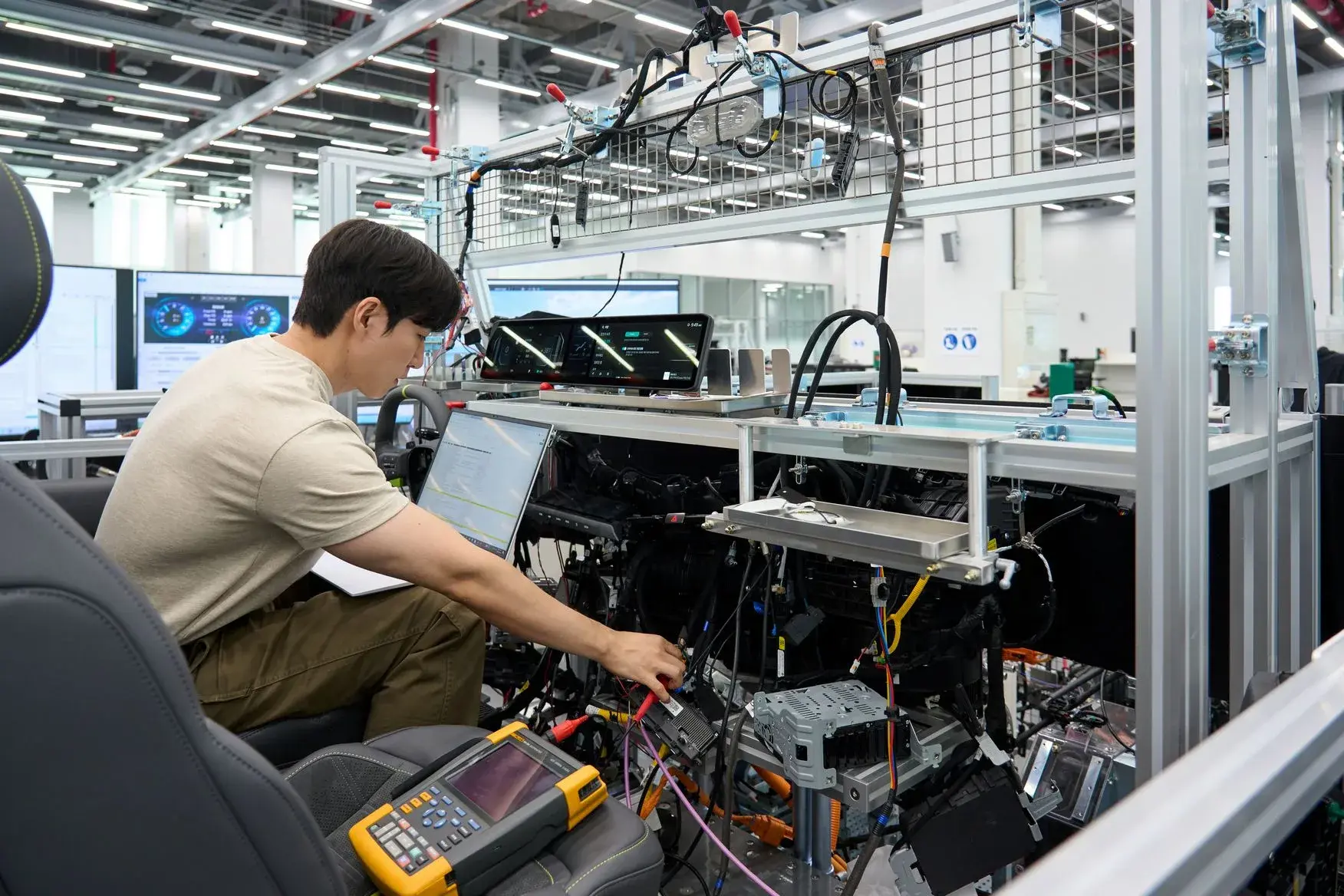
Hardware-in-the-loop systems add another layer by feeding real controllers simulated inputs. NOVA Lab can project virtual road and radar scenarios, then observe how the vehicle's hardware responds without needing to send a finished car onto a test track.
The systems put through these exercises include Smart Cruise Control, Blind-Spot Collision Warning, Lane Following Assist, Lane Keeping Assist and Forward Collision-Avoidance Assist.
Testing the next electronic leap
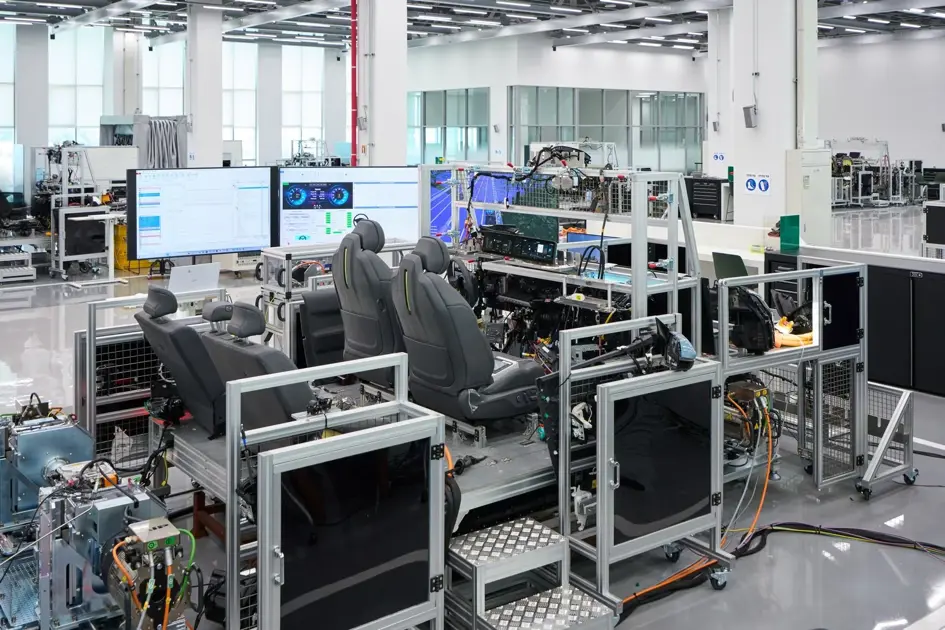
NOVA Lab is also equipped to work with faster Ethernet communications and 48-volt electrical systems, as vehicles become more software-heavy and electrically complex. Its remit extends to over-the-air update validation and anomaly-detection development.
Hyundai says the facility can also support testing around robotaxi control redundancy and cybersecurity. In each case, the attraction is the same: engineers can probe how controllers, signals and safety functions behave while changes are still comparatively easy to make.
That does not remove the need for physical prototypes or real-world validation. It shifts a substantial part of the detective work earlier, when the vehicle exists as a full-scale network of hardware, wiring and simulated roads rather than a finished machine.

