



Hyundai Motor Group has unveiled Pleos Connect, a next-generation infotainment system that will bring a new AI assistant, app marketplace and redesigned cockpit experience to future Hyundai, Kia and Genesis models.
The system launches in Korea in May on the new Hyundai Grandeur, before a phased global rollout. Hyundai says the Ioniq 3 will be the first European model to feature Pleos Connect, with the Group targeting around 20 million equipped vehicles by 2030.
Big screen, fewer headaches
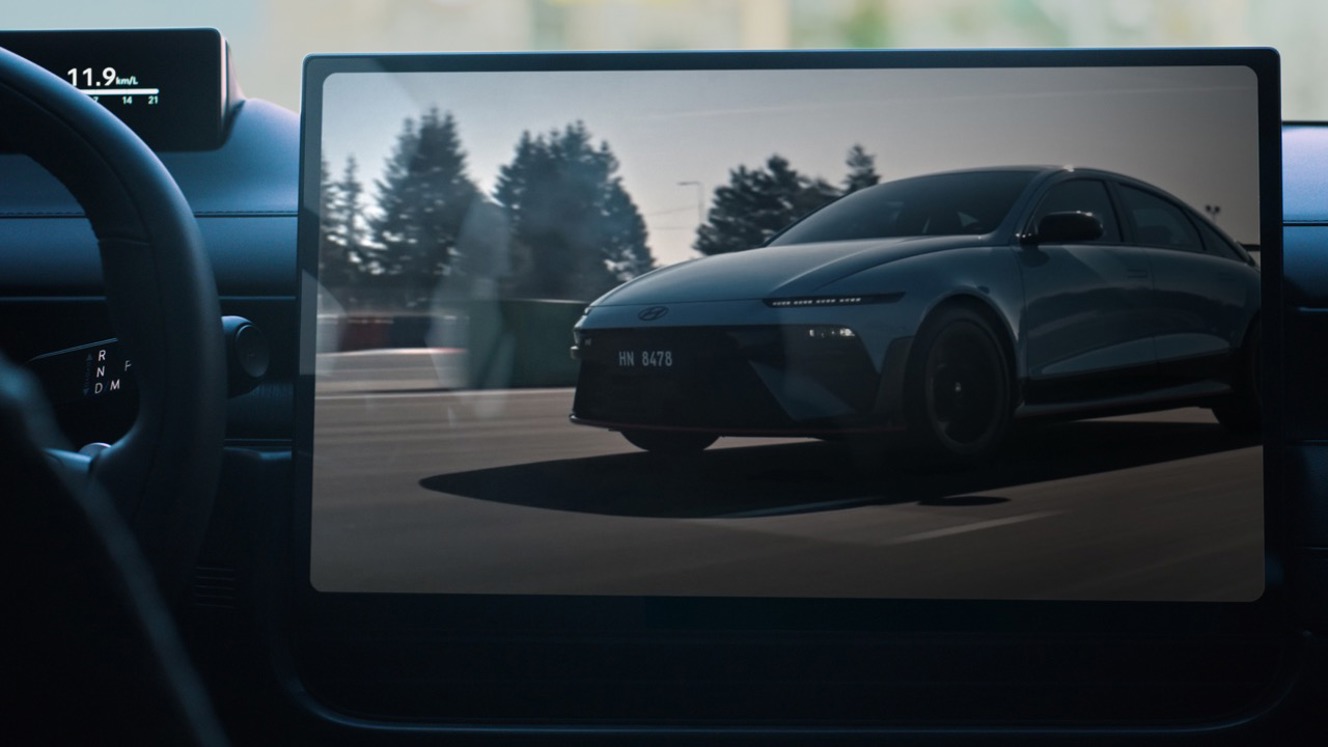
Pleos Connect is built around a wide central display, a slim driver-facing screen and physical buttons for core controls. Sensible? Very. Touchscreens are great until you need to change something quickly on a bumpy road.
The large display is split into three areas: driving information, apps and a bottom bar for recently used or pinned functions. The app section can run in a single-screen layout or split-screen mode, allowing navigation and another app to sit side by side.
The slim screen sits directly in front of the driver and shows essentials such as speed, media and turn-by-turn directions. Hyundai says the layout was developed with input from UX studios in Seoul, Irvine, Frankfurt and Shanghai, with a focus on mobile-like familiarity and reduced distraction.
Meet Gleo, the in-car AI
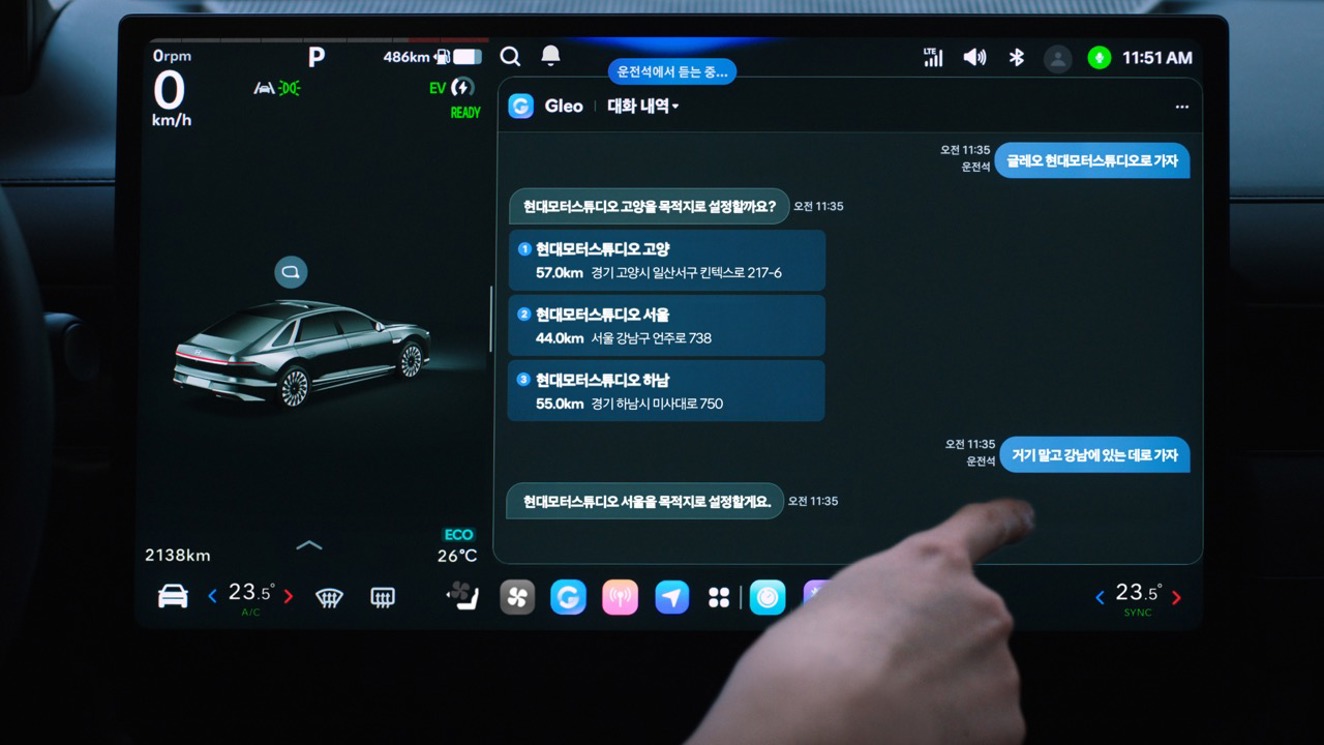
The headline act is Gleo AI, Hyundai Motor Group’s new voice assistant powered by a large language model.
It is designed to understand natural, context-aware requests, including commands such as “navigate there” or “find a restaurant near here”. It can also process multiple commands in one request, adjust vehicle settings, search the web and access vehicle manual information using voice control.
There is cabin awareness too. Gleo AI can recognise where a command comes from, so a request such as “turn on my heated seat” can be applied to the correct passenger. Hyundai says future updates will expand the assistant into personalised services and wider app control.
App store on wheels
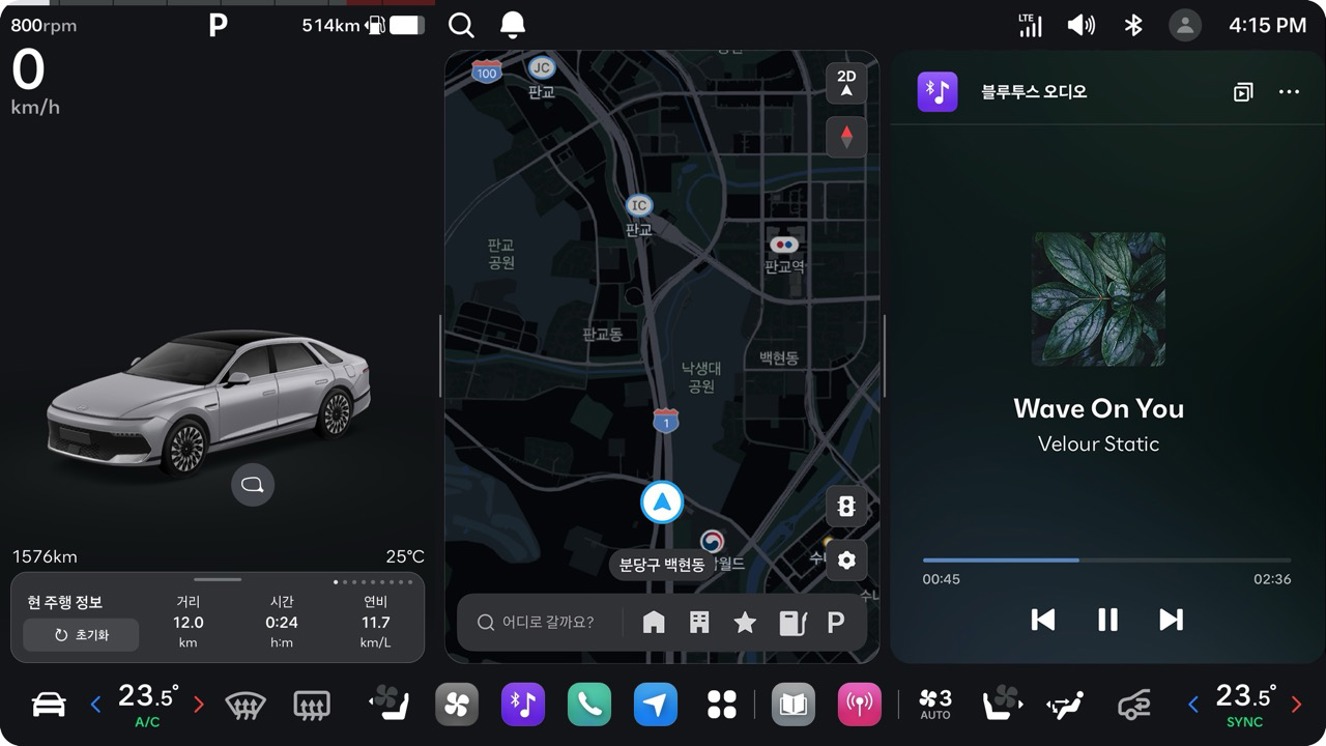
Pleos Connect also introduces an App Market, allowing third-party services to run directly in the vehicle without relying on a smartphone connection. Initial services include YouTube, Spotify, essential; and genie, while future additions are expected to include gaming, entertainment and vehicle management tools.
Developers will be able to build services through Pleos Playground, which provides APIs and tools for the ecosystem.
The system marks Hyundai Motor Group’s first major deliverable in its shift towards software-defined vehicles. Longer term, the Group says it aims to move towards what it calls Artificial Intelligence-Defined Vehicles, where the relationship between car and driver becomes more personal, more adaptive and, ideally, less menu-heavy.


