



- Legendary 1934 record-breaker recreated in 3-year project.
- Auto Union Lucca achieved 326.975km/h over a flying km.
- New version makes 382kW from a supercharged V16.
Audi Tradition, the division within the company responsible for preserving its history and heritage, has painstakingly recreated a legendary record-breaking Auto Union from the 1930s.
The 1934 Auto Union "Lucca", aka Rennlimousine, was born of a furious race between two brands to set new speed records and win Grand Prix races during the decade.
Auto Union was founded in 1932 after a merger of Audi, DKW, Horch and Wanderer (hence Audi's four-ring symbol today). It entered its first GP season in 1934 with the Type A and the same year set three world speed records, with Hans Stuck at the wheel.
Daimer-Benz responded by tying Auto Union's record with driver Rudolf Caracciola, then setting several new ones in October 1934 on the highway near Gyón, Hungary, in a specially built record-attempt car called the W25. Ultimately he reached an average speed of 316.592km/h over a flying mile. This became the number to beat.
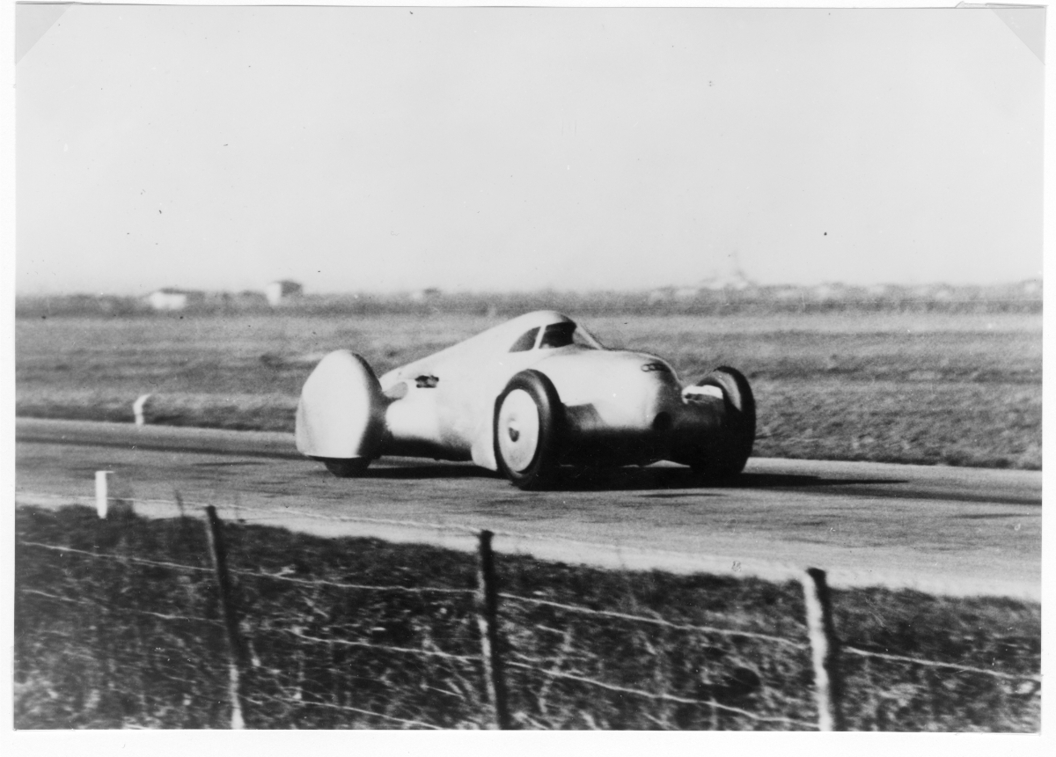
Auto Union put plans in place for another record attempt in early 1935, with further development of the existing record-breaker in the wind tunnel – first as an open version, then with a closed cockpit for improved aerodynamics.
The body was finely sanded and coated with clear lacquer, and the spoked wheels were fitted with covers. Two circular openings at the rear served as fresh air intakes for the carburetor.
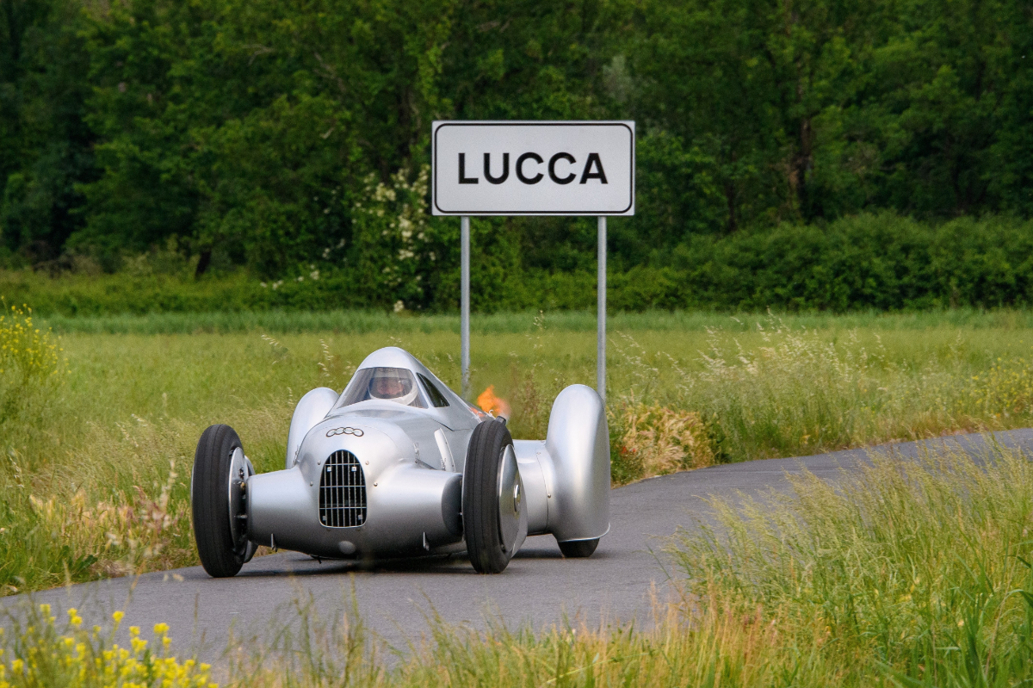
The exhaust pipes pointed upwards and were grouped into two outlets on each side. The car was already equipped with a 16-cylinder engine from the 1935 season, the displacement increased to approximately 5.0 liters; this early version of the engine, with 252kW, was later boosted to 276kW.
The chassis and suspension were carried over from the 1934 racing car, but the elongated, aerodynamic silhouette, including a fin-like rear end and teardrop-shaped wheel arches, made in unique in the racing world at the time.
How the 1935 record was set
The original plan was to use the route from the Daimler-Benz record-setting run near Gyon, in Hungary.
On February 5, the team carried out two test runs in rapidly worsening weather. On the second run, the exhaust pipe burnt through, and the tests were suspended.
The weather was deemed too unpredictable and the organisers started looking further and further south, eventually settling on the Florence-Viareggio road between Pescia and Altopascio, near the city of Lucca in Italy.
This section of the autostrada was judged ideal for record attempts – level, with a high-grip surface, eight meters wide, and virtually straight for around 5km.
The first test drives began on February 14, trialling various vehicle configurations. The next morning at 9am, the car appeared for its record attempt, with Hans Stuck at the wheel.
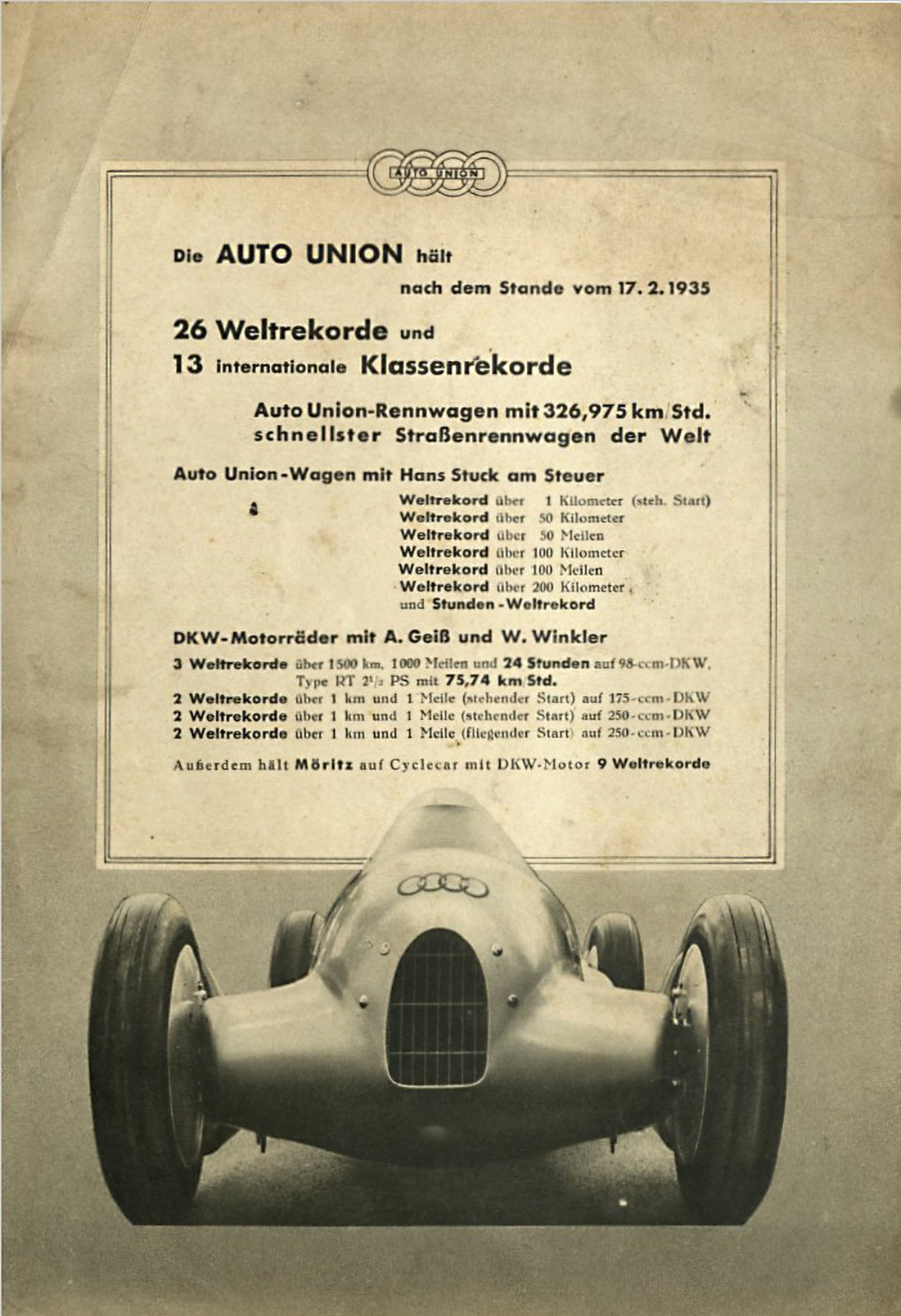
With the front of the radiator sealed and further aerodynamic optimizations, the flying-start mile record in International Class C was set at an average speed of 320.267 km/h. Timing equipment recorded 11.01 seconds for a section of the return run in “Run 3 Stuck II”, which corresponded to a speed over the kilometre of exactly 326.975km/h – making the car the “fastest road racing car in the world.”
At almost the same time as the successful record attempt in Lucca, a virtually identical version of the record-breaking car was unveiled at the International Motor Show in Berlin (February 14-24). The main difference compared with the Lucca model was a larger grille. Both cars were later raced.
Auto Union Lucca replica was three years in the making
“Audi does not yet have any Auto Union racing or record-attempt cars from the early Grand Prix era in its historic vehicle collection," says Stefan Trauf, head of Audi Tradition. "With the Auto Union Lucca, we are adding a highly evocative member of the Silver Arrow family to the Audi AG collection.
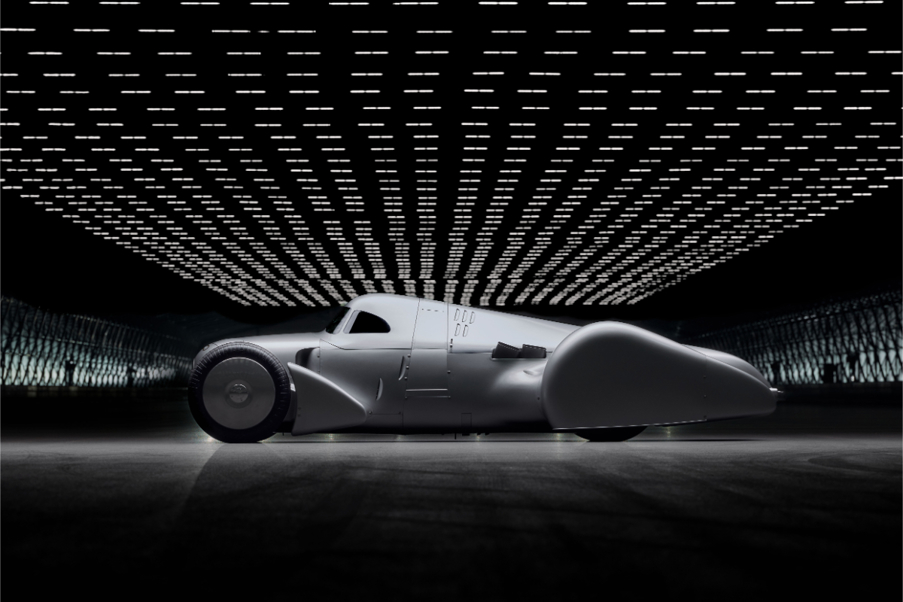
"To me, the Auto Union Lucca is a masterpiece of engineering, tuned for high speeds and maximum performance, yet at the same time a beautiful car – in my view, this combination is unique.”
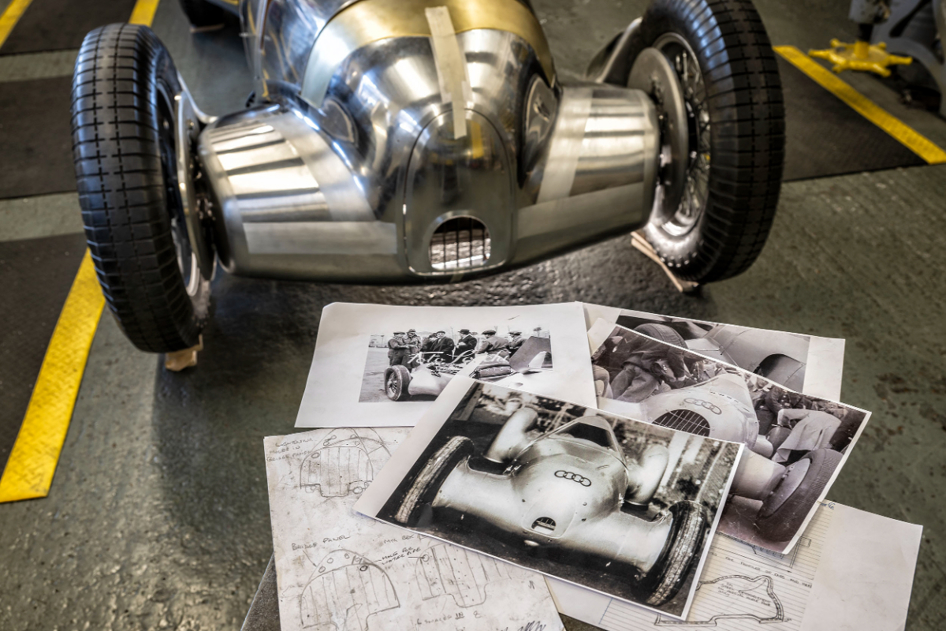
Audi had the Auto Union Lucca recreated by Crosthwaite & Gardiner based on historical photos and various other documents from the archives. After spending just over three years on its construction, the British restoration specialists completed the project in early 2026.
All components are handcrafted especially for this model. The production of the streamlined bodywork was especially labour-intensive.
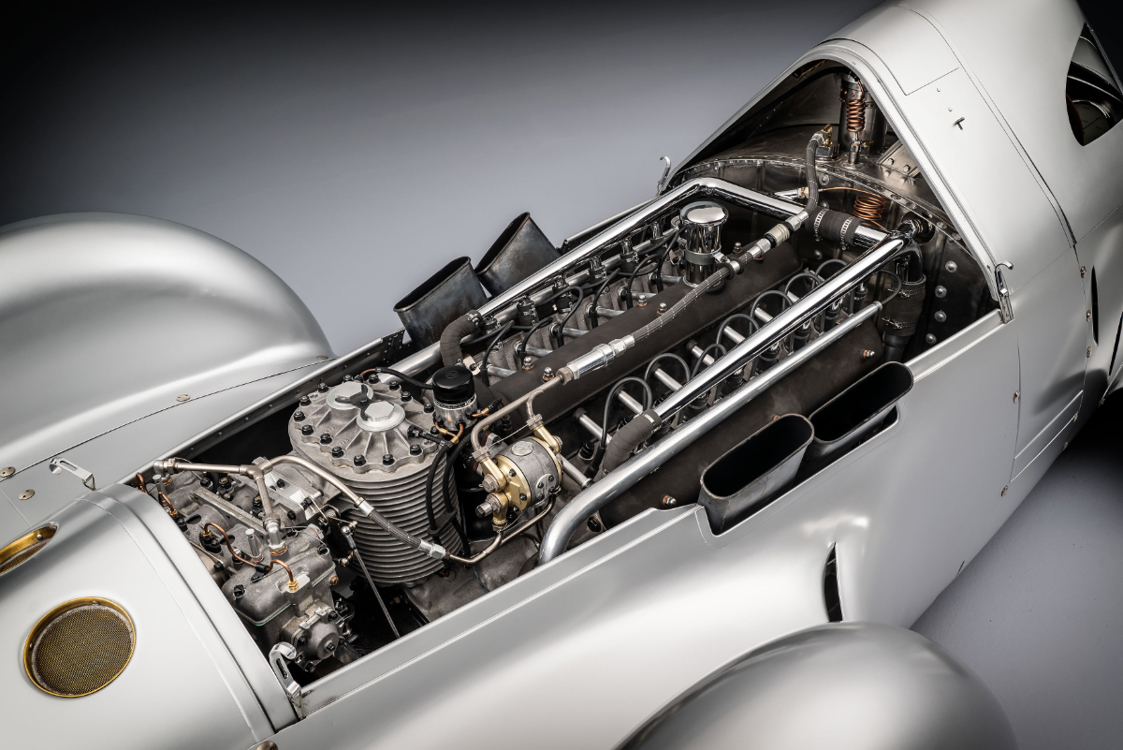
Authenticity was crucial, but practicality and durability were also improtant for the recreation. Audi Tradition has fitted the Lucca with the 16-cylinder engine from the Auto Union Type C, because its 6.0-litre engine is visually indistinguishable from a 5.0-litre, making the engines interchangeable within the Silver Arrow family.
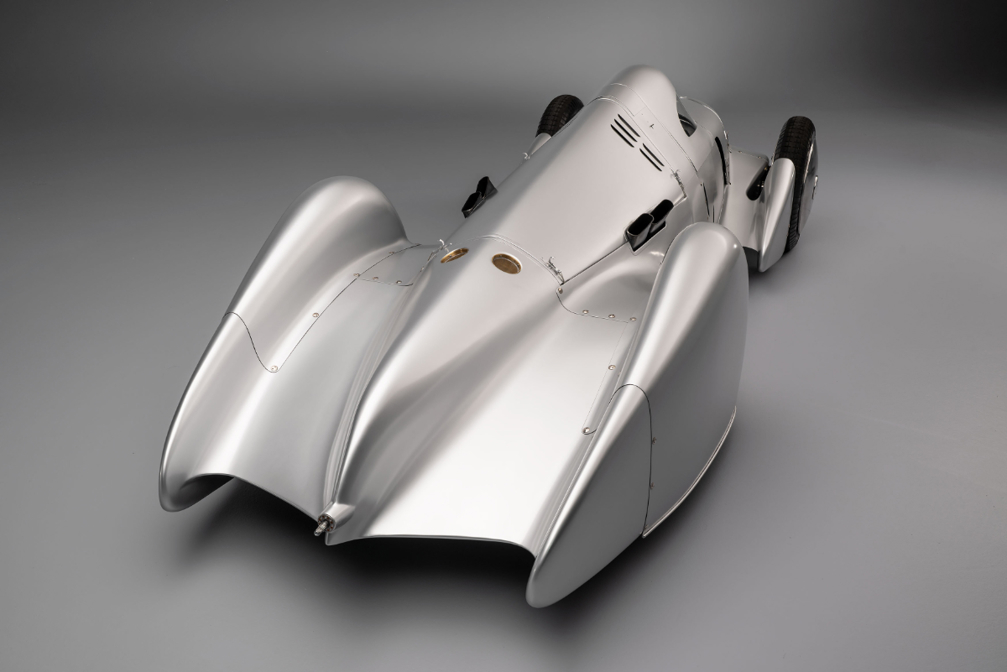
The new Auto Union Lucca also features several modifications that were implemented for the later Avus race in Berlin in May 1935, such improved cooling, to enable it to be safely used for demonstration runs.
The recreated Rennlimousine makes 382kW from its 16-cylinder supercharged engine and weighs 960kg. The exterior is finished in Cellulose Silver.
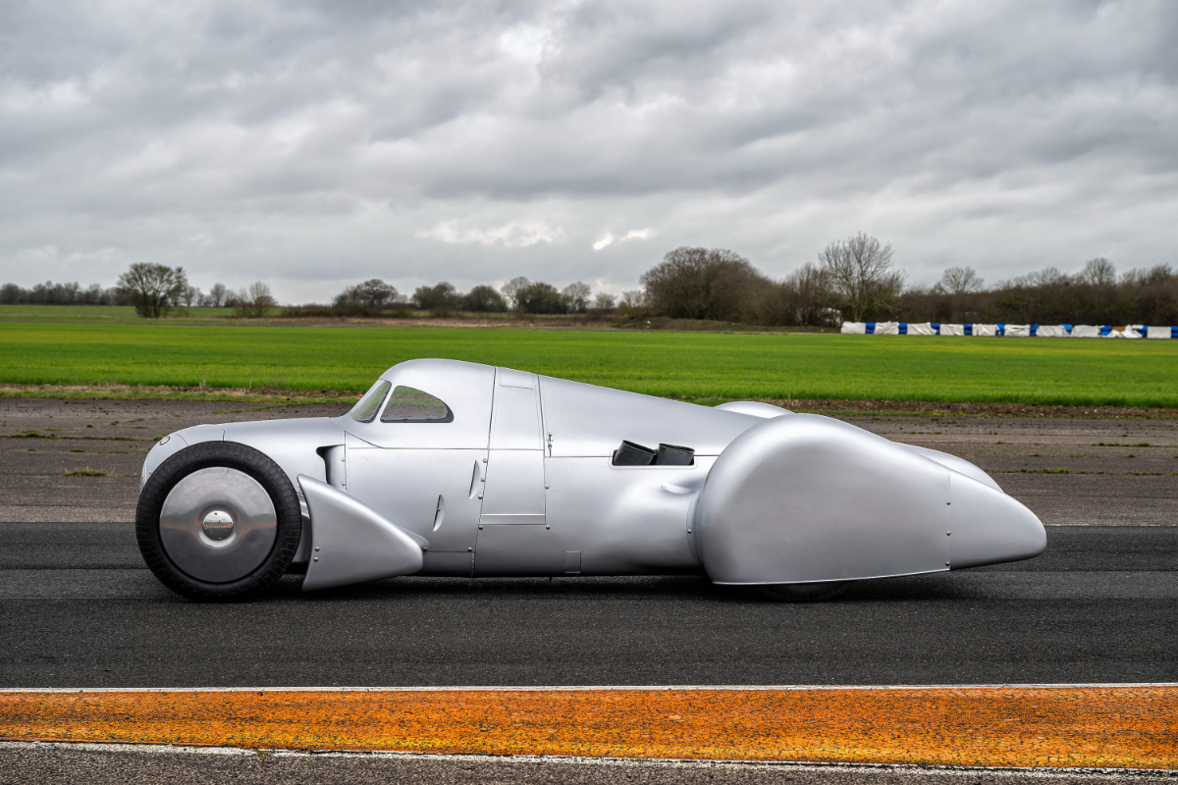
After being unveiled in Lucca, Italy, the Rennlimousine will make its first public appearance in motion at the Goodwood Festival of Speed from July 9-12.