



It's 2026 and even big family 7-seat SUVs are cleaning up their act. Models like the Hyundai Santa Fe, Mazda CX-80 and Toyota Highlander showcase electrified technology, keeping the kids on the move while sipping fuel as frugally as they can.
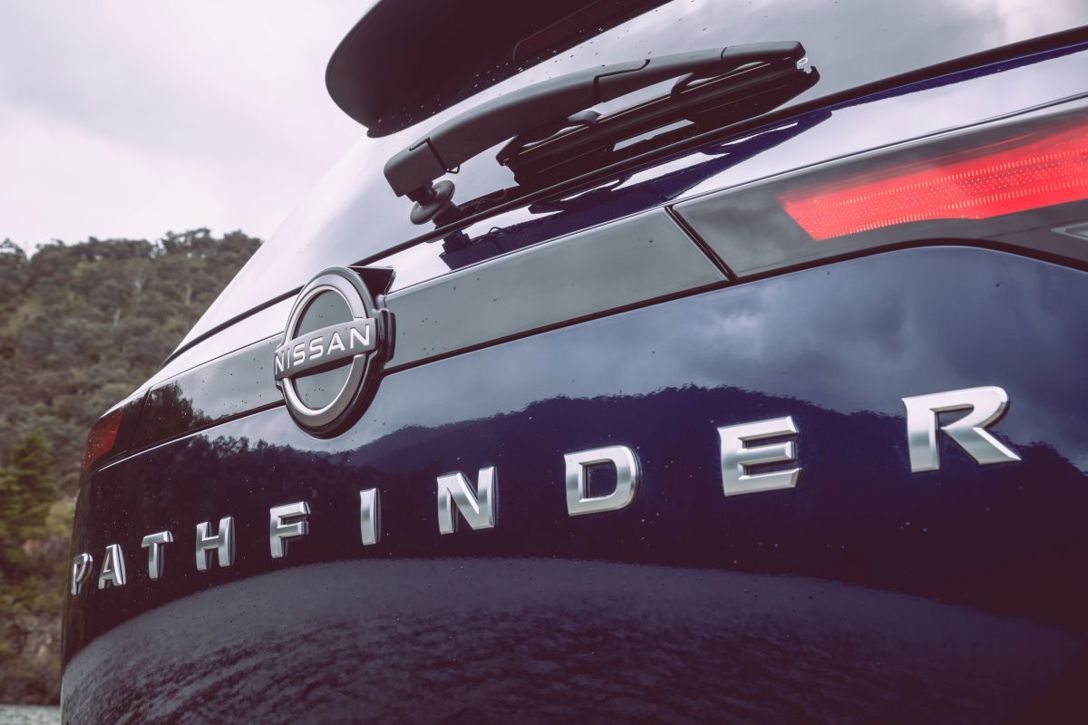
Not the Nissan Pathfinder. This American-style, American-built SUV sticks with an old-school naturally aspirated V6 engine. Does the big Nissan feel out of place in a hybrid world, or is it a comforting old-school express for the family?
Pathfinder is available in two specification levels for New Zealand. Our test car is the top Ti-L.
On the outside: what are the Nissan Pathfinder Ti-L's main design features?
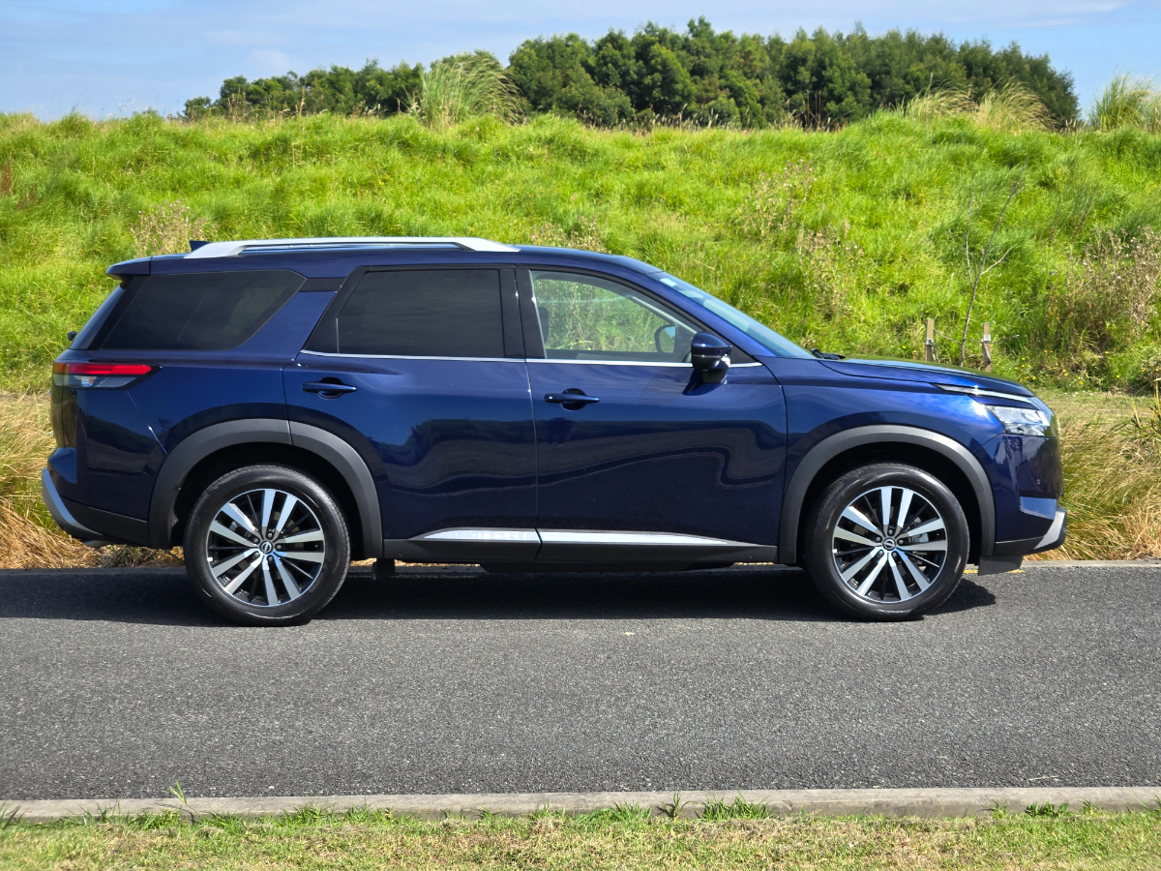
If you hadn't guessed already, Pathfinder is not the latest thing on the market. This model was launched in New Zealand in 2022, after the badge had a bit of a hiatus here.
This American-style, American-built SUV sticks with an old-school naturally aspirated V6 engine.
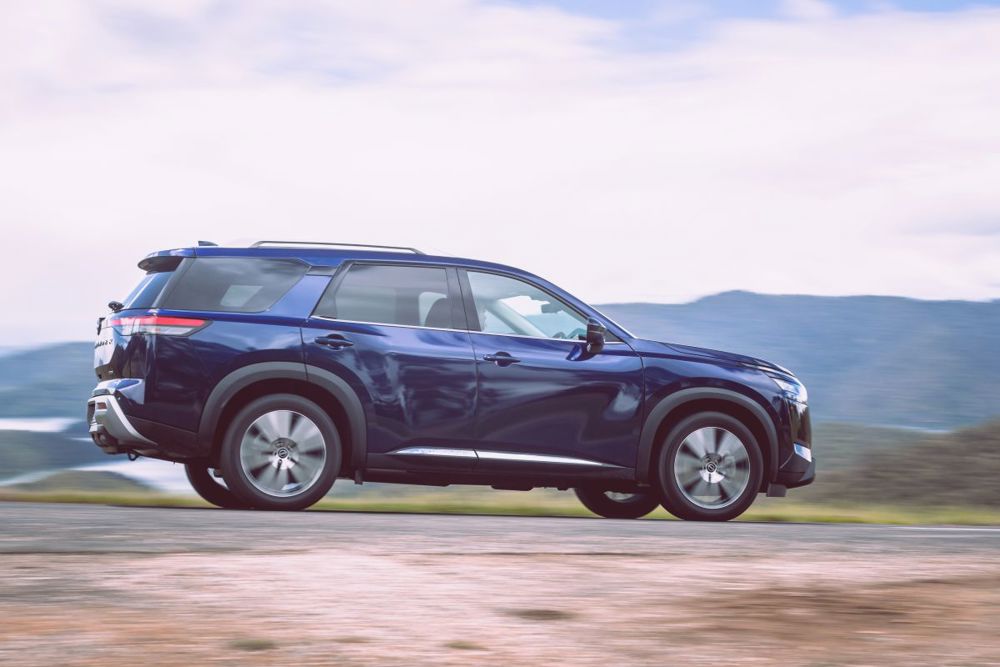
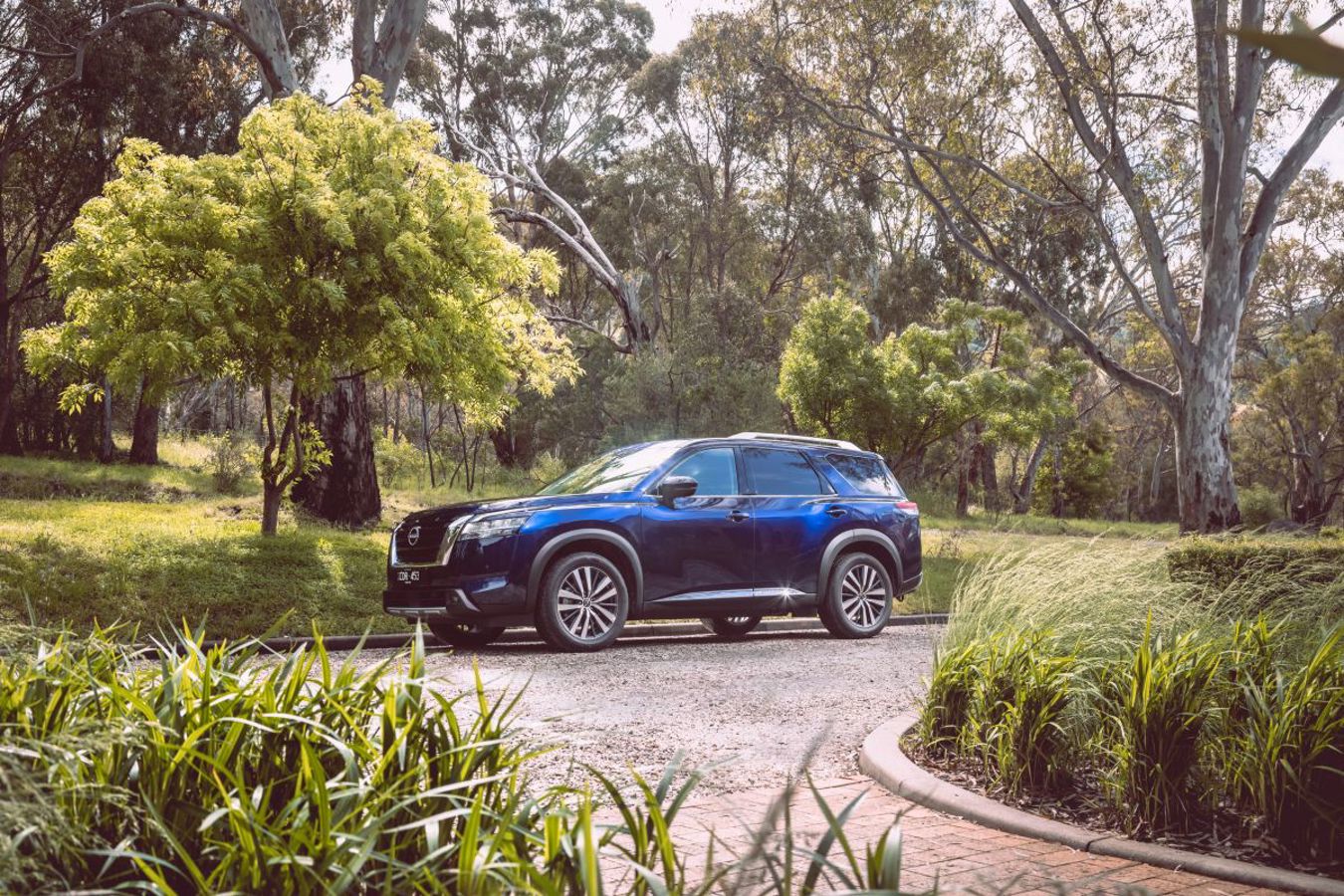
But it's still a sharp-looking machine, with lots of SUV-like styling addenda, big 20-inch wheels filling the arches and wraparound rear glass that visually shrinks the car's exterior, despite a big footprint: it's a snip over 5 metres long.
OVERVIEW
On the inside: what's the Nissan Pathfinder Ti-L's cabin like?
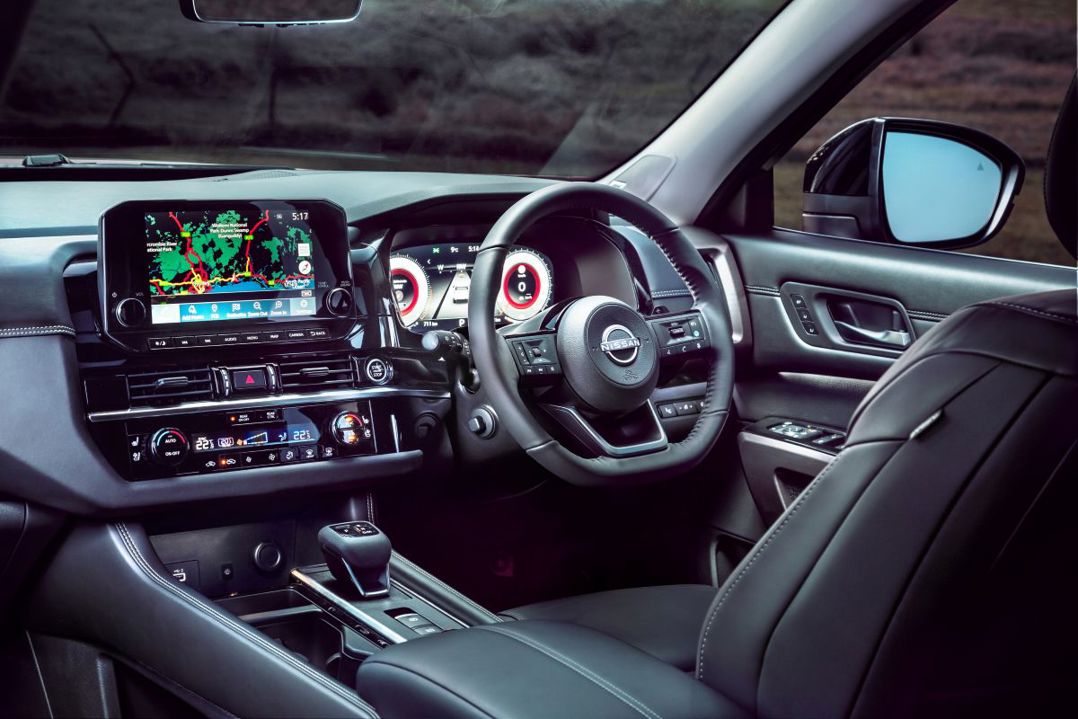
Inside, the Pathfinder is undeniably sumptuous in a 10-years-ago kind of way, with impressive finish, lots of quilted leather and lots of switchgear. And actually, that fits with the market segment, which still tends to favour fairly traditional interior design.
Second-row passengers will love the Pathfinder experience. With two captain's chairs, it's more of a luxury people-mover vibe.
The dashboard is awash with buttons, but there's also plenty of technology. The main instrument panel is digital and configurable, there's a head-up display and the modest 9.0-inch infotainment system has wireless Apple CarPlay. You have to plug in for Android Auto, though.
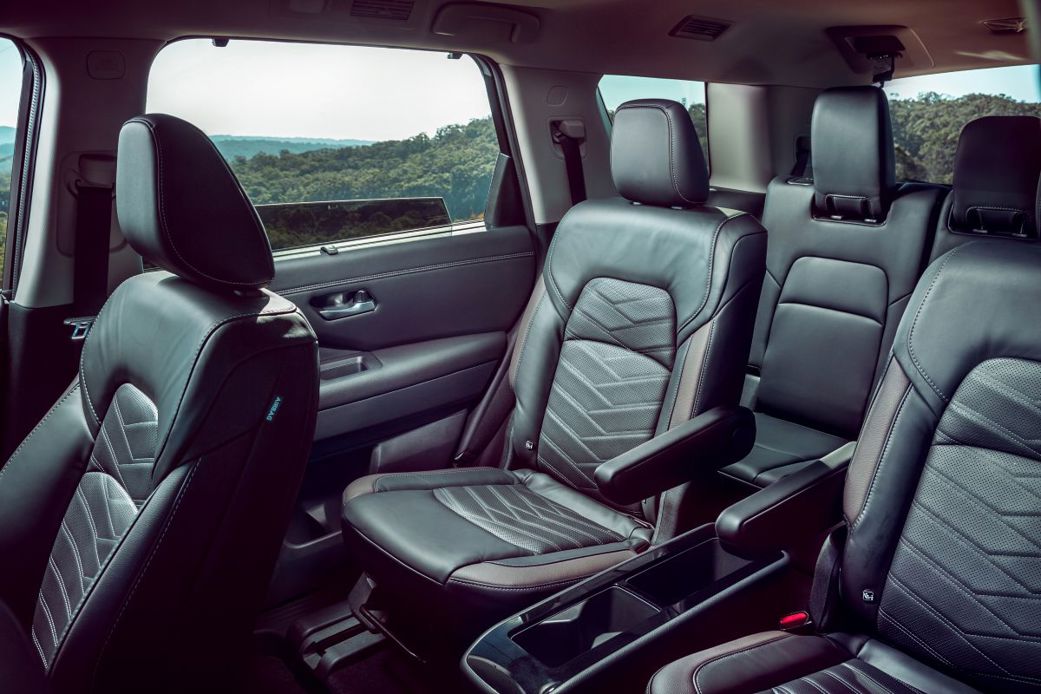
Second-row passengers will love the Pathfinder experience. The rear doors open wide and with two captain's chairs, it's more of a luxury people-mover vibe. Both seats are heated, too, and there's a storage bin in the centre with cupholders. Sunny? Roll up your side-window blinds.
The kids might fight over the right-hand seat in the back - that’s the only 3rd-row position that gets a USB charge port.
Having that luxurious second row, but maintaining a 7-seater configuration, entails a bit of compromise in the 3rd row. Access is pretty good: there are electronic releases on the side and back of the 2nd-row chairs, which means you simply press a button and the seat slides and tips forward. Nissan calls it "EZ Flex with Latch (an Americanism for Isofix child-seat attachment) and glide".
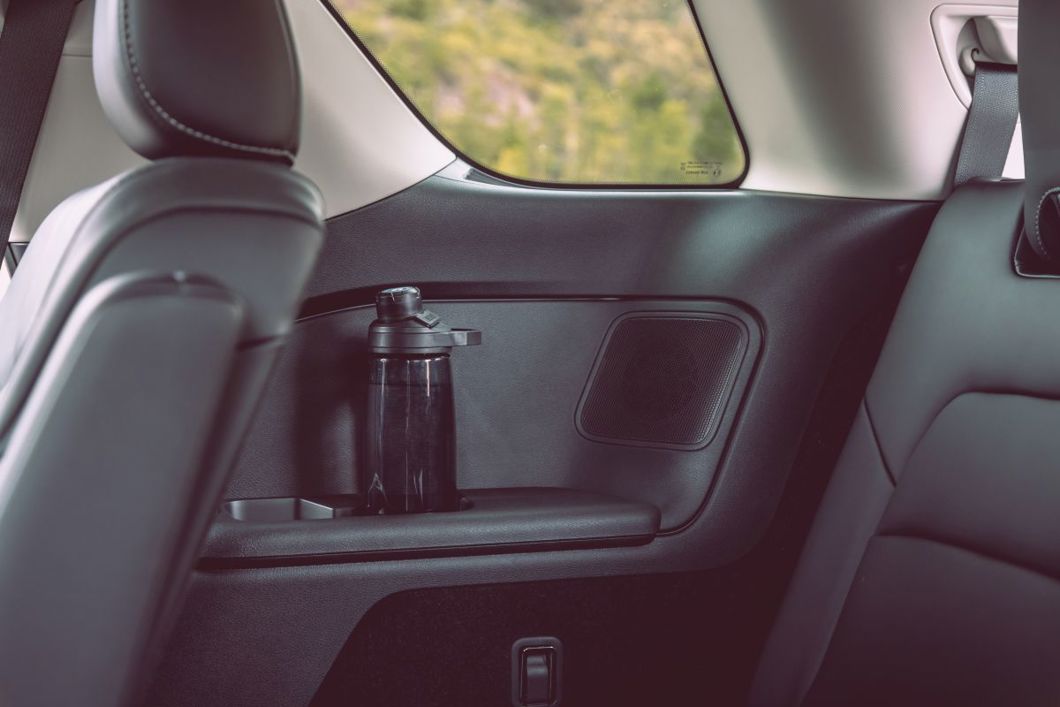
According to maths, having a 2-2 seating setup in the first two rows means three in the back. That'd realistically be three children. The centre-position seatbelt is anchored in the roof, which is a bit untidy. It’s all a bit knees-up, as is often the case with 7-seaters, but still: there's genuinely space for an adult occupant (or two) back there if needed.
The 3rd row switches from real leather to synthetic, but it's nicely executed. There are ventilation outlets and cupholders each side back there, but the kids might be fighting over the right-hand seat in the back - that’s the only 3rd-row position that gets a USB charge port. As an aside, the $5k-cheaper Pathfinder Ti puts a bench in the 2nd row, making it an 8-seater.
Even when you've got a full load of family and friends aboard, the rear-view mirror remains effective because it's digital: it can show you a view from a rear exterior camera, rather than the one with heads blocking everything.
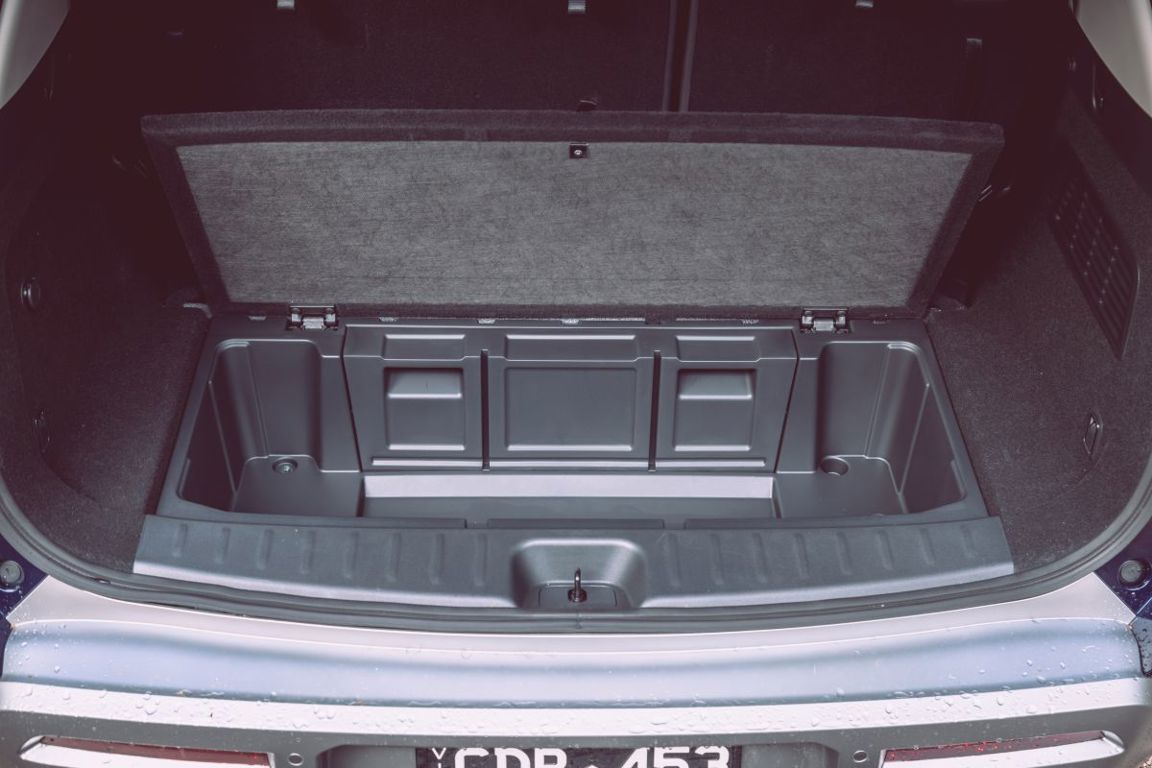
With all 7 seats in use there's reasonable cargo space, especially if you factor in the deep storage box underneath the floor. But as a 5-seater (which is how so many of these large SUVs are used), there's a truly vast luggage area that seems even bigger than the official 557-litre figure suggests.
INTERIOR
On the road: what's the Nissan Pathfinder Ti-L like to drive?
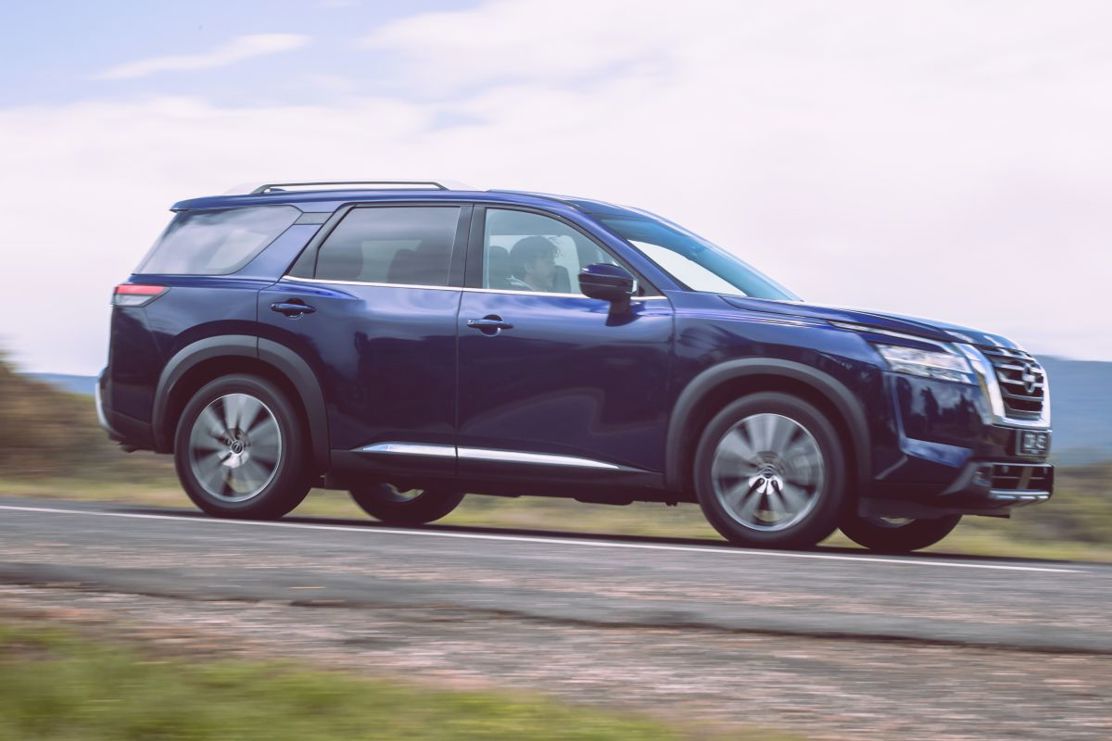
It might seem old-school, but the Pathfinder's smooth 3.5-litre V6 petrol engine is a highlight of the driving experience, especially as it's paired with a conventional 9-speed automatic transmission. The previous model had a CVT... which definitely wasn't a highlight.
The V6 is rev-happy and sounds pleasingly throaty. The bulk of the power is up top, but the 9-speed transmission does a great job of keeping things on the boil at middling speeds. Which is really where you should be driving the Pathfinder: it's a relaxed school bus/cruiser.
The fuel consumption isn't terrible, either. The official 11.7l/100km is a good indication of mixed real-world use; we averaged 12.3l during our week, including some fairly sprited driving. Urban use will drive up the numbers sustantially given the Nissan's size and weight, but if you're doing lots of open-road travel you might be plesantly surprised: this car has long legs thanks to that 9-speed gearbox.
The ride is cushy considering the 20-inch wheels and low-profile tyres. But the handling is also surprisingly composed, given the Pathfinder's size and relaxed character. The steering has weight which gives you confidence, and the suspension controls body movements remarkably well. It's not nearly as lollopy (technical term) as you'd think.
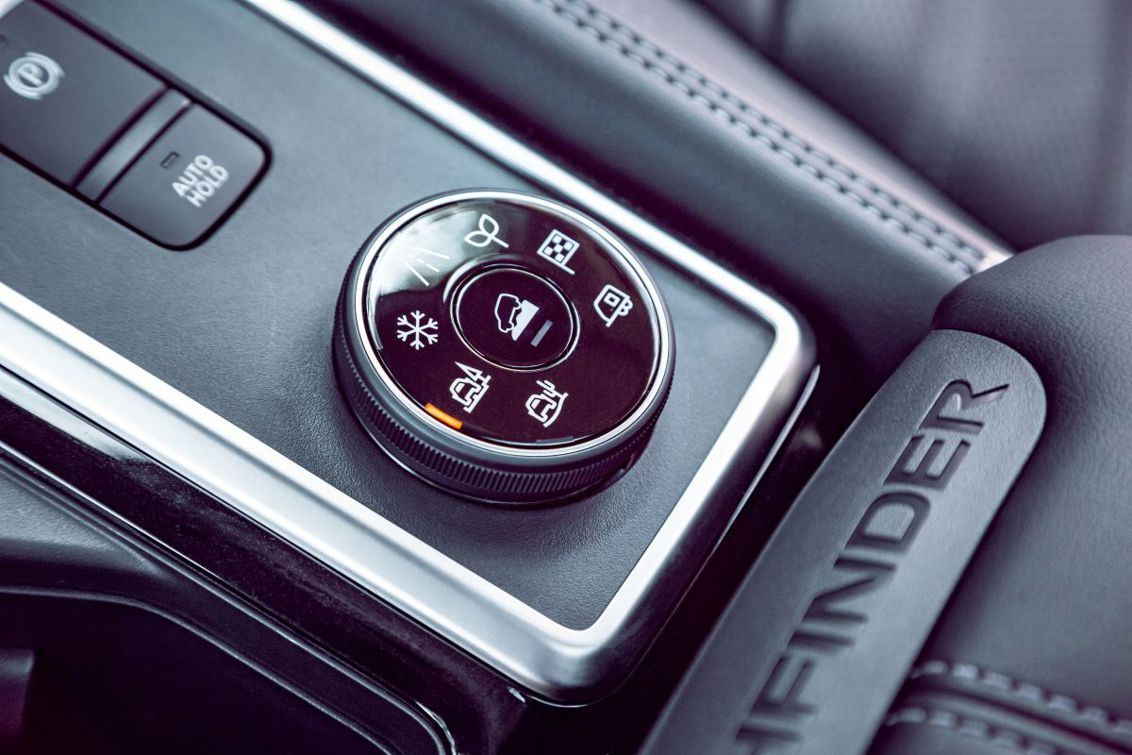
There's a even a Sport mode available on the centre-console drive-setting dial, along with a plethora of off-tarmac settings - although this is definitely a crossover, on a road-car platform, rather than a full-on off-roader like a Ford Everest. Top tip: for gentle driving it's worth turning the dial to Economy, which makes the Pathfinder more of a front-drive machine and will save some 91-octane.
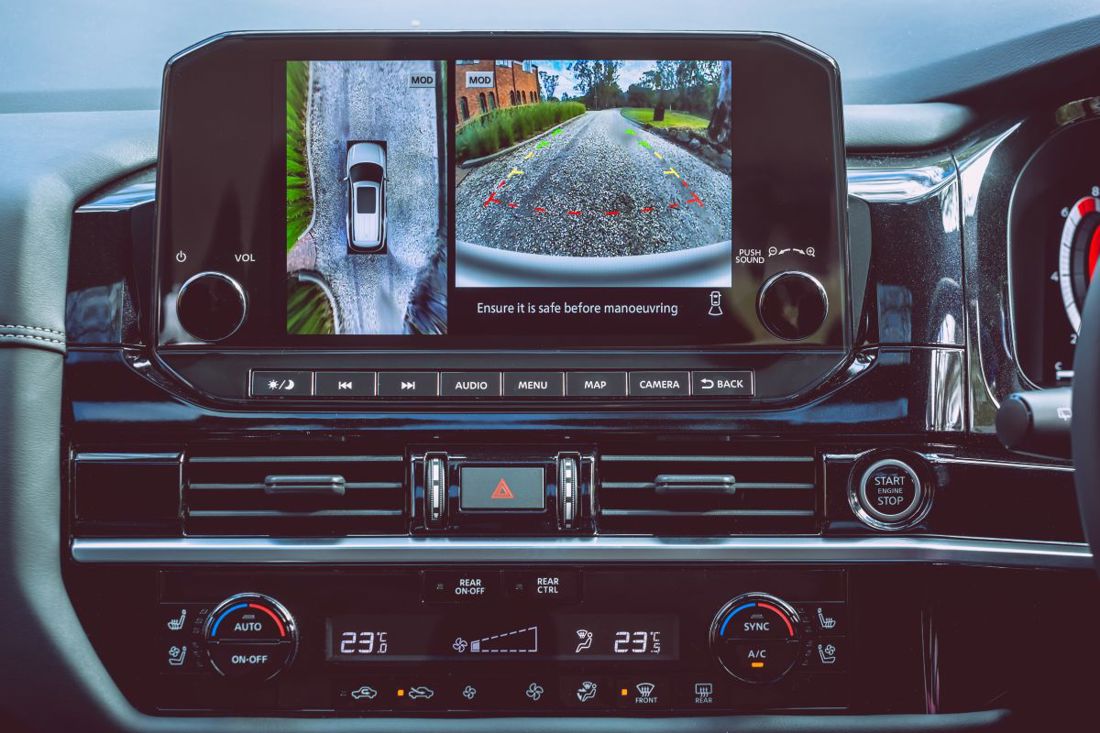
Nissan was a pioneer of 360-degree camera systems way back when, and the Pathfinder Ti-L has the full surround and bird's eye view setup. But the infotainment display's small size and somewhat grainy display undermine the clever tech a bit.
TECHNICAL
On ownership: what's the Nissan Pathfinder Ti-L warranty and servicing situation?
Pathfinder comes with a 5-year, 150,000km warranty and 5 years roadside assistance. Servicing is every 15,000km or 12 months, whichever comes first.
On the whole: what do we think of the Nissan Pathfinder Ti-L?
The lack of electrification will put some people off, as will the somewhat traditional dashboard layout and fussy ergonomics. But there's plenty of comfort/convenience technology on offer and the Pathfinder has an impressive suite of safety features (including a centre airbag).
There's also huge appeal in the Pathfinder's throaty V6 engine and pseudo-MPV cabin layout, with those captain's chairs and generous space. It has the potential to please both driver and passengers.
In fact, it's the kind of family SUV you could get quite attached to; it has personality. But it's also quite expensive. Our Ti-L model is more pricey than many rivals, and you have to factor in the extra running costs when the likes of the Hyundai Santa Fe, Mazda CX-80 and Toyota Highlander all boast hybrid technology. If that doesn't bother you... the kids will love this thing.
Nissan Pathfinder Ti-L FAQs
What kind of car is the Nissan Pathfinder Ti-L?
A large SUV with 7 seats.
Does the Nissan Pathfinder Ti-L have hybrid or EV technology?
No. It's powered by a naturally aspirated V6 petrol engine.
What’s the fuel economy of the Nissan Pathfinder Ti-L?
11.7 litres per 100km (3P-WLTP).
Is the Nissan Pathfinder Ti-L safe?
The Pathfinder from model-year 2022 onwards has a 5-star ANCAP rating (valid until 2028).
What safety and assistance features does Nissan Pathfinder Ti-L have?
What are the Nissan Pathfinder Ti-L's main rivals?
- Hyundai Santa Fe Elite 1.6T hybrid AWD ($79,990): hybrid down on towing, but there's also a 2.4-litre petrol option.
- Kia Sorento Water HEV AWD ($88,490): Now hybrid-only, with Water as the top specification.
- Mazda CX-80 Homura 3.3 MHEV AWD ($78,990): Mild-hybrid inline six, but you can also have a PHEV,
- Skoda Kodiaq RS ($95,000): Definitely the sporty option and another pure-ICE powertrain.
- Toyota Highlander Limited ZR hybrid ($89,990): Arguably the default choice, with hybrid power across the range.


