



What's this new car all about then?
The RZ is Lexus New Zealand's only pure-electric (BEV) model; the UX300e compact-SUV was discontinued last year. It shares a lot in terms of platform and technology with the Toyota bZ4X, but in Lexus terms it's really a sister model to the RX hybrid: slightly smaller (85mm shorter, 60mm lower), but in the same premium-SUV market segment. That's "RZ" for the R model line and Z for zero-emissions, by the way.
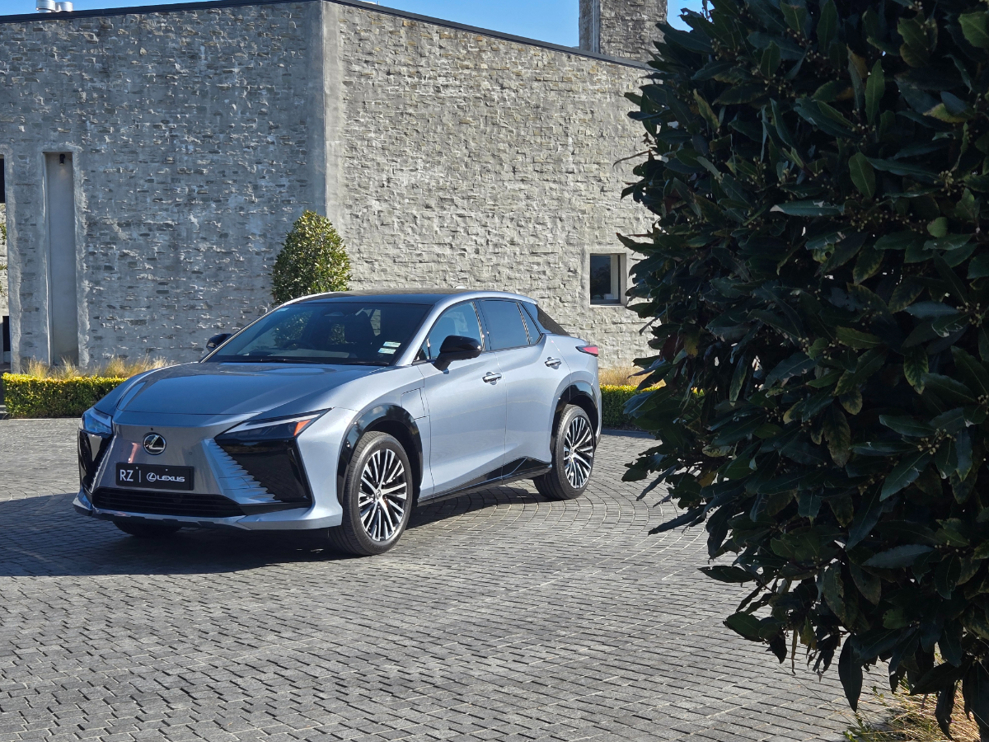
The original RZ was launched in NZ in 2023; it's time for RZ, take two. In some ways very little has changed; in other ways, this is a revolutionary model for Lexus.
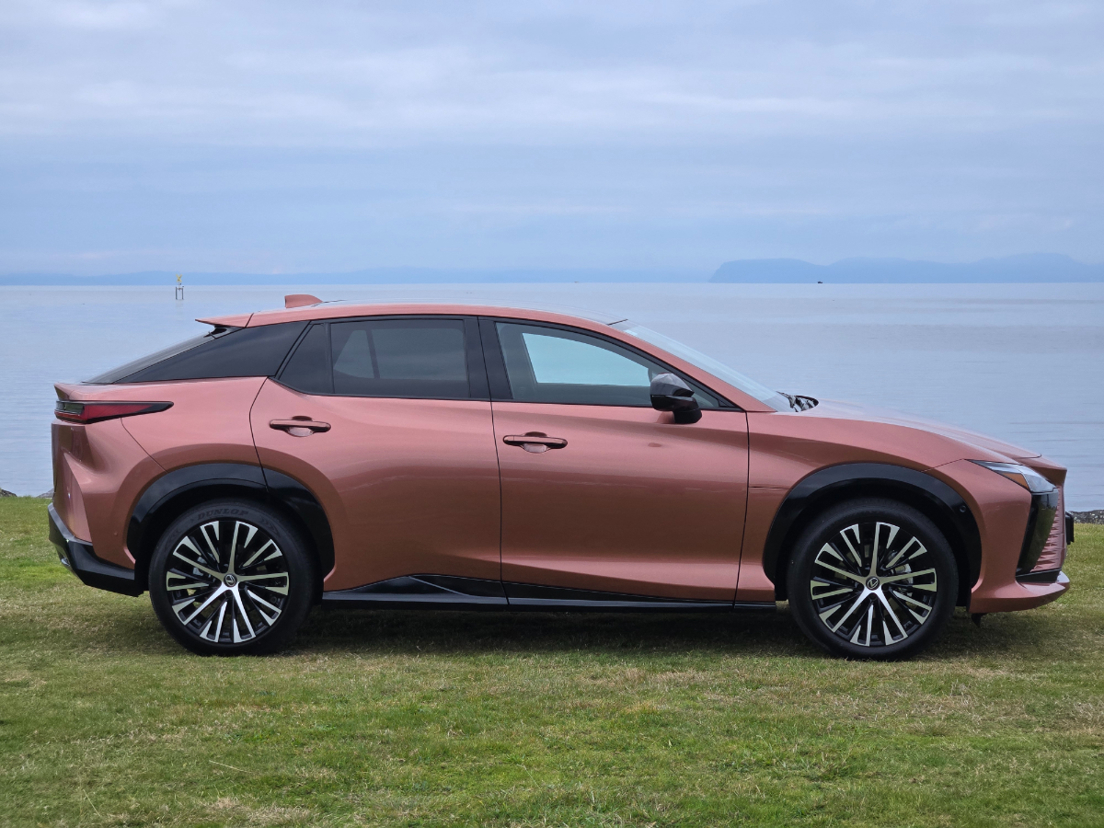
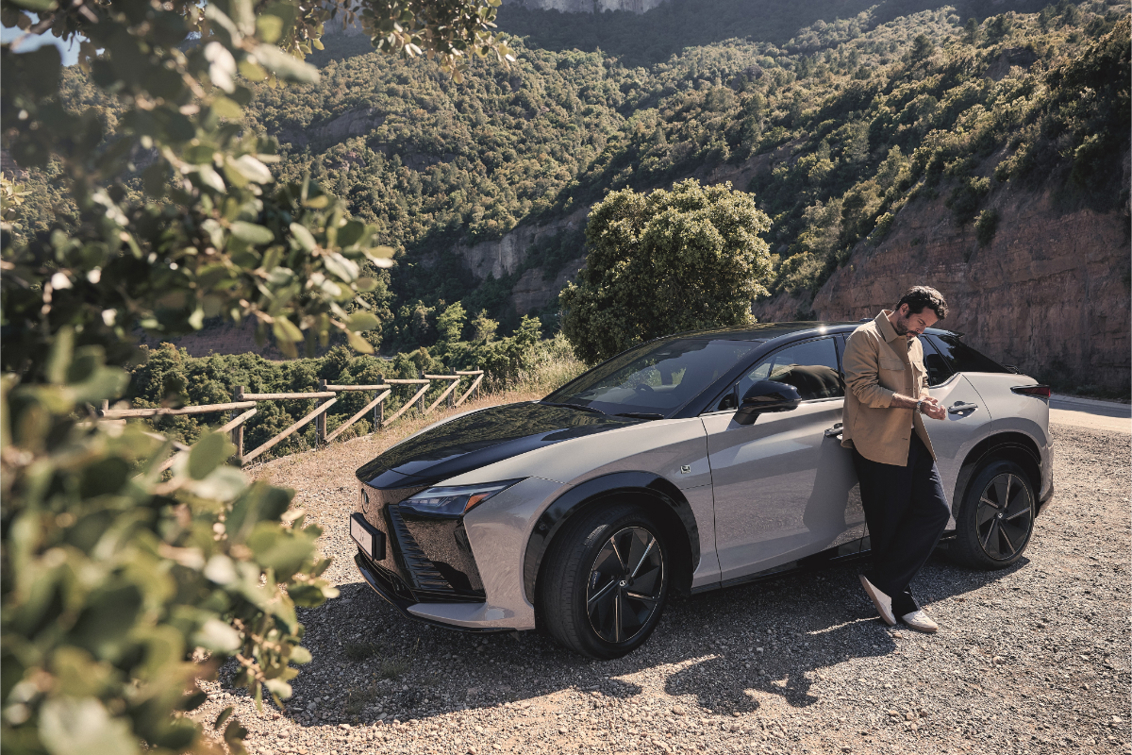
There's no longer a Core entry-level version. RZ starts with the 500e Dynamic (previously 450e), which used to be the flagship version. You'll be hard pressed to pick new Dynamic from old, at least from the outside: there's almost no visual change.
But underneath, there's slightly enlarged battery capacity (up from 71 to 74.7kWh) and more importantly, improved thermal management that allows the pack to stay in its optimum operating zone more of the time. Peak charge rate is still 150kW, but Lexus says the new model will be able to achieve that on a DC station more often and for longer periods; so charging will be quicker.
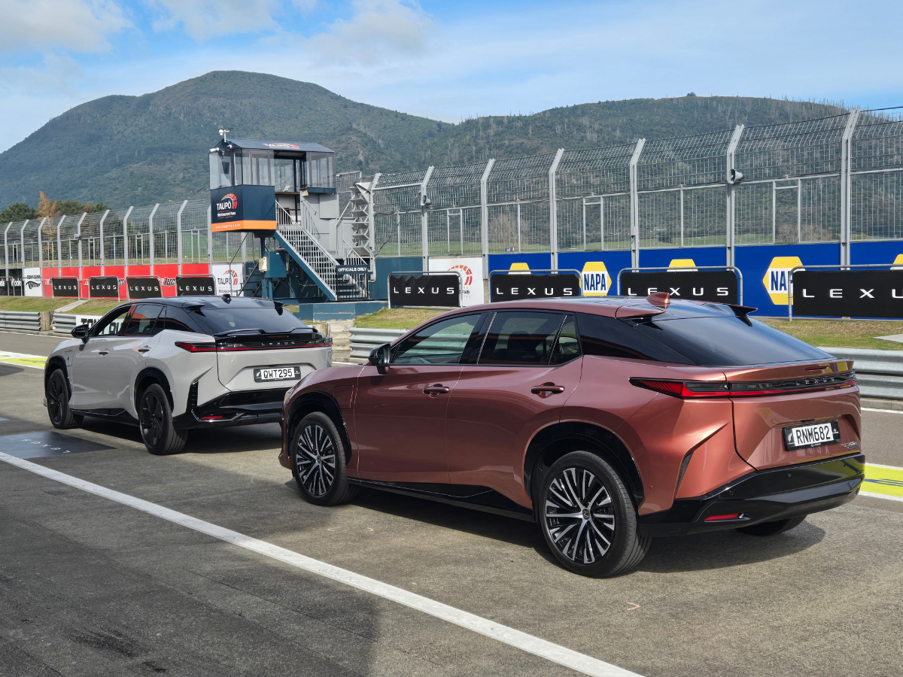
AC charging has doubled in speed to 22kW, although there are not that many places in NZ where that's available (most home wallbox-type units are 7kW). That might change once the Government's $52.7m loan fund for extra public stations starts to be spent: of the 2574 new points planned, 1200 will be AC.
The RZ eAxle motors have also been revised, with the focus on improved efficiency: it's AWD-only of course, maximum power 280kW.
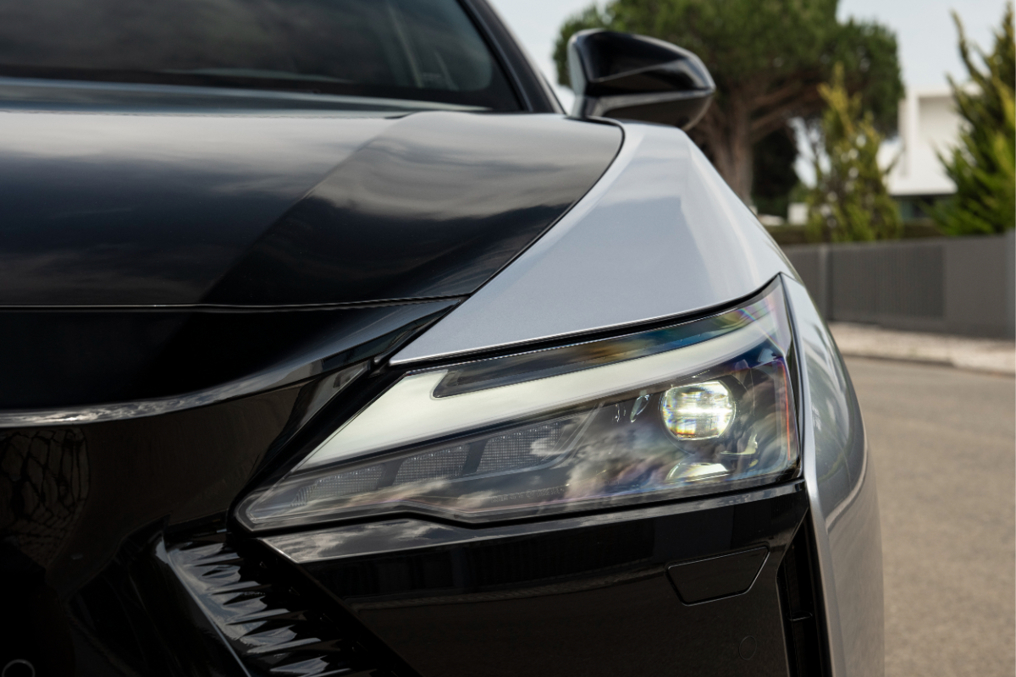
WLTP range has improved from the 395km of the previous model to 460km - mostly thanks to the improved temperature management, says Lexus.
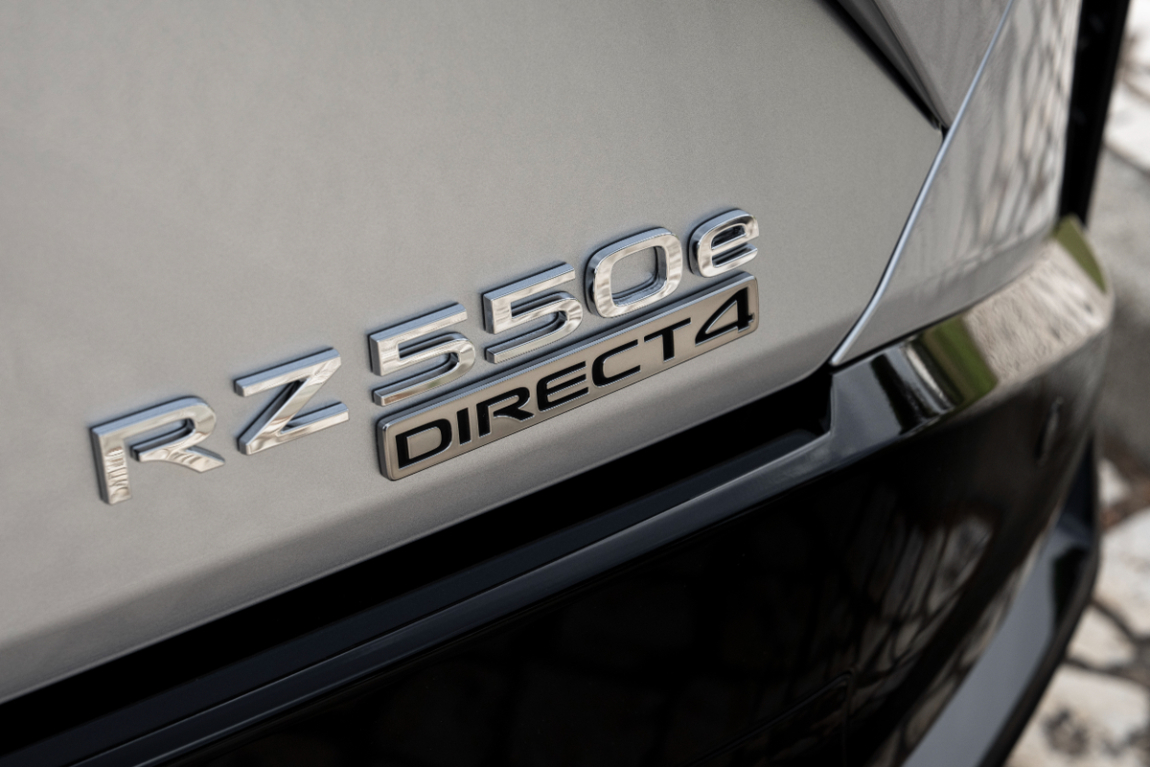
The top RZ 550e F Sport is something new for RZ, and aligns the model more closely with the RX 500h F Sport. The battery goes up to 77kWh and power increases to 300kW, but range reduces to 437km.
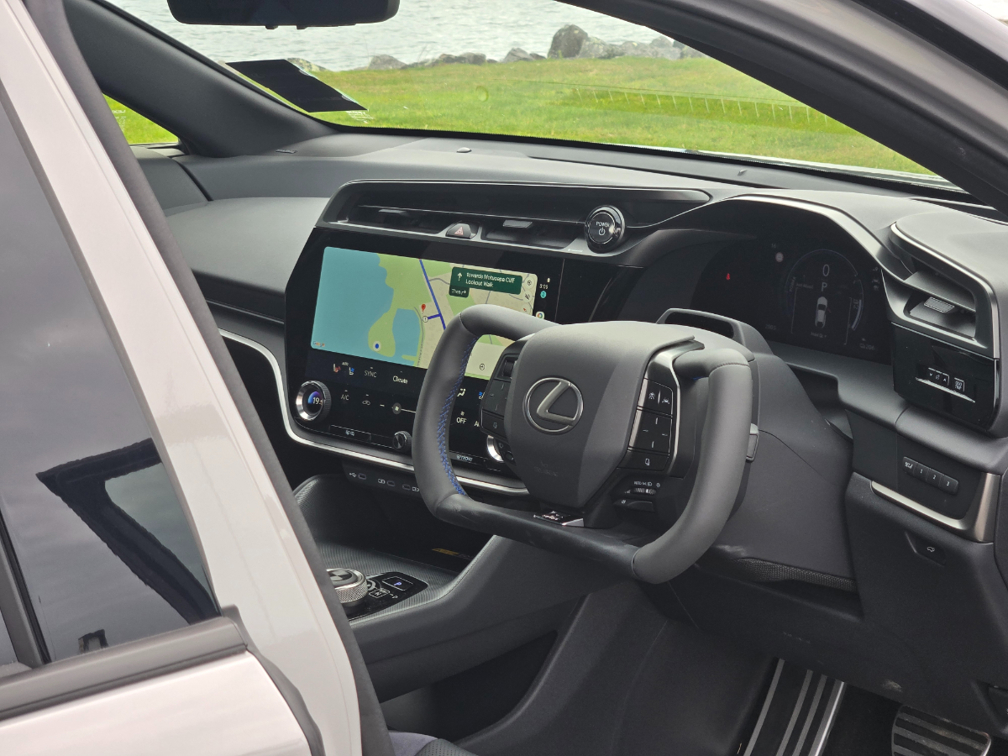
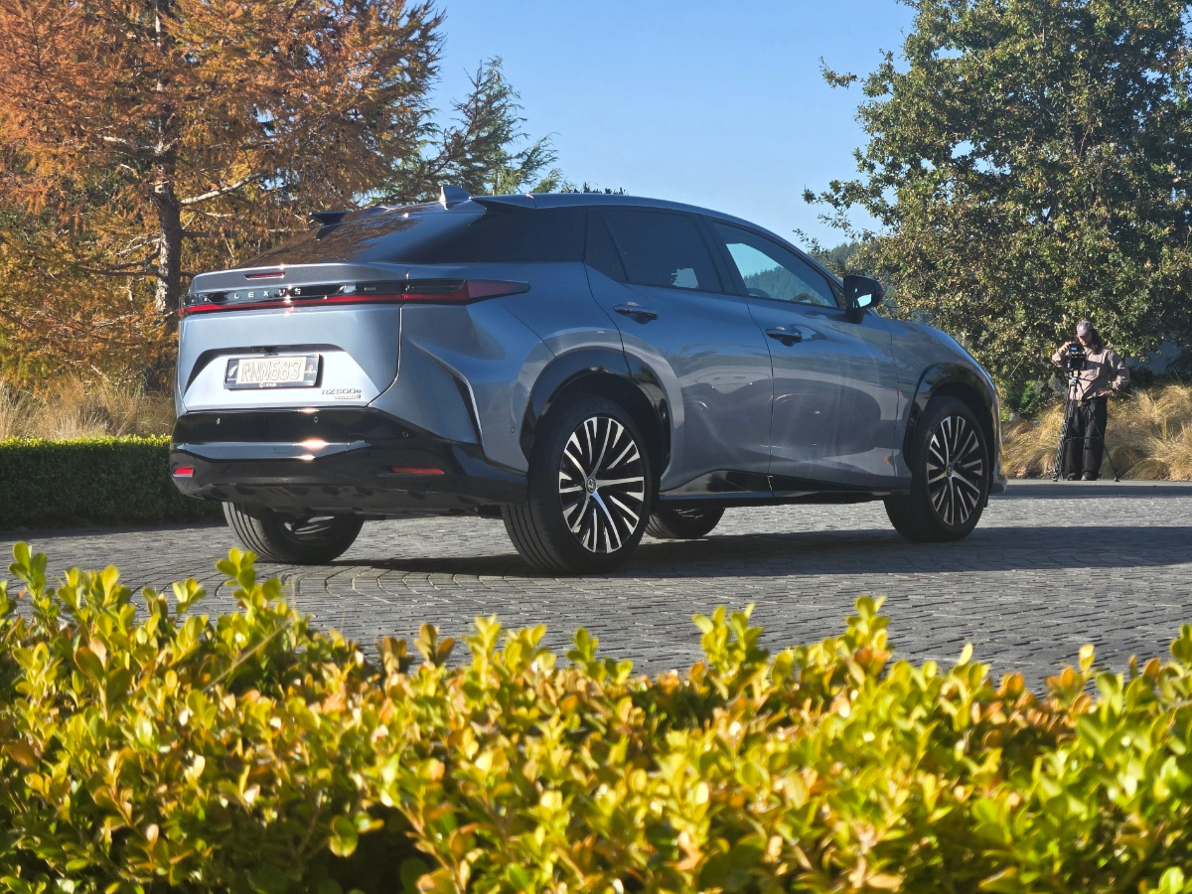
You'll be able to pick this one: it has different frontal styling, some trick aero wheel covers (plastic, but there are alloys underneath) and some extra rear spoiler action.
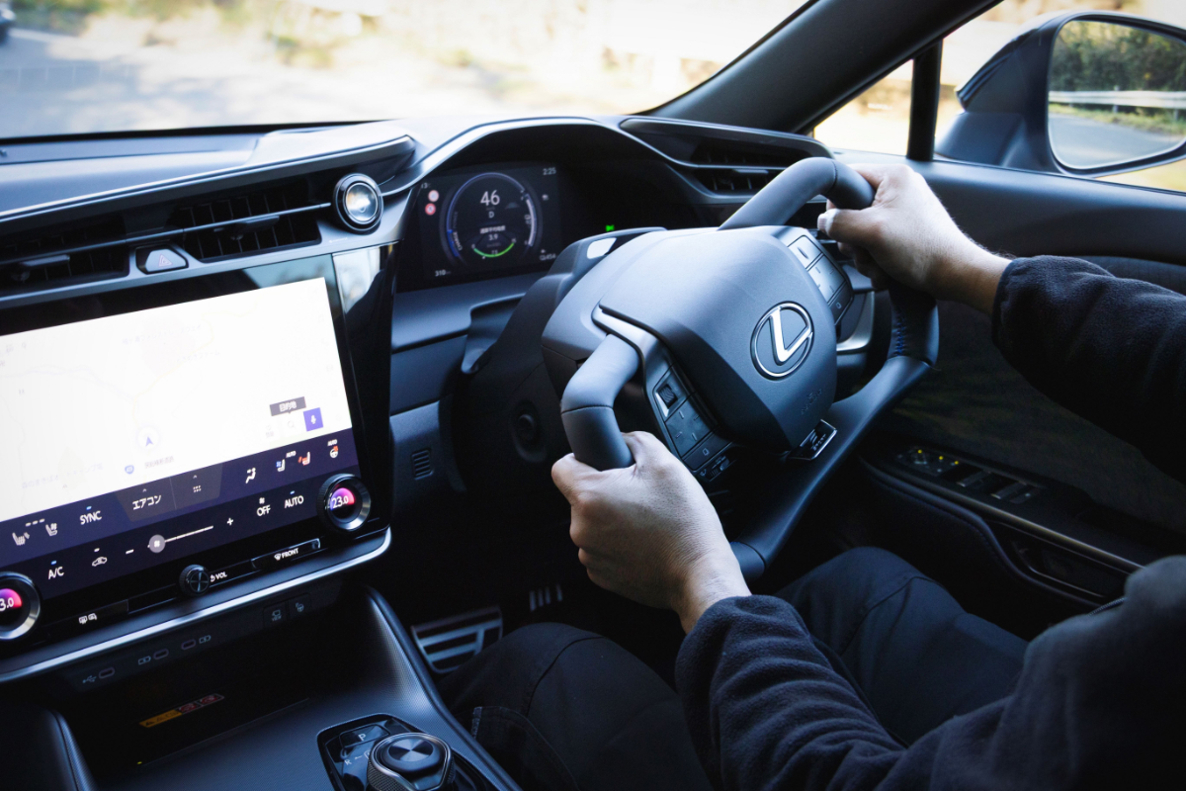
The headline news for the F Sport is the RZ's steer-by-wire (SBW) system, meaning there's no physical connection between the steering wheel (well, it's not really a steering wheel as such) and front axle; everything's done with sensors and actuators, just like in an aeroplane.
We've seen steer-by-wire before in NZ, of course. Infiniti offered it on the Q50 and Q60 back in 2017. The concept was similar, but it was not as sophisticated as this new Lexus setup and it also came with a full backup mechanical steering column. There's no such thing in the RZ; Lexus has supreme confidence in the technology. Farizon (by Geely) vans also have steer-by-wire, by the way. But we disgress.
SBW goes hand-in-hand with a Knight Rider-spec (Google it, young people) "yoke" steering, um, facilitator. The technology does not require this, of course; you could have a normal circuar wheel. But the yoke gives Lexus a chance to show off SBW's abilities.
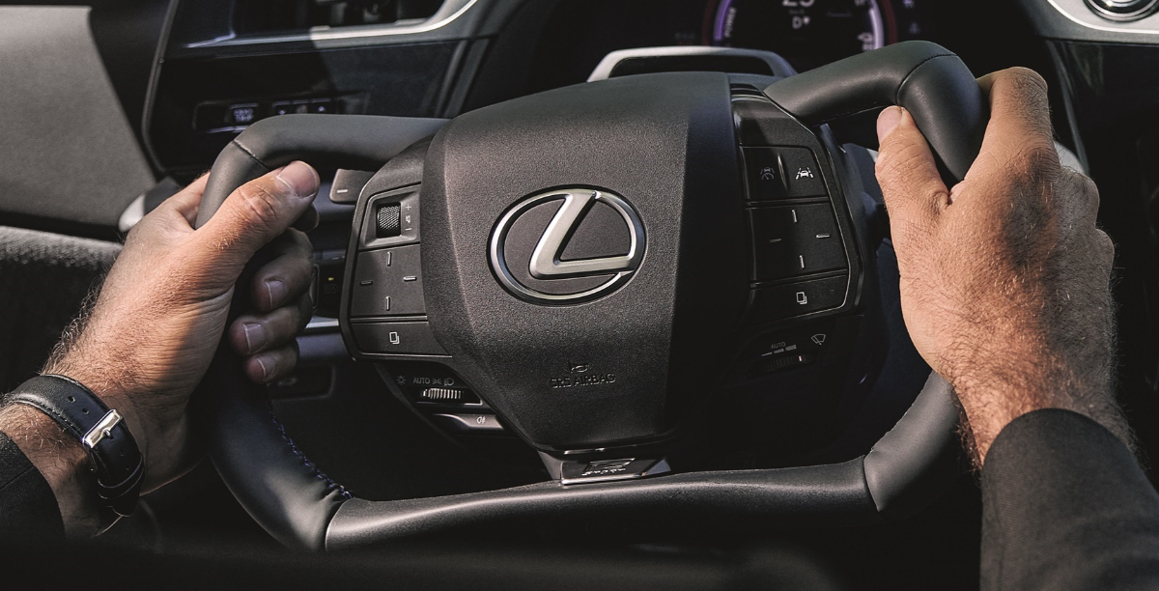
You can only hold it at quarter-to-nine; that works because the ratio is highly variable. Maximum lock is only 200 degrees (most conventional cars are around 720deg), and the ratio adjusts so you can complete a U-turn without moving your hand position at low speed, yet gets progressively slower as speed builds for a more natural, less nervous response on the open road.
In fact, Lexus says SBW offers a superior driving experience because the Steering Control Actuator senses forces generated from the road surface and can filter out unwanted vibrations, resulting is better feel and feedback. It also gives a clear view of the instruments, eases ingress/egress and, let's face it, looks futuristic and generates lots of headlines.
SBW is standard on F Sport, but you can also specify it on Dynamic for an extra $10k ($119,900). Which sounds like a hefty option price, but it's some pretty serious technology and comes with reconfigured controls to suit the yoke. Lexus NZ says about half of Dynamic customers are opting for SBW.
How much is it?
When the RZ was introduced in 2023, it sat just above the RX hybrid lineup: petrol-electric to BEV, which made sense. The RZ Core just undercut the RX500h F Sport: $141,900 versus $142,900. The RZ Dynamic was top of the R-range at $151,600.
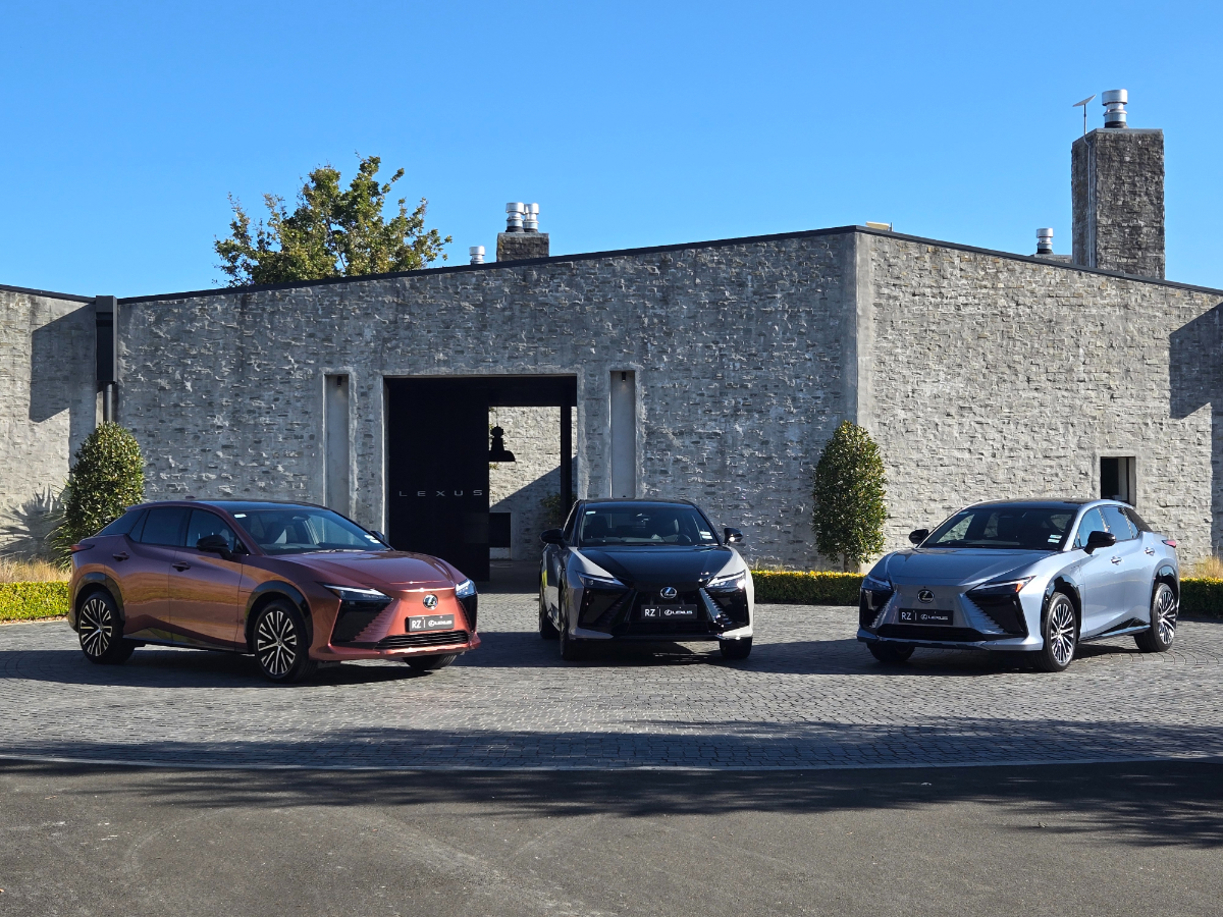
The RZ didn't exactly set the BEV sales on fire: Lexus has sold just 120 of them in three years. The competition is also more multi-layered in 2026.
So now there's been a big rethink on pricing, and Lexus NZ has decided the RZ should sit in-between the smaller NX and slightly larger RX. There's no more RZ Core, so the entry point is now the Dynamic at $109,900, which represents an astonishing $41,700 reduction from the previous model.
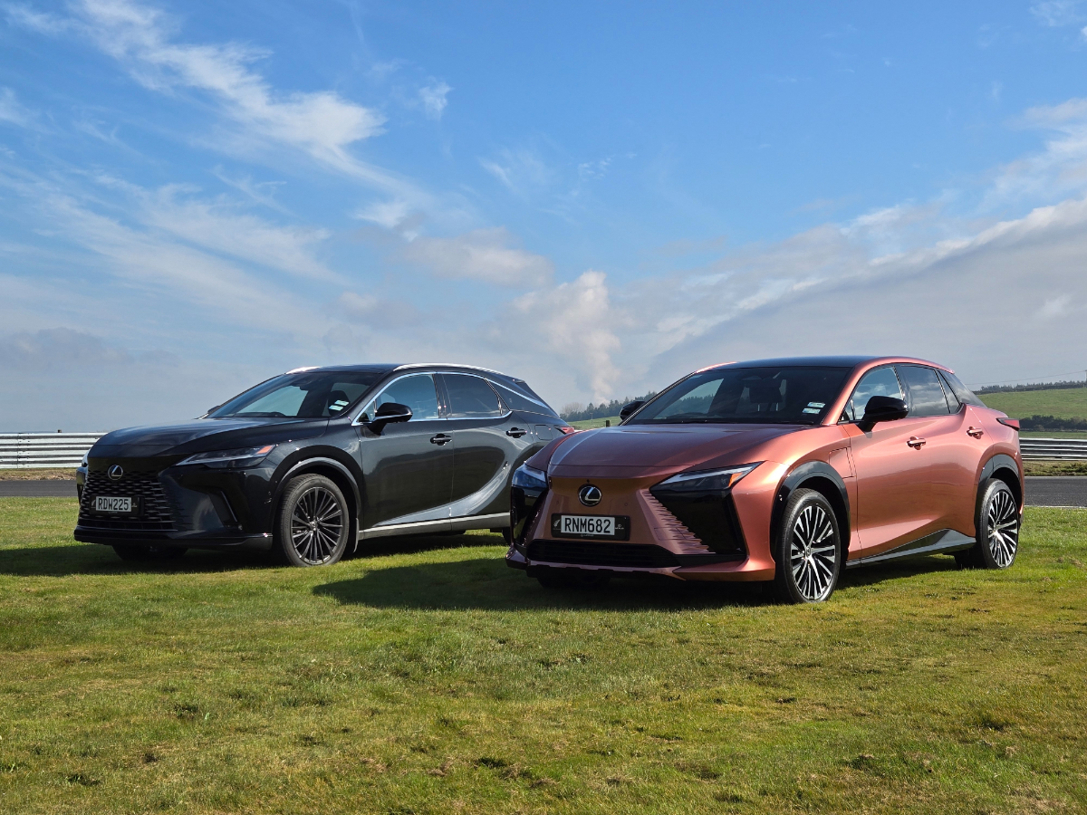
The RZ Dynamic is now only $1300 more expensive than the smaller NX 350h Limited hybrid and substantially cheaper than the NX Limited plug-in hybrid ($116,600).
More significantly, the new bells-and-whistles RZ 550e F Sport (SBW standard) is $134,990. The only RX that's cheaper is the entry-level 350h Premium and really, the equivalent is the flagship RX 500h F Sport, which is priced $9k higher at $143,900.
Lexus NZ vice president Andrew Davis says this a very deliberate strategy, reflecting a "multi-pathway strategy; we want to offer all the different powertrains to customers at accessible price points."
Translation: the original RZ was too easy to ignore because it was so much more expensive than the RX. Now, if you're buying an RX, you really have to at least take a look at RZ.
What's it like to drive?
The RZ has always been a polished and accomplished EV and not much has changed there: it's deeply refined, brisk without belting off the line and serving up a surprisingly sporty (read firm) but well-controlled ride.
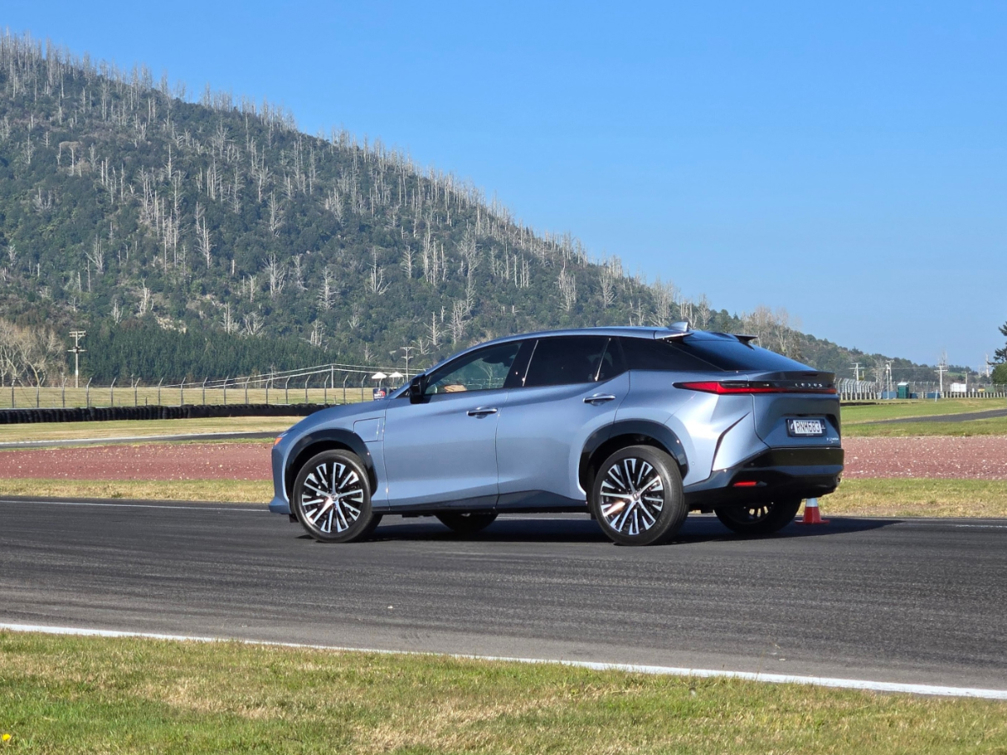
The thing everybody wants to talk about is SBW. It does take some getting used to, especially when you get in cold and drive it at low speed. The response off-centre is very abrupt, feeling almost like an aggressive 4-wheel steering car (it's not, although the RX F Sport is).
We started the media-drive day with some track exercises, both low and high-speed, and it's fair to say cones were sacrificed. The biggest challenge is possibly not how the technology works, but training the driver to keep their hands in position. In tight manoeuvres it's natural to default to a hand-over-hand movement, until you find there's nothing to grab onto.
Once we'd got the hang of it, there was a slalom-type course that involved a variety of velocities. Half-way there was a very deliberate 360-degree turn. SBW allows you to do that without changing hand position, but your brain doesn't. At least not at first.
SBW does feel very natural on a road drive (we spent the afternoon doing a lap of Lake Taupo), the variable ratio changing seamlessly with the ebb and flow of the road and cornering speeds. And yes, slowing from that type of driving to an urban environment with the super-quick ratio was a lot easier. You get used to it.
The steering was remarkably well-isolated from some very bumpy roads, and confidence-inspiring on some tight 35km/h corners... but we still reckon it might be a challenge to convince potential customers on a quick drive around the block. You have to spend time with SBW to really appreciate the advantages... or figure out if it's really for you.
Unique to F Sport is Interactive Manual Drive, which simulates an 8-speed automatic and works via fingertip paddles. It's similar in concept to that employed by Hyundai on the Ioniq 5 N: the system holds the chosen "gear", can hit a pretend redline, will not accelerate hard if you've chosen a ratio that's too high, and can really slam through the steps under power.
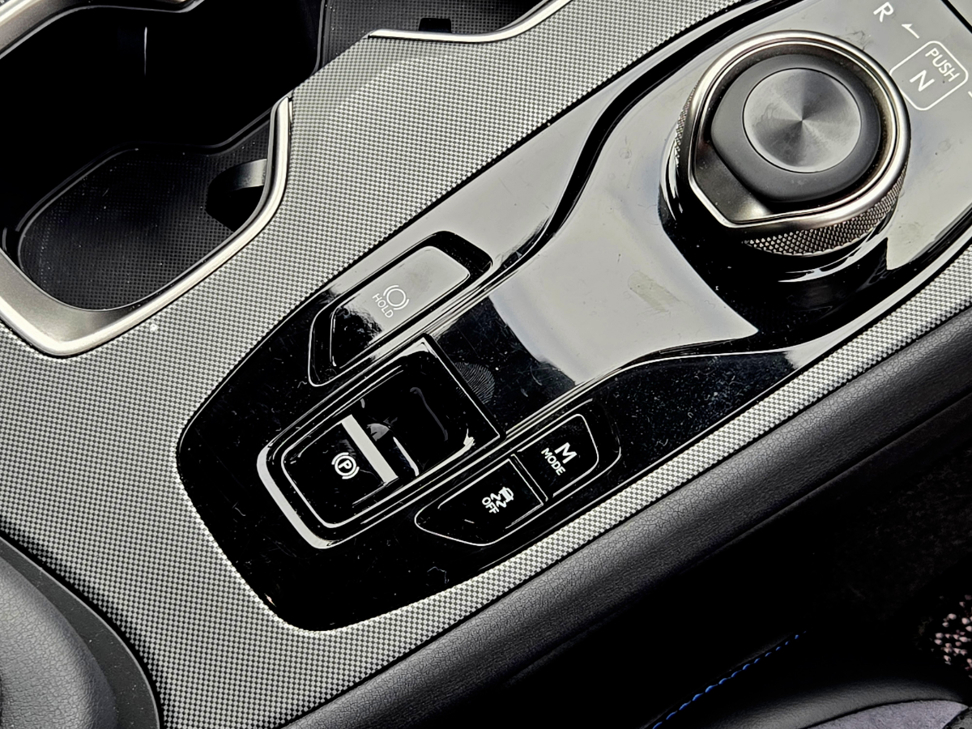
There's a simulated sound designed specifically for the system that can run at three levels, but it's a very EV-tune - not a petrol-esque soundtrack like the Ioniq N. Makes sense.
What’s the pick of the range?
It might come down to the look you want... or how you want to steer.
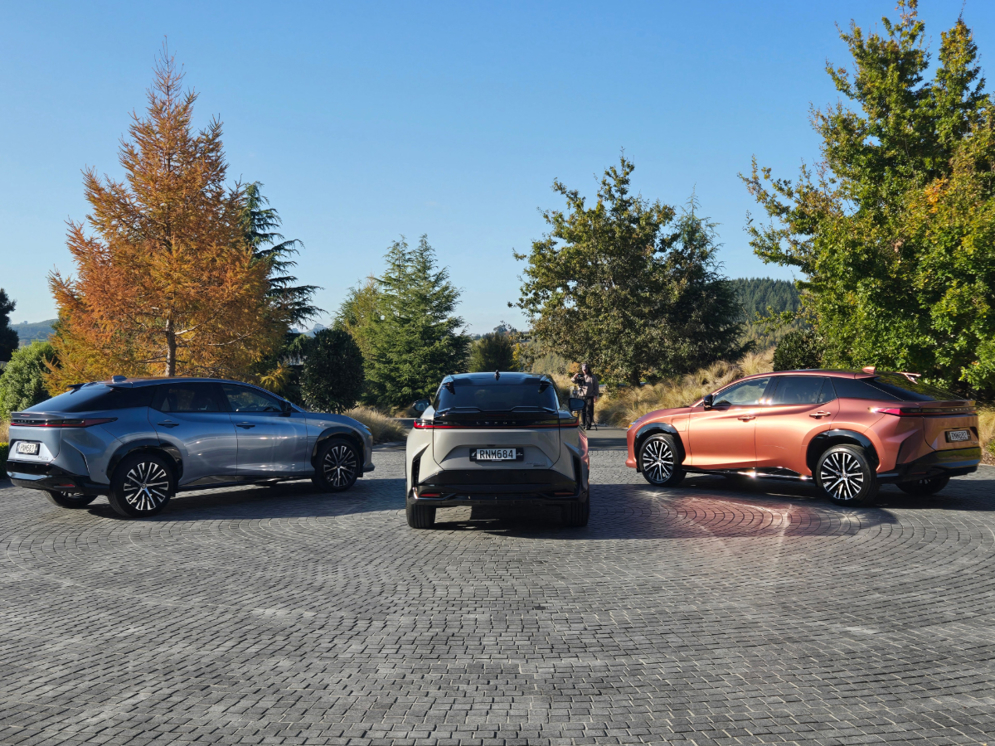
If you want a more low-key RZ , the Dynamic fills that role. It's still a very quick car (0-100km/h in 4.6 seconds versus 4.4sec for the F Sport) but doesn't shout about it visually, and you have the choice of standard steering or SBW.
However, spend the extra on a Dynamic with SBW and you're getting ever-closer to the price of the F Sport, which has more power, more performance and added features - including Interactive Manual Drive, which you can't have on the Dynamic. With Lexus NZ's new pricing strategy, the F Sport is hard to go past.
What other cars should I consider?
Lexus NZ does well with the PHEV versions of the NX ($115,000-$116,600) and RX ($145,000). So any L-loyalists wanting to take the next step in electrification can now look at the RZ and see they're getting quite a bit for their money. The RZ 550e F Sport looks like an especially good proposition against the RX 500h F Sport.
If we're talking BEV competition, there are sharply priced rivals emerging from China in the premium segment (another reason for the Lexus price-rejig): the Zeekr 7X is an impressive luxury/performance SUV at $69,900-$94,900, for example.
The Cadillac Lyriq has dropped in price to $99,000 (or there's the 6-seat Vistiq for $125,000), the Polestar 4 is now just $99,900-$119,900, or consider the Audi Q6 e-tron ($134,990-$169,990).
The real competition might come with new-gen, high-tech BEV models like the BMW iX3 (confirmed at $125,900 from mid-year) and the Volvo EX60 (late-2026). There's a lot happening in this segment.


