



For the vast majority of the 50 years that the Honda Civic has been a staple of the global automotive landscape it was a capable, affordable small hatchback and sedan that offered up all the sensible practicality of a Toyota Corolla, but with more driver appeal and often (but not always) a sharper design edge.
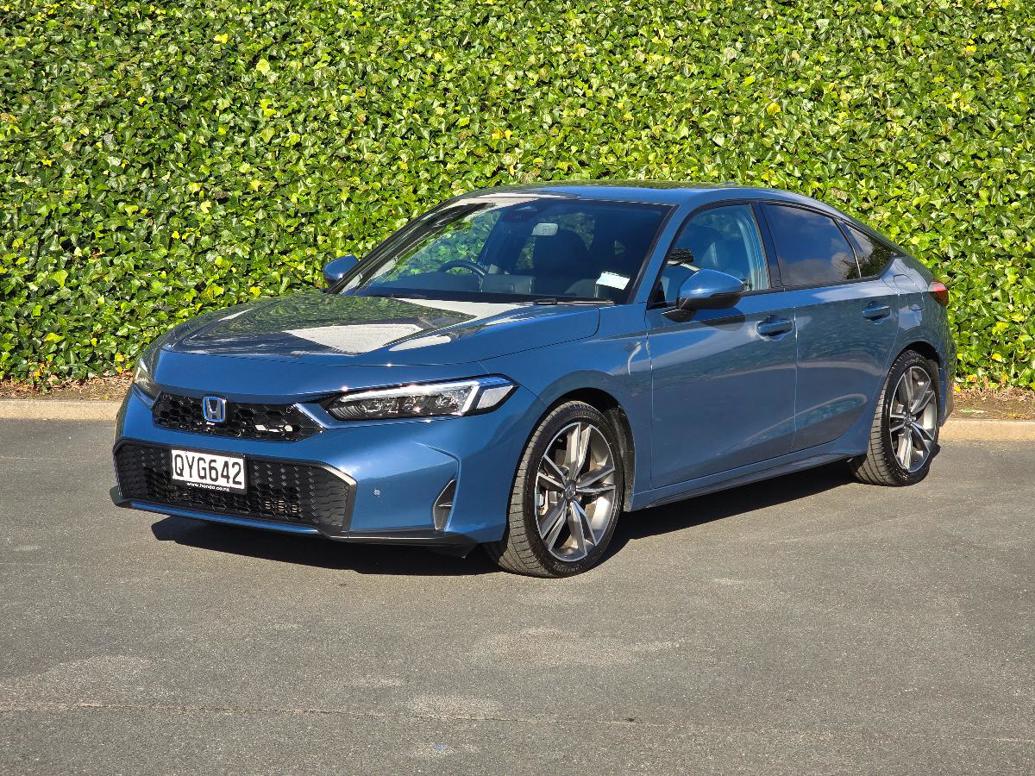
However, in its 11th generation, the Civic has undergone a dramatic transformation, evolving from a budget-friendly, no-frills commuter into a premium hatchback that positions itself as a sophisticated alternative to entry-level luxury models. Yes, really.
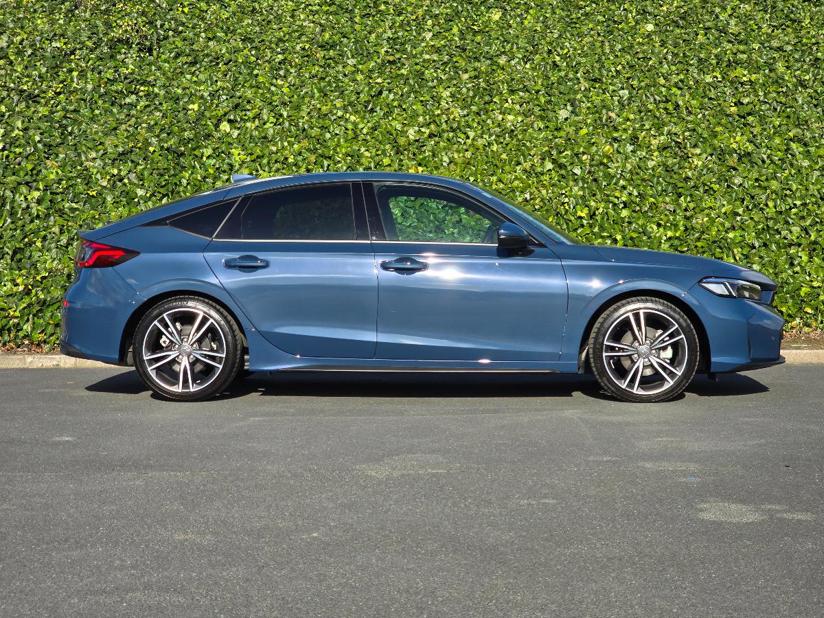
Now sold here in just two forms - the superbly polished and frantically fast Type R and the SR e:HEV you see here - the Civic range now starts at $59,000 for the e:HEV and rises to $72,000 for the Type R.
However, in both cases it attempts to justify a significantly higher price tag with exceptional build quality, advanced technology, and genuinely world-class powertrains.
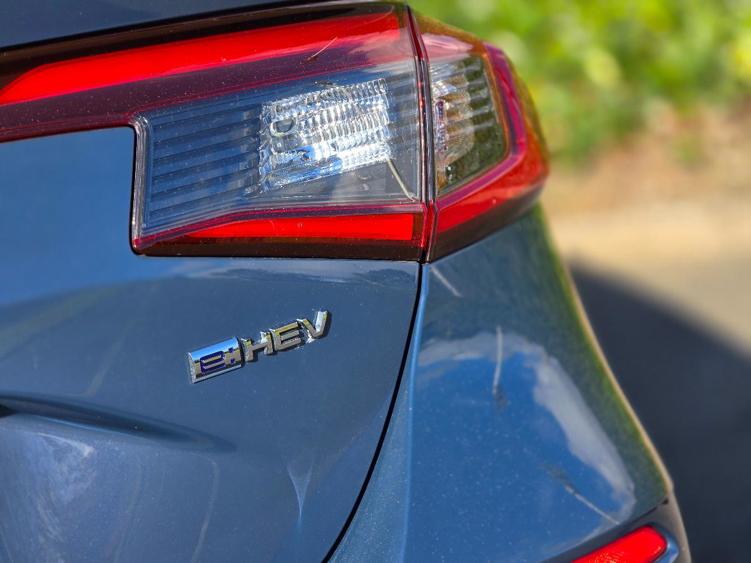
While the appeal of the Type R is obvious and largely in line with the competition (the GR Corolla is between $65,990 and $69,990) the SR is a bit more of a head scratcher. That is, until you drive it.
The $60k price tag for the single high-spec SR variant essentially repositions the Civic in a no-man's land between mainstream competitors like the Corolla and premium European hatches like the Volkswagen Golf, Audi A3, and Peugeot 308. But it has to be said that it takes the fight right up to those premium competitors in almost every regard.
Inside, the Civic avoids flashy trends and or overly digital features in favour of exceptional ergonomics and excellent build quality. Unlike many modern rivals that bury functions in touchscreens, Honda has retained physical buttons and dials for the likes of dual-zone climate control and audio volume.
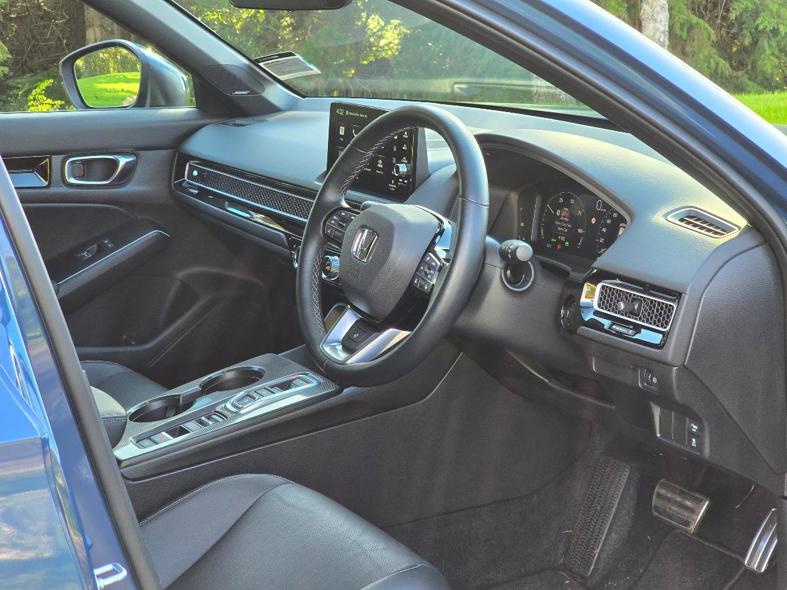
This refreshingly uncomplicated approach is paired with a 9.0-inch infotainment screen that, while smaller than many competitors, is a vast improvement on previous Honda efforts in infotainment, and is vibrant and responsive.
The brilliance of the e:HEV system lies in its operation; unlike traditional hybrids, the Honda can decouple the petrol engine at cruising speeds to run entirely on electricity.
A major tech upgrade for the latest model is the integration of Google Assistant, Google Maps, and Google Play directly into the car’s operating system, however the Civic lacks an onboard data connection, so has to be tethered to your phone’s WIFI hotspot to work.
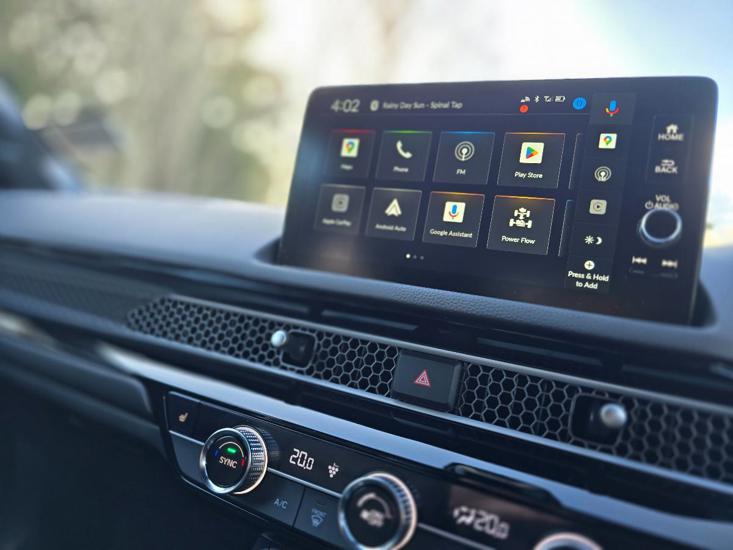
This is odd to say the least, but probably not a huge issue if you own the car, however, some data plans don’t allow tethering, while older phones may not even be capable of it. Not necessarily a problem, more something to bear in mind.
Under the bonnet, the Civic features Honda’s sophisticated "two-motor" hybrid system that pairs a 2.0-litre naturally aspirated Atkinson-cycle four-cylinder engine with two electric motors and a 1.0kWh lithium-ion battery for a total system output of 135kW and 315Nm.
The brilliance of the e:HEV system lies in its operation; unlike traditional hybrids, the Honda can decouple the petrol engine at cruising speeds to run entirely on electricity. It functions primarily as an electric car at low speeds, with the petrol engine acting as a generator to charge the battery or assisting under heavy acceleration. This results in a driving experience that is seamless and refined, with transitions between power sources that are almost invisible to the driver.
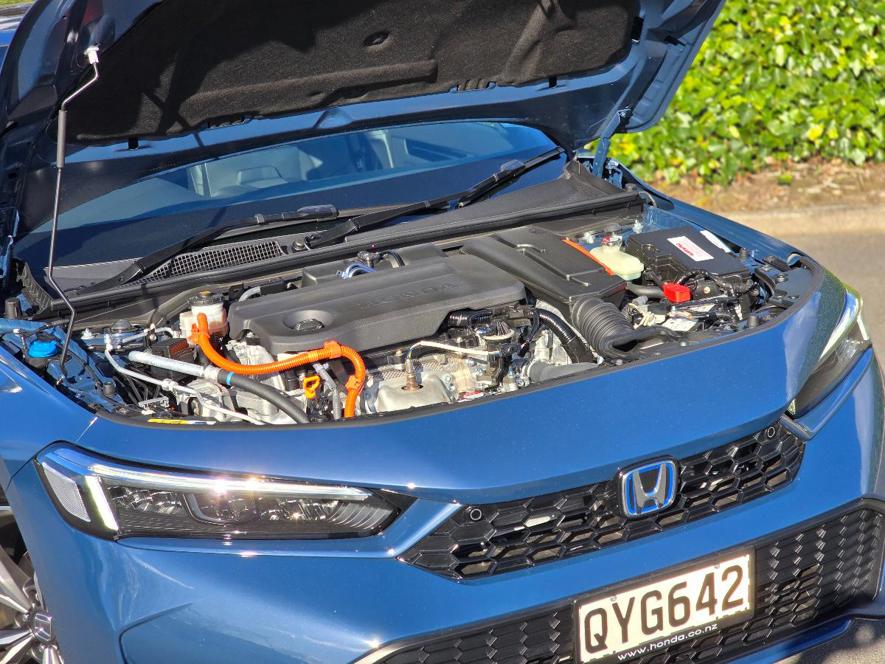
In terms of efficiency, the Civic is truly frugal. While Honda claims a 3P-WLTP combined fuel consumption of 5.1L/100km, it is genuinely easy to beat this figure in normal daily driving, with it only climbing to mid-5s after some fairly enthusiastic driving.
The sheer quality and refinement of the Civic e:HEV, combined with its confident, fluid handling and remarkable efficiency makes it a truly impressive example of a modern small car.
While the clever hybrid powertrain provides remarkably seamless and refined performance, the Civic e:HEV’s finesse and balance on the road is equally superb. It benefits from a low centre of gravity and a MacPherson-strut front and multi-link rear suspension setup, which provides it with impressive agility allied with a beautifully compliant ride.
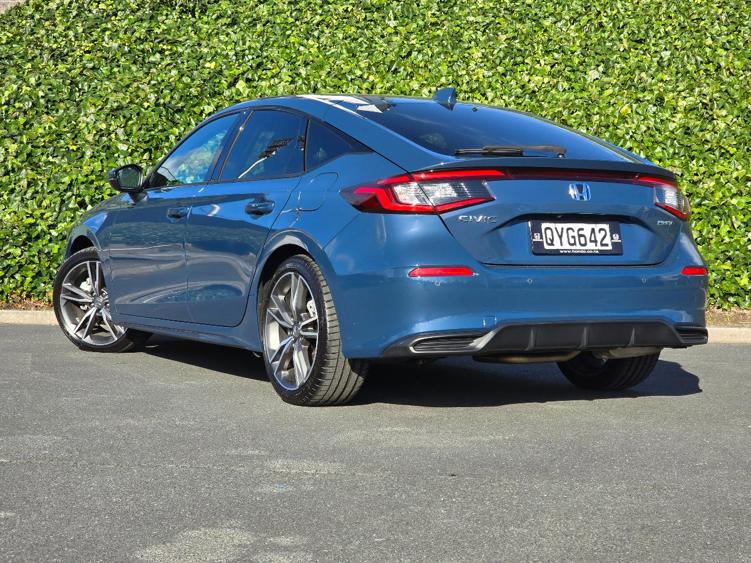
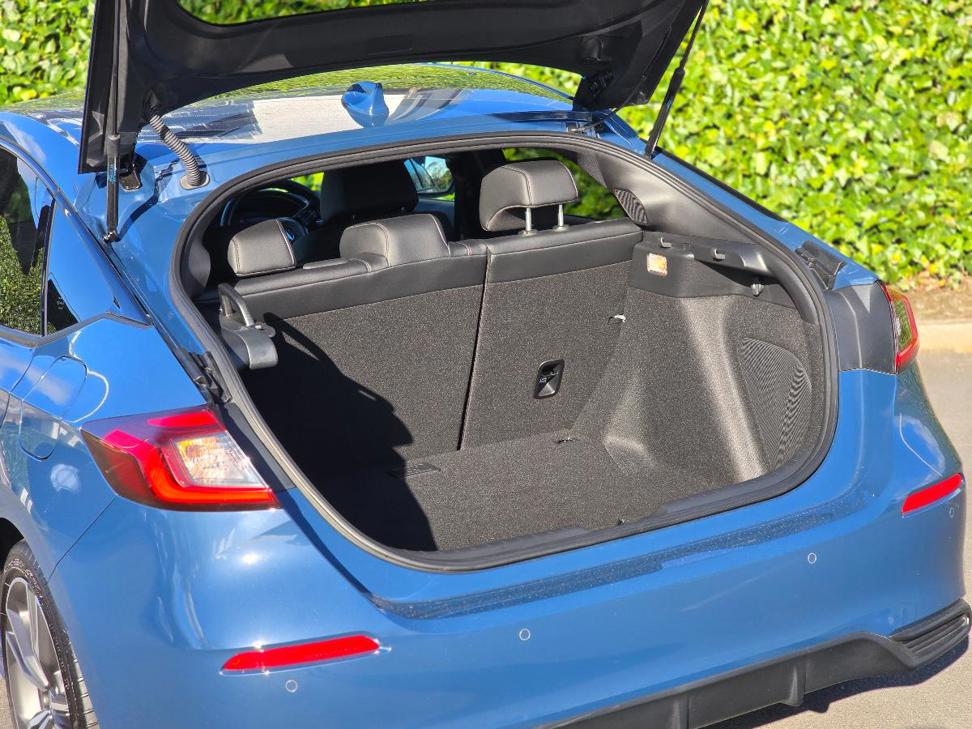
Despite its low-slung, liftback-style sedan silhouette, the Civic is surprisingly practical. It offers a 404-litre boot, which is larger than many small hatchbacks and even some mid-size SUVs, while there is an additional 45 litres under the boot floor for good measure. While the sloping roofline limits headroom for taller rear-seat passengers, legroom is generous and the rear seats are comfortable.
The Civic also comes standard with the Honda Sensing suite of driver-assist technologies that includes 11 airbags, autonomous emergency braking, and adaptive cruise control with Traffic Jam Assist. Unlike a lot of modern cars these systems are refreshingly non-intrusive, acting as a gentle reminder rather than being overzealous or annoying.
The sheer quality and refinement of the Civic e:HEV, combined with its confident, fluid handling and remarkable efficiency makes it a truly impressive example of a modern small car.
However, while it is spacious, ultra-efficient, safe, and arguably the best-driving hybrid in its class, it faces a significant uphill battle thanks to the fact that it’s not an SUV and that high price that pushes it into a territory where many buyers might prefer a premium-badged European car.
It easily matches or even beats its impressive fuel economy claims in mixed driving, and it is a superbly refined, high-quality car overall.
You’re not going to cross-shop it with a Corolla anymore, but if you are looking around in the entry level end of the European hatch segment, then you owe it to yourself to take a look at the Civic at the very least. You might be pleasantly surprised.
How much is the Honda Civic e:HEV?
In New Zealand, the Civic is only offered in a single high-spec SR variant retailing for $59,000.
What are the key statistics for the Honda Civic e:HEV?
The Civic uses a 2.0-litre four-cylinder petrol engine paired with two electric motors pumping a combined maximum output of 135kW/315Nm through the front wheels.
Is the Honda Civic e:HEV efficient?
Yes, the Honda Civic e:HEV is extremely efficient and truly frugal. Honda claims an official combined fuel consumption of 5.1L/100km, and says urban consumption can drop as low as 2.0L/100km. In real-world driving this is easily achievable without any effort whatsoever.
Is the Honda Civic e:HEV good to drive?
The Civic has a superbly balanced and refined character, with the transition between battery power and the petrol engine being utterly seamless, and with Honda’s active noise cancelling effectively insulating the cabin from external noise, it is a superbly refined car. Throw in its well-sorted suspension that balances comfort with confident cornering, and its nicely weighted and precise steering and you get a small car that is super accurate and assured on the open road.
Is the Honda Civic e:HEV practical?
The Civic is extremely practical for a small hatchback, offering a boot that is larger than most rivals and even some small SUVs. While its generous rear legroom is slightly offset by the sloping roofline that limits headroom for taller rear passengers, it is still very comfortable and relatively spacious in the rear.
What do we like about the Honda Civic e:HEV?
The interior is solid, well-built, and uses high-quality materials as well as featuring a refreshingly uncomplicated layout with physical buttons and dials. It easily matches or even beats its impressive fuel economy claims in mixed driving, and it is a superbly refined, high-quality car overall.
What don’t we like about the Honda Civic e:HEV?
The significant price increase over previous generations hurts, despite the huge leap in technology, refinement and efficiency it brings, but despite the premium price, it lacks a head-up display, power tailgate, and seat ventilation.
What kind of person would the Honda Civic e:HEV suit?
The Honda Civic e:HEV is ideal for anyone after a premium, highly engineered alternative to the ubiquitous compact SUV, or someone looking at the lower end of the premium European car segment.


