


What's this new car game all about then?
One of the biggest questions surrounding Grand Theft Auto VI has been how its cars would actually feel to drive. GTA IV favoured weighty, suspension-heavy handling, while GTA V went in a much more arcade-like direction. Rockstar's latest effort promised to be something of a middle ground.
According to developers the game's rebuilt driving physics model is designed to make different vehicles feel genuinely different, rather than simply varying their speed and grip. Supercars should be at home on tarmac but struggle off-road, while muscle cars demand more throttle control and older vehicles exhibit softer, more pronounced suspension movement.
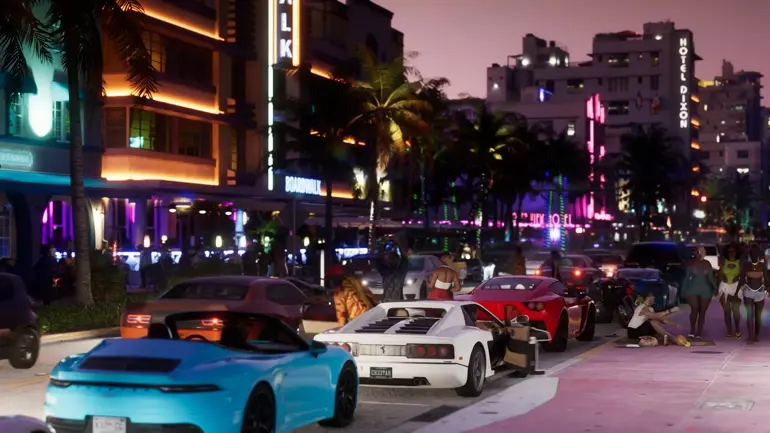
Weight transfer was also said to be more noticeable, with cars pitching under braking and leaning through corners. Tyres, suspension and steering all play a greater role, while even passengers can affect a vehicle's balance.
On paper, the new game sounded like an appealing combination of GTA IV's heft and GTA V's accessibility. But the real test is whether Rockstar has managed to make its virtual cars feel more convincing without sacrificing the sheer fun of driving them. So has it?
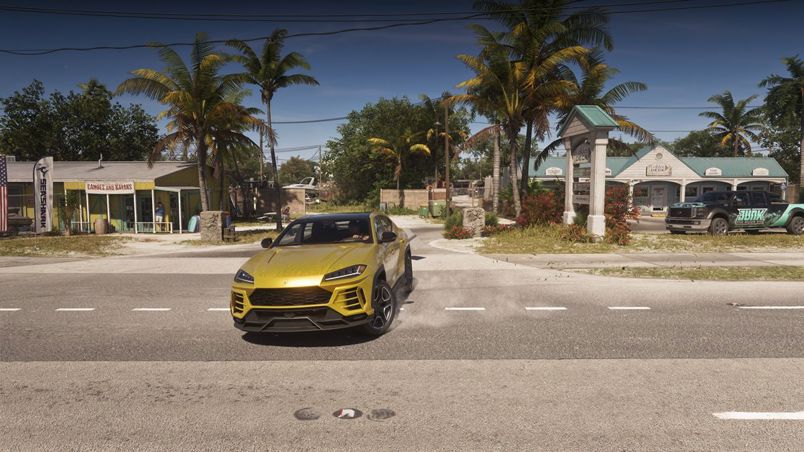
After an initial few hours with the game, we have to say that, yes, it has done just that, albeit with retaining a strong bias towards GTA V's more arcadey handling.
Rockstar has dialled back some of the more forgiving mechanics from GTA V though - there's less control when airborne, and an overturned car can no longer simply be rocked back onto its wheels (you can get out and push it back, i it is on it's side!) - while tyre damage, more detailed collision physics and changing road conditions also make driving less predictable.
And there's plenty happening beyond the handling, too. Working fuel gauges, engine status indicators and additional vehicle security systems add another layer of immersion. And, thankfully, it all adds up to what is easily the most fun handling in any GTA game, striking an almost perfect balance between immersion and ridiculous fun.
How much is it?
GTA VI is very much a modern game in that it looks amazing, is utterly enormous and costs quite a lot more than games used to.
The Standard Edition includes the complete single-player campaign, and while it costs $139.95 digitally on the PlayStation and Xbox stores, it can be had for around $20 less as a boxed download code at retailers.
The digital-only Ultimate Edition that lands at $174.95 builds on the base game with 16 integrated story-mode extras that unlock as you progress through the chapters, as well as exclusive vehicles, unique weapons, specialised businesses, retro styling packs, and classic car restoration missions.
What's it like to drive?
The opening of Grand Theft Auto 6 makes an obvious show of a more reactive game world, and it's tutorial feels less like a tutorial and more like a crime you’ve accidentally become responsible for. Playing as Lucia in a flashback, you can make a mess of an escape in several different ways: run, in a random direction and steal a boat, and the game reacts to it, with the probation officer you are telling your story too chiming in with "You were in a boat?".
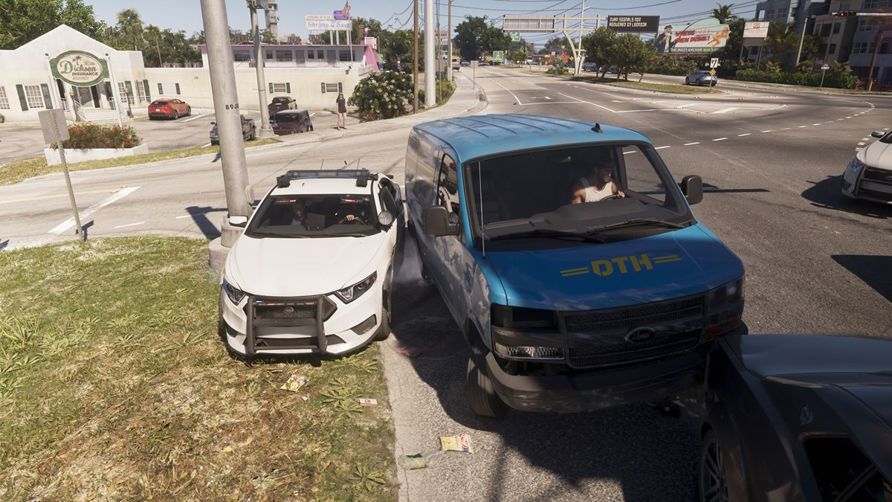
The next flashback sees you on foot, where I tried to steal a van, only to set off its security system and end up arrested. It all feels totally random and open to choice, yet the story still steers you toward its intended beats. But the route there feels refreshingly your own.
That freedom is a good introduction to the game’s approach to driving. Rockstar seems to have found a useful middle ground between GTA IV’s heavy, soft-suspension feel and GTA V’s more forgiving arcade handling.
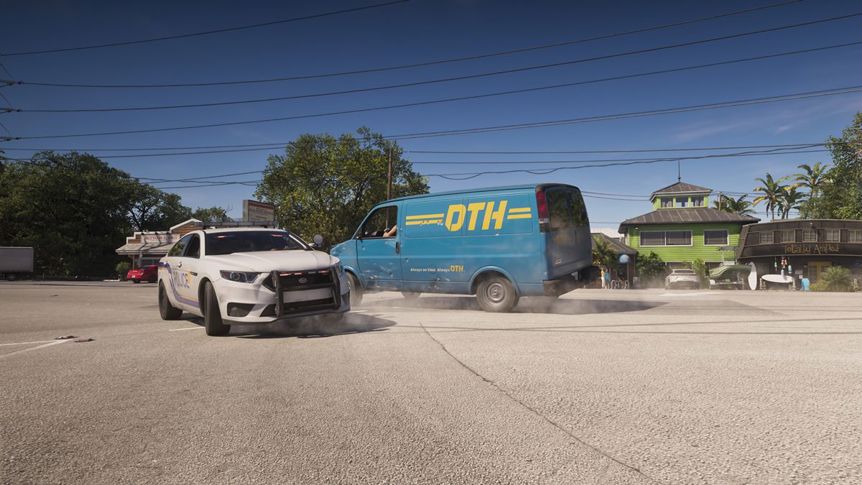
Cars have more weight and suspension movement than before, but you don’t need to treat every corner like a physics exam and a sporty coupe feels nimble and adjustable, while a truck, van or motorhome feels as though it possesses its own area code.
The sensation of speed is immense in the fast cars, while the feeling of sheer bulk is beautifully realised in the larger trucks. And this time around there’s more to getting behind the wheel than finding a car and flooring it - vehicles can have different security systems and, yes, even fuel levels. Some can be hotwired with a simple control input; others are too well protected to steal, at least with the skills available only a handful of hours into the game.
At least, that applies to parked, unattended and locked cars - if a car is being driven then you can steal anything, but you might have to fight the driver, or even a passenger, for it.
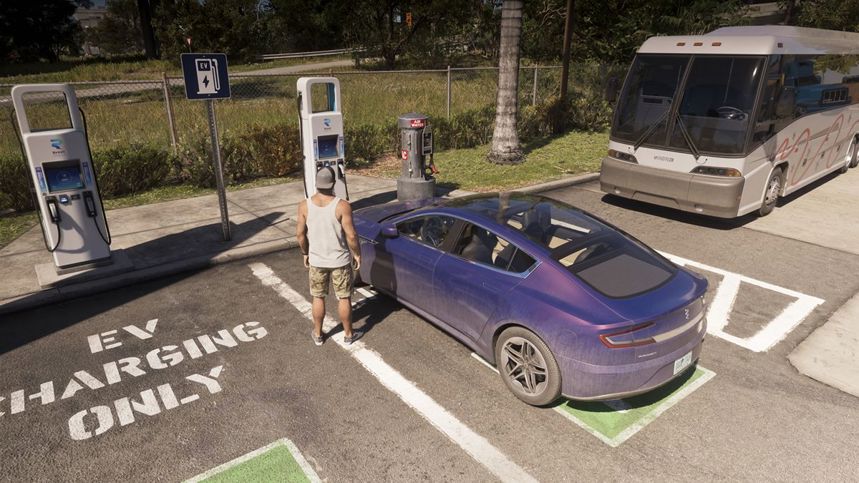
Fuel can be bought at gas stations, which also offer repairs, and consumption seemed modest during these early hours, so isn't a major factor in gameplay. Electric cars also have charging points in the world, and charging one is weirdly faster than refuelling a combustion vehicle. If only we had GTA's charging technology in our world...
While there is massive potential for these new systems to get in the way, they so far seem well judged and add atmosphere - a stolen car with half a tank is an amusing complication, while one with almost no fuel, while the police are behind you, might be less so. But then it all just adds to the realism and ultimate immersion, rather than being an annoyance.
The wanted system is also more nuanced, and it can matter whether police know which car you’re driving and what you look like, so changing your appearance may not be enough if you keep escaping in the same conspicuous vehicle. Vehicle theft has more consequence, in other words, although not enough to discourage stealing something with a full tank and a promising top speed.
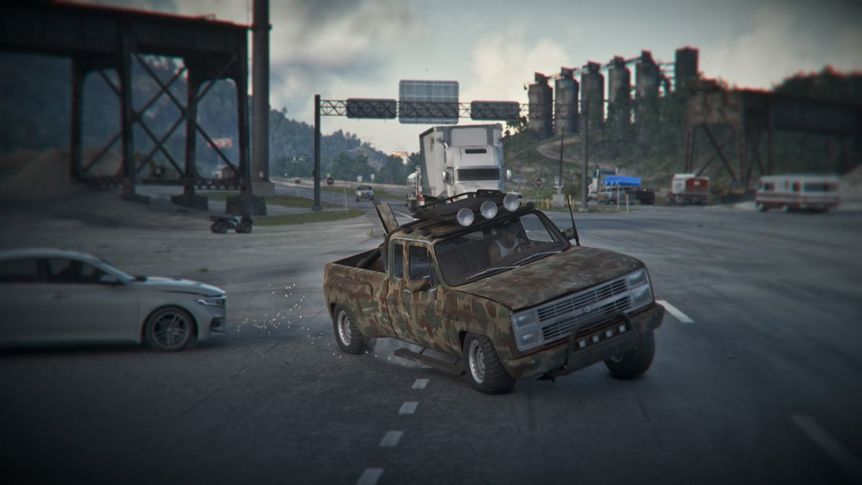
Damage is more convincing, too, and panels can come loose, mirrors can be knocked off, windows shatter, lights and bodywork take a beating, and a badly abused car can trail smoke and wear bullet holes like unwanted accessories.
A sufficiently hard impact can damage the engine, remove a wheel and eventually affect handling, although damage is still largely cosmetic in the broader sense, and even a battered car generally remains drivable, with the handling penalty from severe crashes not seeming especially dramatic in our early impressions.
And that balance suits GTA - the extra consequences make collisions feel more substantial without turning every scrape into a frustrating and unscheduled tow-truck simulator.
The level of detail is, of course, spectacular, with one particularly neat technical detail being the brake discs: work them hard and they glow red; stop the car and they stay hot for longer, keep moving and they cool as airflow passes over them. It’s a small touch, but an effective one, and one of many that make the world feel genuinely lived in.
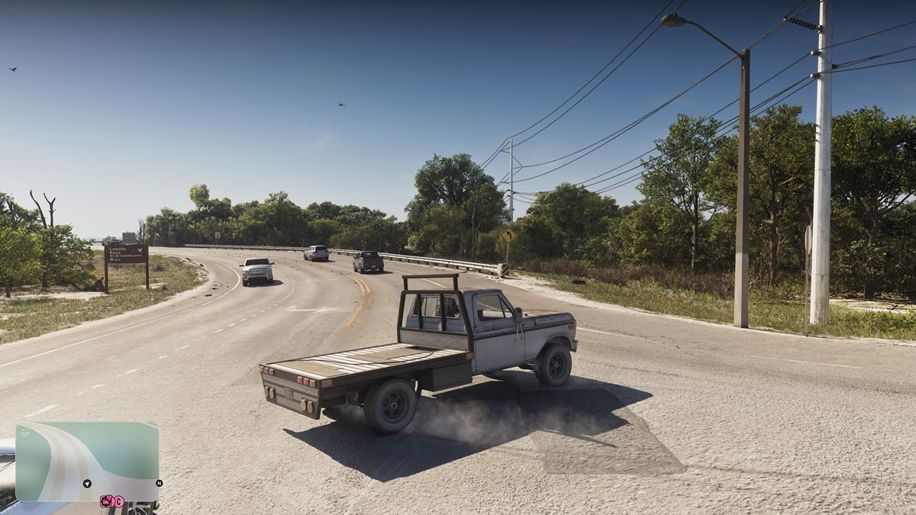
Rockstar said that they had made the roads narrower than in GTA V, and they have, but in an extremely natural way, while traffic is denser, and drivers are less like obedient moving scenery: they hesitate, make questionable decisions and sometimes get aggressive. I even saw one pickup perform a fantastic burnout at a red light.
There’s also a massive level of care and detail in the vehicles themselves, too. Headlights distinguish cooler, blue-toned LEDs from warmer halogens, and the interiors are fully modelled and animated, although only when viewed as a background to the phone, with the absence of a first-person in-car driving view a curious omission - in my early impressions, only exterior camera options were available.
Even stereos appear to vary by vehicle - a golf cart had a tinny and underpowered audio system, while a n Obey (Audi) had a fuller, richer sound. Engine sounds are distinct between cars too, but sound very much the same as Grand Theft Auto games, so there is definitely room for more variety.
Driving in GTA VI is not a radical reinvention of the formula - it’s a refinement, but a ridiculously comprehensive one. More believable weight, more varied traffic, richer damage, and more texture to 'borrowing' a car and trying to get away in it. The appeal is that these details make the world feel more convincing without making driving a chore.
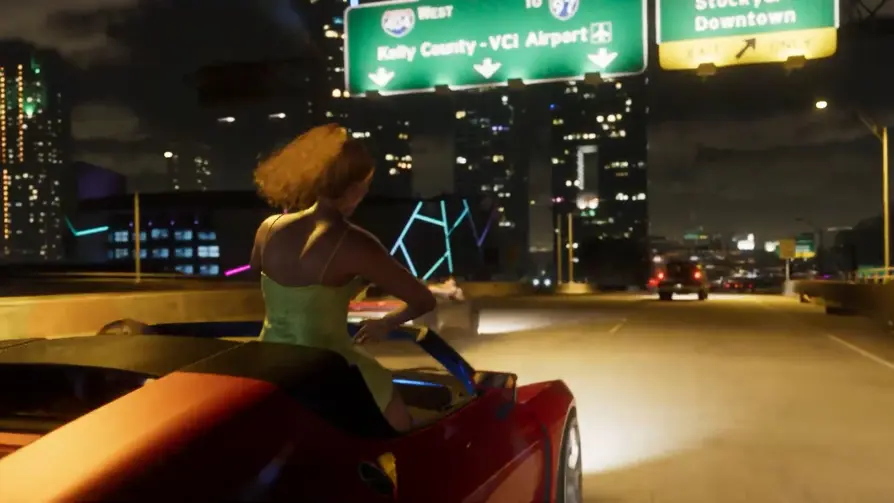
The first driving you get to do after the initial introduction is in Jason's Vapid Ganado (a Ford Ranchero with Chevrolet El Camino touches) at night, in the rain, among Miami-style neon, with The Cars’ “Drive” on the radio. Subtle it is not. Effective it absolutely is. It’s a reminder that the technical touches work best when they help turn a simple trip across town into a scene.
What’s the pick of the range?
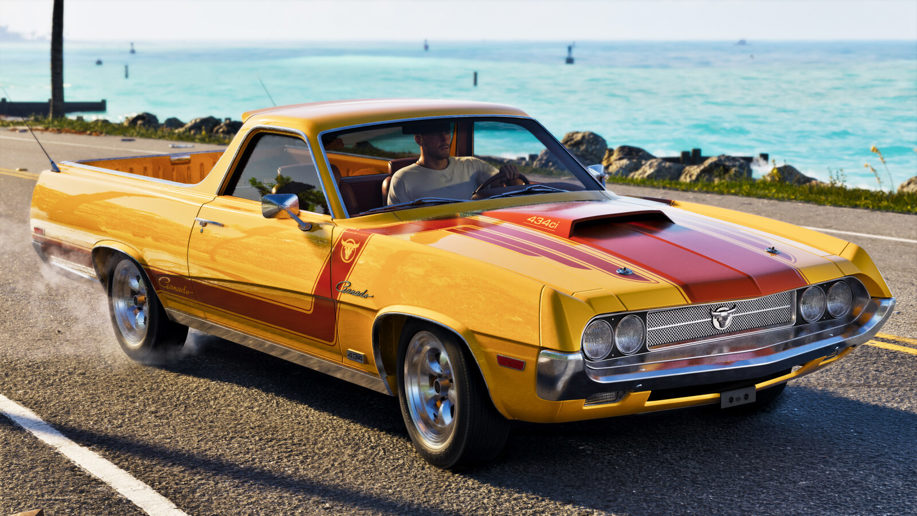
A few hours in and there are already so many different cars and trucks (and bikes and lanes and boats...) to choose from. And there will no doubt be many, many more to come. I'm not going to pick a favourite yet, although the Ganado is a fun, tail happy place to start, while the Pfister Comet (Porsche 911) and Coil Raiden (Tesla Model S) are genuinely fun cars too.
What other cars games should I consider?
Like the rest of the world - none. At least, not today; Grand Theft Auto VI is the only game in town right now.
The driving physics are realistic enough to be massively immersive, but not so realistic as to sap the chaotic fun from the GTA formula, and so far I have barely scratched the surface of what GTA IV has to offer in terms of cars - enough to get a taste for the basic physics and processes involved, but that is all. I haven't even got to car ownership and customisation, which promises to be a whole other level.
But for now, it certainly seems like Rockstar has a winner on its hands, at least as far as their treatment of cars and driving goes - I could honestly lose hours in GTA V just driving around recklessly creating chaos, when I had originally intended to complete a mission, and GTA IV looks like it will be no different...


