



What are these new cars all about then?
One of the good things about creating a compact delivery van using a passenger-car platform is that you can take that van and make a different passenger car out of it. Go 360-degrees... end up somewhere different.
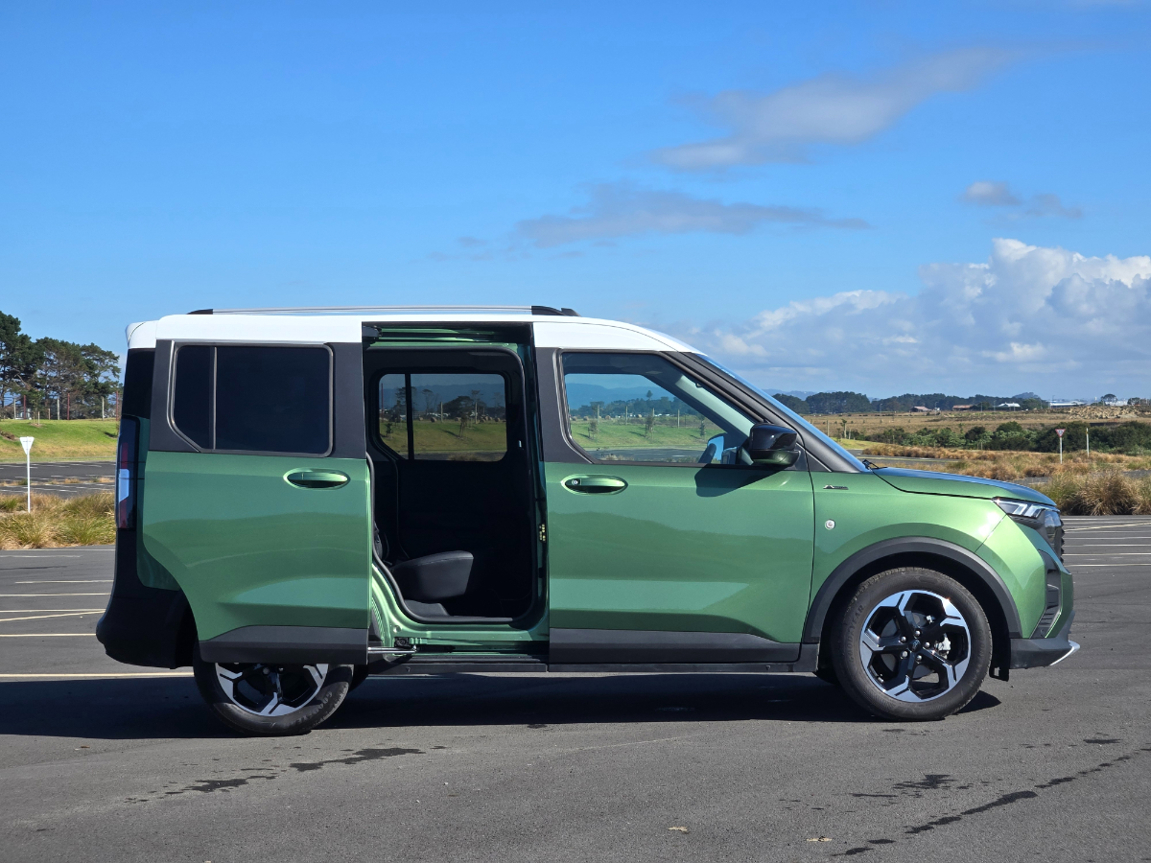
That's the Ford Transit Courier DCiV and Tourneo Courier Active in a nutshell. The Courier is the most minuscule of the many commercials wearing the Transit badge, just 4337mm long and riding on the same underpinnings as the Puma compact-SUV.
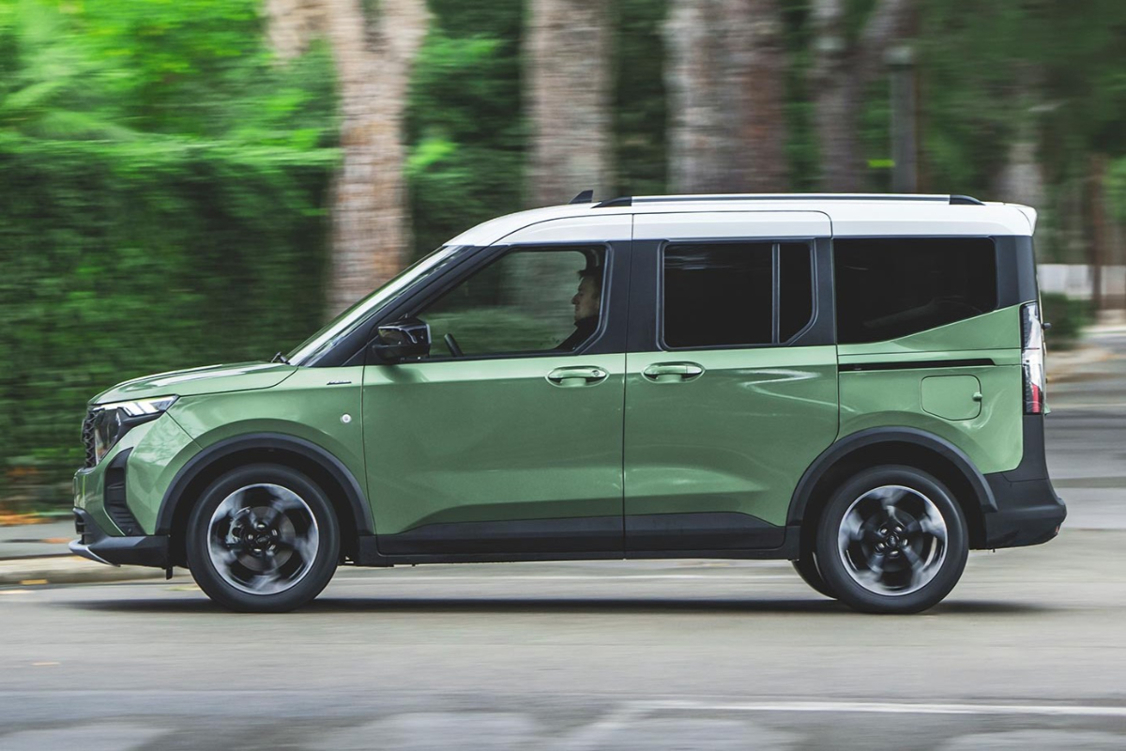
"Tourneo" has been Ford-speak for a people-mover since 1995: it's derived from the Latin word "tornare", which means "to round or cut to shape". So the Tourneo Courier is all about people rather than just cargo, with a cabin that's trimmed in a more luxurious way.
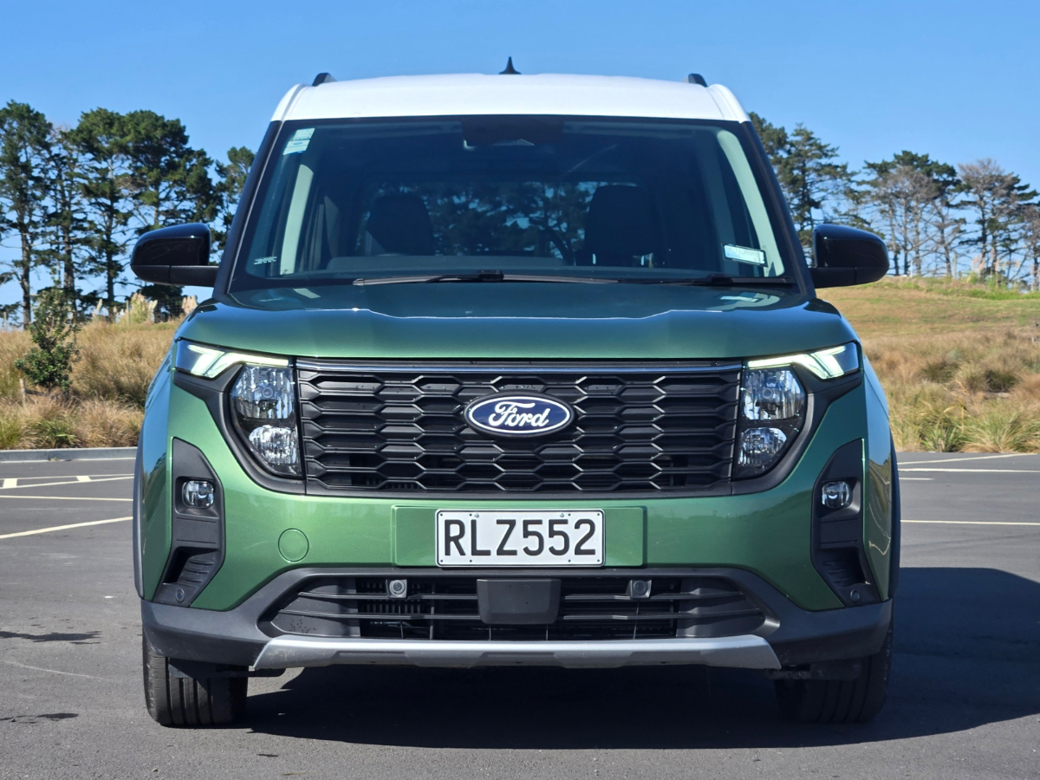
And it's the cutest-looking little thing in SUV-adjacent Active specification with chunky plastic body addenda, an extra 19mm ground clearance and a two-tone paintjob, which is standard on all Tourneo models except for black. Which is completely black.
They're both a whole lot of fun. There's a Puma underneath that boxy shape, remember.
That's the basic concept of Courier versus Tourneo, but there's a twist. They're both 5-seaters; the "DCiV" bit in the Courier's name denotes Double Cab in Van.
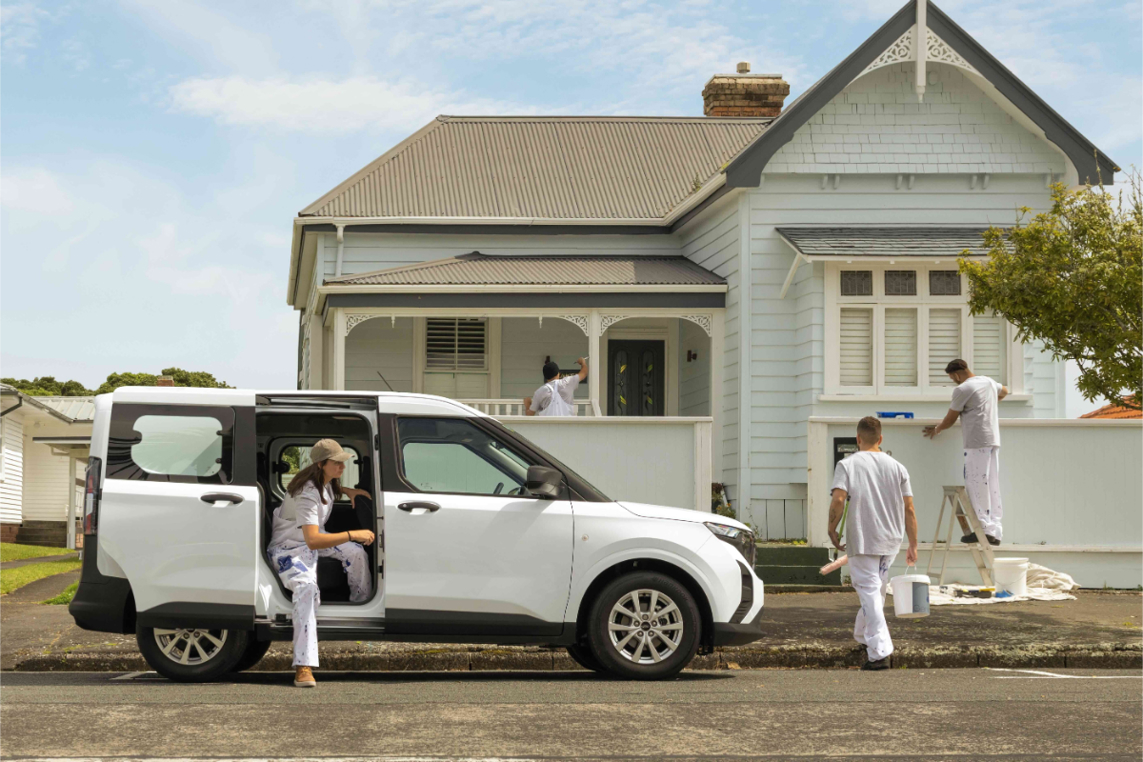
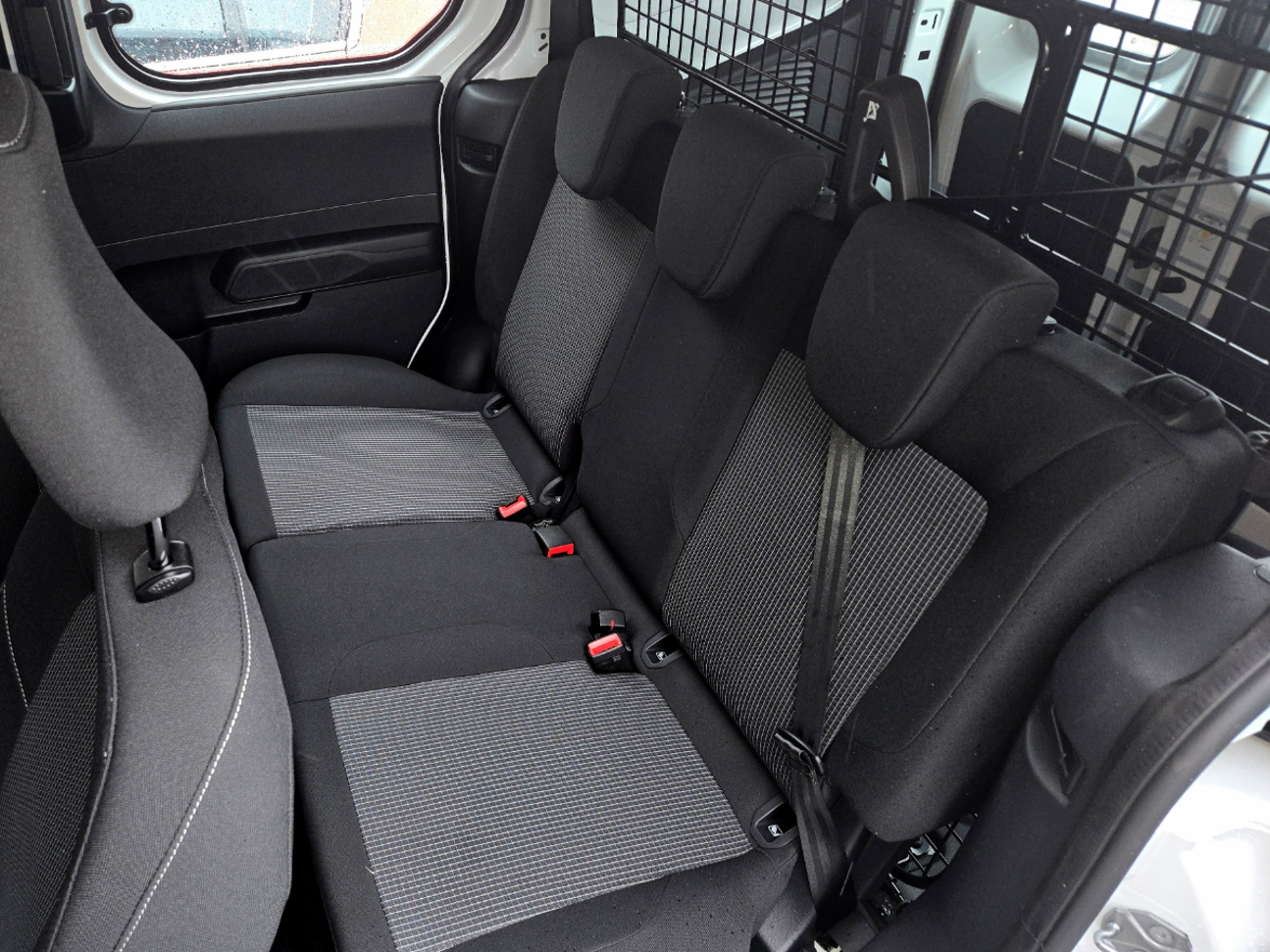
So they both have the same 60/40-split tumble-fold rear seats, and both do essentally the same job.
It's just that the Courier has barn doors at the back and a clever moveable cargo barrier (for whether the rear seats are in use or folded out of the way), while the Tourneo has a hatchback and a conventional cargo cover over the boot area. Rubber versus carpet lining in the cargo area; you get the picture.
The vital stats are pretty much the same. Maximum loadspace length is 1429mm, floor-to-roof is 1216mm and there's 1.3-2.4 cubic metres of cargo volume depending on whether they're in 5-seat or 2-seat mode.
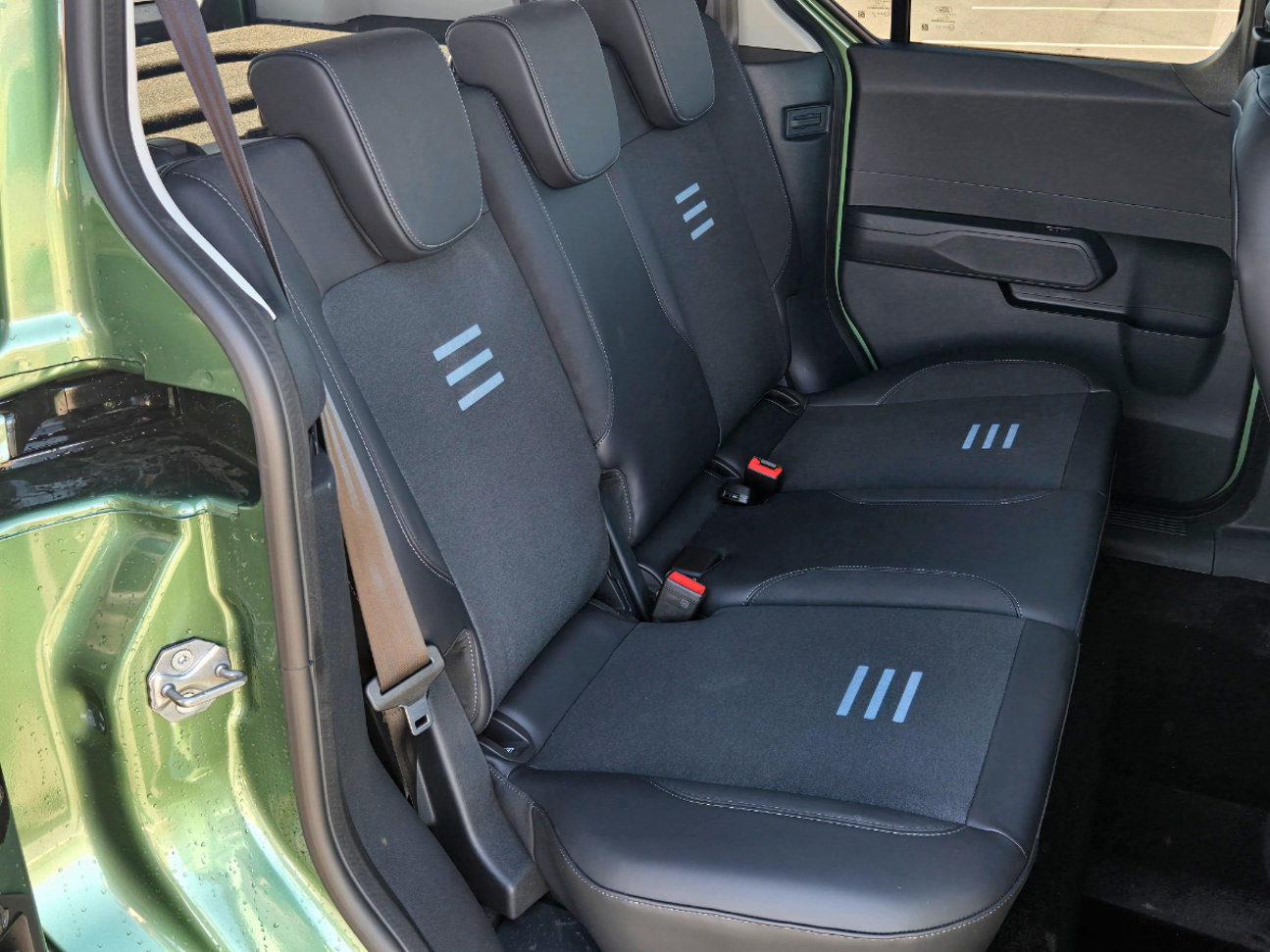
The Tourneo does get nicer upholstery, a blend of cloth and vinyl in blue-and-black, compared to the Transit's plain black. And the rear windows open - they don't on the Transit.
The Transit manages a little more load length as a 5-seater (1002mm versus 935mm) and slightly more between the rear wheel arches (1120mm versus 1172mm), but there's not a huge amount in it.
The cabin architecture is quite vanny in both models, which brings both pluses and minuses in the case of the Tourneo. There are countless storage spaces, including one in front of the instrument binnacle and above the windscreen (both very light-commercial), there's a neat fake-vent beside the infotainment screen that's suitable for a phone-mount and overall, things are mostly kept simple.
So it's very functional. But the cabin is also made from hard, scratchy plastic, which is fine for a van - expected, even - but not so welcome in a pseudo-SUV. Styling-wise it's fine, and both models get a subtle bit of blue trim around the passenger-side to give things a lift.
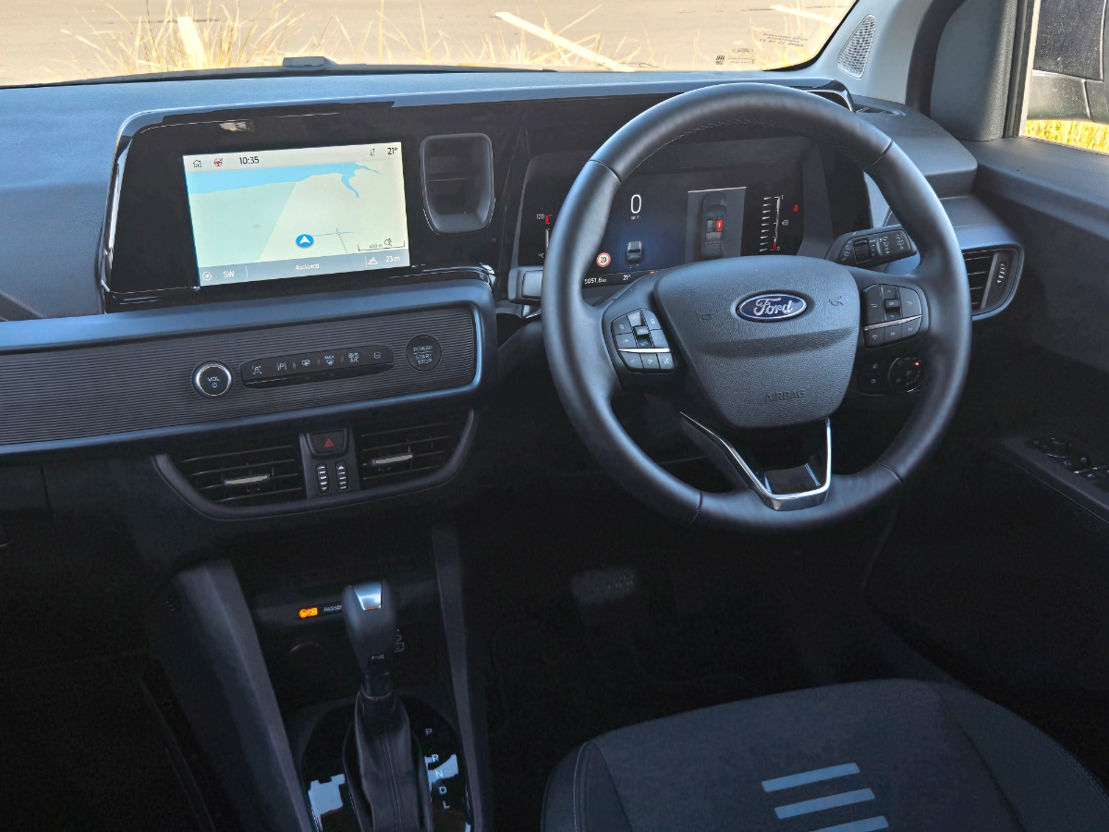
The Tourneo does get nicer upholstery, a blend of cloth and vinyl in blue-and-black, compared to the Transit's plain black. And the rear windows open - they don't on the Transit.
It also has an extra airbag on the driver's seat (curtain airbag coverage for front and rear seats, by the way). There are heated front seats, mirrors and steering wheel for both.
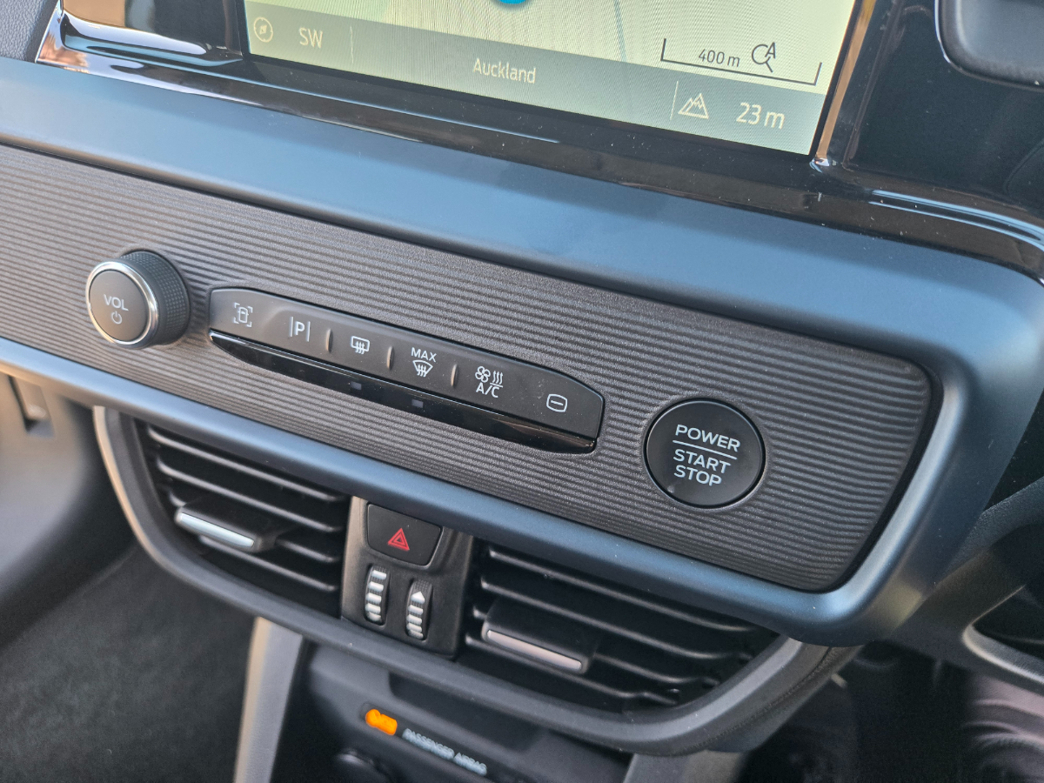
The infotainment is familiar Ford and features wireless Android Auto and Apple CarPlay, but has a quirk or two.
For example, there's a physical button for climate control, but all it does is take you to a screen shortcut, and then you then fiddle around with virtual controls. Wouldn't it just be easier to have a button for temperature?
How much are they?
The Courier is $49,990; you can order it in any colour you like, as long as it's white.
The Tourneo is $55,990 and comes in the same Frozen White but with black roof, Bursting Green with white roof, Cactus Grey with white roof and Agate Black (all black).
What are they like to drive?
They're both a whole lot of fun. There's a Puma underneath that boxy shape, remember.
That's fun, not necessarily highly polished. The 3-cylinder engine has a brilliant soundtrack and is full of energy, but the 7-speed automatic gearbox does have a habit of tempering the joy. Under a medium throttle it tends to go for the highest possible gear, which results in the odd shudder; like the little guy is struggling.
It's a scrappy little handler, decently grippy and acceptably composed given it's tall and has a twist-beam rear suspension. Try it, you'll love it.
It's not a mild hybrid like the Puma either, so the stop-start takes a moment to fire up and get the thing moving, especially if you're sitting at the lights on adaptive-cruise-pause.
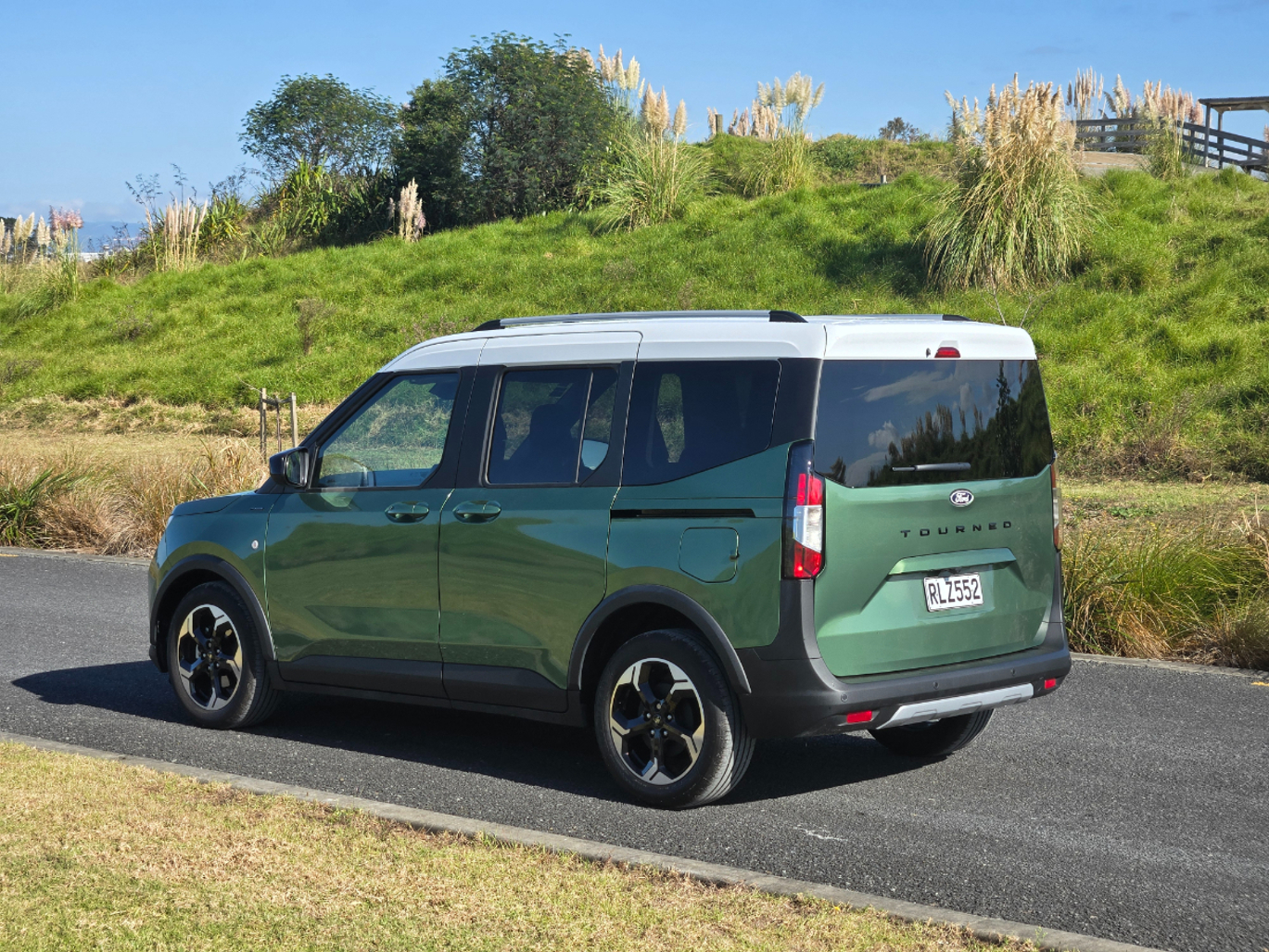
It's a scrappy little handler, decently grippy and acceptably composed given it's tall and has a twist-beam rear suspension. Drum brakes at the back, too. But try it, you'll love it. The Tourneo rides a little higher (182mm ground clearnace versus 193mm) so it rolls more, but it has bigger footwear: 17-inch versus 16in for the Transit. Hey, you're not taking either to a track day.
The cabin is outrageously tall (gentleman, you you can keep your top-hats on) but actually the seating position is more car-like. Love it.
What’s the pick of the range?
Given the Transit carries people almost as well as the Tourneo and it's cheaper, you might think it's the sensible choice.
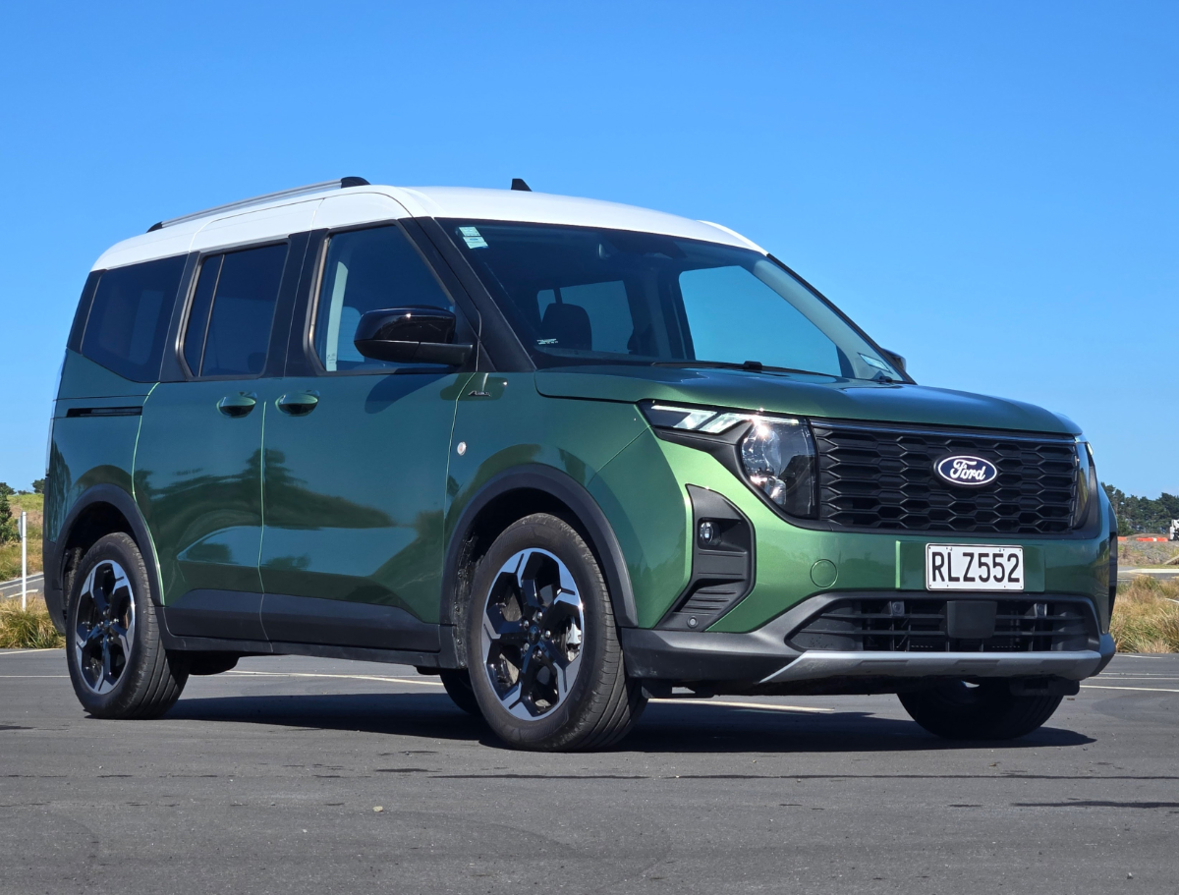
But it's not that much cheaper, so the choice is really what you want to do with it. The Transit is an awesome thing for a commercial user, but you'd be bonkers to buy it if it's not primarly a work vehicle.
The Tourneo is $6k more but you get a lot for that: colour choice, SUV-like style and cabin upholstery, carpeting instead of rubber lining in the load area, and little touches that mean a lot - like keyless entry and pushbutton start (the Transit is a key-twist affair).
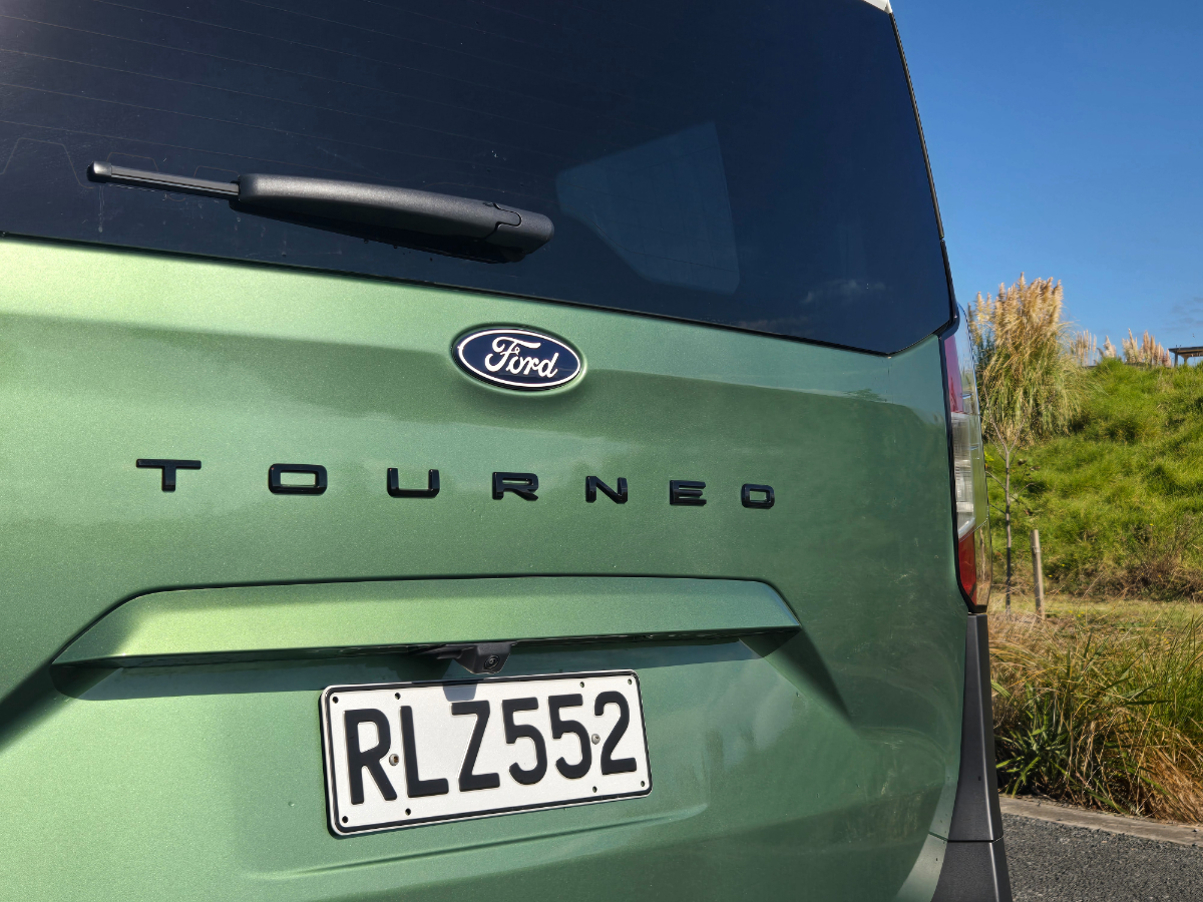
But it's got all the van-like load capacity, so it's still perfect for a small business that wants to project a funky image.
What other cars should I consider?
Wow, now you're asking the tricky questions. The most obvious rival in concept is the Volkswagen Caddy, which is also a compact van... that can also be a car. But that's bigger and much expensive, with prices from $68,000 right up to $75,500 for the longer Maxi.
There's really nothing in the compact people-mover sphere in NZ to compete directly with the Tourneo, but the Active specification means it's aligned with any small SUV you'd care to name.
We'd gravitate towards ultra-practical ones like the smaller Honda Jazz Crosstar ($30,700) or HR-V ($43,500), both with clever seat-folding mechanisms, or models with a similarly quirky character like the entry-level Mini Countryman C, also with a 3-cylinder engine, for $54,990.
But really, the Courier is a class of one in NZ right now.


