



What’s this new car all about then?
BYD is bringing back the dream. And, by that, I mean a station wagon.
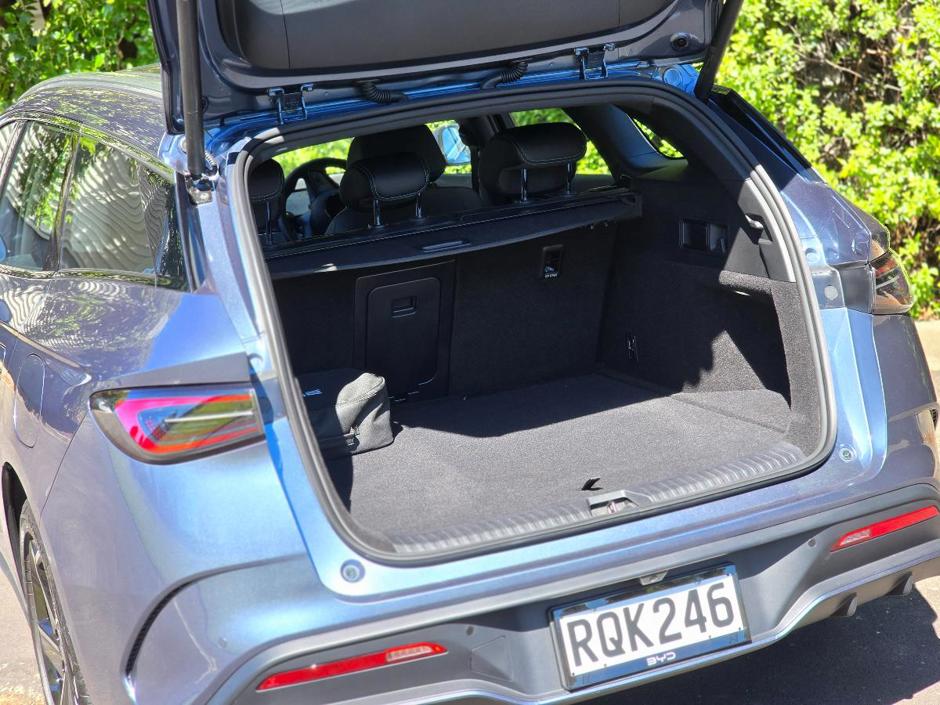
As we all know, wagon's are awesome - that is a proven scientific fact (I think) and I won't hear otherwise - but there has been a sad lack of them ever since those silly SUVs and utes took over the new car sales landscape in New Zealand.
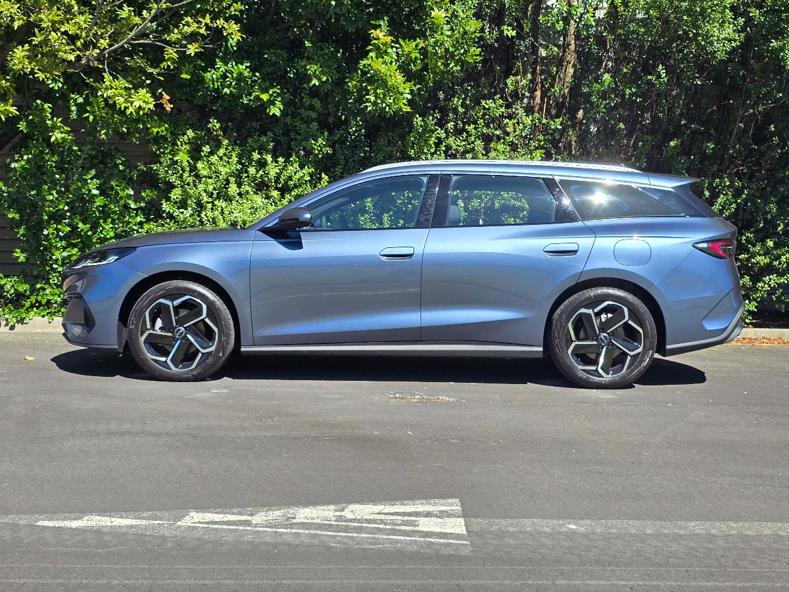
In fact, if you want a wagon, you either have to buy a Toyota Corolla wagon (which is still brilliant, but hardly exciting), be prepared to have everyone thing you are driving an unmarked police car (the Skoda Superb and Octavia wagons are cool, but very similar) or spend a lot of money, with Euro brands like Audi, BMW and Cupra.
But how about the idea of a 'super hybrid' PHEV wagon with slick Euro looks, impressive material and build quality, and all the latest technology from a popular and established brand, but for Corolla wagon money? THAT is what BYD is bringing to New Zealand with the imminent arrival of the Seal 6 Touring.
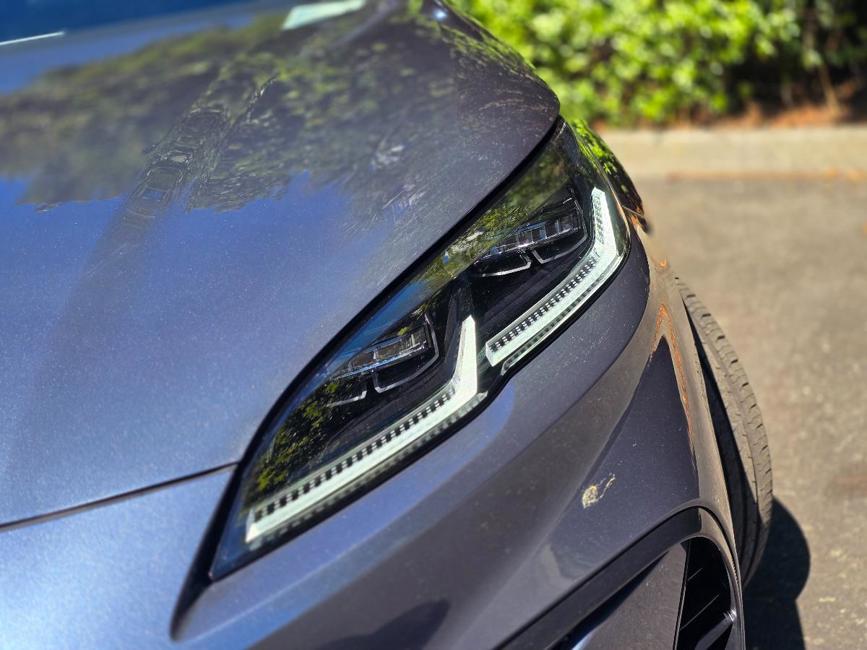
While largely mechanically unrelated to the all-electric Seal sedan we already get here, it is sold as a PHEV version of that car, but is actually available in sedan form itself - although we won't be getting that here, even though Australia is taking it, because we just don't buy sedans anymore.
Basically, BYD NZ is aiming the Seal 6 Touring squarely at fleet and business buyers, with strong appeal to private customers who miss traditional wagons.
Two trims are planned for New Zealand - Essential and Premium - with both feature BYD’s latest DM-i hybrid system (version 5), pairing the familiar 1.5-litre engine with a Blade battery, driving the front wheels.
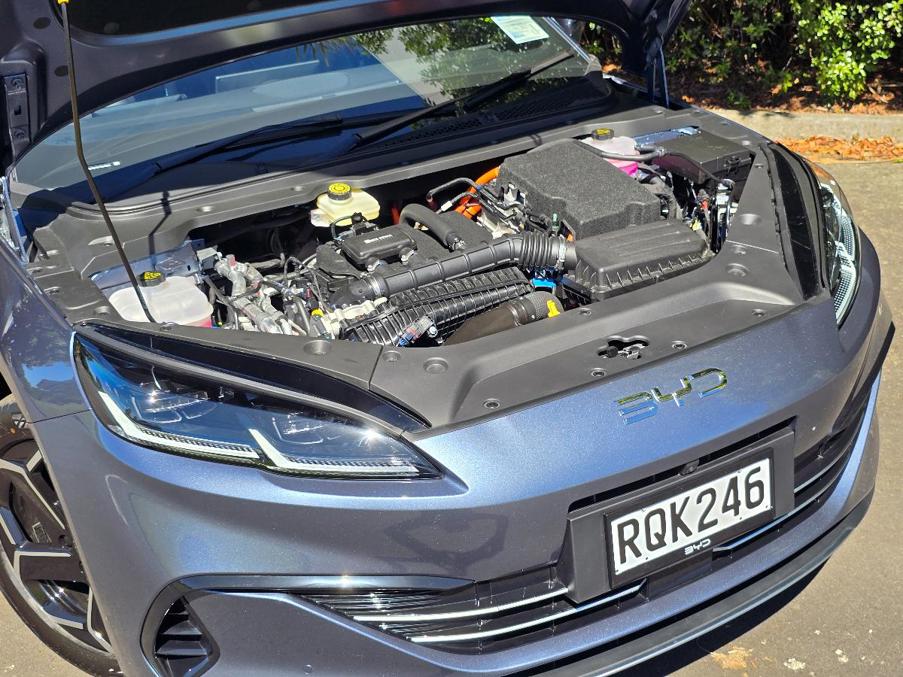
BYD claims the Premium has around 125km of EV range (measured under the generous NEDC cycle), while its total petrol-plus-electric range sits somewhere around 1500 to1600km under "ideal conditions". The Essential, on the other hand, uses a smaller battery and a 3.3kW AC charger, with an all-electric range of around 75km.
Both cars include vehicle-to-load capability and BYD voice assistance, and the model already carries a Euro NCAP five-star safety rating, which will likely translate into the same rating from ANCAP.
How much is it?
That's the big question, really: pricing is not final, but BYD General Manager, Warren Willmot, outlined targets that will be shaped by exchange rate movements and the removal of Clean Car fees.
The Essential could possibly come in as low as $39,990, with Willmot acknowledging it would likely land closer to $40,000 - $45,000, while the top-spec Premium is targeted for the early to mid-$50,000s, with “mid-50s” described as the upper limit likely.
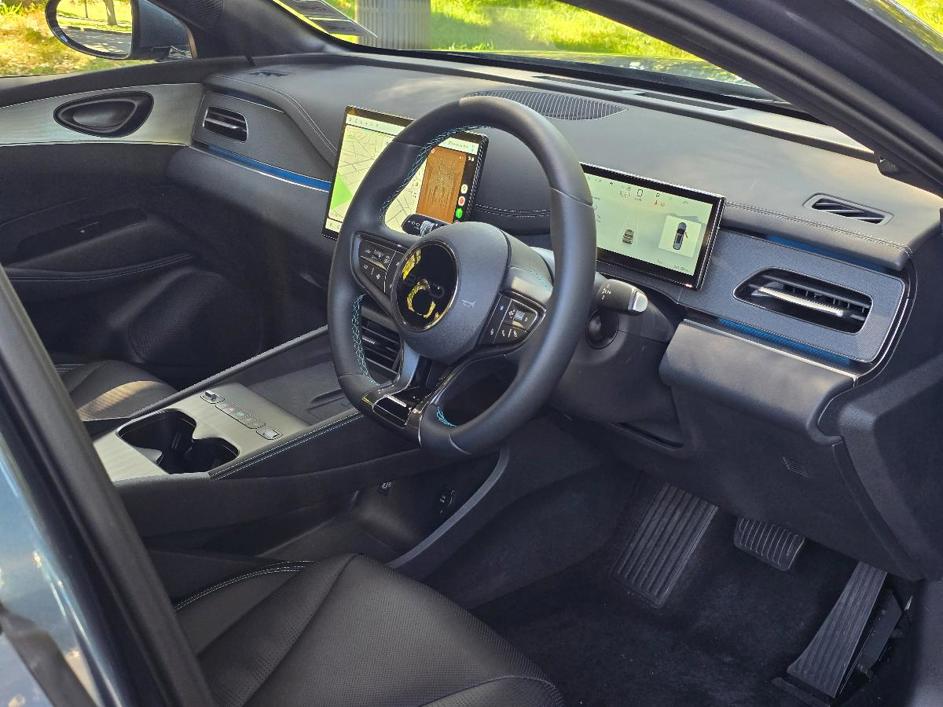
This genuinely prices the Seal 6 at close to Corolla levels (the Corolla wagon starts at $38,990), making the Essential particularly appealing to fleets.
What's it like to drive?
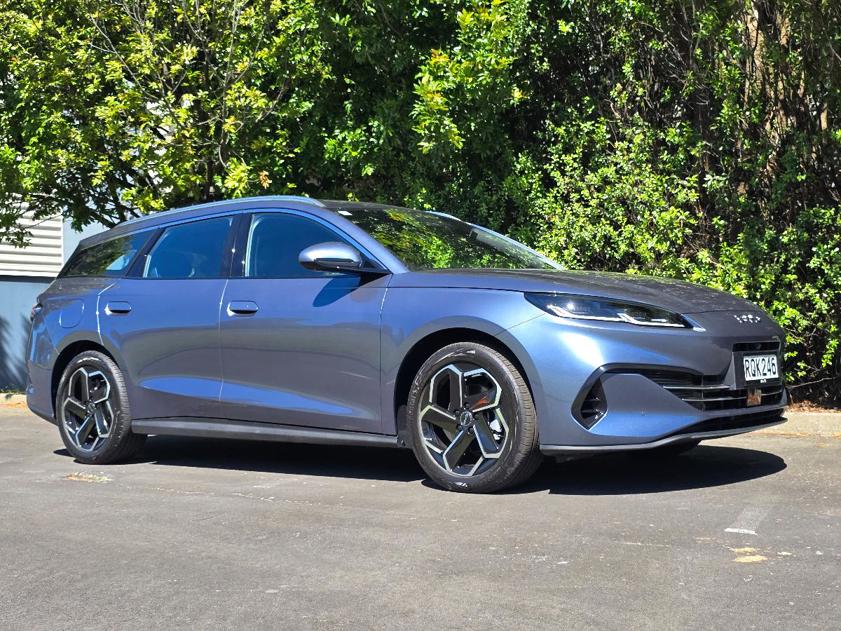
More than anything else, the Seal 6 demonstrates the incredible rate at which BYD has evolved to suit our market and tastes, largely thanks to the company's efforts at localising its suspension tuning and electronic driver assists.
The Touring has all the expected driver assists, but they are genuinely now gentle assists that help you out rather than nagging annoyances that scream at you for no reason. Perhaps the sole exception is the driver monitoring system that is still quiet and understated in its warnings, but is slightly over-excitable, chiming in a little too eagerly sometimes.
On the other hand, the Touring's Intelligent Cruise Control (ICC) deserves to be singled out, simply because it has eliminated the annoying 'nibbling' at the wheel that the lane keep assists system in previous BYD's exhibited, actually making long open road trips relaxing now.
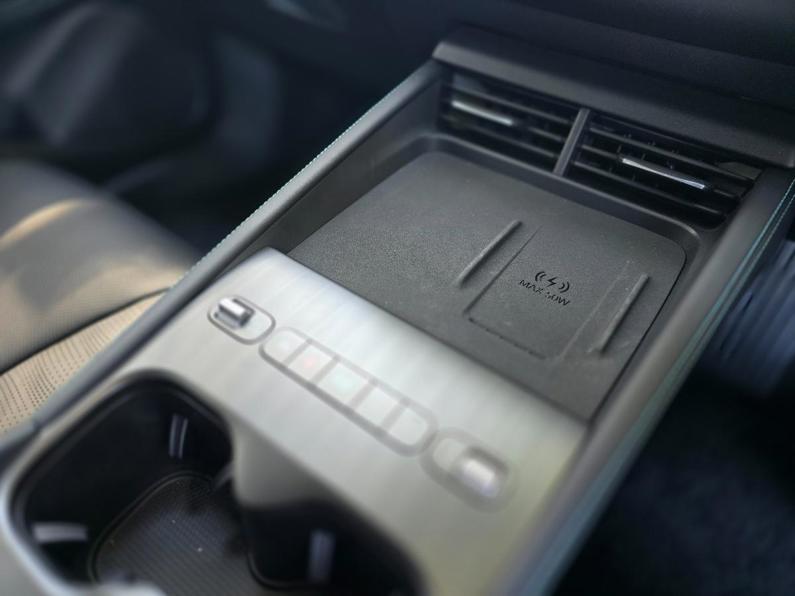
Ride-wise the Touring is firm and slightly sporty feeling, but without the slightly brittle edge over rough surfaces that has been present in cars like the Seal 6 and 7 SUVs, while handling is accurate and flowing, with a tendency towards safe, predictable understeer at the limits.
There is also minimal body roll and the steering is nicely weighted, actually possessing quite a bit of feel and feedback - it is still slightly remote, but offers enough to actually engage the enthusiastic driver.
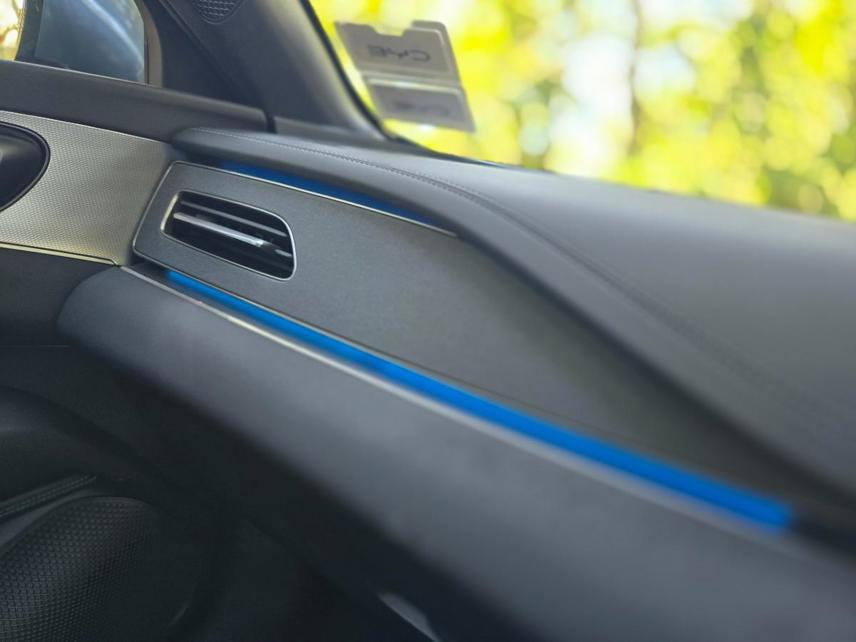
Performance is best described as 'enough', knocking off the 0 to 100km/h sprint in around 8 seconds, and with a strong punch in the mid-range for overtaking. The plug-in hybrid powertrain is refined and mostly silent during normal commuting, and when driven more aggressively, the four-cylinder engine becomes more audible but emits a pleasant, slightly growly sound rather than a coarse or unpleasant one.
And it is, of course, aggressively efficient, with our few days with the Touring retuning a combined calculation of 2.5L/100km using BYD's onboard computer that combines the electric efficiency (roughly 14kWh/100km) and the actual petrol efficiency (1.0L/100km).
What’s the pick of the range?
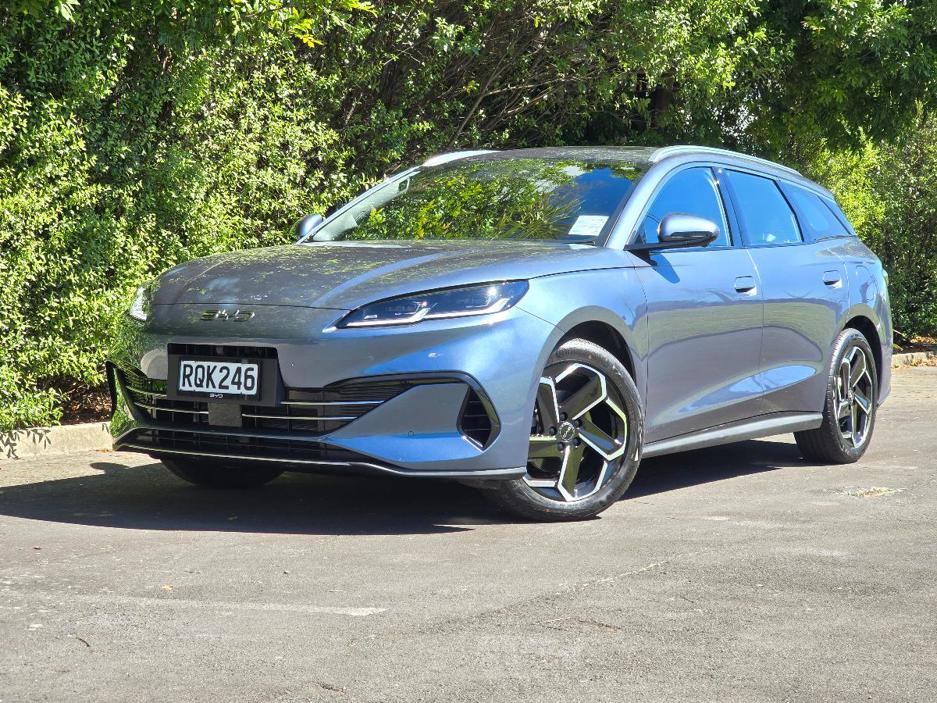
While we only drove a pre-production version of the Premium model, it would seem likely that it would be the prick for private buyers wanting maximum electric running and long-distance flexibility, thanks to its larger battery, longer EV range and fuller equipment list.
With BYD’s DM-i v5 system and Blade battery, it delivers notable efficiency in urban commutes on electricity alone for more than 100km, meaning that the daily commute can easily be handled on electricity alone, even if it is only plugged in a couple of times a week.
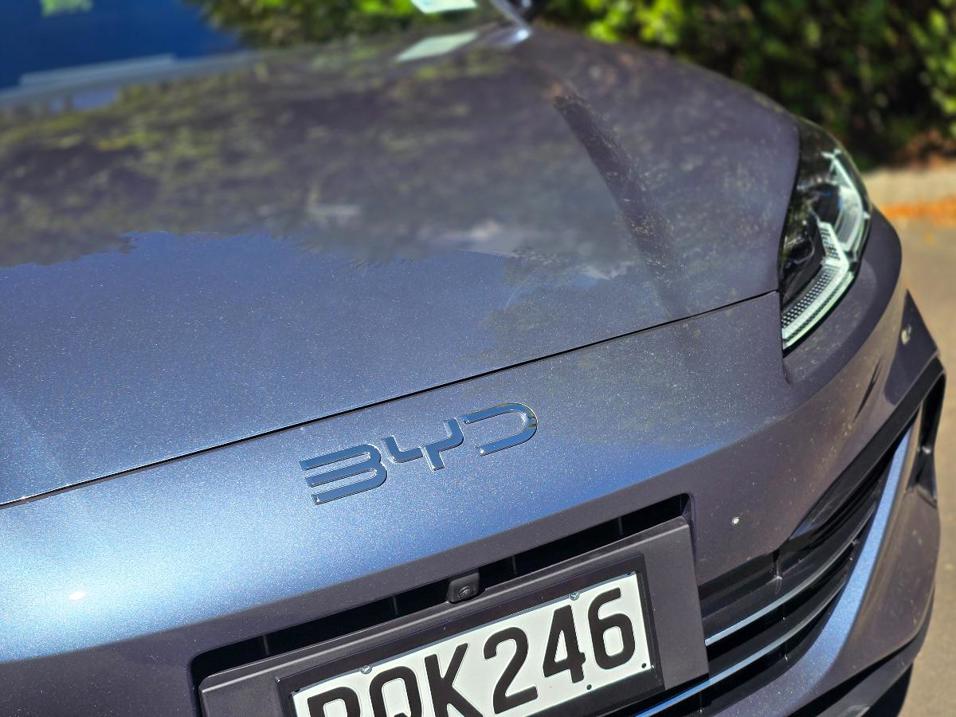
The Essential, on the other hand, will likely hold strong appeal to fleet buyers, particularly if it gets here under that $40k mark.
What other cars should I consider?
The entry level Essential is likely to be pretty closely priced to the Corolla wagon ($38,990) if it comes in under (or, at least close to) the $40k mark, making that the obvious point of comparison, while the Premium largely has its likely price point all to itself, with the closest rival - the Skoda Octavia ($60,500 to $78,000) - starting at above $60k, while the larger Superb wagon ($77,300 to $86,000) is considerably more.
The Octavia's close cousin, the Cupra Leon Sportstourer ($62,900 to $84,900), is likewise somewhat pricier (and somewhat sportier), while going beyond that gets you into the realms of Audi (the A5 Avant e-hybrid starts at $117,990) and BMW (the 320d xDrive Touring starts at $101,900) and more than twice the Seal Touring's price.
Buyers who have migrated to SUV-shaped wagons such as the Subaru Outback ($54,990 to $74,990) or Forester ($49,990 to $54,990) may find the Seal 6 Touring’s lower stance and estate format a closer match to their traditional wagon tastes, even though all-wheel drive is not yet available in the BYD.


