


- BMW's camouflaged V8 prototype has accelerated beyond 300km/h during testing at Italy's Nardò circuit.
- Specially matched tyres contain an additional foam layer, paired with the brand's 20-spoke alloy wheels.
- BMW has yet to disclose the production model's name, engine output, price or launch timing.
BMW Alpina's first production model has been stretching its legs at Nardò, accelerating beyond 300km/h while still wearing camouflage.
The V8-powered car is undergoing high-speed testing on the Italian facility's 12.6km circuit. BMW has confirmed that it passed the 300km/h mark, although that figure does not establish its eventual maximum speed.
Just as telling as the pace is the emphasis on comfort. BMW is developing the car around the ability to cover long distances at high speeds, combining its performance work with chassis tuning intended to keep the journey comfortable.
Familiar details beneath the disguise
Camouflage conceals the finished body, but several Alpina signatures are already part of the engineering package. The car wears 20-spoke alloy wheels and four oval exhaust outlets, while the tyres have been specifically matched to the wheels and incorporate an additional foam layer.
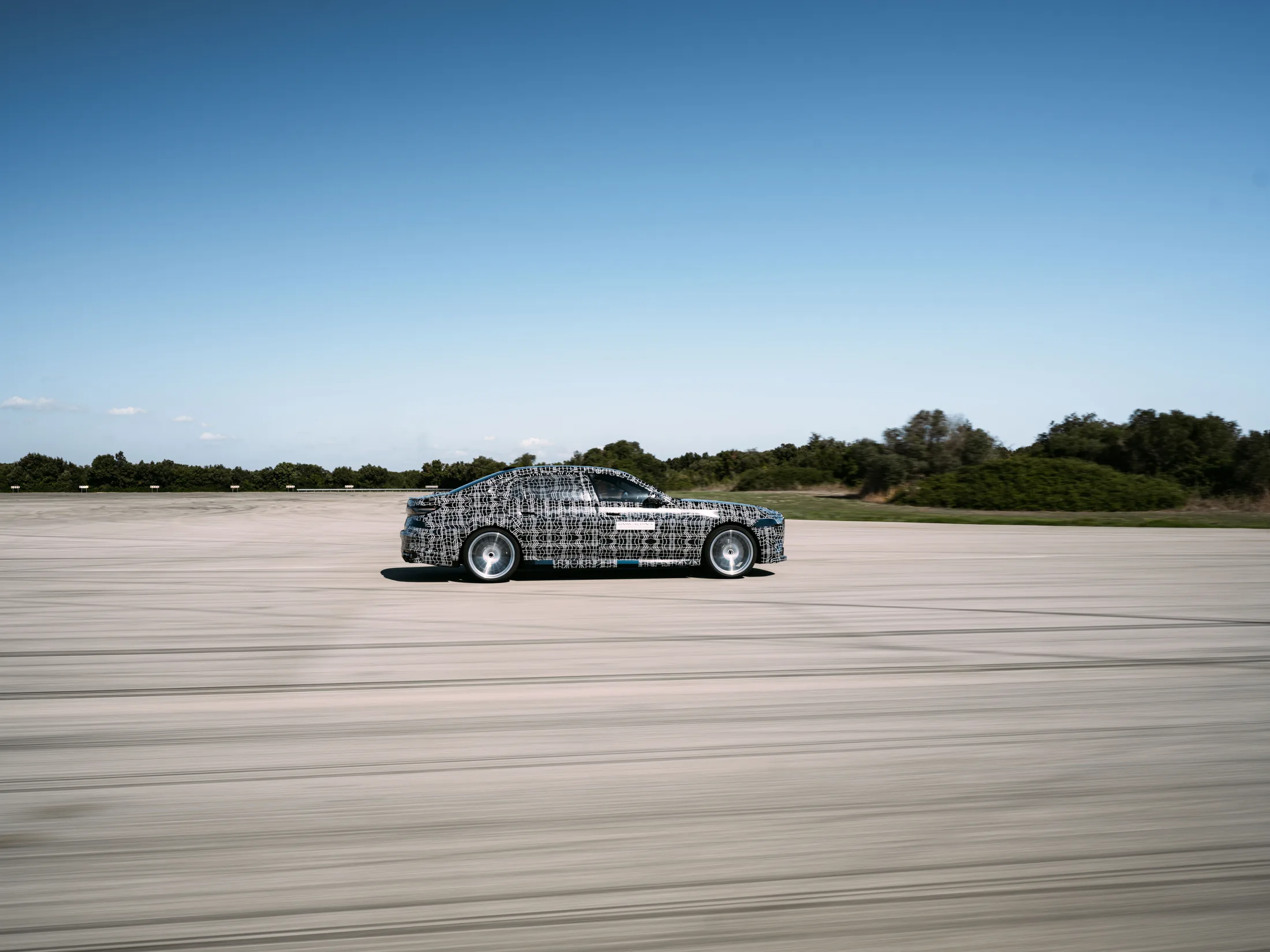
The body is being developed with aerodynamics in mind. Underneath, the chassis has to deliver the combination of dynamic capability and comfort that BMW is setting out for the model.
That brief also reaches the accelerator pedal. Engine and pedal calibration are being tailored for smooth power delivery, while the transmission is adapted to the engine's higher revs and output. The high-speed programme therefore covers how the car responds as well as how quickly it travels.
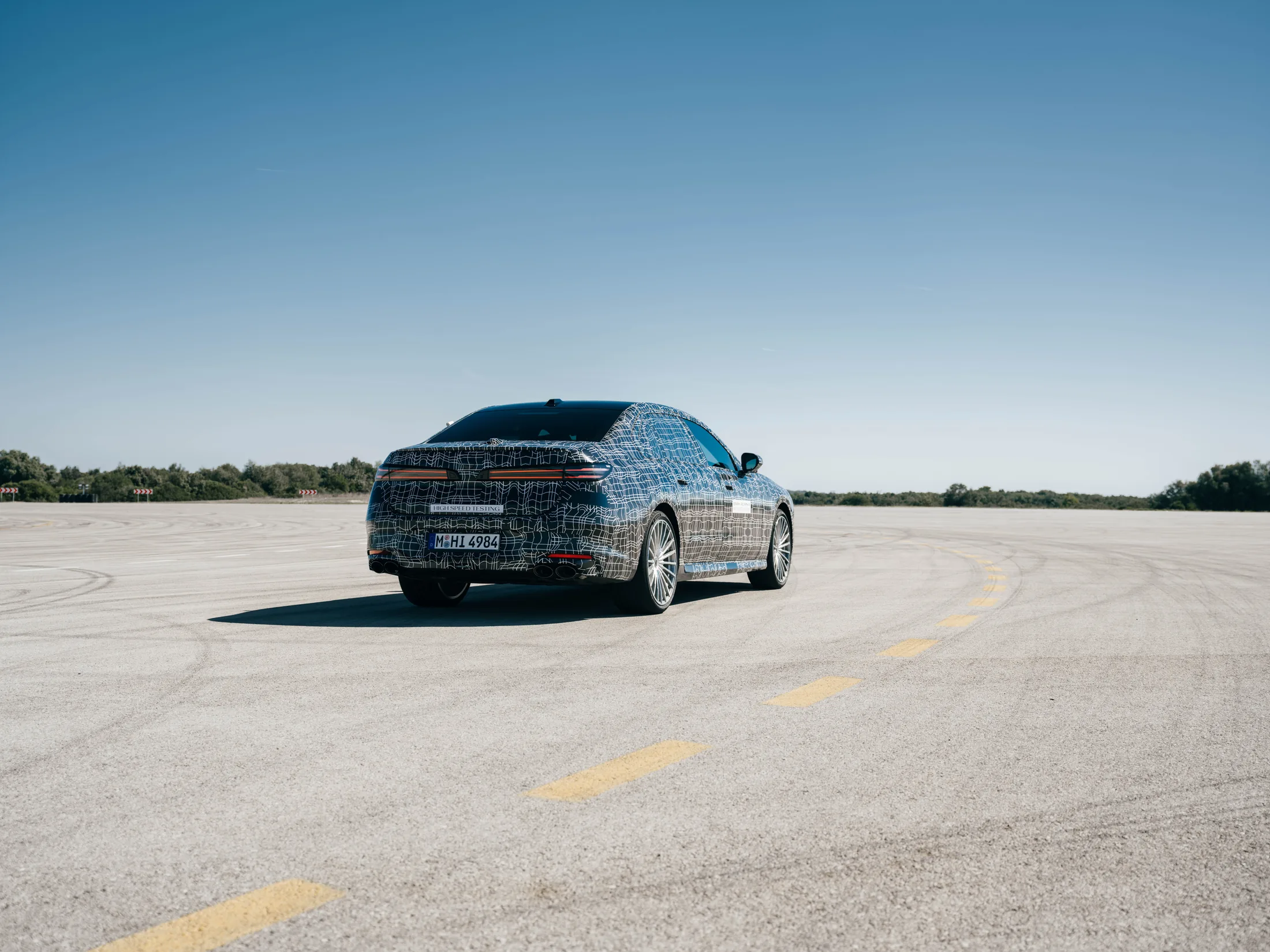
The numbers still to come
For now, the V8 confirmation and testing speed are the headline mechanical details. BMW has not disclosed the engine's capacity, power or torque, and the production model's name remains under wraps alongside its bodywork.
Pricing and launch timing have also yet to be announced. Nardò provides a concrete glimpse of the production car's development, with the final specifications still to follow.


