



Zeekr is the new Chinese EV brand for New Zealand that everybody’s been talking about, and we’re certainly getting to know it. We’ve already reviewed the X compact-SUV and 009 luxury people mover.
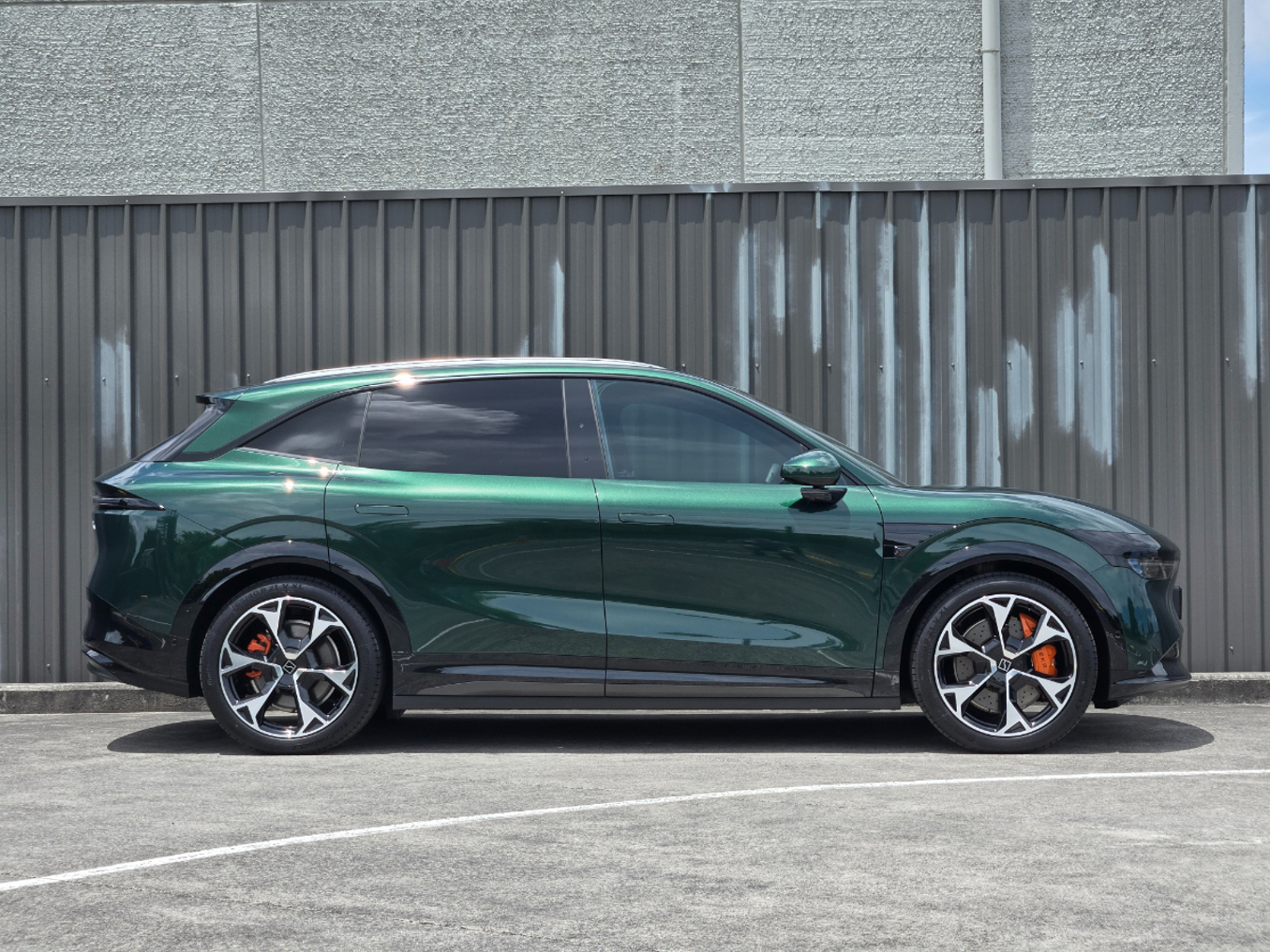
But the Zeekr everybody’s really talking about is this one: the 7X. It’s the newest, most high-tech model offered by the brand in NZ and the one pitching into the most competitive market segment: it’s a mid-sized SUV.
On paper, it’s a rival for the likes of the (obligatory mention incoming) Tesla Model Y, BYD Sealion 7 or even the Kia EV5. But the brand-aspirations of Zeekr and the quality/equipment combo means the 7X is also aiming higher up the ladder, trying to match the luxury character of Audi, BMW, Mercedes-Benz and Lexus at a much lower price point.
“Lower” is relative, of course. While the 7X starts at $69,990, our flagship 7X Performance is $94,990, plus another $1750 for our test car’s striking Forest Green colour (there’s an extra cost for everything except white).
It’s still a lot of car for that. The 7X Performance packs a huge punch with 475kW/710Nm, and it wants for nothing in terms of standard specification. In fact, it’s probably got a few things you’d never even thought about.
EV types get all dizzy about the 7X’s battery tech and 800-volt architecture, giving this model the ability to recharge at an incredible 420kW. That’s not currently possible in NZ, although you can certainly take those 300kW Hyper Chargers to the max when you’re road-tripping. And yes, you’re future-proofed to some extent. But the beauty of this car is that its appeal goes way beyond just being an electric-tech-turnon.
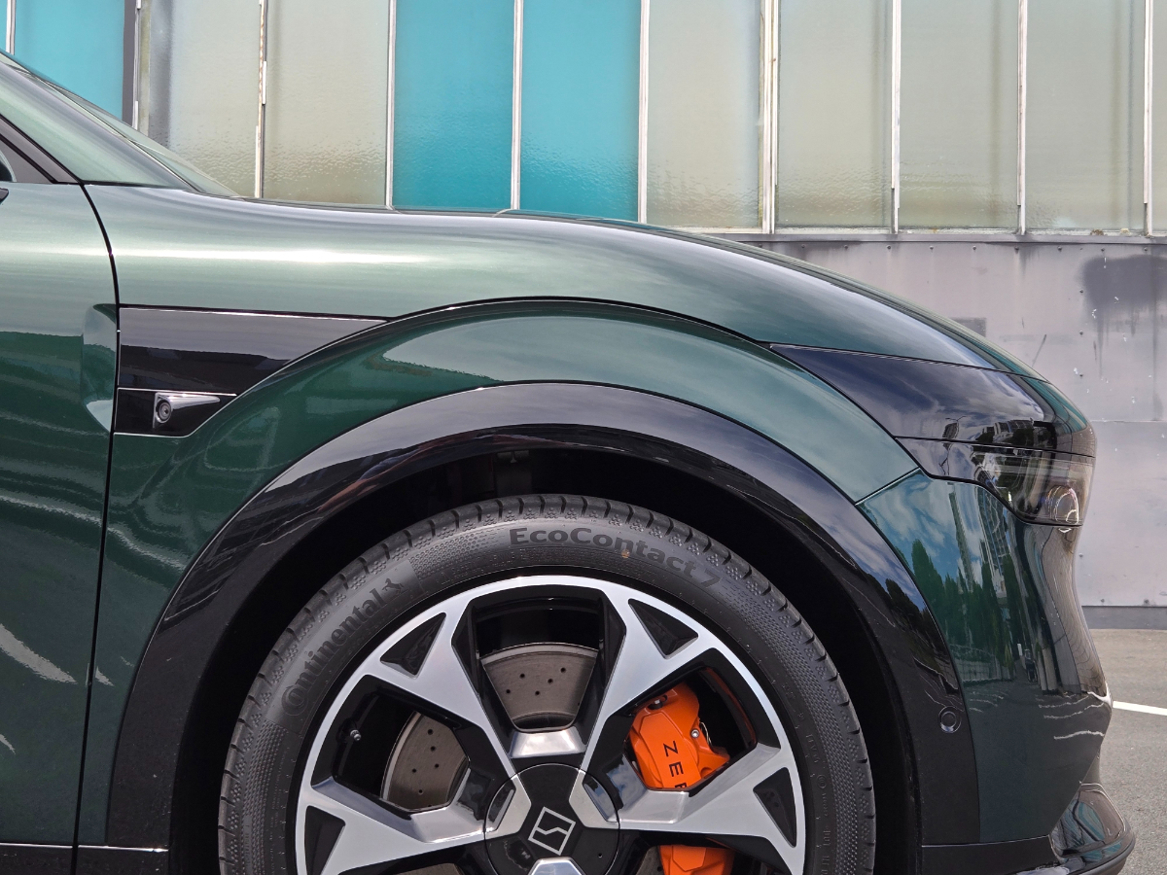
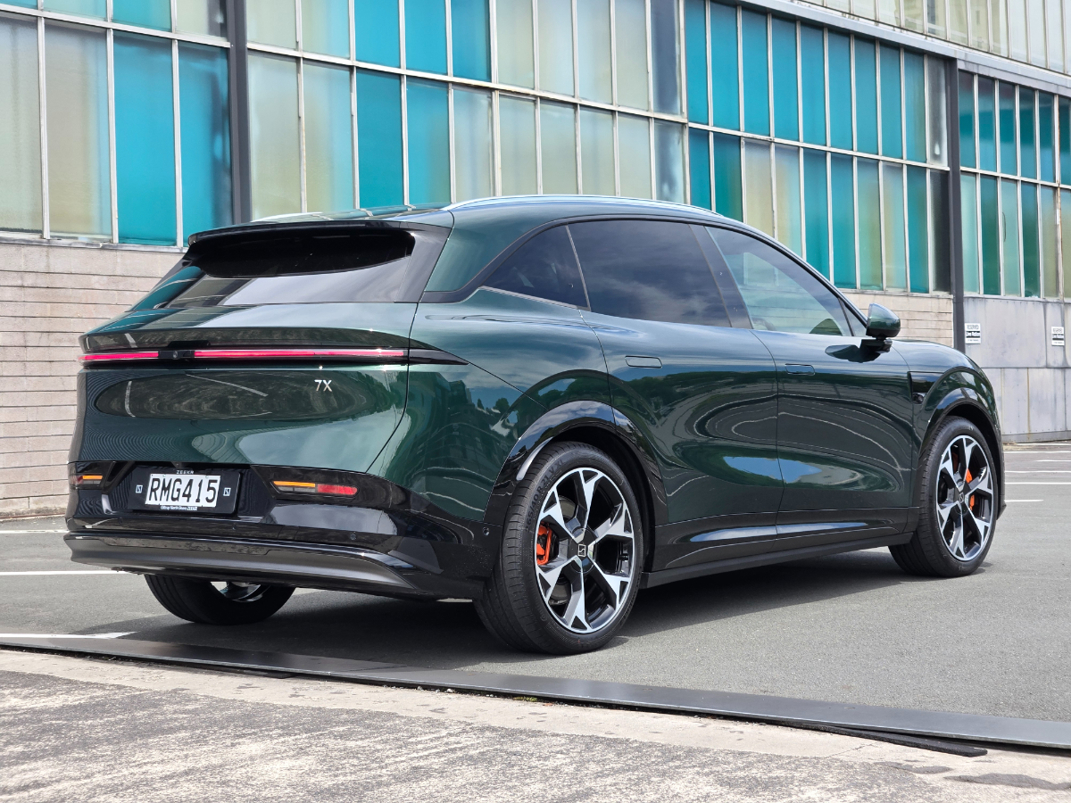
Like the look? We do. In many respects it sticks to the EV-SUV styling playbook, but a handful of nice design details give it a real lift. The black “mask” across the front houses a light bar, but it also wraps right around the front guards, broken by the wheel arches. The intricate overlapping D-pillar might be a bit Smart #1 (a Geely-group sister model), but it’s distinctive all the same.
We’d argue the Performance name is a bit of a misnomer; indeed, this model is called “Privilege” in some markets. Yes, it’s crazy-fast with 0-100km/h in 3.8 seconds and boasts air suspension with a “Very Low” setting and torque vectoring to finesse its cornering capabilities. But the 7X is primarily a luxury car.
In fact, select Sport mode and all it does is change the acceleration to its most aggressive calibration; the steering and suspension stay as-is, and if you want those to be a bit more lively you can switch them independently.
It’s still a machine with plenty of driver appeal. The steering feels consistent in all its modes, and despite a bit of chassis-patter on broken surfaces (a typical EV thing), there’s pleasing nuance in the way the 7X rides and handles. It’s compliant, but well controlled.
Switching the chassis to Sport doesn’t endow the car with a whole lot more handling ability; it just adds an underlying firmness that sometimes undermines the communication from below. We’re more than happy to leave it in Standard (there’s also a Comfort setting), even for brisk driving.
The AWD seems well-calibrated for such a powerful car, too; there’s little evidence of the push-pull you often get on powerful dual-motor EVs when they have to tackle tricky Kiwi backroads.
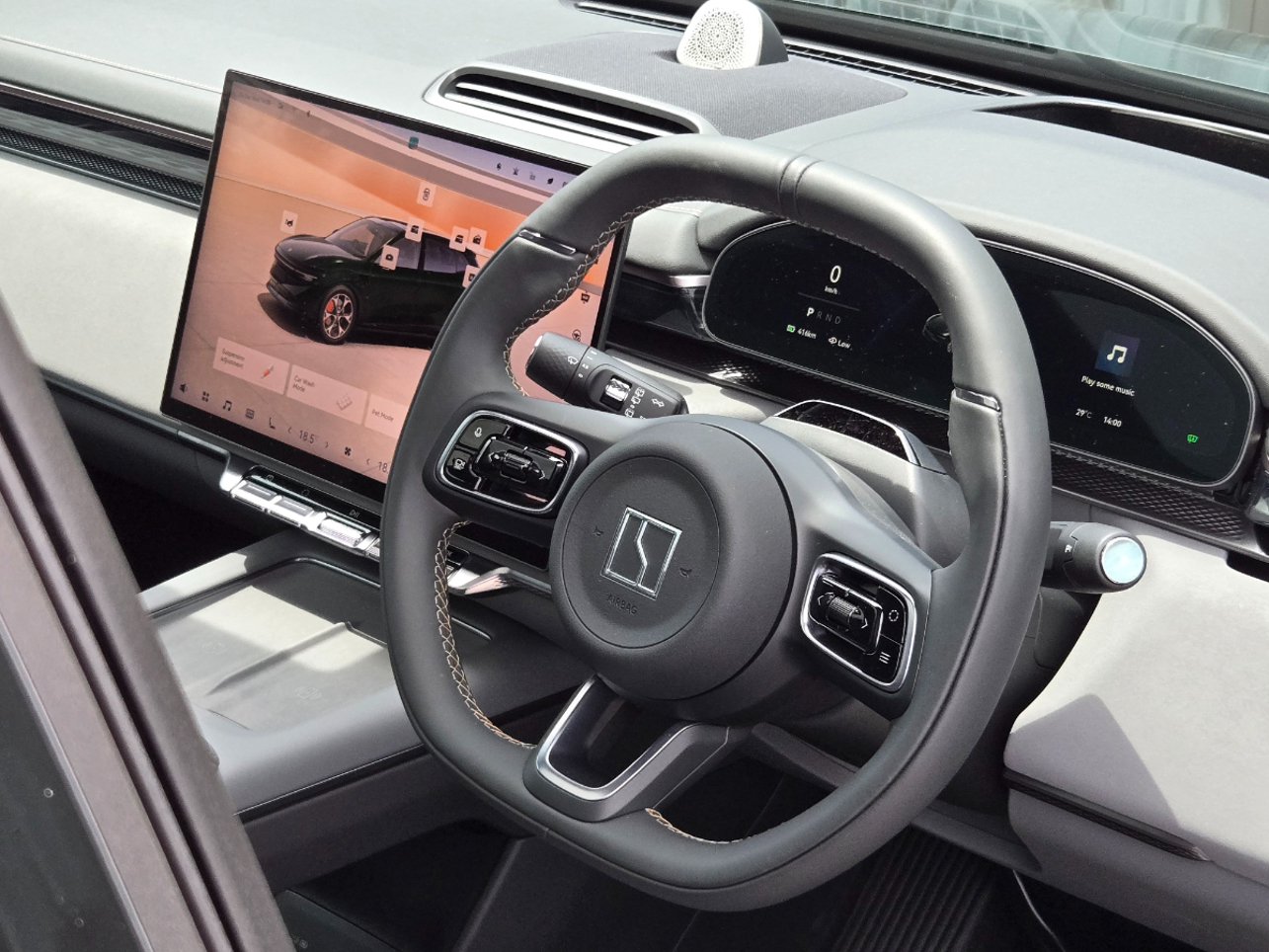
There’s a maturity and balance to the dynamic package that does indeed put the 7X closer to European SUVs than some of its Chinese rivals. The same can be said of the driving environment. Outwardly, it follows new-gen EV standard operating procedure: minimalist design, and massive (16-inch) central infotainment screen with most vehicle functions contained therein.
But there are also physical controls. Quite a few, in fact: eight on the steering wheel and two scroll-controllers, plus another four and another scroller on the centre console. The steering wheel iteself is a lovely thing to hold, by the way.
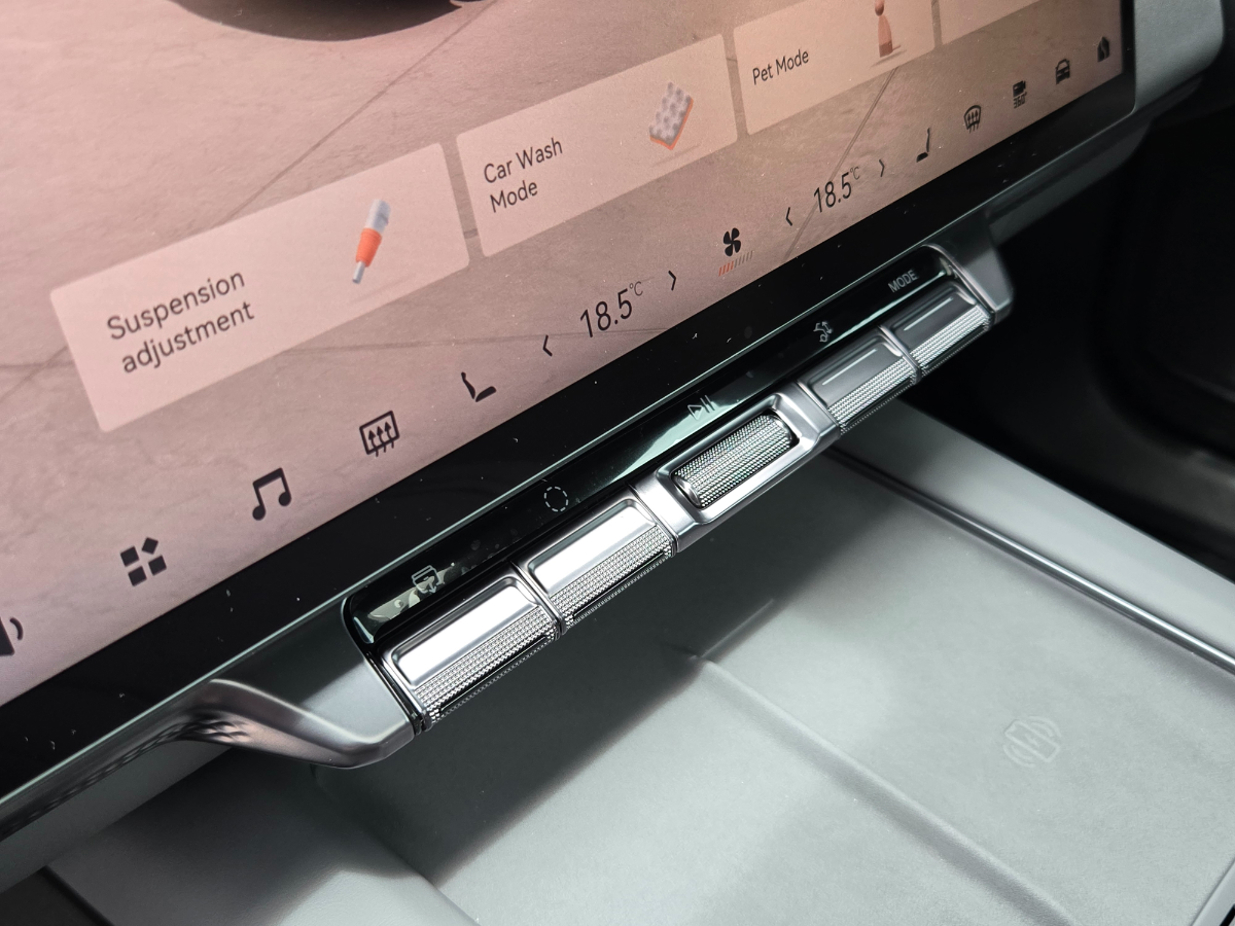
One of the wheel buttons and one on the console are Favourites that you can assign a variety of functions to. Others include acceleration mode, tailgate, audio control and the glovebox release.
Of course you can do any of that on the infotainment screen as well and it’s pretty well laid-out, including a Polestar-like shortcut dock along the bottom with the crucial stuff like climate, media and the seats (heating/ventilation/massage). You can also activate the seat massage with a physical control on the seat-squab… or ask “Hi, Zeekr” to do it (plus a lot of other things).
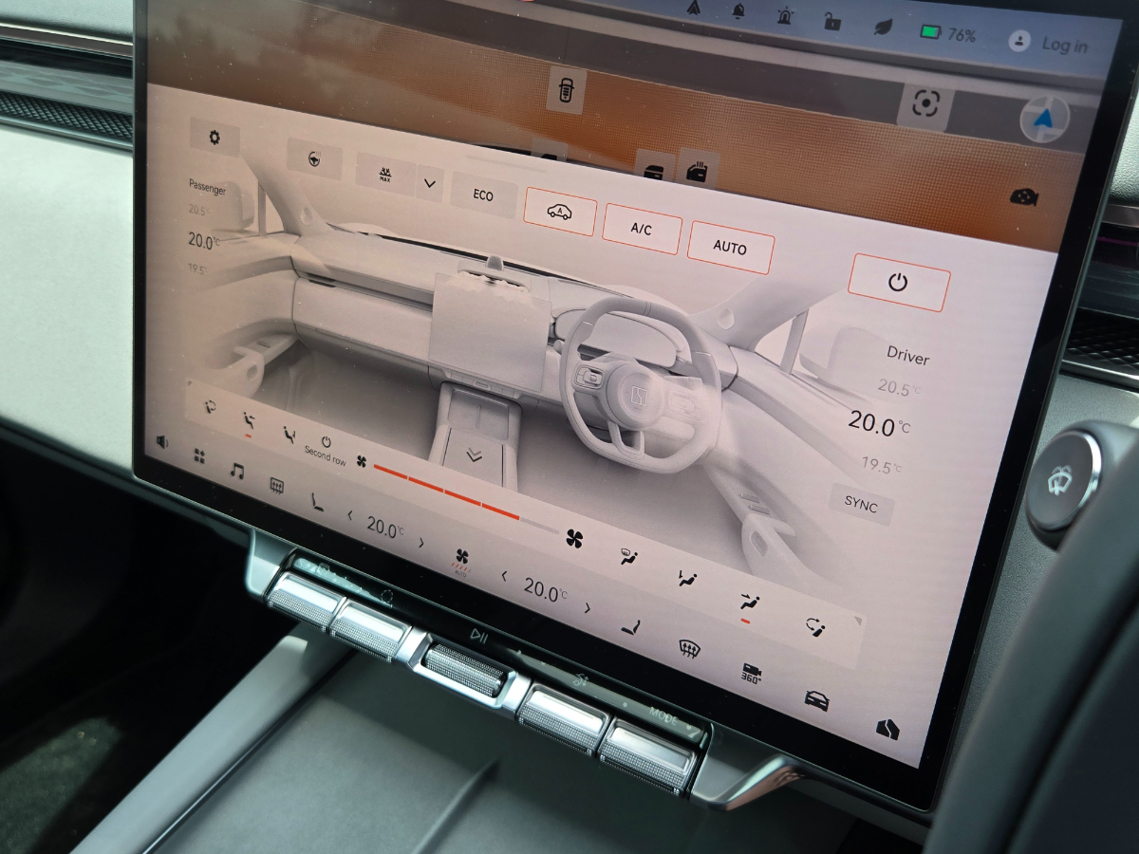
There’s too much clever stuff to mention in the space of one story, but for example: you can bring up a graphic of the dashboard on the 16in screen and adjust the temperature and airflow in a delightfully WYSIWYG way. There’s a pet mode. A camping mode. A monster 36in head-up display.
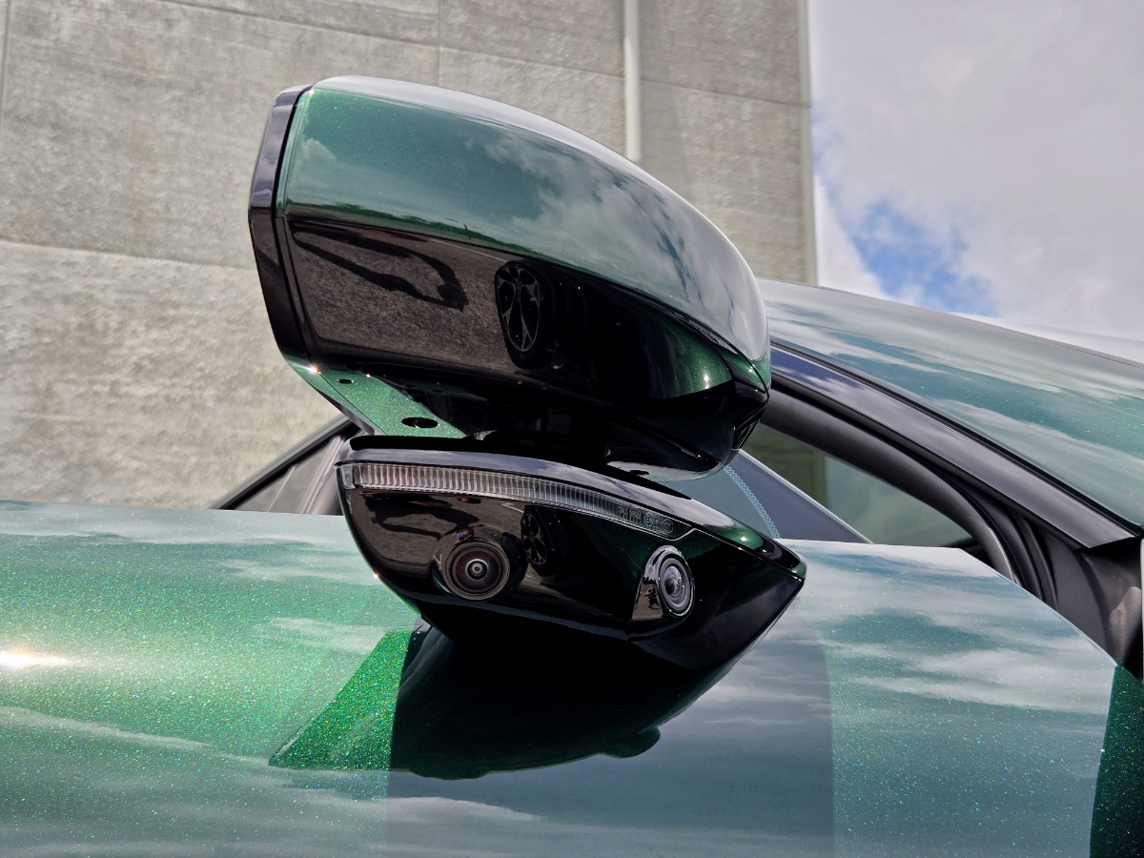
Oh, and a camera in the B-pillar can be used to display a view of the rear-seat occupants on the infotainment screen, which sounds a bit creepy but is brilliant if you’re got children in the back. Adult occupants can slide the lens shut manually if they’re not keen on being seen.
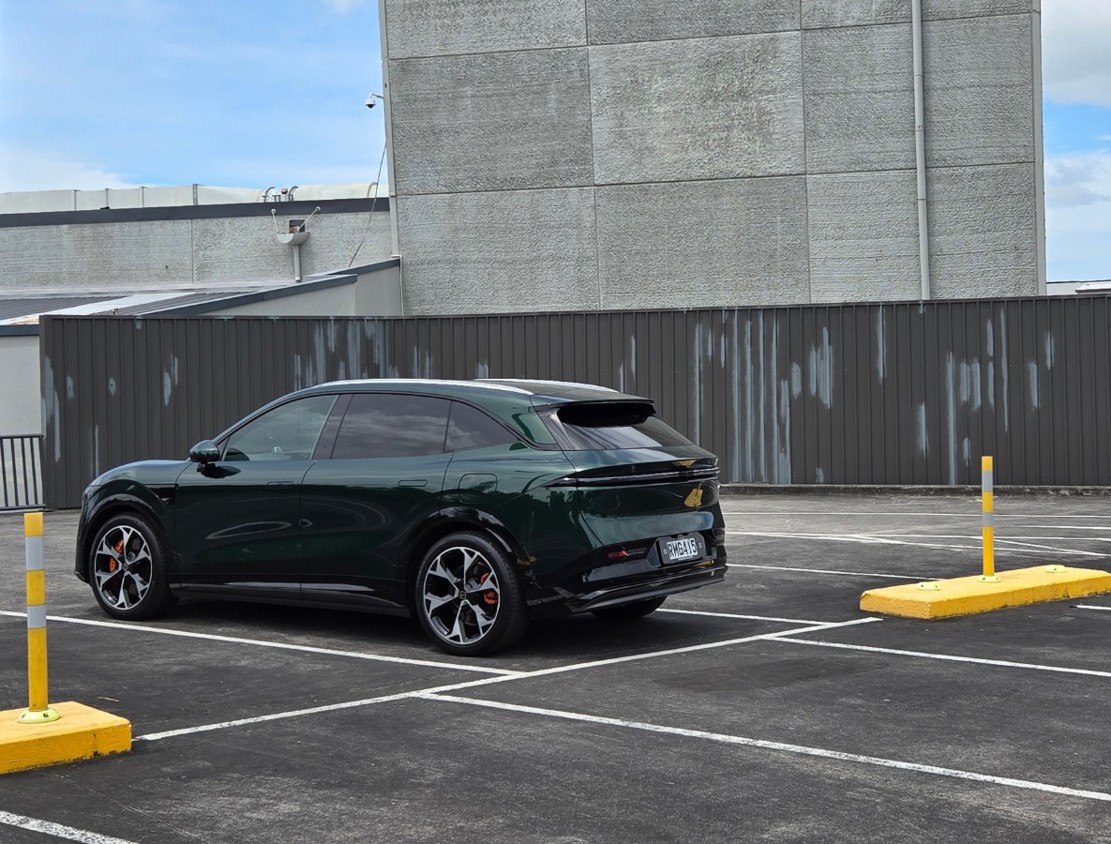
If something could possibly be powered, it probably is in this car. The charge port, naturally. The tailgate. But also the frameless doors.
It’s easy to become fixated on the novelty of the Performance model’s Rolls-Royce-style powered doors. They open via buttons on the pillars and have incredibly good sensors (aided by the cameras) that prevent them hitting anything - even an obstacle mid-way down the panel, where you wouldn’t think there would be coverage.
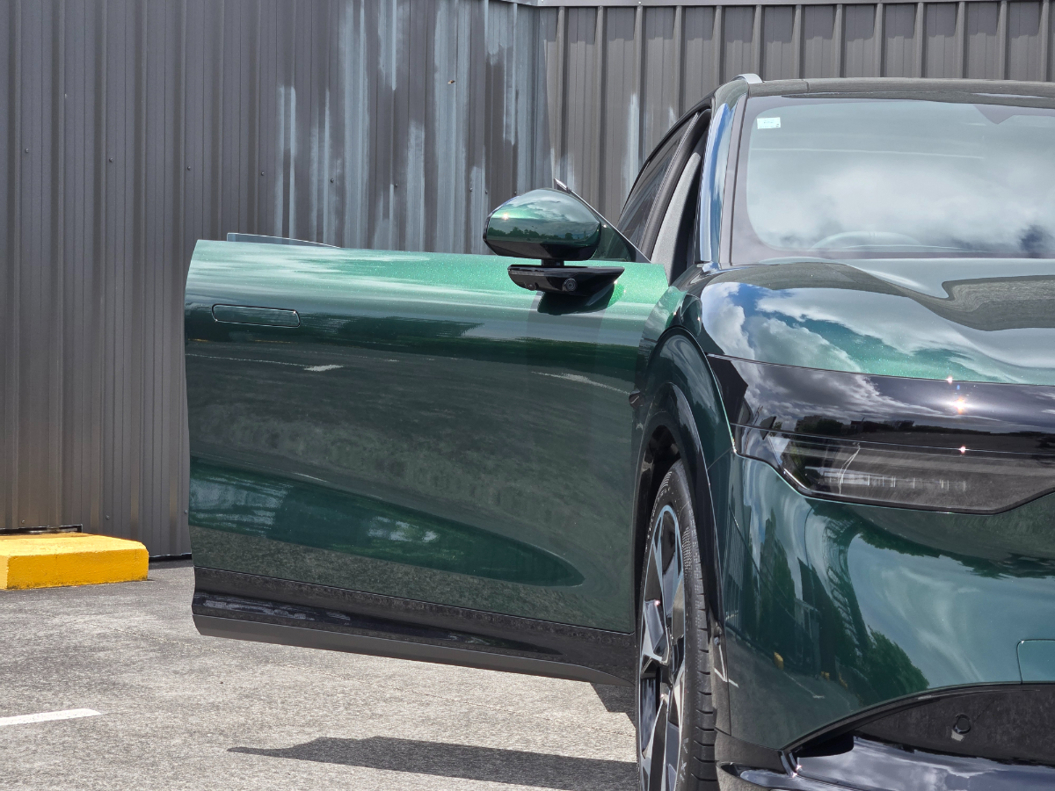
We honestly couldn’t catch them out, save a few instances where the car was parked on an empty road and the driver’s door was reluctant to open fully. Perhaps the camera wasn’t sure what it was seeing?
Anyway, they’re fun; the driver’s door closes when you press the brake and the rest are operated by a button on the door trim. You can also operate any/all from the touch screen, meaning you can open the doors for passengers as they approach, which goes down pretty well.
Yes, it’s all a bit silly. But it’s a feature you have by choice; you can decouple the mechanism and use the doors normally if you want. If you want to be boring.
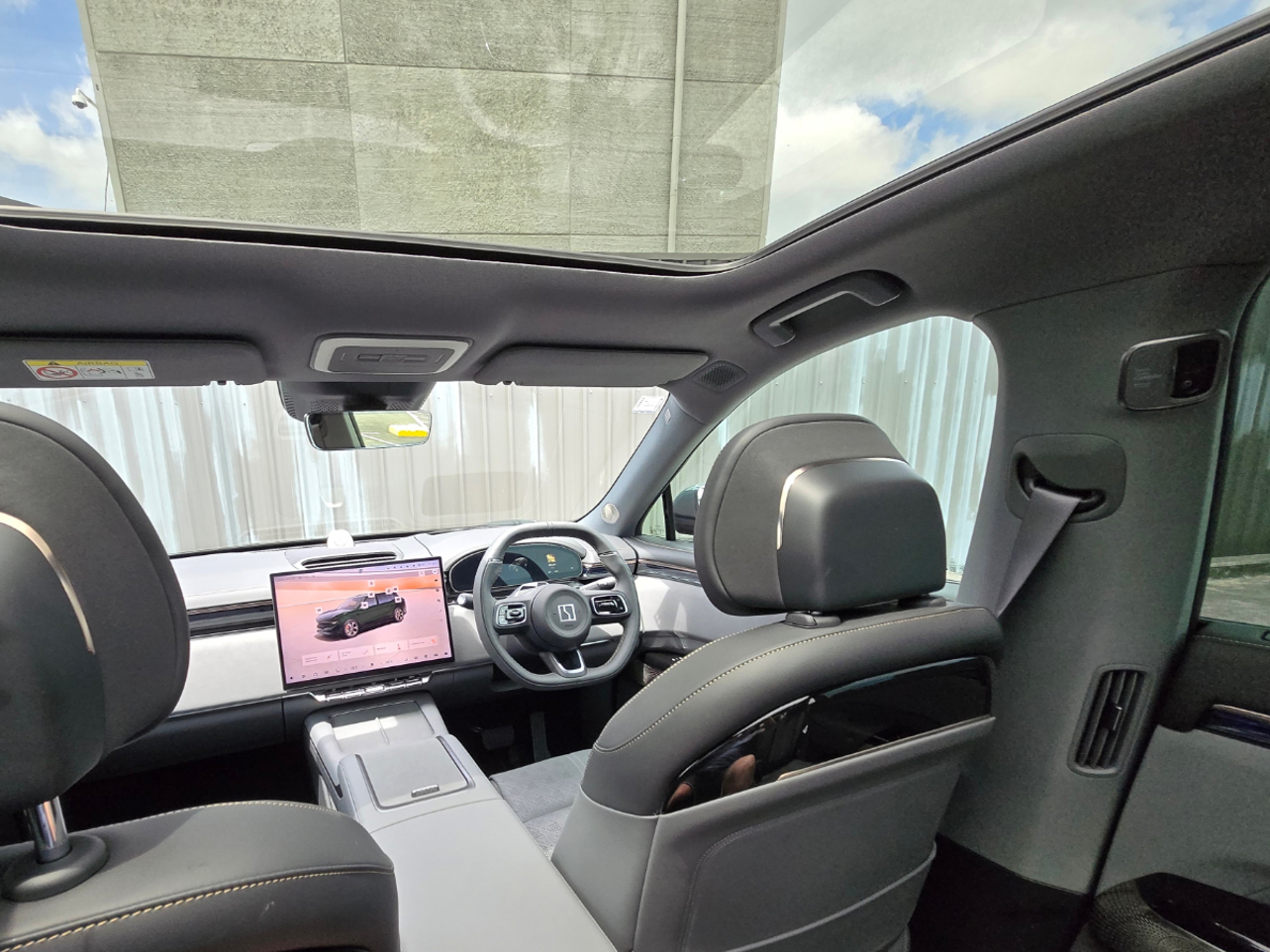
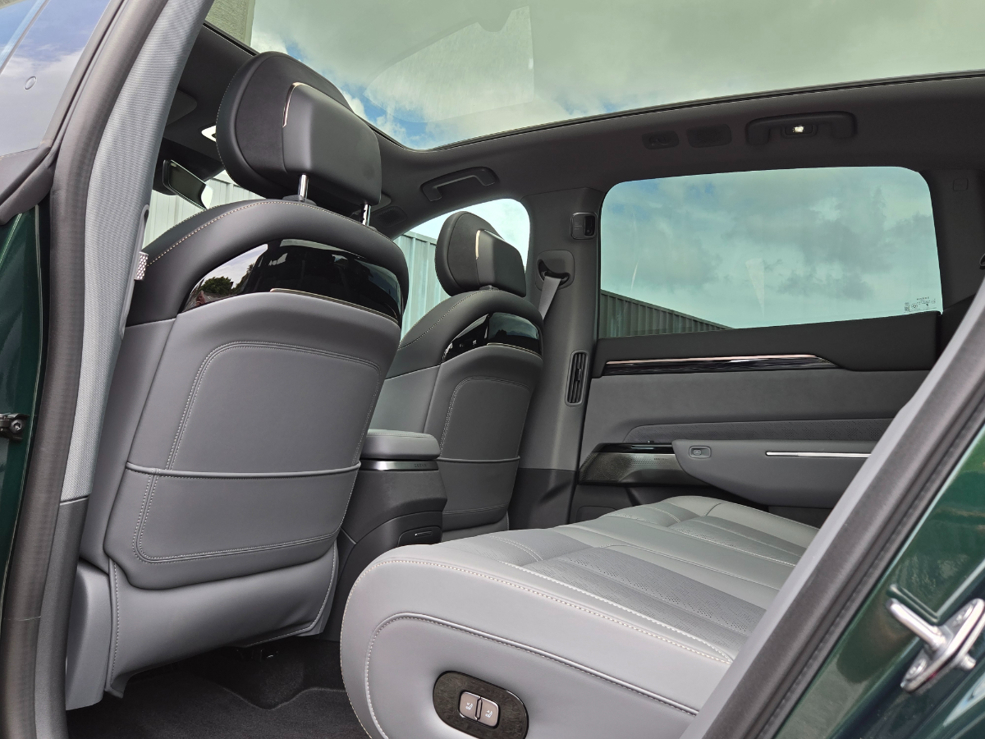
For occupants, the 7X does feel rather luxurious. Regardless of how you choose to operate them, the rear doors can open to a generous 90 degrees. The upholstery is nappa leather, the fit-and-finish really does live up the $95k pricetag (and beyond) and while there’s some of the expected high-end EV bling, including “ripple effect ambient lighting”, overall it’s quite restrained and classy.
Truly vast in the back, too, with a powered rear seat and the expected Chinese priority given to those in the back: the left-side passenger has power-controls to shift the front-passenger seat forward and out of the way, for even more legroom: up to 1187mm.
But what about the familiar Kiwi priority of sheer practicality? That’s impressive, too. There are storage spaces everywhere (36 says Zeekr), including a large centre console box that can be removed and replaced with a fridge, or pull-out drawers underneath the back seat.
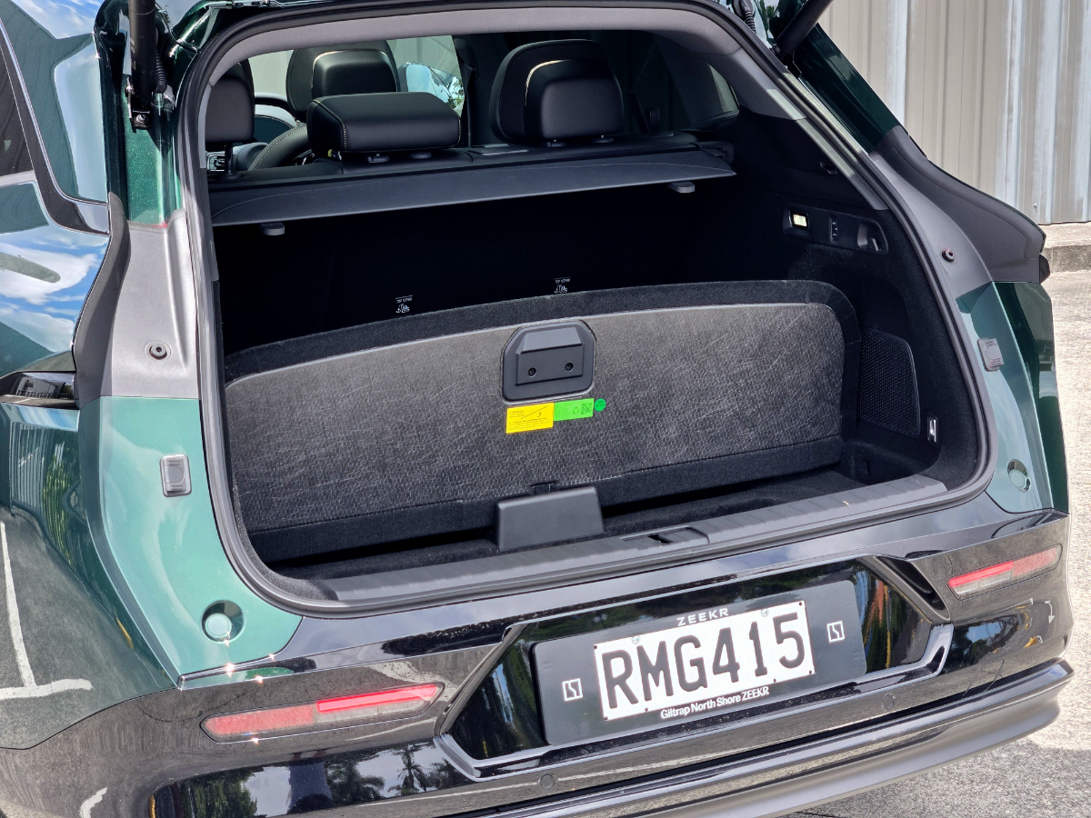
The boot has a double floor and the back section can be locked upright to act as a partition. The cargo area is nicely shaped, with 537 litres of storage space. You don’t quite get a flat load-through with the back seats folded, but Zeekr claims a generous 1978l all the same. There’s also a 62l frunk.
Zeekr is a young brand, founded in 2021, but under the auspices of a highly accomplished parent company: Geely. It was created primarily for export markets ahead of China, and the 7X stands as the most confident expression of that ethos. It doesn’t smash any boundaries or wow you with sporty handling, but it takes an established format and finesses it to a fine degree.
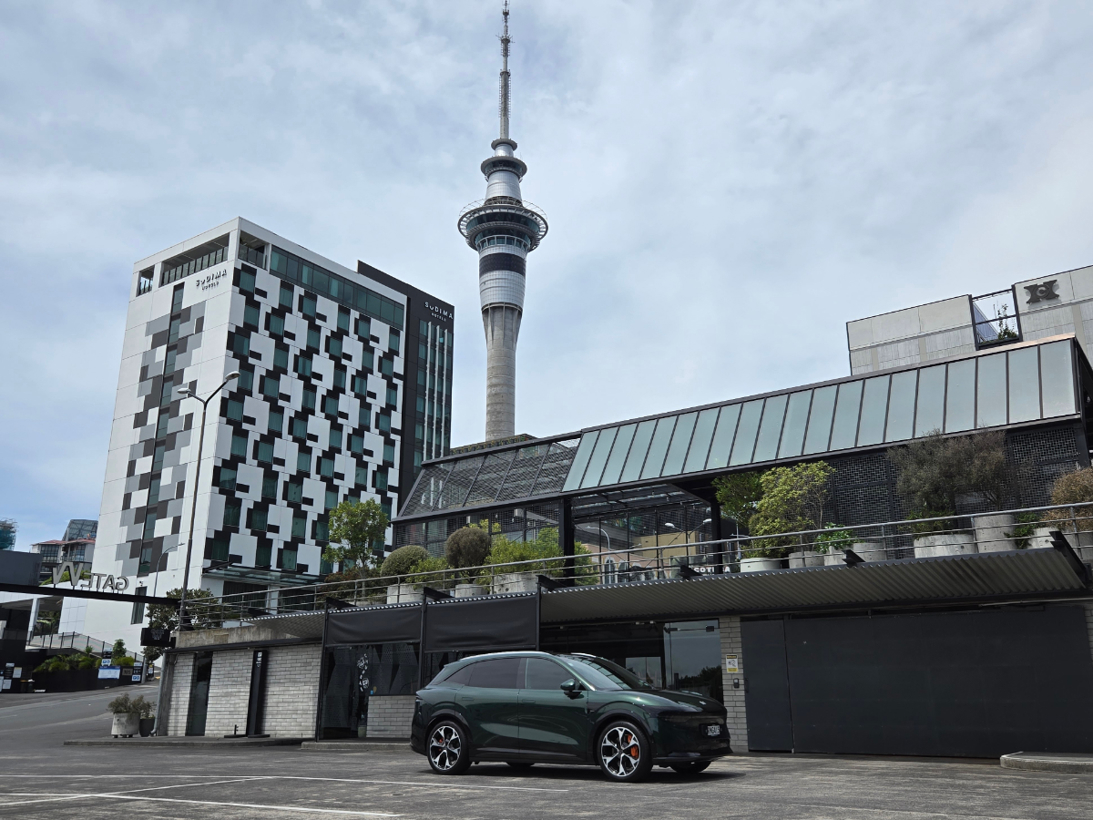
It’s a very satisfying and sophisticated offering that feels completely finished software-wise (not always a given with new-gen models these days) and ready for Kiwi roads.
We’d go so far as to say its appeal extends beyond pure EVs to the mainstream luxury market. You could get out of a combustion-engine luxury SUV and feel at home in the 7X pretty quickly, because it feels like a car rather than a science experiment, despite all the high-tech. It gets a lot more right than any new-brand new-energy vehicle we can think of.
How much is the Zeekr 7X Performance?
It’s top of the 7X lineup at $94,990. Other models include the Long Range RWD (same 100kWh battery) at $79,990 and the RWD with the much-talked-about 75kWh “Golden Battery” for $69,990.
What are the key statistics for the Zeekr 7X Performance?
The dual motors make a maximum of 475kW/710Nm, which means the 7X Performance is good for a startling 0-100km/h in 3.8 seconds.
Is the Zeekr 7X Performance efficient?
It’s relatively light given the car’s size and dual motors, so a range of 543km is pretty impressive - even considering the massive 100kWh battery. We consistently got 500km-plus projected range during our time with the 7X.
The maximum charge rate of 420kW is a headline-grabber, even if you can’t fully use it in NZ yet.
Is the Zeekr 7X Performance good to drive?
It’s crazy-fast when you want it to be, but that’s a bit of a distraction. It’s really a luxury car, with light (but consistent) steering, a compliant chassis and nicely calibrated air suspension. Dynamically, it has a good feel.
Is the Zeekr 7X Performance practical?
It’s on the larger side of medium-SUV (nearly 4.8m long) with a 2.9m wheelbase and flat floor, so the 7X is genuinely spacious inside. There’s a limo-like feel in the rear, with a back seat that’s fully power-adjustable.
The boot is generous at 537 litres and has a double-height floor, with a back section that can also be positioned upright as a partition. You don’t quite get a flat load-through with the rear seats folded, though.
What do we like about the Zeekr 7X Performance?
It looks more distinctive than the bulk of new-energy EV-SUVs, the performance and ride/handling package is quite well-finessed and the cabin embraces the latest technology but blends it with some old-school tactility. For example, the steering wheel is beautifully shaped and there are physical buttons on both the steering wheel and centre console.
For $95k, the Performance serves up a startling package of technology and quality.
What don’t we like about the Zeekr 7X Performance?
There’s a bit too much Tesla-wannabe in places; even the “Performance” name is cribbed from the Model Y and having features like steering and mirror adjustment solely within the touch screen is disappointing when there’s other switchgear on offer.
Zeekr makes much of its in-house Sound Pro audio system (including headrest speakers) and it’s good, but it didn’t exactly blow us away with its sound quality.
What kind of person would the Zeekr 7X Performance suit?
Somebody who’s interested in a new-energy luxury SUV but wants to retain a bit of real-car feel. Or an EV enthusiast who wants the best car from the coolest Chinese brand.