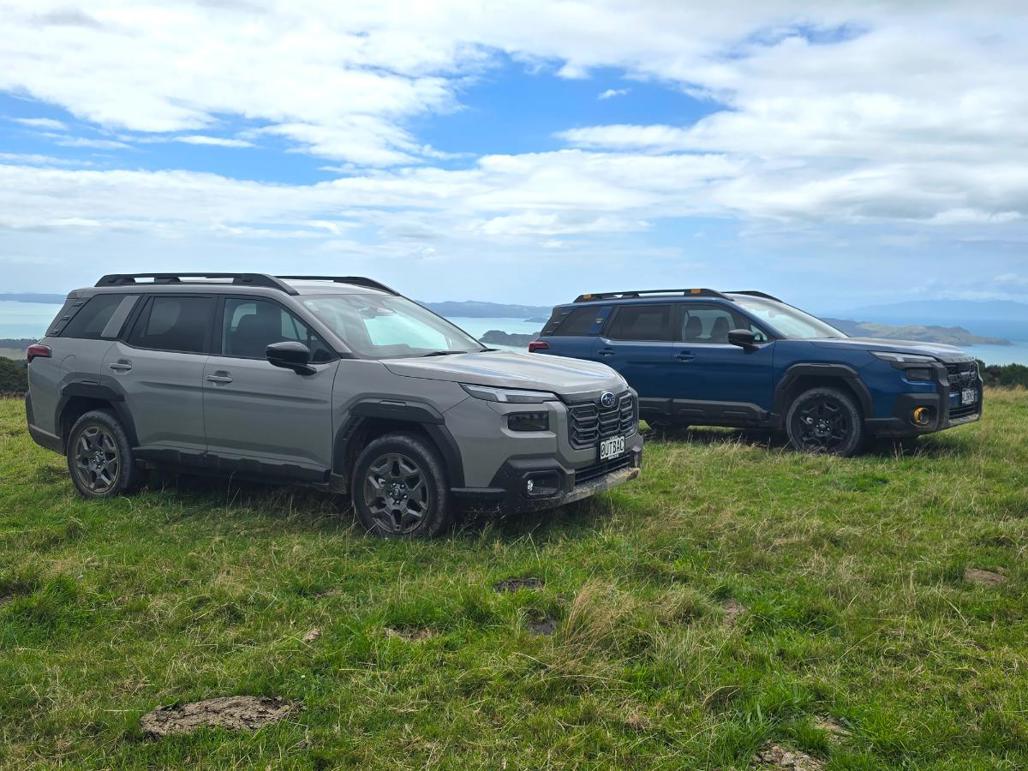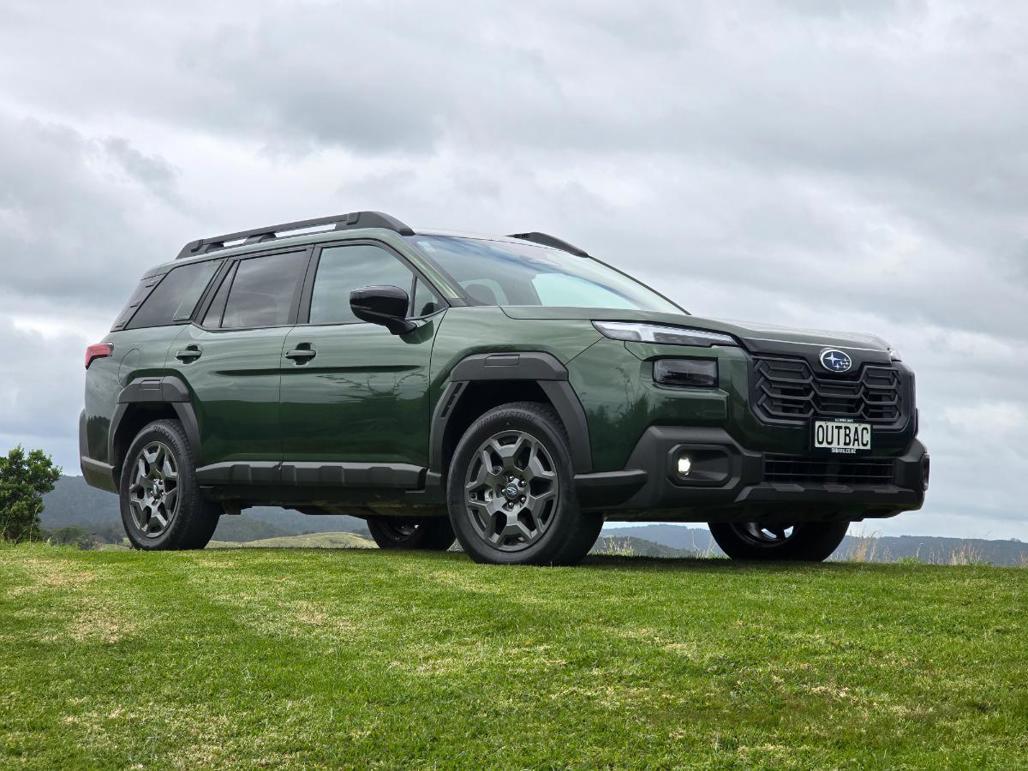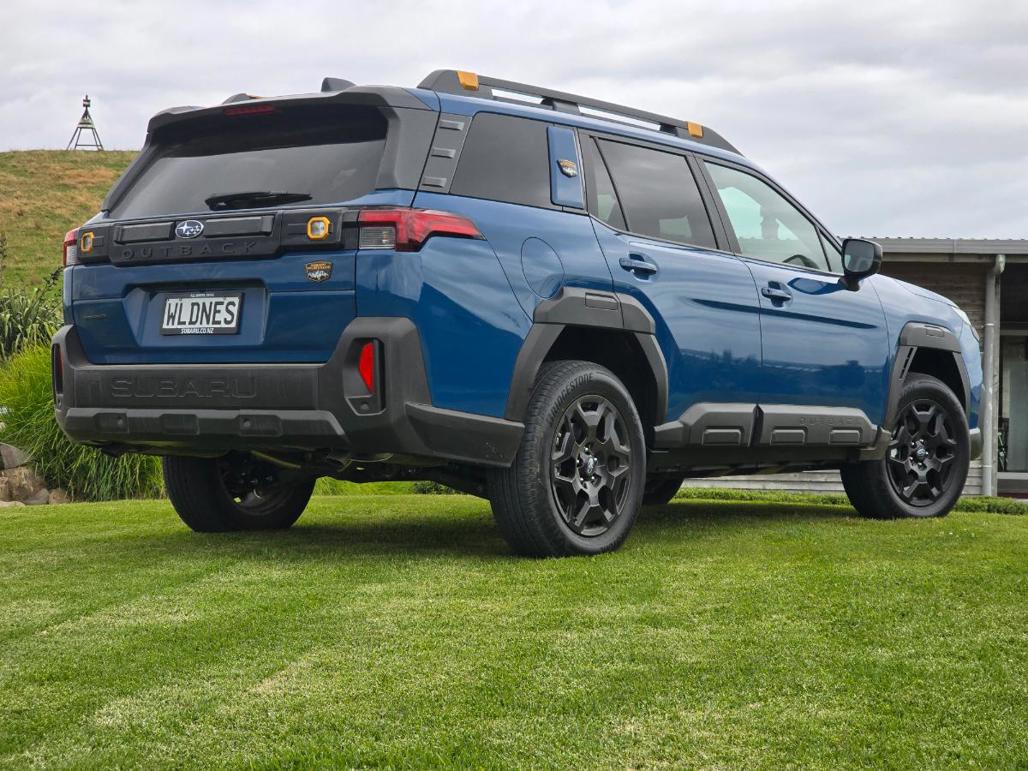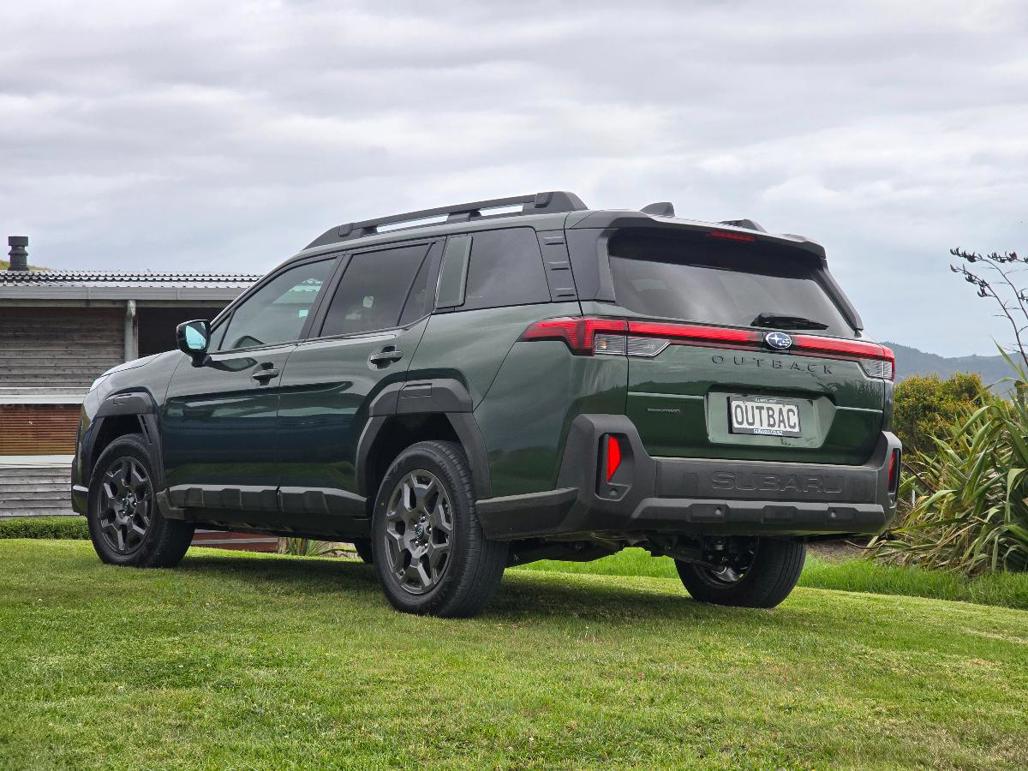



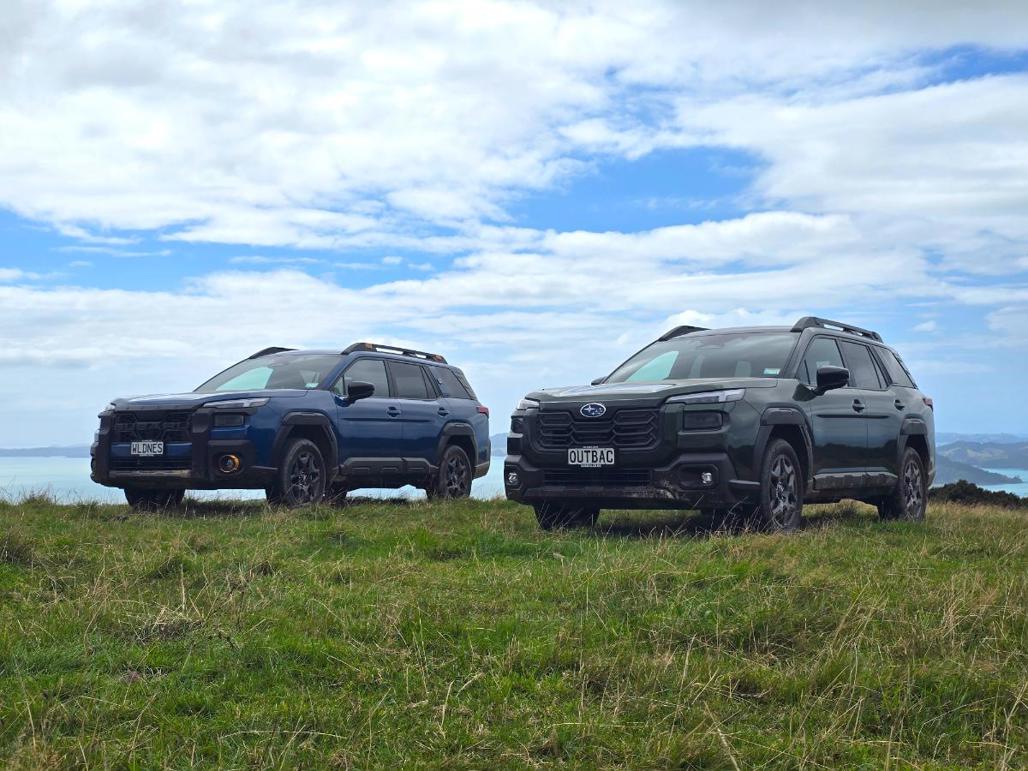
What’s this new car all about then?
The Subaru Outback is an incredibly important car for Subaru New Zealand - it is not only a long-running and iconic nameplate, but it also happens to be the biggest selling Subaru model here.
As such, the launch of a new model is something of a big deal.
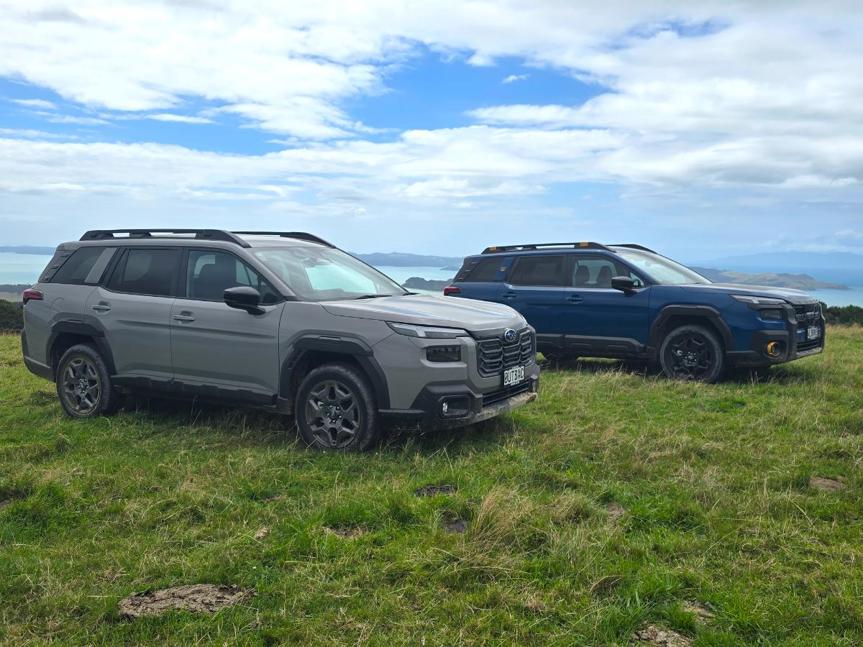
This time around though, Subaru upped the stakes by also introducing the rugged and more off-road focused Wilderness sub-brand with the new 7th-generation Outback.
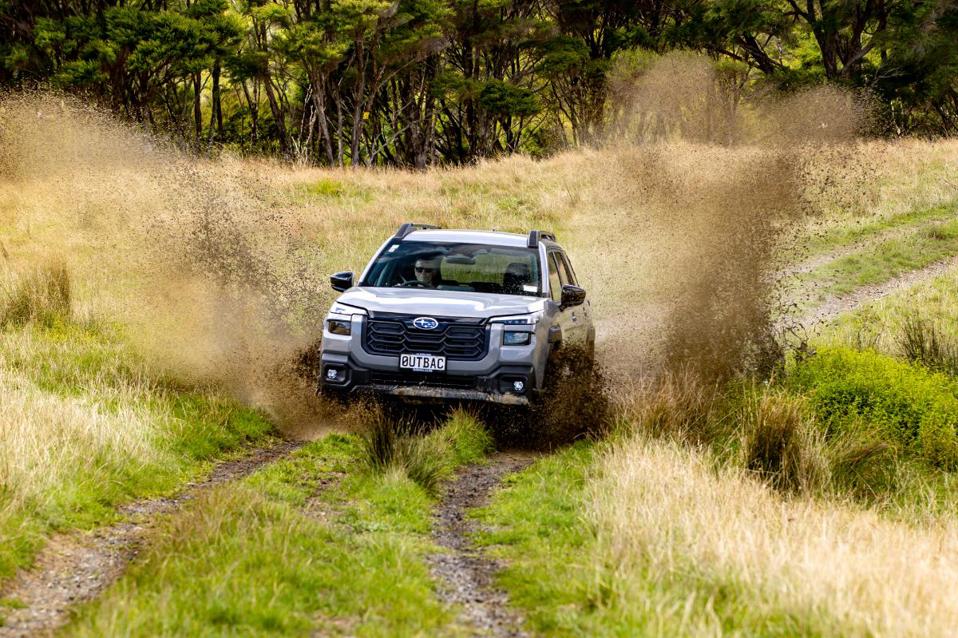
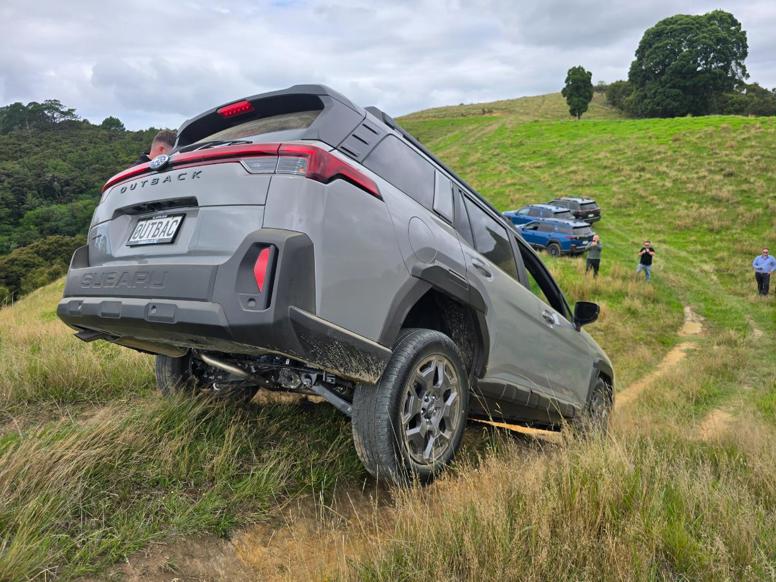
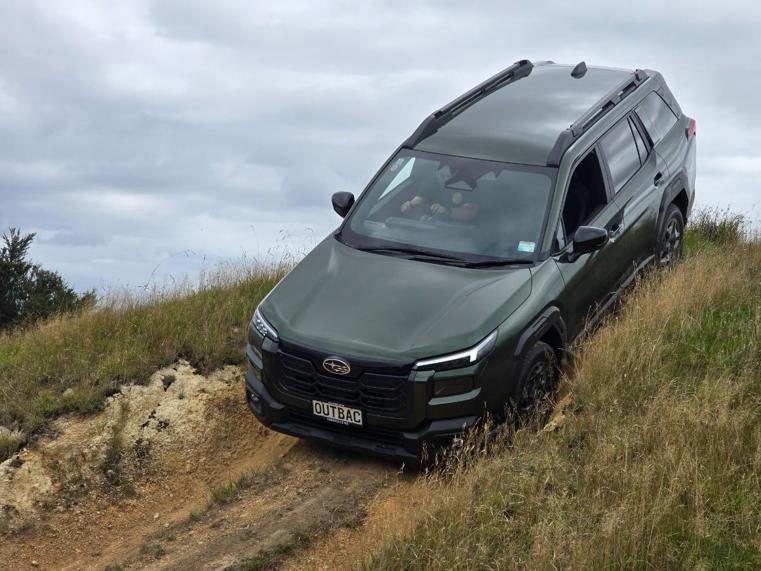
Described as a "capability statement," Subaru says its Wilderness models are “engineered to take the brand's reputation for adventure to the next level”, with the Outback Wilderness models featuring 240mm of ground clearance, as well as greater approach and departure angles.
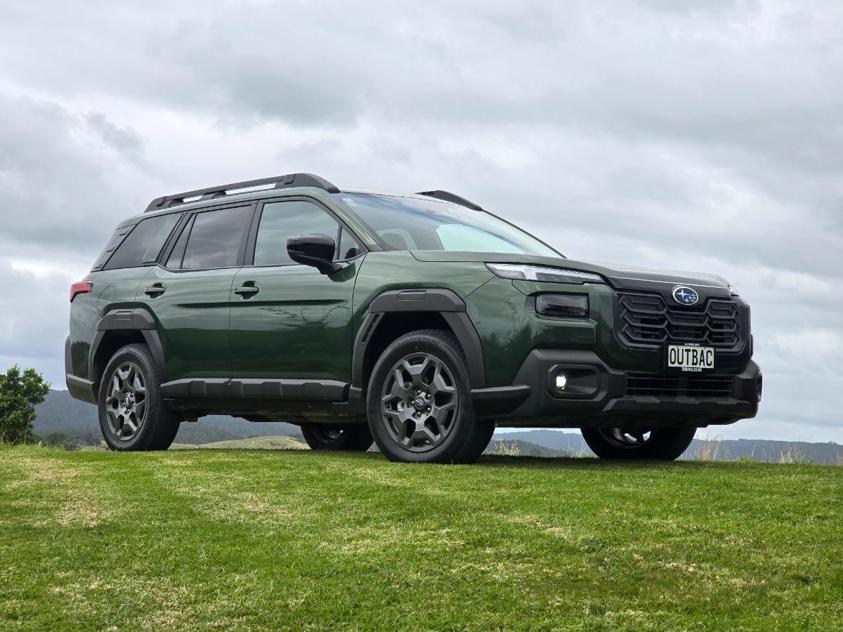
The new Outback is larger and more SUV-like in its proportions than ever before, with a stronger, more upright front end and flatter, bolder surfacing, but still shows its distinctive wagon origins (it was originally based on the now discontinued Legacy wagon, remember?) it is so beloved for.
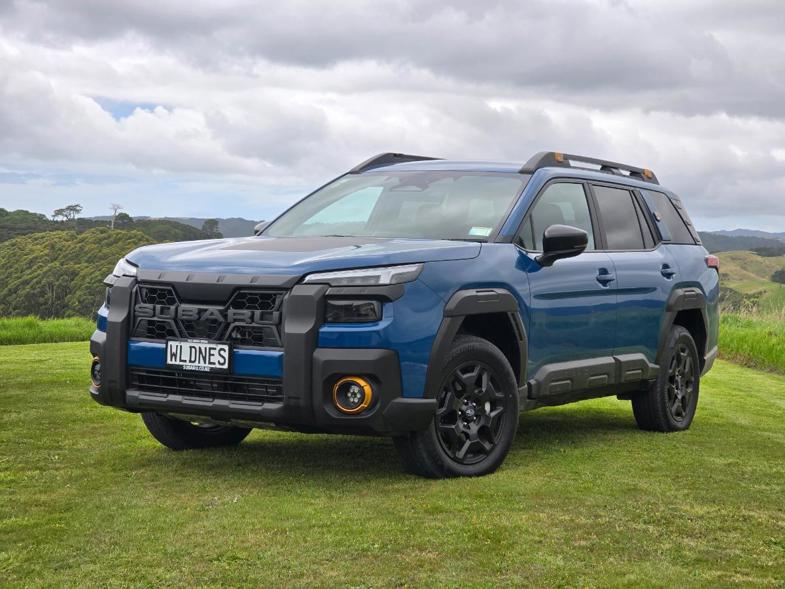
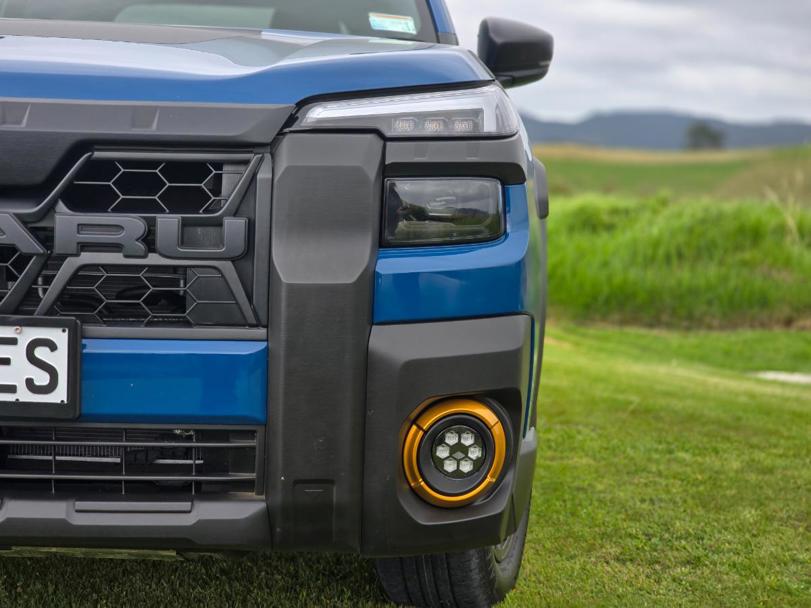
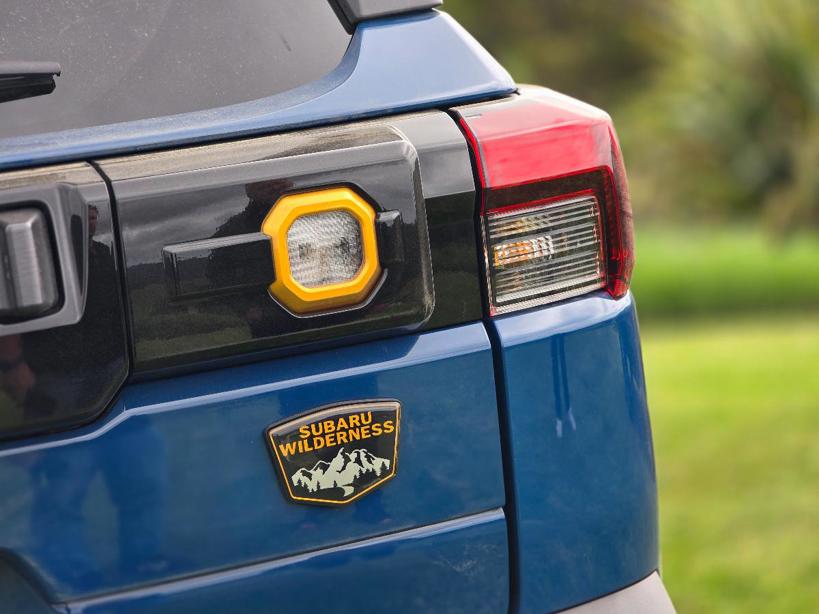
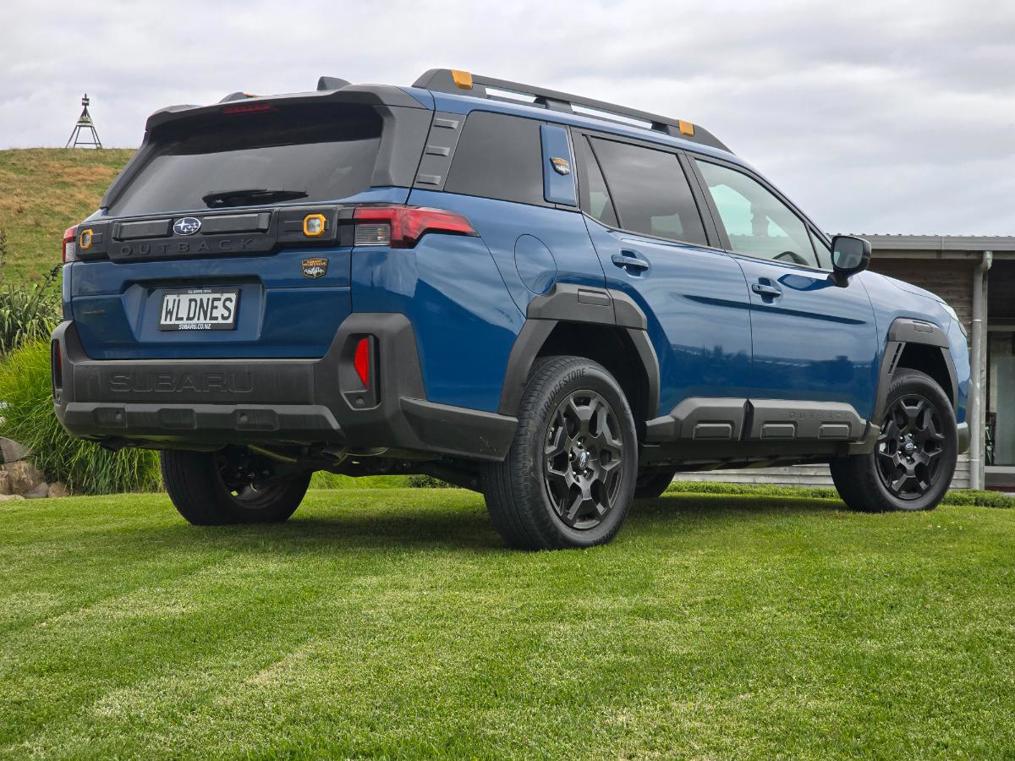
The Wilderness models take this even further with exterior cues that include rugged detailing, orange (well, Subaru syas they are 'bronze'...) accents, distinctive Wilderness branding, and uniquely designed LED taillights.
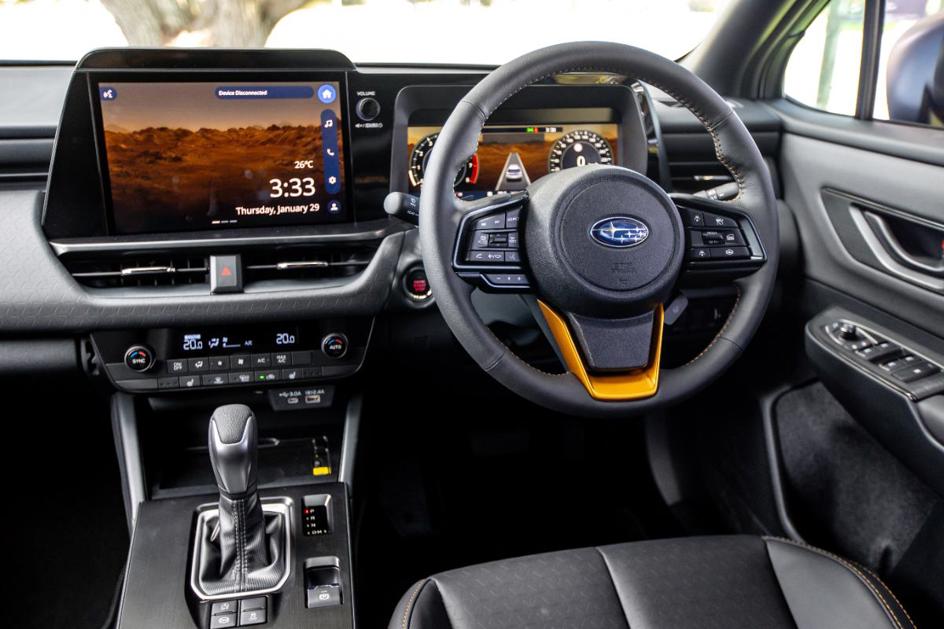
Reinforced underbody protection, ladder-style roof rails with increased load ratings, and functional cladding are also featured on the Wilderness, while the cabin of the new Outback is yet another step forward in Subaru’s interior quality, with fewer hard plastics in touchpoints and more robust, purposeful materials. The cabin feels refined, comfortable, and spacious.
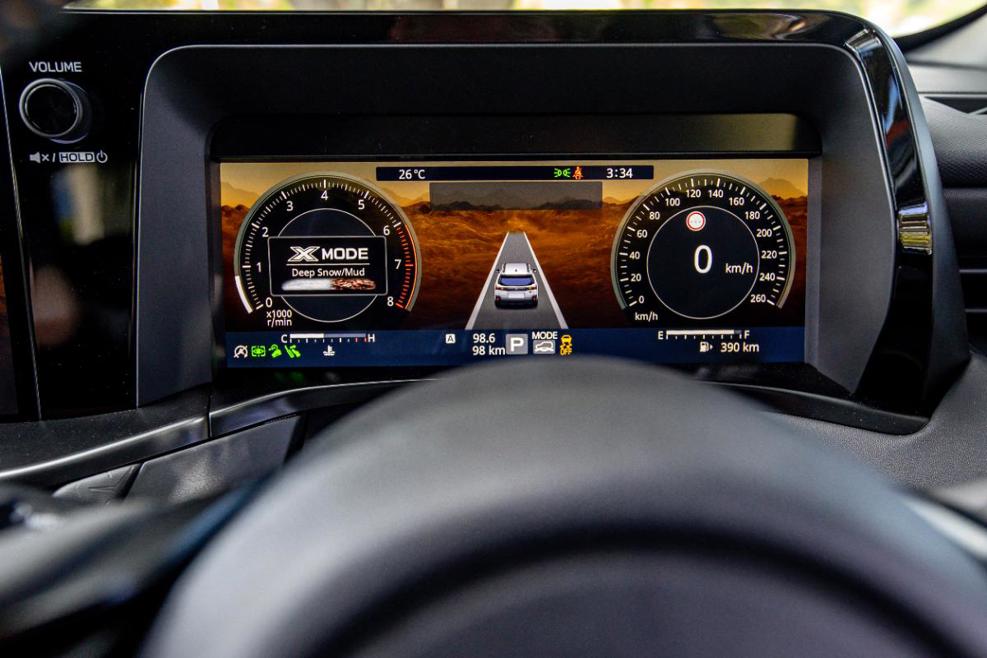
Technology highlights include a new 12.1-inch central touchscreen and a 12.3-inch digital instrument cluster that provide clearer, more modern visuals, while the latest incarnation of Subaru’s EyeSight driver assist now adds a wide-angle monocular camera and an Emergency Driving System, supported by nine airbags and a stronger body structure, including a new far-side airbag for enhanced occupant protection.
On the road, the Outback's handling quickly proves itself to be the standout feature, with a superbly assured nature and minimal body roll.
The standard Outback models are powered by Subaru’s venerable 134kW/247Nm 2.5-litre naturally-aspirated four-cylinder horizontally-opposed petrol engine, while the Wilderness packs a 194kW/382Nm version of the company’s 2.4-litre turbocharged four cylinder petrol engine.
All models use Subaru’s Lineartronic continuously variable transmission with an 8-speed “manual” model available.
How much is it?
The 7th-gen Outback range consists of five models, with the entry level Outback AWD kicking off the line up at $54,990 and packing the full EyeSight safety suite, Subaru’s X-Mode off-road drive mode, wireless Apple CarPlay and Android Auto, synthetic leather seating, a power tailgate, power driver’s seat with adjustable lumbar support, ladder-style roof rails, and 18-inch alloy wheels.
The Outback AWD Premium lands next at 59,990 and adds a 12-speaker Harman Kardon audio system, a 360 degree parking camera, a heated steering wheel, a powered front passenger seat, an electric sunroof, and satellite navigation.
The $64,990 Outback AWD Touring ups the Premium’s spec by adding Nappa leather, heated and ventilated front seats, heated rear seats, wireless charging, auto-folding/dipping mirrors, driver seat/mirror memory, and gloss-finish 18-inch alloy wheels.
Still obviously channeling its wagon roots, the Outback delivers reassuring confidence and agility that stands out in a segment often defined by taller, softer SUVs.
The Wilderness range sits above the standard range, with the AWD Wilderness model landing at $69,990 and adding the turbo engine as well as a larger braked towing capacity (2100kg versus the standard car’s 2000kg) and an extra 20mm of ground clearance (240mm compared to the standard Outback’s 220mm), electronically controlled dampers, dual X-Mode, water-repellent synthetic leather upholstery, an auto-dimming rear-view mirror, matte black 18-inch alloy wheels and a full-size spare, as well as the chunkier, more rugged Wilderness exterior detailing and LED fog lights.
The AWD Wilderness Apex tops the range at $74,990 and adds the Touring’s Harmon Kardon audio system, 360 degree camera, electric sunroof and satellite navigation to the Wilderness spec.
What’s it like to drive?
On the road, the Outback's handling quickly proves itself to be the standout feature, with a superbly assured nature and minimal body roll. The Wilderness in particular sits impressively flat thanks to its electronically controlled dampers, while the steering is responsive, and the Outback drives with the composure of a large car, but with the agility of a smaller car.
Still obviously channeling its wagon roots, the Outback delivers reassuring confidence and agility that stands out in a segment often defined by taller, softer SUVs, while ride quality is excellent overall - again slightly better in the Wilderness than the standard car - making both variants comfortable long-distance companions.
A couple of notable omissions in the new Outback’s on- and off-road arsenal is the lack of Subaru’s traditional SI-Drive modes, now all you get is X-Mode for off-road driving., while there’s also no dedicated off-road screen, an odd miss for a variant that leans heavily on adventure credentials.
Enthusiasts may wish for a sharper powertrain or a modern hybrid assist to fill out the lag though.
While ride and handling are impressive, one area the Outback lags slightly is in its powertrains.
While the competition moves steadily towards advanced hybrid powertrains and slick dedicated hybrid transmissions, Subaru is soldering on with its totally unelectrified boxer engines and CVT, which are starting to show their age, despite regular revisions and improvements.
The standard Outback’s naturally aspirated 2.5-litre boxer engine offers adequate performance and good refinement, but it certainly isn’t exciting, while the 2.4-litre turbocharged boxer in the Wilderness is more powerful and engaging, but noticeable turbo lag blunts its responsiveness.
This is compounded by the Lineartronic CVT that remains smooth but feels dated compared to newer rivals, exacerbating the lag and consequently making the powertrain less lively than it could be when driven enthusiastically.
For everyday use, these drawbacks fade: 99 percent of drivers will find the Outback composed, quiet, and confidence-inspiring. Enthusiasts may wish for a sharper powertrain or a modern hybrid assist to fill out the lag though.
For everyday New Zealand roads and weekend adventures, it remains one of the most aspirational and genuinely enjoyable crossovers you can buy.
Off the sealed stuff the Outback remains impressive too, with the revised X-Mode system being even better than before, largely thanks to the addition of a new automatic hill descent control system that cleverly simply holds the car’s speed wherever you lift off the throttle or brake, making adjusting the speed as simple as touching the throttle or brake, even in reverse.
Overall, if you value confident handling, genuine capability, and excellent comfort, the new Outback - especially the Wilderness - delivers a compelling package. Those seeking cutting-edge powertrains or hybrid efficiency may find it dated, but for everyday New Zealand roads and weekend adventures, it remains one of the most aspirational and genuinely enjoyable crossovers you can buy.
What’s the pick of the range?
While we only got to drive the entry level AWD and the AWD Wilderness on the launch, it certainly looks like the entry level $69,990 Wilderness is the pick of the range so far.
The rugged looks, more powerful engine, superb suspension and 2 mode X-Mode system place it perfectly in the sweet spot between on-road refinement and off-road capability.
What other cars should I consider?
The Outback’s unique wagon-based, high-riding form factor gives it a distinct identity in the segment, and also means it has few, if any, real direct competitors.
That said, the obvious cross-shopping prospects include models like the new Toyota RAV4 ($49,990 to $66,990) and Nissan X-Trail ($45,990 to $64,990), as well as the Mitsubishi Outlander ($43,990 to $81,990), Skoda Kodiaq ($57,500 to $95,000), Volkswagen Tiguan and Tayron ($59,990 to $96,990), Kia Sorento ($66,490 to $88,490) and Hyundai Santa Fe ($69,990 to $99,990).
While the Outback's off-road abilities and handling are pretty much class-leading, prospective buyers may lean into options from competitors that offer hybrid or more advanced powertrain technologies, an area where the current Outback is less progressive.