



What's this new car all about then?
Not sure if you noticed, but the Skoda Enyaq has been taking a little holiday from New Zealand. Introduced globally in 2020, it took more than two years to get the car here. But at least the early-2023 Kiwi launch arrived bang in the middle of the Government's Clean Car Discount (CCD), which provided big cash incentives for people to buy EVs.
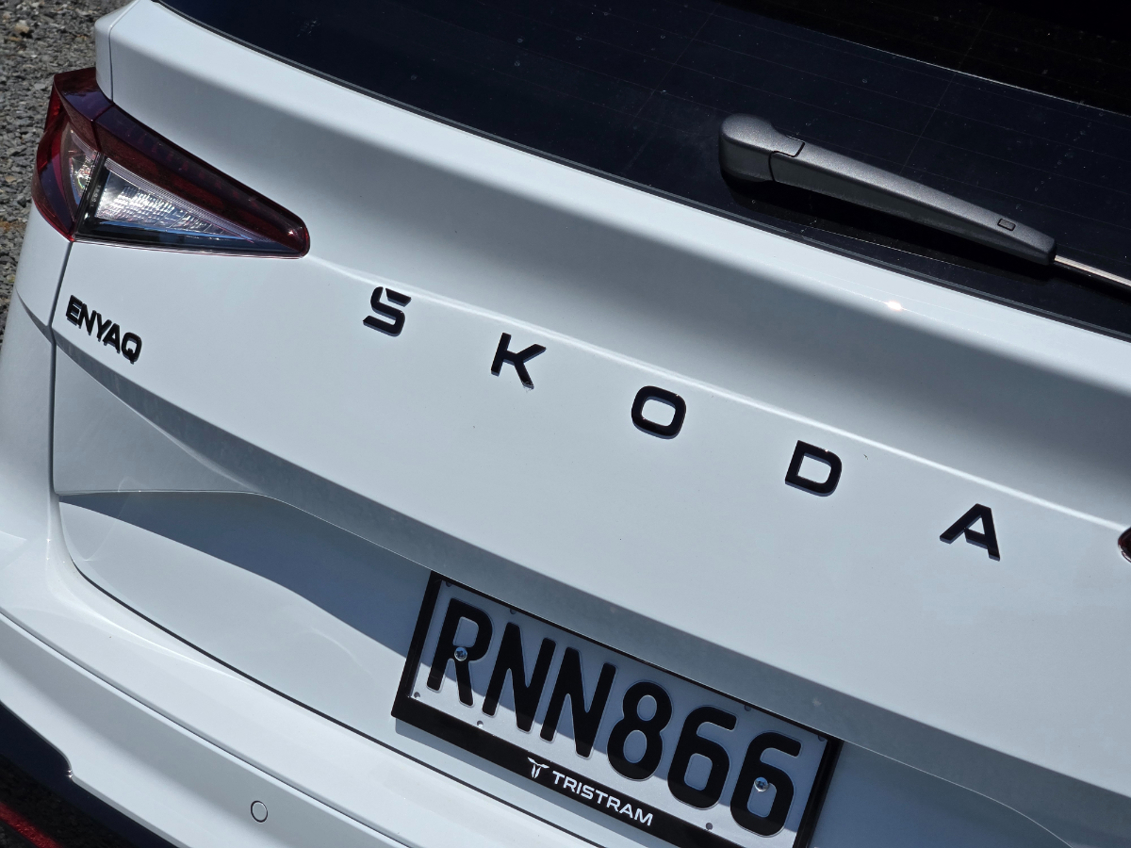
Oh, hang on: Skoda's base model was priced at $92,990, well over the $80k CCD cap, in a somewhat misguided attempt to make the car more of a premium proposition. Didn't work, and the stickers were promptly trimmed back to start at $79,990.
Then the CCD was canned at the end of 2023, demand for EVs collapsed and almost every seller of mainstream electrics found itself with excess stock, resorting to bargain prices to clear them out.
So think of this as a reset for Enyaq. It's technically a facelift, but that lift does include the latest version of the Volkswagen Group MEB electric-car platform, which moves from the previous 150kW rear electric motor as its base to a 210kW unit. The same basic setup underpins the Cupra Tavascan, VW ID.4/5 (also just reintroduced to NZ) and even the VW ID.Buzz.
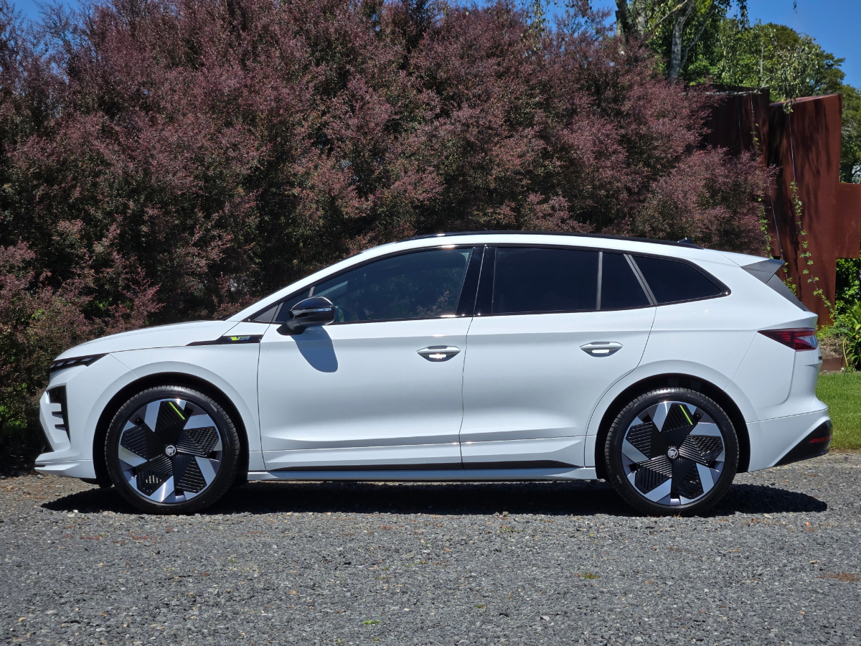
The basic shape is the same, although the coupe version hasn't made a return to NZ (not overly popular, apparently).
However, Enyaq has sharpened up at the front with Skoda's "Tech-Deck" face, including slimline lights up top (they're actually just the running lights and indicators), and the main LED matrix headlamps nestled in the bumper.
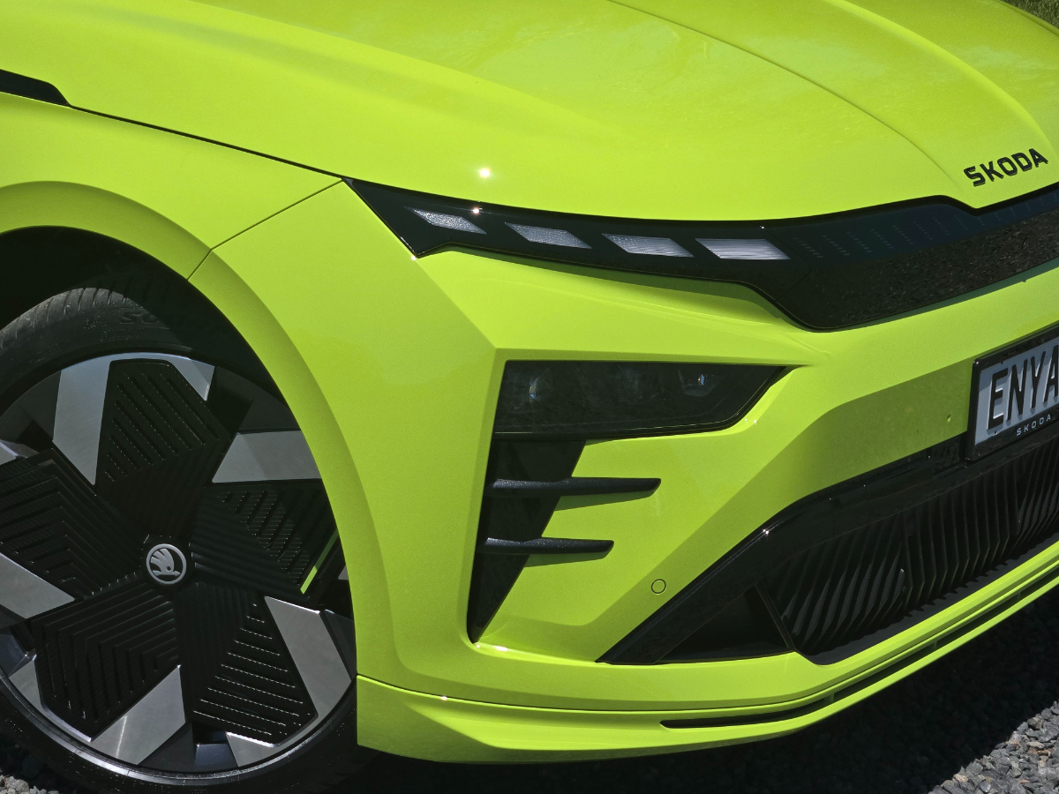
There's much less change at the rear (new bumper though), but in general Enyaq has a sportier look because dark chrome has replaced a lot of the shiny stuff outside and inside. You know, like an Audi.
Other goodies? An upgraded keyless lock/unlock, "virtual pedal" hands-free tailgate operation, LED matrix headlights, acoustic glass, heated/massage front seats with memory for the driver, tri-zone climate and a 13-inch infotainment screen.
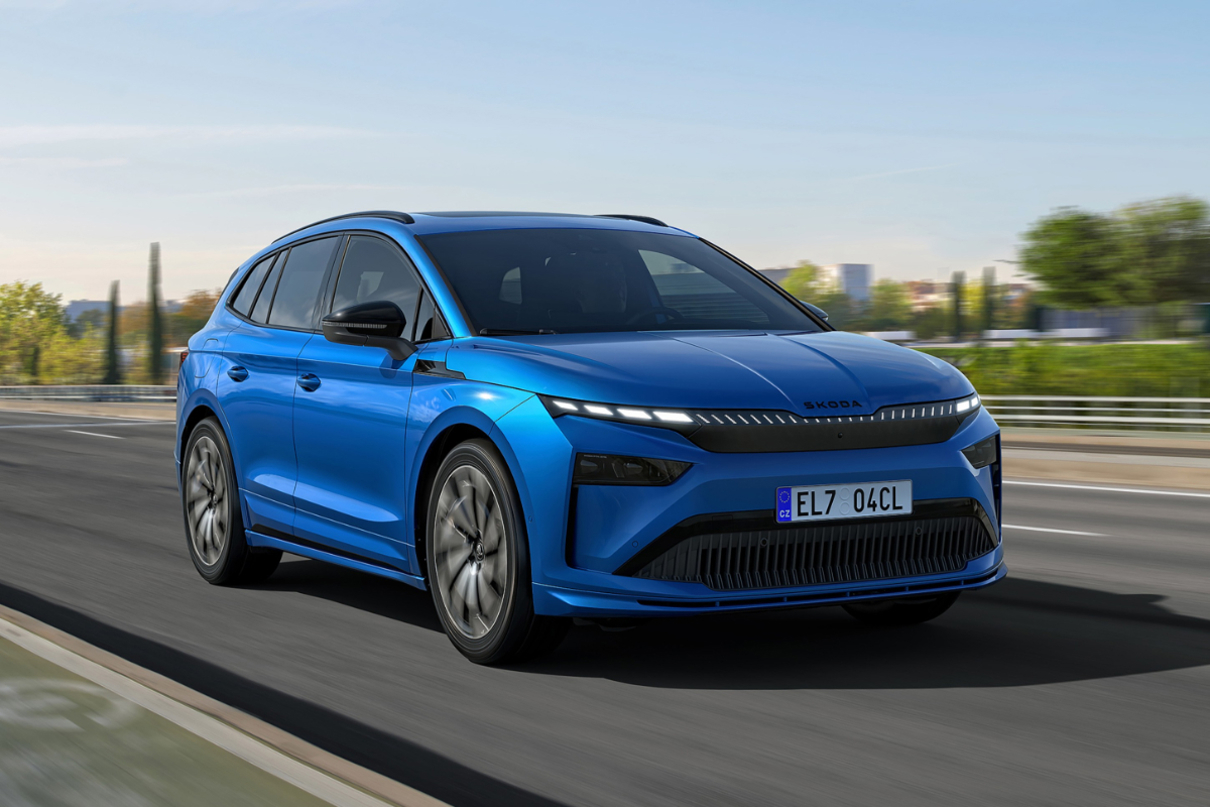
The Enyaq Sportline 85 opens the range, with the 210kW/545Nm rear motor and a 77kWh (usable) battery for a range of 545km.
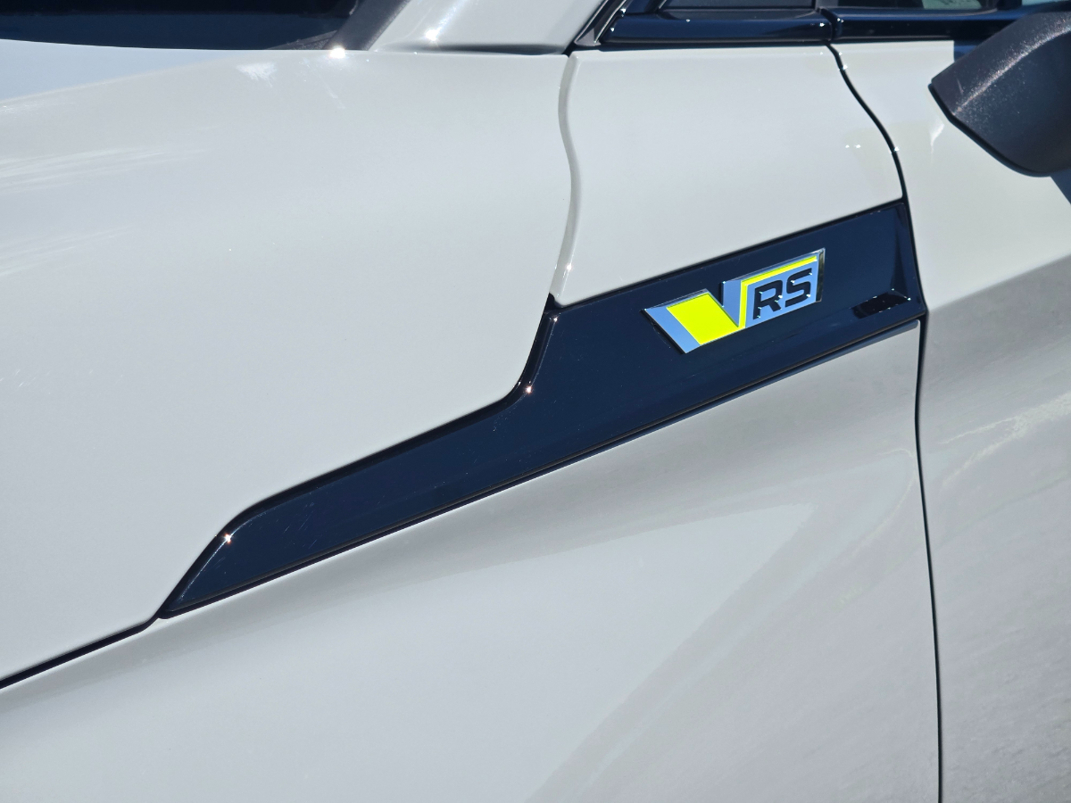
But Skoda NZ has also upped its game this time with the addition of the Enyaq RS, which keeps the same rear motor but adds another 40kW unit at the front for AWD. The wheels go up from 20-inch to 21 and there are upgraded brakes. The battery is slightly upsized to 79kWh, for a range of 520km.
So there's a lot that's new across the Enyaq lineup... but full connectivity still isn't here. As before, the Enyaq isn't live, so you're not getting stuff like full remote access via an app or over-the-air (OTA) updates that buyers pretty much expect in EVs.
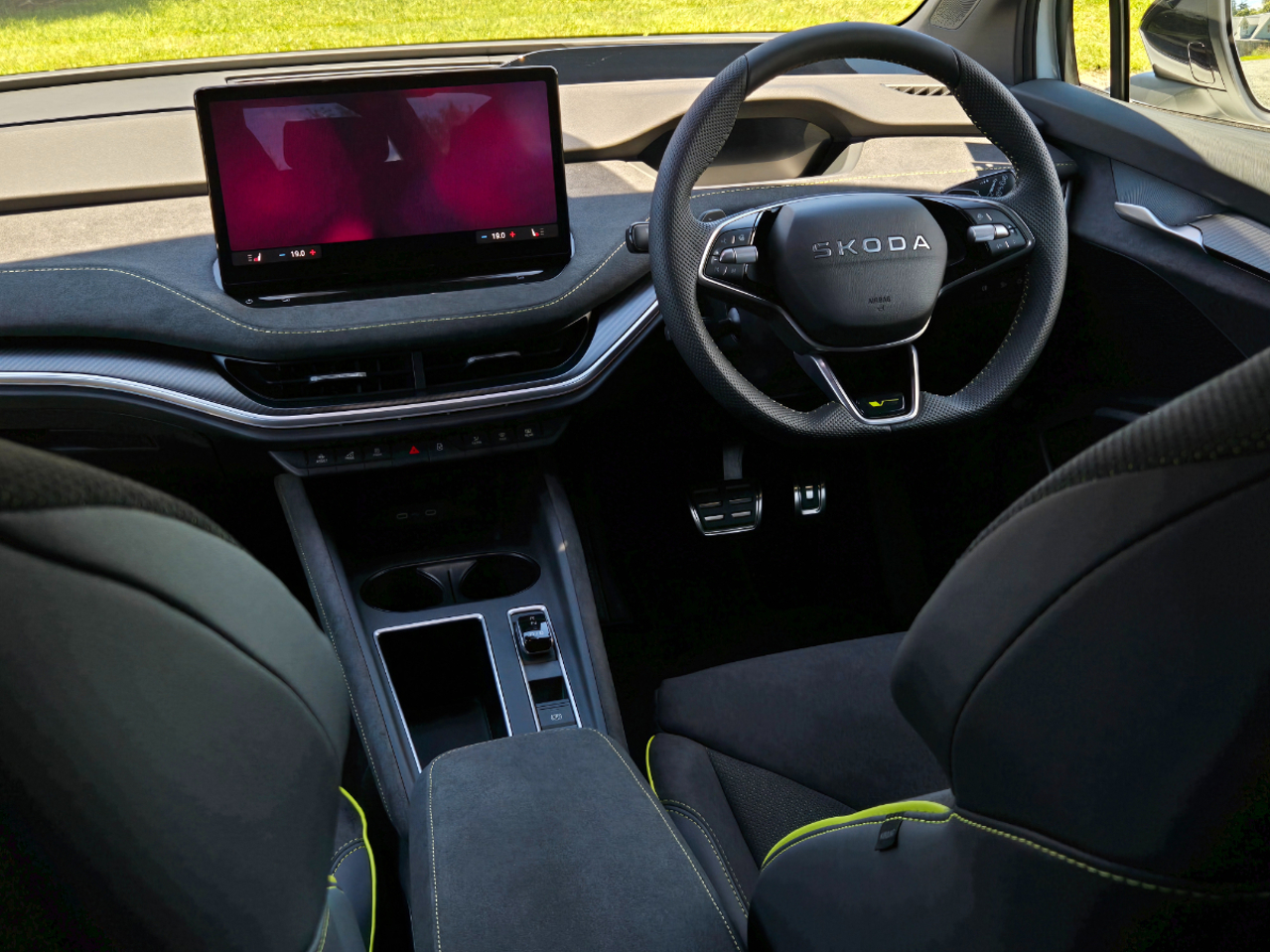
Skoda says it's confident this car has been specified to work much better as an "offline" car for Kiwi customers than the previous one, with fewer dead menus and unwelcome warnings about things that don't work. And it has at least managed to bring wireless phone projection into the picture, which wasn't previously available from the factory without full connectivity (no, we don't get it either).
Skoda NZ says it's on a "pathway" to achieving full connectivity, but what the timeframe is and, more to the point, what the problem is, has not been made entirely clear (ensuring satisfactory data security for users has been cited as one issue). Volkswagen and Cupra, under the same distributor in NZ, have similar issues.
A shame, when so many other brands can deliver live-tech seemingly with few issues.
How much is it?
The Sportline 85 opens the bidding at $89,000: yes, still a tiny bit less than that launch price back in 2023, but a whole lot more than the revised $79,990 sticker from later the same year.
Many EVs that ran out of sales-charge post-CCD are coming back, but they'll cost what they need to cost to be viable products for brands and stock will no doubt be carefully managed. Don't expect a return to slash-and-burn pricing.
It's another $10k up to the Enyaq RS at $99,000, which actually looks like pretty decent value in context of all of the above.
What's it like to drive?
Yes, about that. The Enyaq was launched to the media as part of a larger programme alongside the new (smaller) Elroq, so it really wasn't the main event.
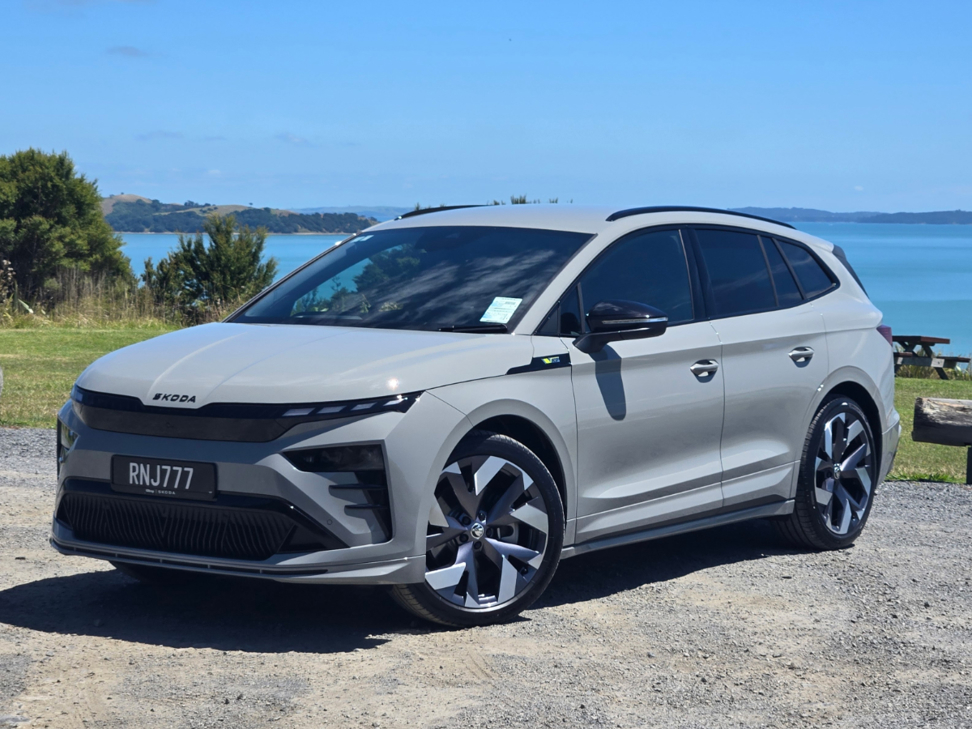
There were no examples of the Sportline 85 to drive, but plenty of the new RS model. You can probably see that; look at all the lovely colours we got to try.
It's not hugely powerful, although it does have more kW than any previous production Skoda RS model; it's also almost certainly the heaviest RS ever made, at nearly 2.4 tonnes.
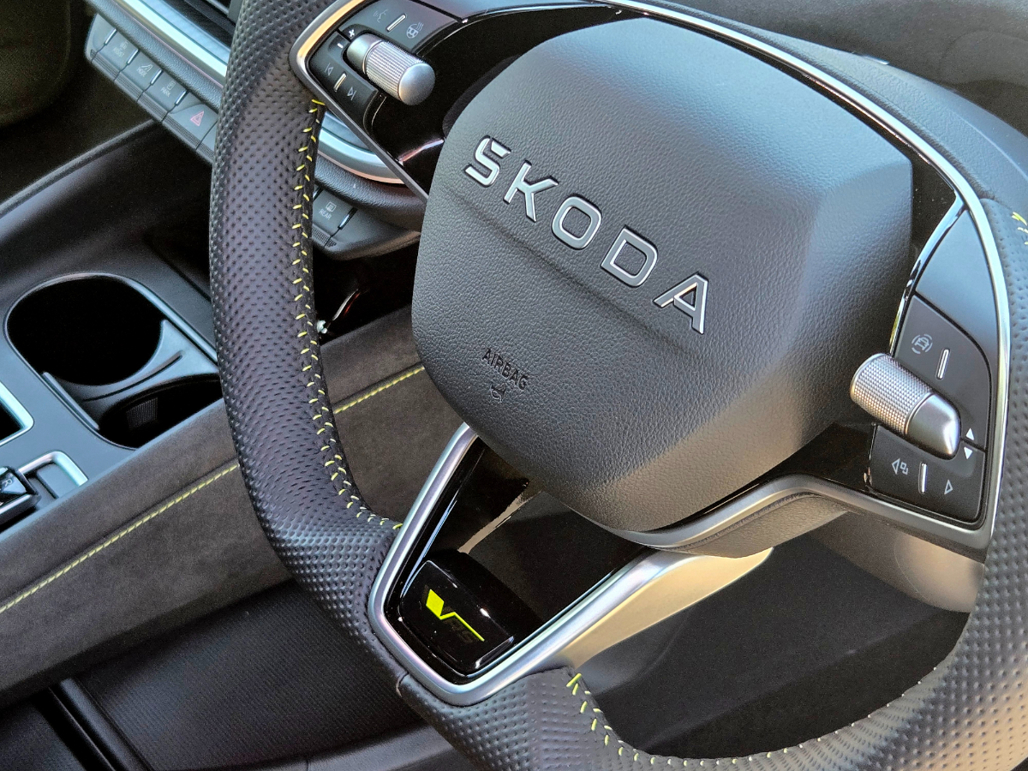
Impressively brisk all the same (0-100km/h in 5.4 seconds) and lots of traction and mechanical grip from the chassis. Quite engaging, too, given that the power bias is still very much towards the rear. It's good fun, in an instant-EV-torque, grip-and-go kind of way.
The connectivity issue rears it head here again, too, though. Apparently offline Enyaqs can't be packaged with the full Progressive Steering and DCC adaptive chassis control package, so the RS has neither (although it does have a more basic Progressive Steering setup). It does sit 15mm lower than standard, though.
What’s the pick of the range?
Tricky question, given we haven't had personal contact with the Sportline yet. The RS looks like good value given you get extra power, AWD with upsised 21-inch wheels and a snazzier interior design, including lime stitching. Enhanced light bar on the front, too... of course.
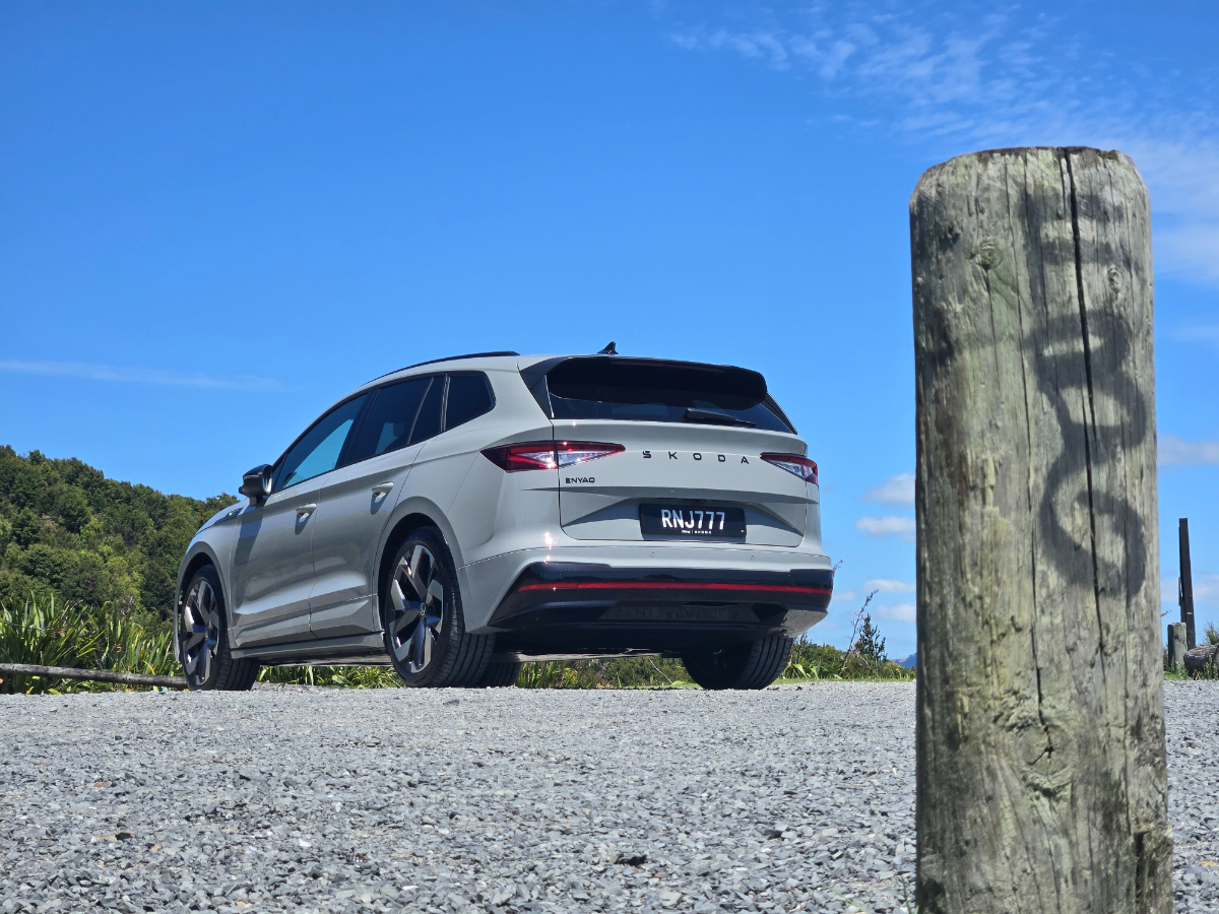
But if you're not swayed by the RS badge and don't need the extra motor, the Sportline isn't missing much. It's still perky with 0-100km/h in 6.7sec and gets the full suite of safety features.
Aside from the garnish, the RS adds a head-up display, 360-degree camera and more powerful 12-speaker Canton sound system.
What other cars should I consider?
The obvious rivals are other vehicles on the MEB platform: Cupra Tavascan ($84,900 for the 210kW RWD, $94,900 for the 250kW AWD) and VW ID.4/ID.5, now only available in Enyaq RS-rivalling GTX 250kW AWD specification, for $76,990 in SUV (ID.4) or coupe (ID.5) shapes.
But the Enyaq remains a very practical EV-SUV with a 585-litre boot, so maybe the new one will be enough to entice you up into the full-electric realm from your Octavia wagon ($60,500-$78,000, including an RS model) or Superb ($77,300-$86,000). Despite previously being available here as PHEVs, neither now offer plug-in power for the Kiwi market.


