



In the US they have a race series for motorcycles equipped with touring fairings and luggage bags, and this Indian Challenger 112 is a road-going model that’s homologated to compete in the elbows-out battles of the King of the Baggers championship. So dynamically, it’s a cut above your average American tourer.
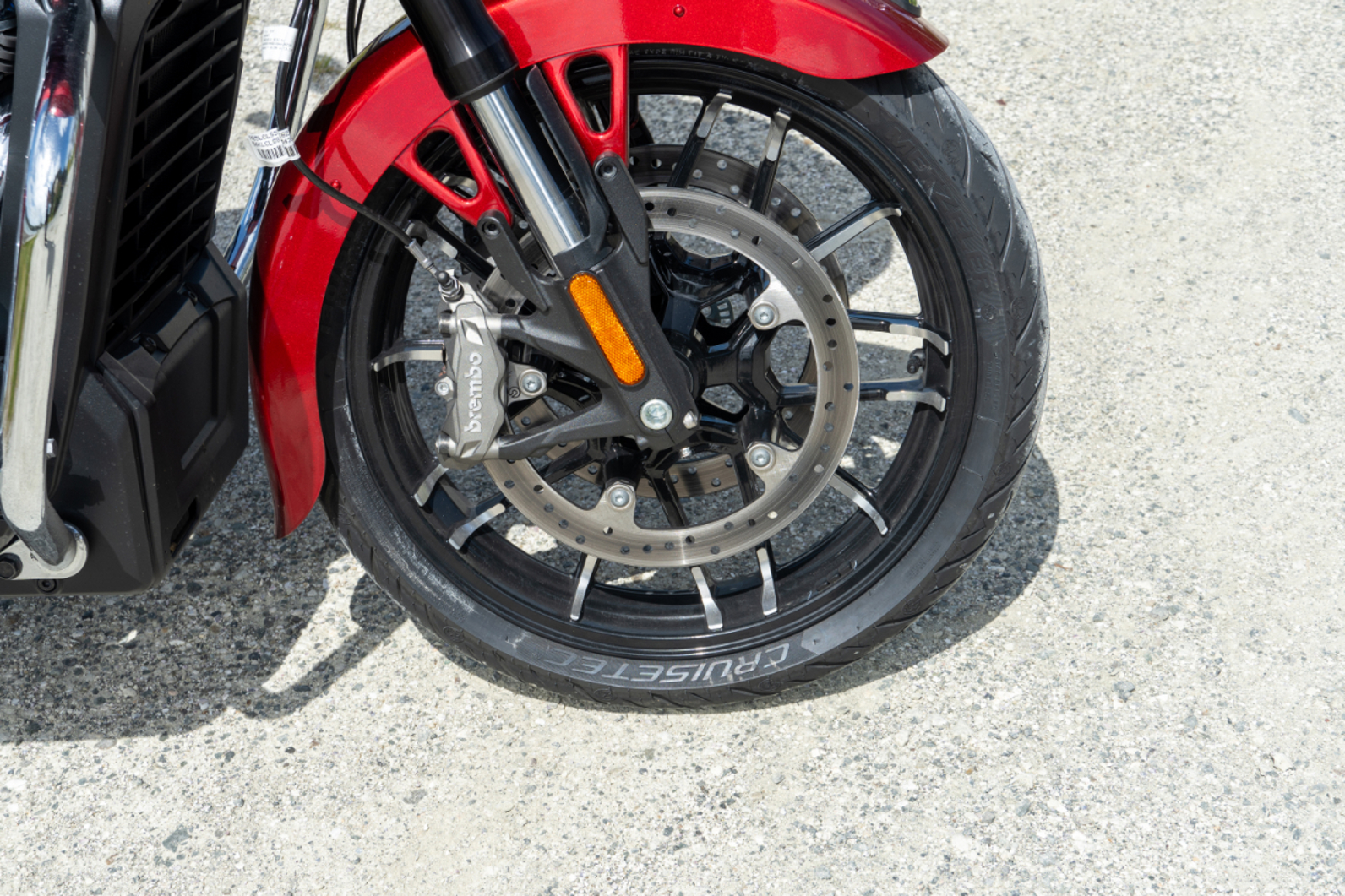
It has an inverted front fork for extra rigidity, powerful Brembo disc brakes, and a low-profile front tyre to quicken its steering. But be slightly wary of taking the Challenger to a track day. The $49,495 Indian only provides a template for race teams to modify for the series, and the stock bike is more a refined and civilised touring motorcycle rather than a track-ready weapon.
Only two motorcycle models are allowed to be modified to race in the bagger series – the Harley-Davidson Road Glide and the Challenger. The fairings and bags of the racebikes must keep to the same profile as those of the stock bike, and their minimum weight must not be lower than a hefty 288kg.
However, outside those main rules, just about anything goes. Engines get thoroughly hot-rodded, frames are lifted higher on more robust suspension for better cornering clearance, and the body parts are usually replicas of the road model’s fabricated in carbon-fibre.
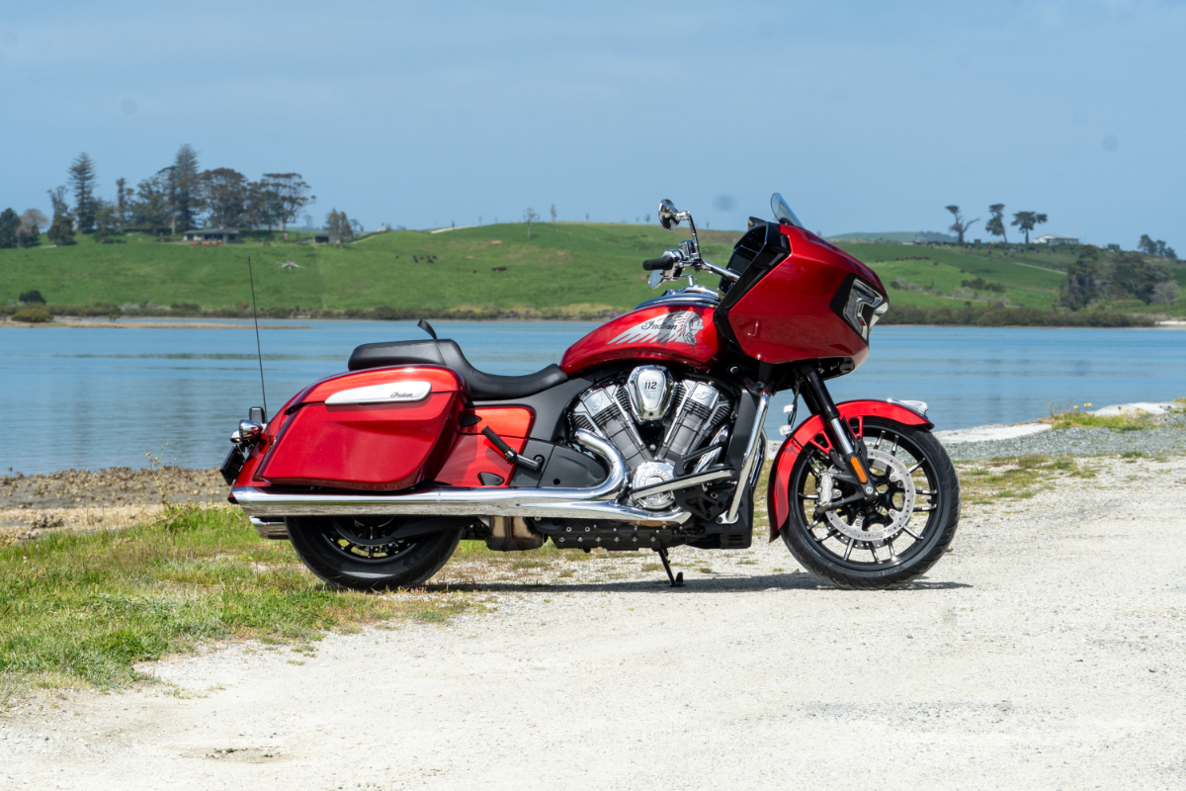
Despite being a platform for a racebike rather than the genuine item, there’s a distant hint of competition to be experienced when riding the Challenger. It might be a feet-forward tourer built to satisfy the American preference for riding positions more suited to lounging than riding, but some components have race-focused thinking behind their design.
This is a road-going model that’s homologated to compete in the elbows-out battles of the King of the Baggers championship.
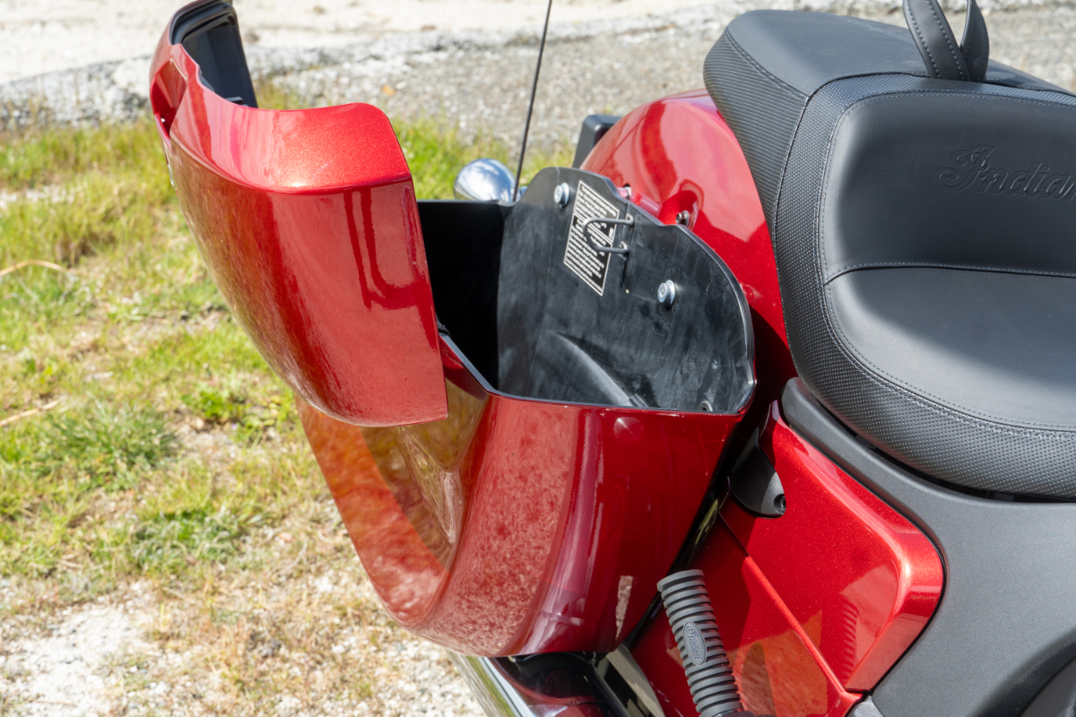
Take the top-loading bags. They’re narrow, light, and shaped to slip through the airstream with little disturbance to the bike’s stability. You know instantly that the legendary Californian motorcycle designer, Roland Sands, shaped them for their aerodynamics rather than the number of sandwiches they carry. Sands heads RSD - Roland Sands Designs - which is contracted to produce Indian’s turn-key racebikes for the series.
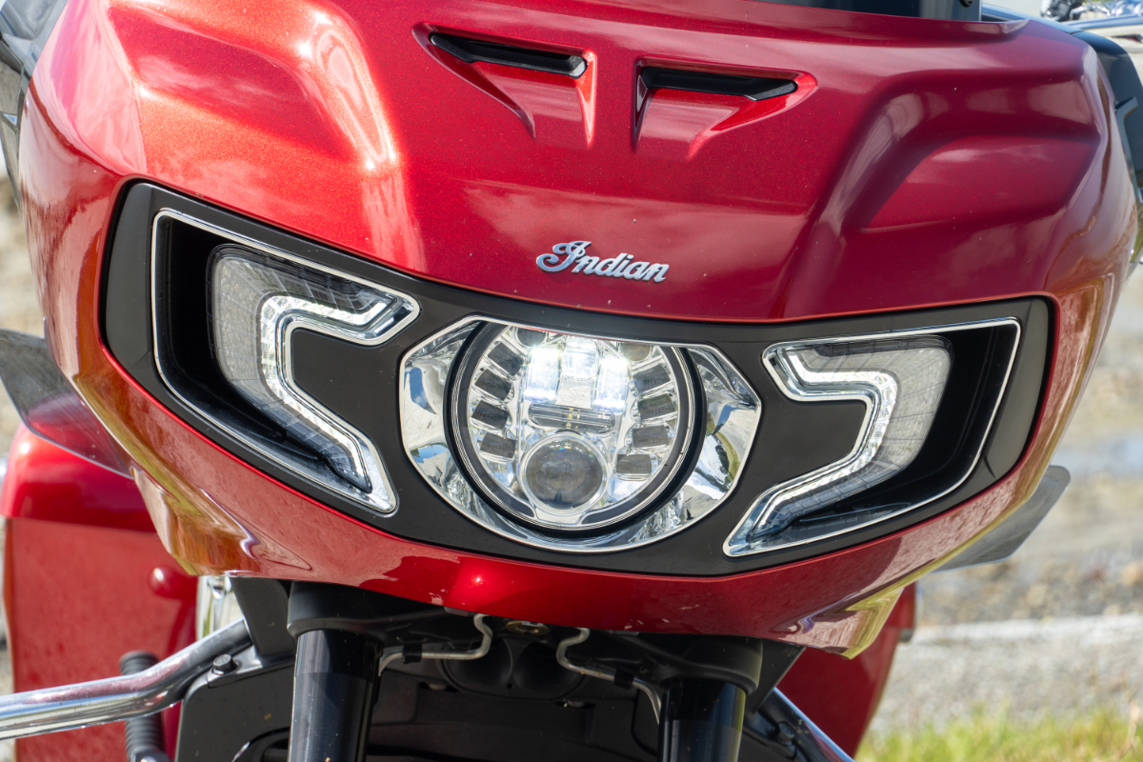
Ditto the humungous frame-mounted fairing of the Challenger. On the road bike it is loaded with a power-adjustable windscreen, a 7-inch touchscreen, extra storage compartments and charge ports, adjustable vents that increase airflow on hot riding days, and is properly lined and neatly finished.
It's the wonderfully-protective and wind noise-hushing fairing that defines the Challenger range from the Chieftain models.
On the racing bagger it is made far lighter and rougher but must keep to the same shape as the road bike’s. Which means that Sands has ensured that it cuts through the air like a larger version of a track cyclist’s helmet.

It's the wonderfully-protective and wind noise-hushing fairing that defines the Challenger range from the Chieftain models and the latter has a smaller bat-wing fairing that’s handlebar-mounted.
What the numbers don’t convey is the impression of increased refinement from the Indian powertrain.
Both bike ranges get the new 112 cubic-inch (1835cc) version of Indian’s liquid-cooled, big-block V-twin for the 2025 model year, and it takes power output to a maximum of 126bhp. Torque peaks at 181Nm, a healthy serving of force capable of quickly slinging the 388kg (when the 22-litre fuel tank is full) Challenger rapidly past slower traffic when the need arises. Throttle response is flawless and the revs climb rapidly, accompanied by the rich stag-like roar that only comes from a large-displacement V-twin.
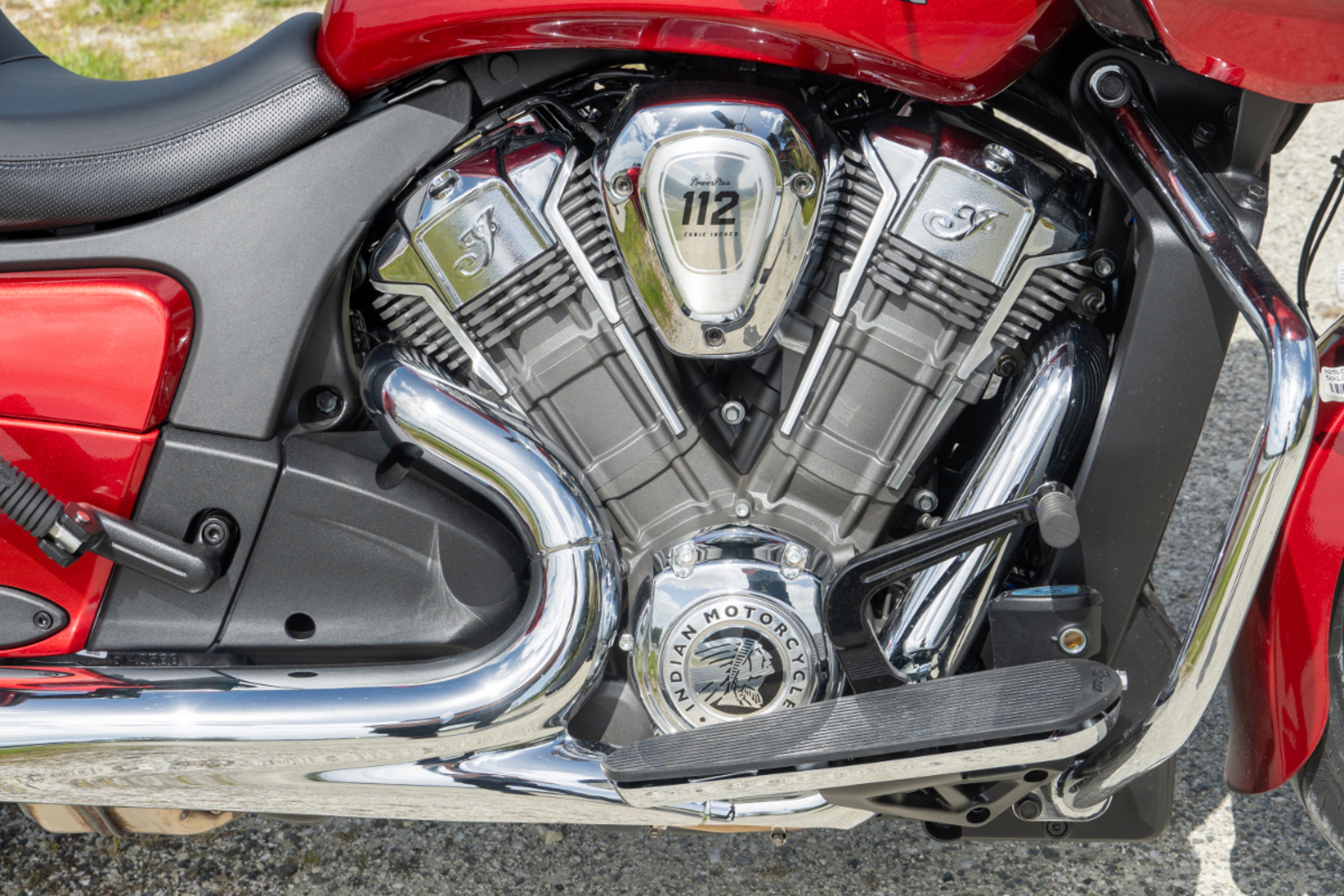
What the numbers don’t convey is the impression of increased refinement from the Indian powertrain. The six-speed gearbox has shorter lever throws than the default American V-twin, and the clutch lever is easy on the hand muscles. The belt final drive is so commendably anonymous in its delivery of grunt to the road that you’re never aware of it.
Active safety – the ability to avoid crashes – is a real 2025 Challenger highlight. I love how the linked brakes operate complete with cornering lean-angle-sensitive ABS. A dab on the foot-lever when getting into a corner too hot automatically trail-brakes the front suspension, sharpening the bike’s steering. It’s as brilliant as the rear tailgate warning system which flashes the rear lights to let the following driver/rider know they’re getting too close.
There’s lots more to this bike than just its laid-back riding possie and an engine that could be two cylinders sliced off a 7.0-litre V8. With its refined handling, active safety and ride, this is America’s best bagger… despite losing the race series to the Harley Road Glide this year.