



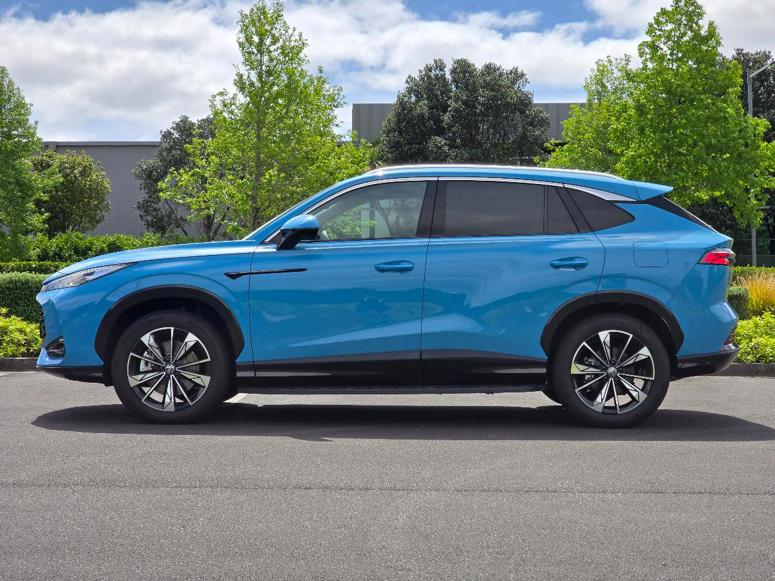
While consumer interest in PHEVs is still languishing (for some strange reason), the arrival of the 2025 MG HS Super Hybrid is still very much worthy of note as, while its predecessor once held the title of New Zealand’s cheapest PHEV SUV, this all-new model enters a far more congested and competitive market.
Click here to read our MG HS Essence full review
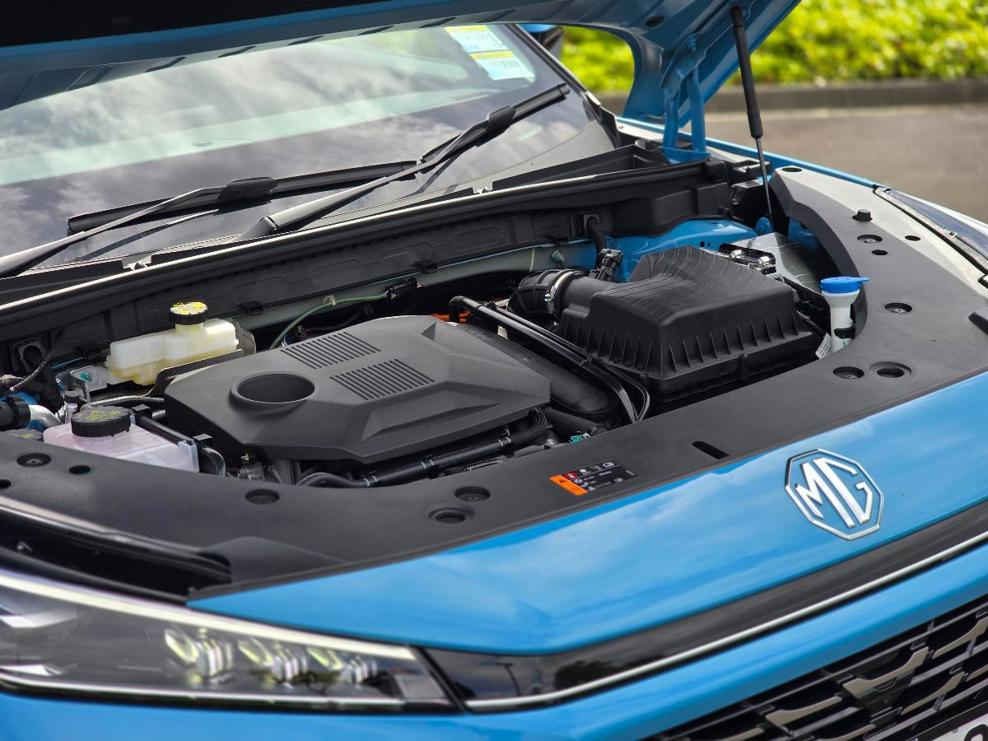
The Super Hybrid features largely the same powertrain as the MG HS Hybrid+; a 1.5-litre turbocharged petrol engine with and a single electric motor, with a two-speed dedicated hybrid transmission (DHT) that sends the power through the front wheels.
Where it differs, however, is that it packs a considerably larger 24.7kWh battery and pushes considerably more power through those front wheels - 220kW and 330Nm, to be precise.
This puts the HS as one of the more powerful options in its class on paper, however, in the real world it doesn’t exactly drive like a performance car, offering up a more reserved approach in favour of drivability and economy. It’s certainly not slow, but it doesn’t exactly rip your face off either.
In most daily driving scenarios, the HS Super Hybrid performs much like a pure electric vehicle. It is exceptionally smooth and quiet, with the good pick-up from a standing start and excellent rolling acceleration characteristic of EV powertrains. Like the hybrid, the transition between electric and petrol power is seamless, and the cabin is well-insulated from engine noise.
While the HS Super Hybrid enters the super competitive super hybrid arena with a compelling powertrain, this also comes with a larger price tag that might furrow a few brows, particularly when you start looking at the slightly rough edges that the cheaper ICE and hybrid models can get away with.
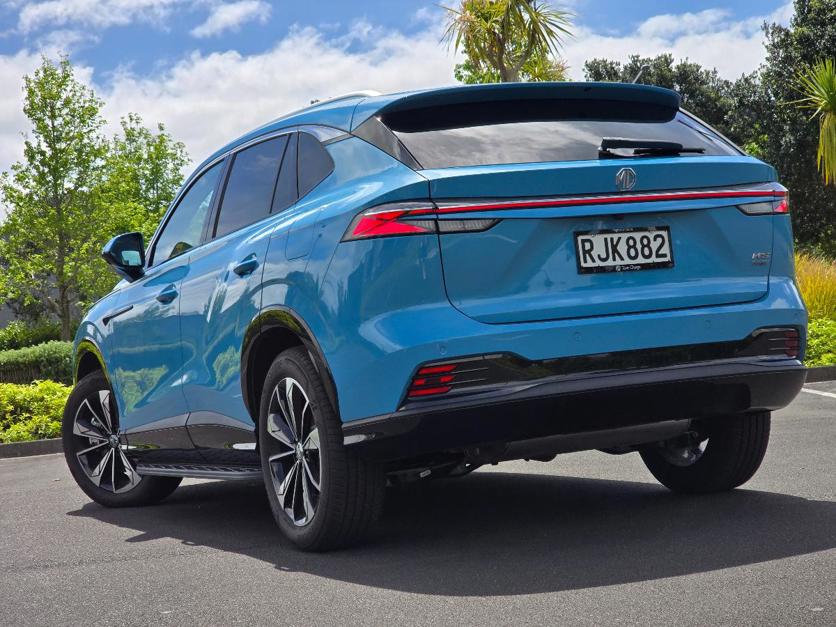
The HS Super Hybrid is available in two trims, with the entry level Excite landing at $52,990 and the top-spec Essence we test here costing $56,990. This represents a significant price premium over the equivalent petrol-only models, with the PHEVs demanding $13k and $14k more for Excite and Essence respectively.
MG claims an official EV-only driving range of 120km (WLTP) from its 24.7kWh battery pack, which is actually largely achievable in real world.
Like the rest of the HS range, the Super Hybrid’s handling is competent and predictable for an SUV of its size, but the ride has been compromised by the addition of the larger battery. While the suspension's tuning, firmed up to handle the extra weight of the battery, is still impressive over larger bumps, on less-than-perfect surfaces it can feel overly firm and noticeably more fidgety than the hybrid.
Then there is the constant struggle to put those big power and torque numbers through the front wheels, with the HS’s standard tyres not quite being up to the task, leading to excessive wheel slip during acceleration, a problem that is particularly pronounced in wet conditions.
The HS Super Hybrid's headline feature is its beefy EV-only range. MG claims an official EV-only driving range of 120km (WLTP) from its 24.7kWh battery pack, which is actually largely achievable in real world driving, placing the HS Super Hybrid towards the top of the PHEV pack in terms of multi-day, fuel-free commuting for the average driver.
Once the battery drops low enough the HS Super Hybrid acts like a conventional hybrid, with consumption figures to match. MG’s official combined fuel consumption figure is quoted at 0.7L/100km, but this is calculated based on starting with a fully charged battery. Once that is depleted you generally see figures closer to between 4.5 and 5.5, which is largely identical to the standard hybrid HS we tested recently.
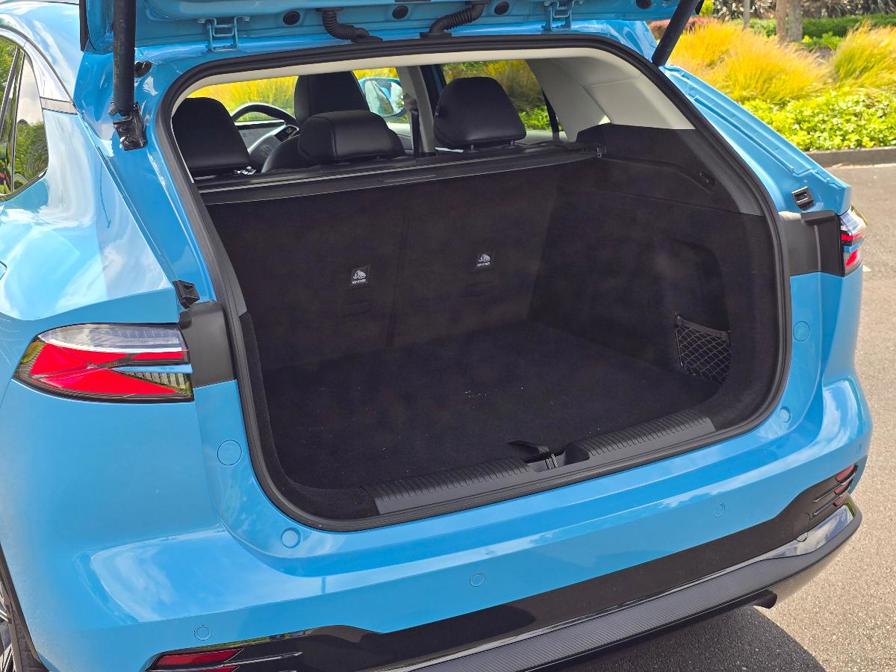
This serves to reinforce the core principle of PHEV ownership: if you don’t have the discipline to plug it in each night, a PHEV is just a more expensive version of a regular hybrid. The HS Super Hybrid mixes this up a bit, however, by offering considerably more electric-only commuting than most.
The MG HS Super Hybrid is a vehicle of contrasts, defined by the clash between its brilliant engineering and rough edges that are drawn into sharp relief by its higher price point.
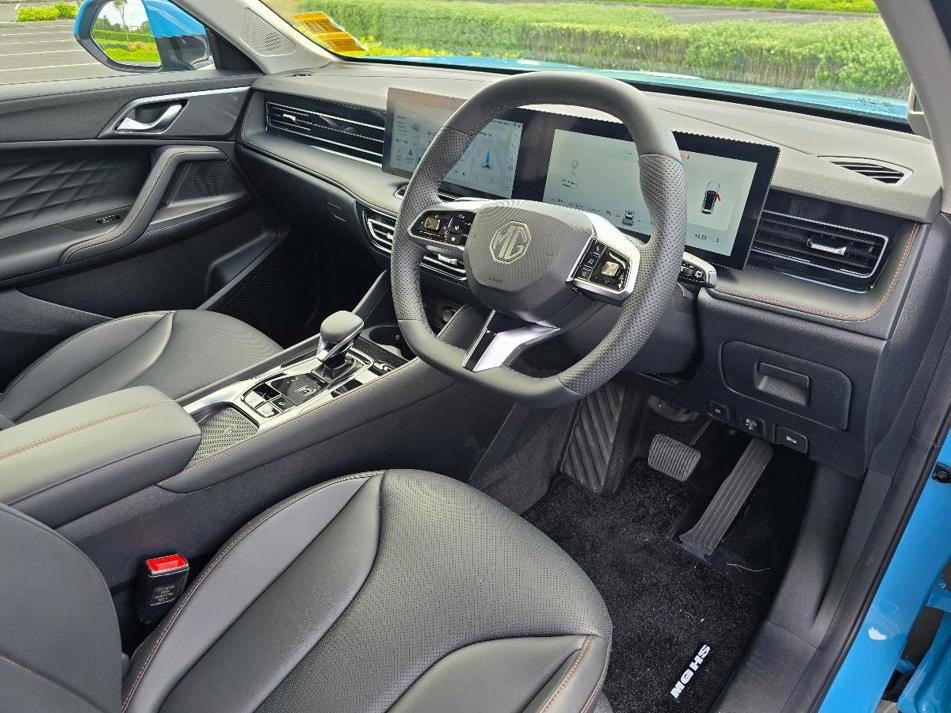
The HS Super Hybrid’s cabin presents the same mix of commendable design, impressive space, and modern technology as the rest of the HS range, combined with the same budget blemishes and technological frustrations.
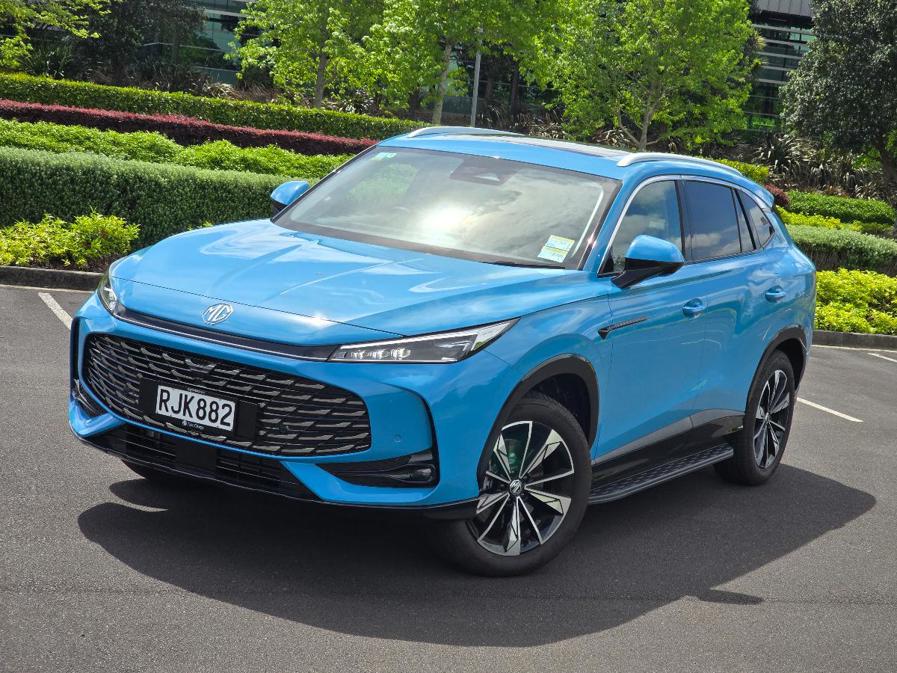
And this is where the HS Super Hybrid’s price becomes even more of a problem for it, with those budget touches and rough edges becoming even more apparent than in the likes of the $36,990 entry level Vibe model, or even the mid to high $40s of the hybrid models.
The MG HS Super Hybrid is a vehicle of contrasts, defined by the clash between its brilliant engineering and rough edges that are drawn into sharp relief by its higher price point.
While it excels with a class-leading real-world electric range and a remarkably smooth, intelligent powertrain that makes daily driving a quiet and effortless affair, this impressive foundation is held back by compromises that are present in all variants of HS. Most importantly, its price point invites comparison with formidable competitors that challenge its value proposition, making its flaws harder to overlook.


