



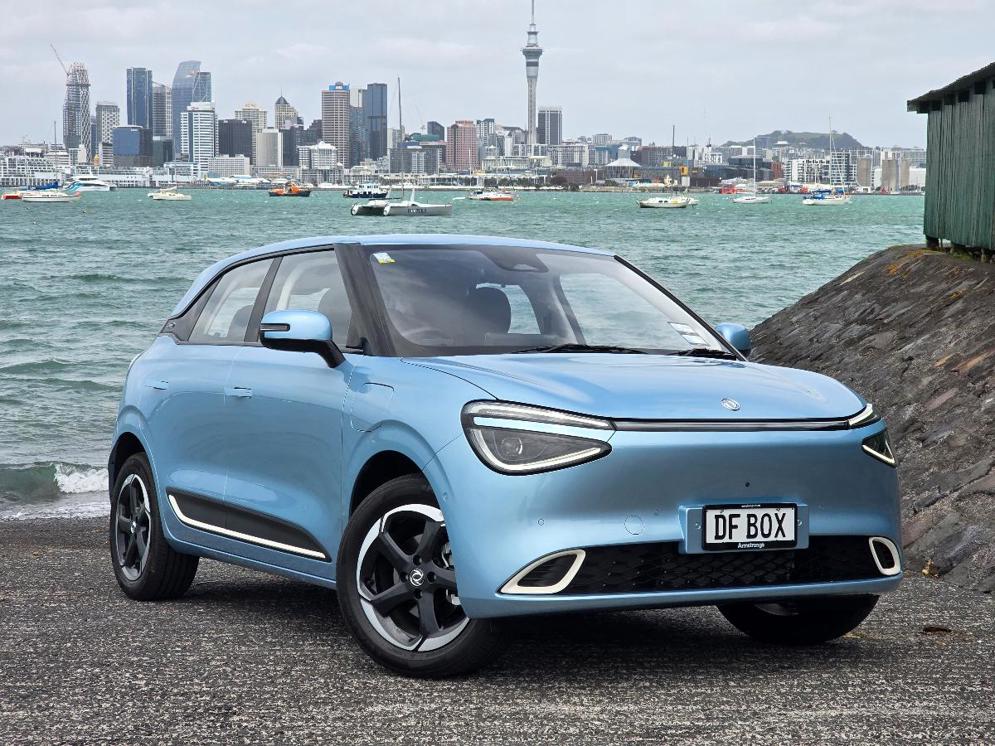
The Dongfeng Box currently holds the title of New Zealand’s cheapest brand-new electric vehicle - a transitory title for sure - and at an introductory price of $29,990 (rising to a retail price of approximately $32,990 after an unspecified period), it sits squarely in the price territory of the considerably smaller (and conspicuously ICE-powered) Suzuki Swift.
It is also better equipped than a top-end Swift while offering the advantages of an EV powertrain, meaning that EVs have truly reached price parity. And, it would seem, safety parity, as the Box also shares the Swift’s 3 star Euro NCAP safety rating. Well, kind of.
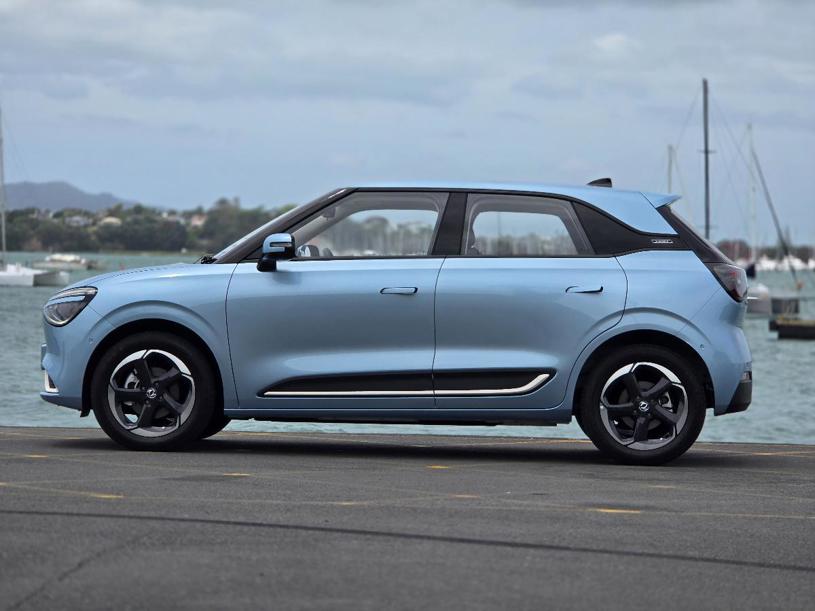
It turns out the Dongfeng Box we get here isn't the same as the 3 star one tested in Europe, but before we get to that, let’s touch on the positives first. Because it’s gonna take a negative turn soon.
And, indeed, initial impressions of the Box are genuinely positive, with its driving dynamics being defined by a sense of surprise. While it is certainly not powerful or fast, equipped as it is with a modest 70kW/160Nm electric motor, its light weight of just over 1300 kg makes it feel unexpectedly nippy and agile in urban environments.
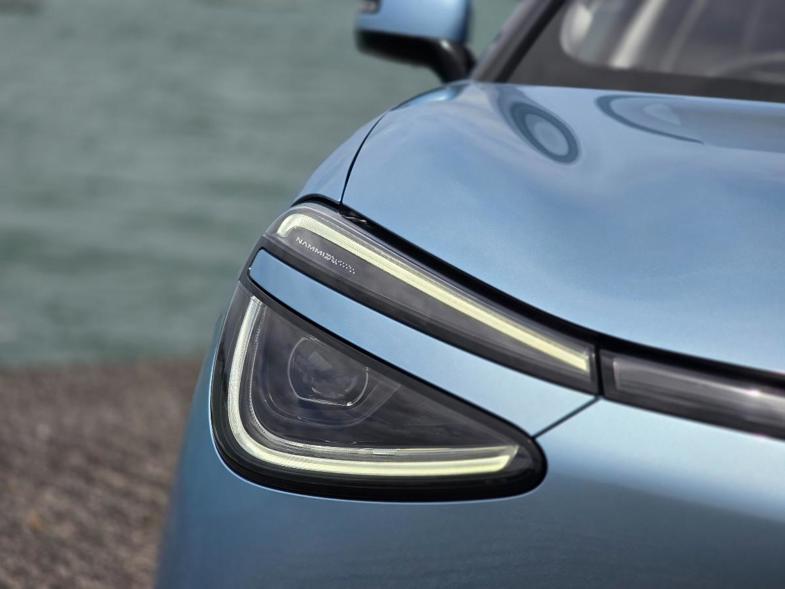
Exceptionally easy to navigate through urban streets, the Box is perfectly suited as a small urban runabout. Heading onto the open road sees the Box more than capable of keeping up with the flow of traffic without difficulty. However, optimistic lunges for gaps in traffic or high-speed overtaking manoeuvres are not really in its repertoire; the performance is adequate, but limited.
Driving the Box on a short urban circuit during its recent launch event, it displayed an excellent ride around town, being comfortable and absorbent. And, to be completely honest, I fully expected this to translate into a floppy mess on the open road.
However, I was pleasantly surprised when the Box revealed itself to be surprisingly competent and capable on a winding road. The modest power means that things never descend into messy push understeer (at least it doesn’t in the dry), while the surprisingly well-controlled body keeps things nicely predictable and, yes, even enjoyable, all while maintaining its impressive ride quality.
There is a slight caveat to this praise, however, as the ride can become a tad brittle when encountering small imperfections on relatively smooth surfaces.
However, there is a noticeable divide between the Box’s impressive basic competency and its more ambitious features.
The driver assistance systems also provided a point of unexpected competence, with the Box’s lane departure assists and alerts being remarkably subtle, providing gentle corrections rather than intrusive interruptions. Even the radar cruise control and lane keep assist functioned with a level of capability that I simply did not expect from a budget Chinese EV, generally staying out of the way until needed.
However, there is a noticeable divide between the Box’s impressive basic competency and its more ambitious features, and when Dongfeng tries to be too clever and offer features usually outside the realms of budget cars, the results can be quite poor.
For an example of this you need look no further than the self-parking system that is unique in the budget segment, but almost entirely useless. Once activated it scans for a park, hopelessly mis-identifying the vast majority of them, and when it finally sees one it likes, it will sit there for a while, occasionally moving a bit before generally giving up. Except you will have given up well before this point, as the chorus of car horns rising behind you will have become unbearable.
Likewise the "leather" upholstery is unconvincing, while the ventilated seats are almost useless, offering only a slight chill to the occupant's bottom if the exterior temperature was not too high.
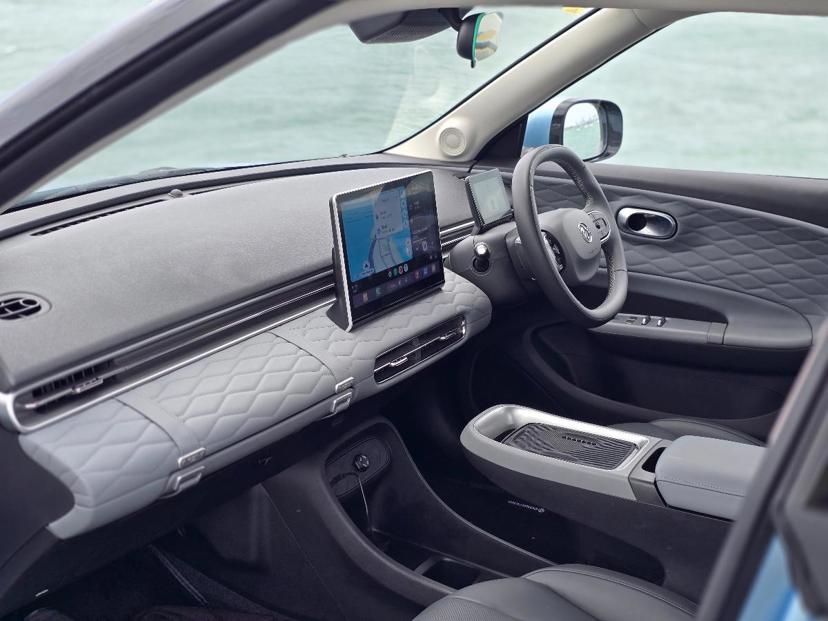
In contrast to the over-ambitious parts of the Box, there were also areas when it was obvious that it was being built to a budget. The lack of built-in Android Auto and Apple CarPlay necessitates the use of a wireless dongle, and while it genuinely works well, the fact it needs to be used highlights the budget-conscious nature of the Box. Adding insult to injury is the fact that the wireless charging pad is only capable of keeping the phone’s battery at its current state of charge, rather than actually adding charge.
While a modern 3 star car is safer than an even a five year old 5 star car, the fact that the Box we see here likely wouldn’t even make that grade is disappointing in the extreme.
Inside the cabin, the evidence of building down to a price becomes more apparent, with a noticeable lack of soundproofing, which results in a noisy experience on the open road. However, while there are quite a lot of hard plastics used throughout the interior, these are mostly kept out of immediate reach.
The user interface is another area where the Box’s personality feels quite distinct, if somewhat restricted. The infotainment touchscreen is limited to a palette of lilacs and purples, featuring a friendly little cat avatar that can be interacted with (it might stand up or lick itself when poked, but sadly can’t be provoked to storm off the screen in a kind of furious, self-righteous simmering rage that only irritated cats can manage), so it probably won’t be surprising to learn that the Box has a “Girly” mode (yes, it’s genuinely called that) that makes things even more pink and purple.
A more serious consideration, however, is the 3 star Euro NCAP safety rating that has translated into an unusual “unrated” label on NZTA Waka Kotahi’s Rightcar website.
This is because the New Zealand-spec Box actually only gets two airbags, while the 3 star rating from Euro NCAP is based on testing a higher-spec LHD model that featured side and curtain airbags, as well as advanced driver monitoring systems and eCall emergency assistance technology, none of which it gets here.
The Euro NCAP report also identified structural problems with the Box, saying that multiple spot welds had failed on the A-pillar during crash testing.
The 3 star Euro NCAP rating due to concerns about airbag deployment force and failed spot welds in the body structure is bad enough, but the fact that local cars lack features from even that car is particularly concerning.
Ultimately, the Dongfeng Box presents a solid, high-baseline package of basic competency: it handles and rides far better than its price point suggests, even if its more ambitious features fall short. It is a quirky, surprisingly capable little car that manages to be very good at the basics, even if it occasionally gets a bit out of its depth when trying to exceed its budget origins.
However, the serious lack of safety features make it almost impossible to recommend in good conscience. While a modern 3 star car is safer than an even a five year old 5 star car, the fact that the Box we see here likely wouldn’t even make that grade is disappointing in the extreme.
How much is the Dongfeng Box?
The Dongfeng Box is currently available at a special launch price of $29,990, which is a $3,000 reduction from its full retail price of $32,990. There are additional costs for specific options: while white is the only no-cost paint, other colours range from $499 to $749, and a front trunk (frunk) tray is an optional extra costing $499.
What are the key statistics for the Dongfeng Box?
The Box is powered by a 70kW/160Nm electric motor mounted on the front axle. It uses a 44kWh LFP battery providing a WLTP range of 317km, and will accelerate from 0 to 100km/h in 12.5 seconds, with a top speed of 140km/h.
Is the Dongfeng Box efficient?
Dongfeng claims a combined consumption of 15.4kWh/100km for the Box and this is extremely easy to achieve in real world driving. Even out on the open road at highway speeds it will generally stay under 15kWh/100km.
Is the Dongfeng Box good to drive?
While it is not exceptionally powerful, the Box feels lively up to 80km/h and is more than comfortable at highway speeds. The steering is super-light, quick, and accurate, making it easy to maneuver through traffic, while its suspension tune favours comfort, effectively ironing out bumps and road imperfections better than many other short-wheelbase vehicles. It even manages to be surprisingly fun on a winding road.
Is the Dongfeng Box practical?
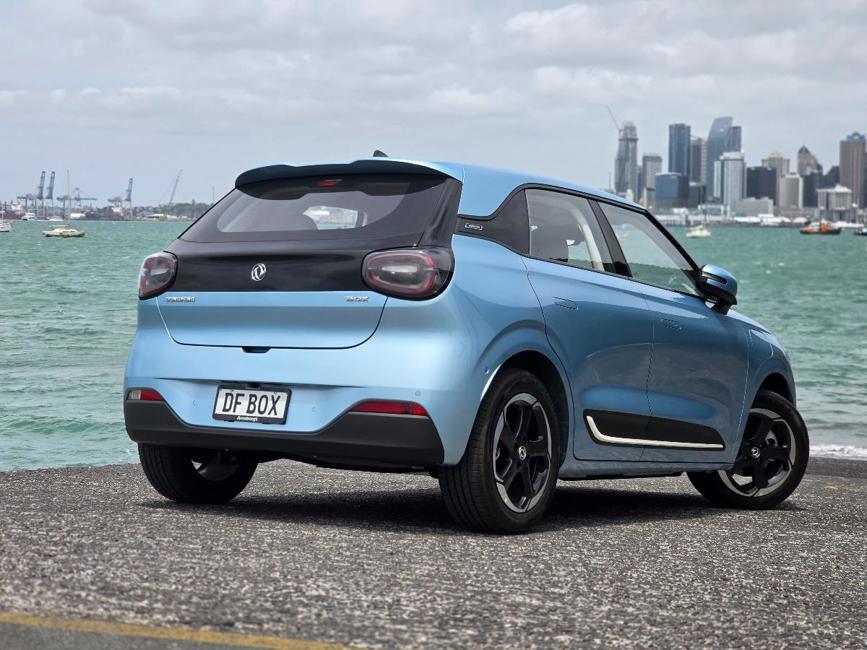
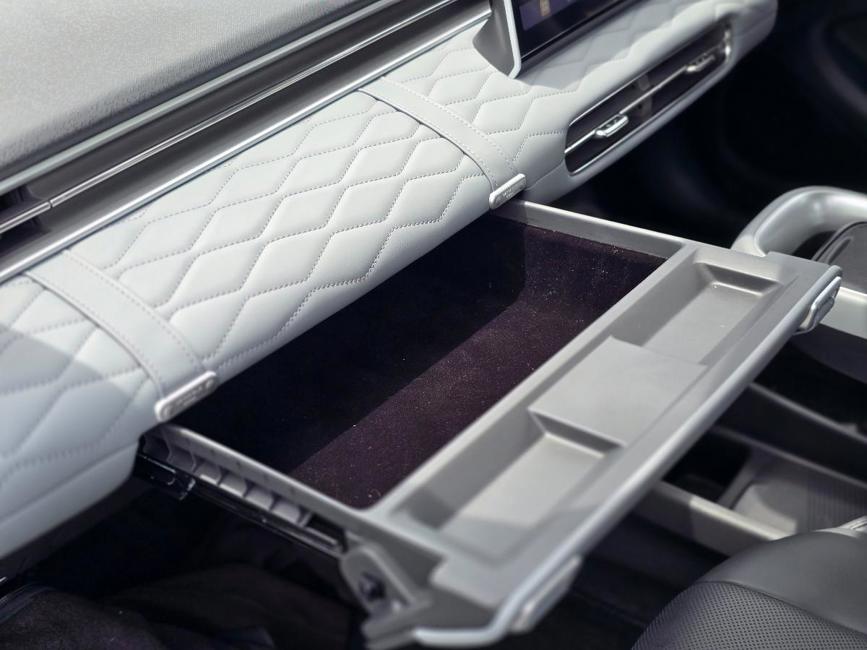
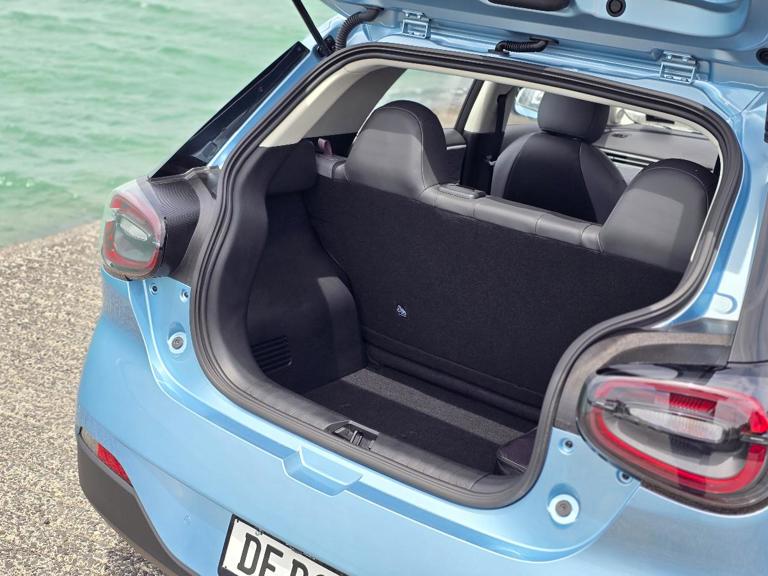
The Box is highly practical for its size, offering up adult-friendly rear space and a 326-litre boot that expands to 945 litres with the seats down. A standout practical feature is that both the front and rear seats can fold completely flat, creating a space for resting or carrying long items. It also includes small storage innovations like a slide-out dashboard drawer.
What do we like about the Dongfeng Box?
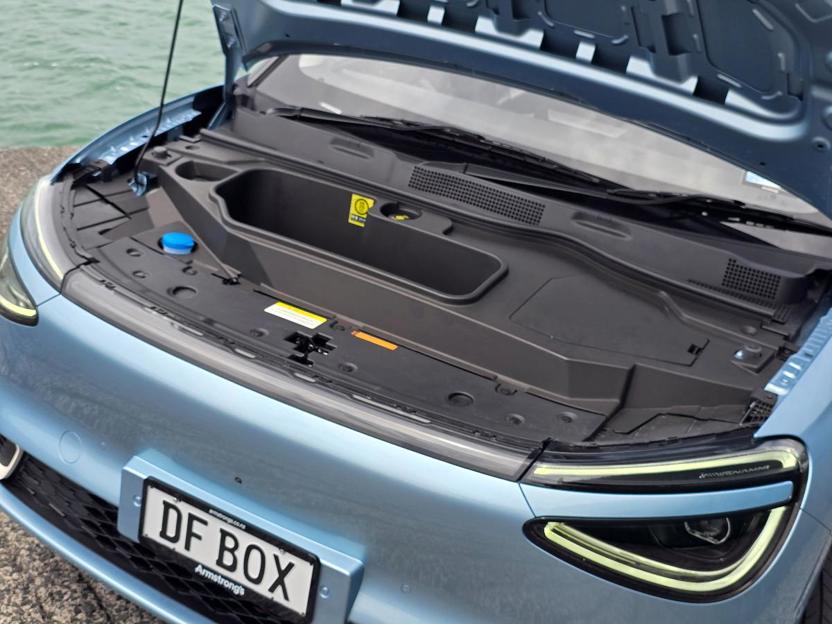
Domgfeng is offering high-end features like frameless doors, flush handles, a 32-colour ambient lighting system, and a full-width LED light bar at a truly budget price point. Ride and handling are impressive for the money asked as well, while the driver assist systems are extremely well judged and non-intrusive.
What don’t we like about the Dongfeng Box?
It tends to be a bit over-ambitious with some of its advanced features, falling short with the likes of self-parking, while the roundabout way Apple CarPlay and Android Auto are implemented is clunky and unsatisfying.
Then there is that safety rating: the 3 star Euro NCAP rating due to concerns about airbag deployment force and failed spot welds in the body structure is bad enough, but the fact that local cars lack features from even that car is particularly concerning.
What kind of person would the Dongfeng Box suit?
The Box is primarily targeted at younger urban buyers looking for a stylish, small EV at the lowest possible price point. In this regard, there could even be the argument made that the ‘unrated’ Box is still a safer proposition than an older second hand car for similar money, but then the BYD Atto 1 is not far off landing here, is the same price and has a full 5 star ANCAP rating...


