



Chery’s return to the New Zealand market with an absolute avalanche of SUVs, starting at the budget end of the segment with the petrol-powered Tiggo 4 in ICE and hybrid forms.
Since then it has added several other models in the burgeoning ‘super hybrid’ market, but has now turned its attention to the straight-ICE arena in larger models with petrol versions of the larger Tiggo 7 and Tiggo 8 SUVs.
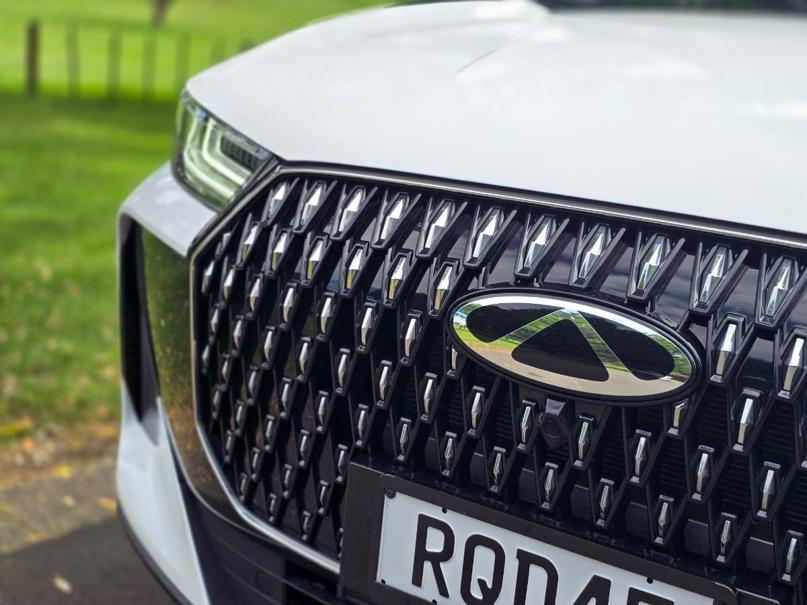
The Tiggo 7 offers a Toyota RAV4-sized medium SUV stocked with high levels of equipment levels for a startling entry price of less than an entry level Corolla hatch. Yep, that's right, the Tiggo 7 Urban costs just $34,990.
For that money you get a handsome SUV powered by a 108kW/210Nm 1.5-litre petrol turbo four-cylinder engine sitting on 198-inch alloy wheels and packing standard features like LED headlights, a 12.3-inch infotainment touchscreen, wired and wireless Apple CarPlay and Android Auto, dual zone climate control, a full suite of actice and passive safety systems, 8 airbags and a 5 star ANCAP rating.
On the outside: what are the Chery Tiggo 7 Urban's main design features?
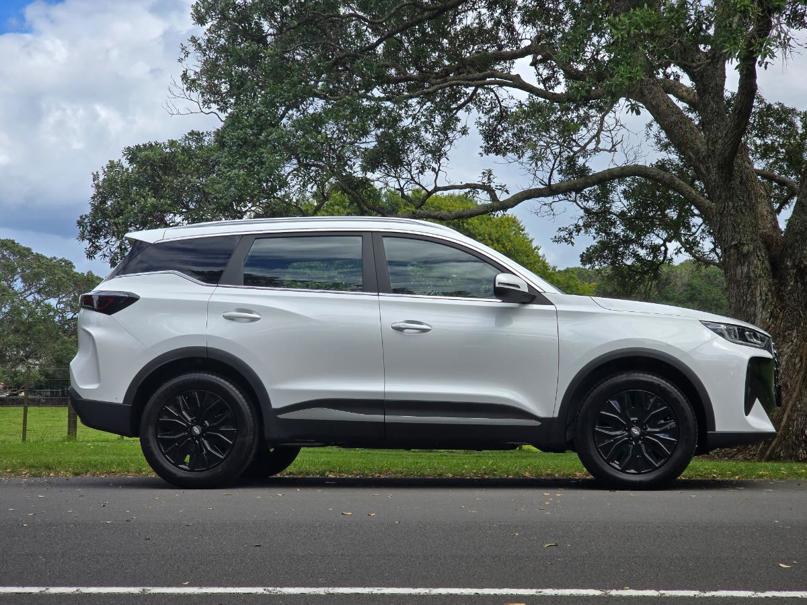
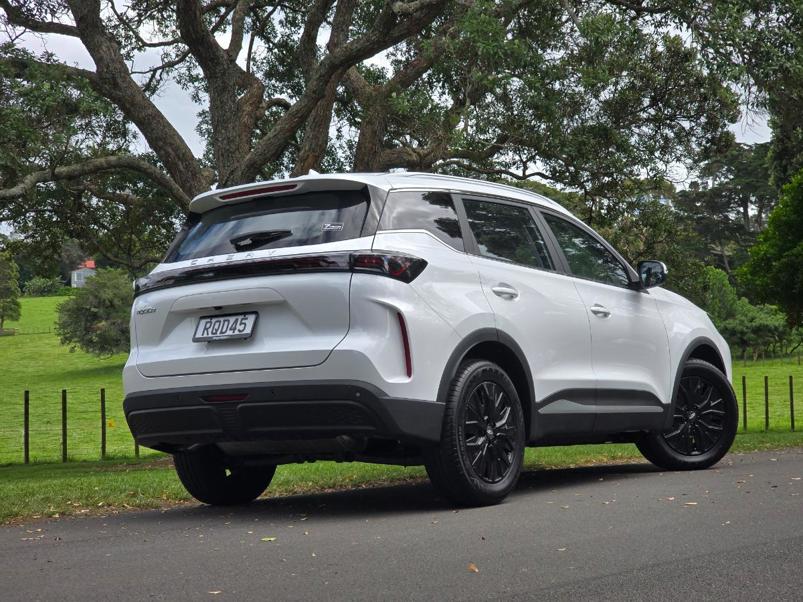
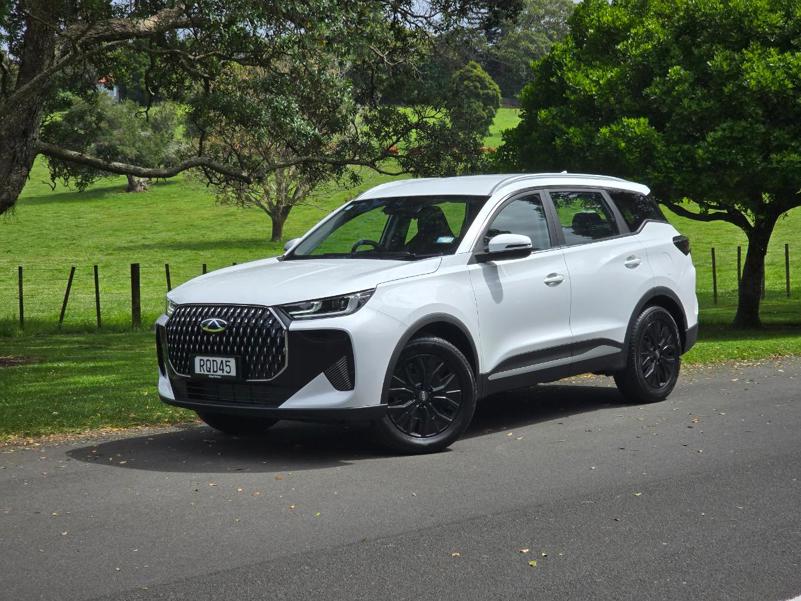
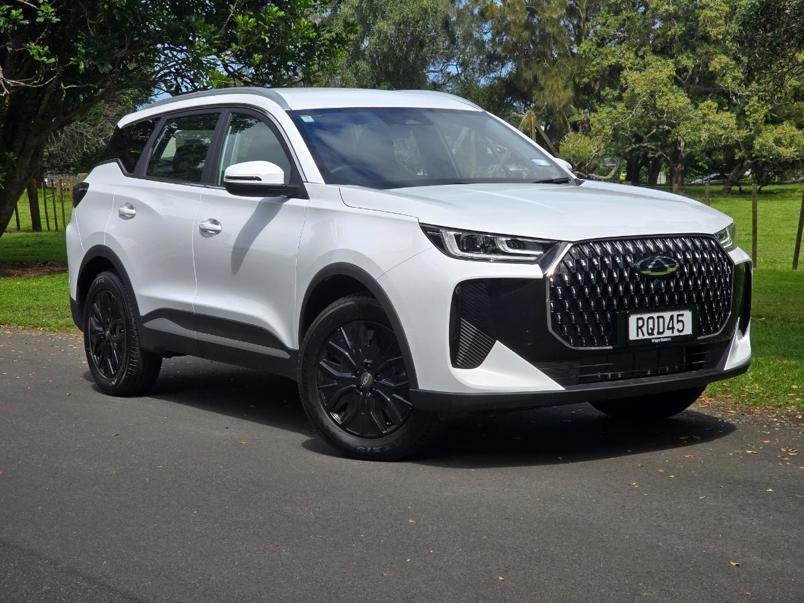
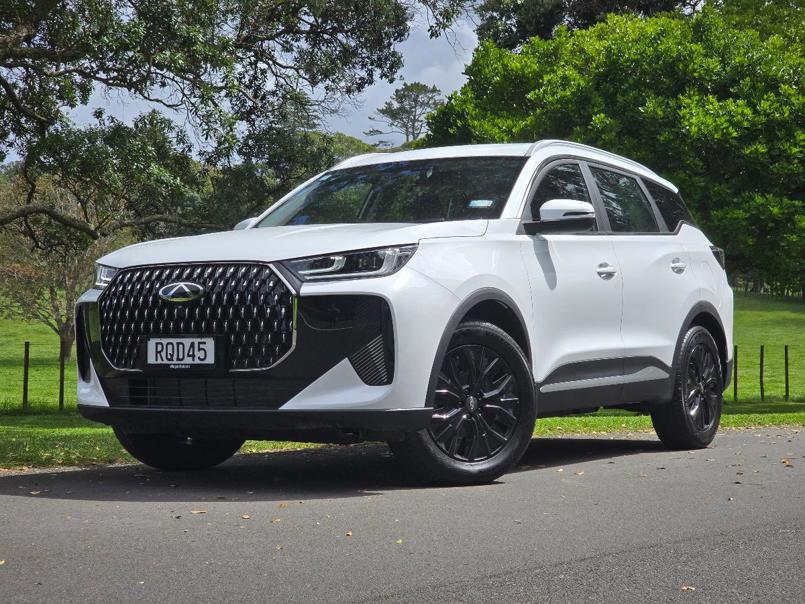
The Chery Tiggo 7 presents a handsome, if conventional, exterior. It doesn't break any new ground with futuristic or startling design cues; instead, like its smaller Tiggo 4 sibling, it embraces a very traditional mid-size SUV aesthetic.
The front is dominated by an enormous grille that is something of a Chery signature these days, and looks good here, although I'm not personally entirely convinced by the black gloss inserts that flank it.
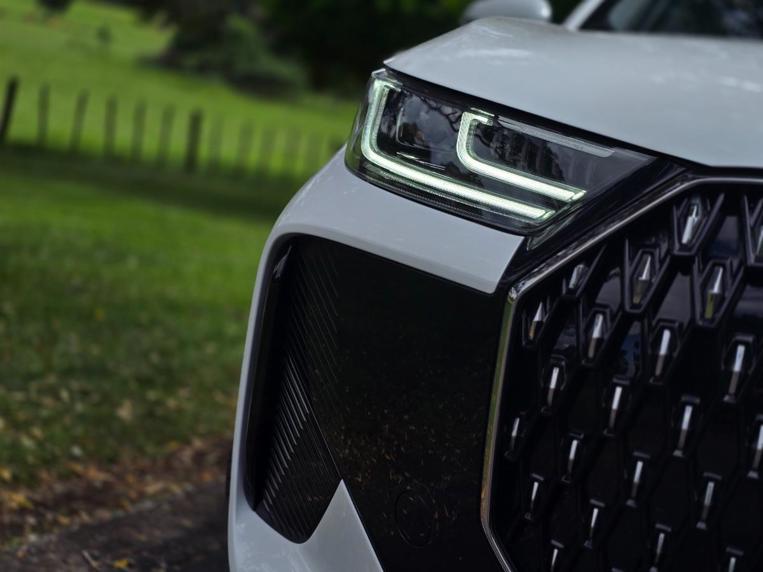
While the overall styling might even appear slightly dated, it's a pleasant and inoffensive design that won't necessarily turn heads in traffic, but looks perfectly nice and well-proportioned.
Our test vehicle was brand new, with only 50km on the clock, and its performance reflected that.
The entry-level Urban model we drive here sits on 18-inch alloy wheels and features LED headlights and taillights, so is far from a stripped-out budget offering.
OVERVIEW
| Price | $34,990 |
| Body style | Medium 5 seat SUV |
| Wheels and tyres | 18-inch alloy wheels, 225/60 tyres |
| Length | 4540mm |
| Wheelbase | 2661mm |
| Weight | 1489kg |
| Website | chery.co.nz |
On the inside: what's the Chery Tiggo 7 Urban's cabin like?
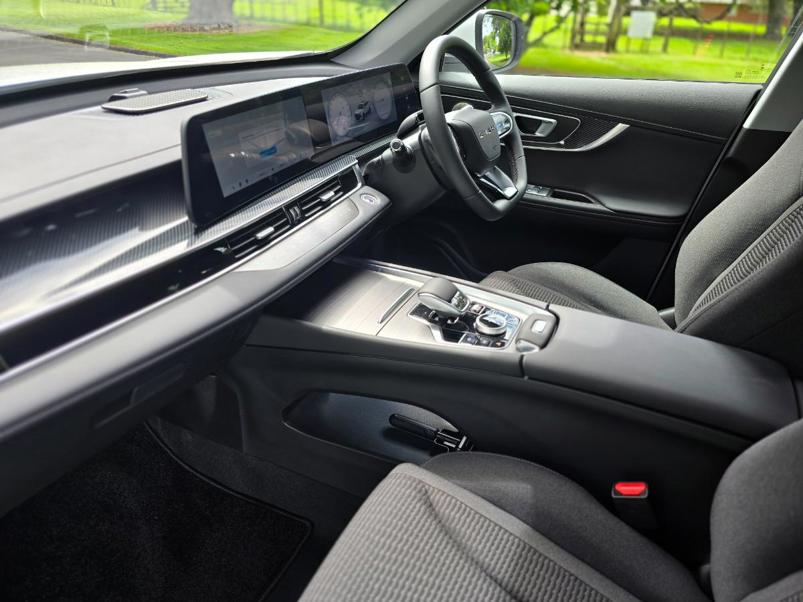
Stepping inside the Tiggo 7, you're greeted by an interior that feels significantly more expensive than its price tag suggests.
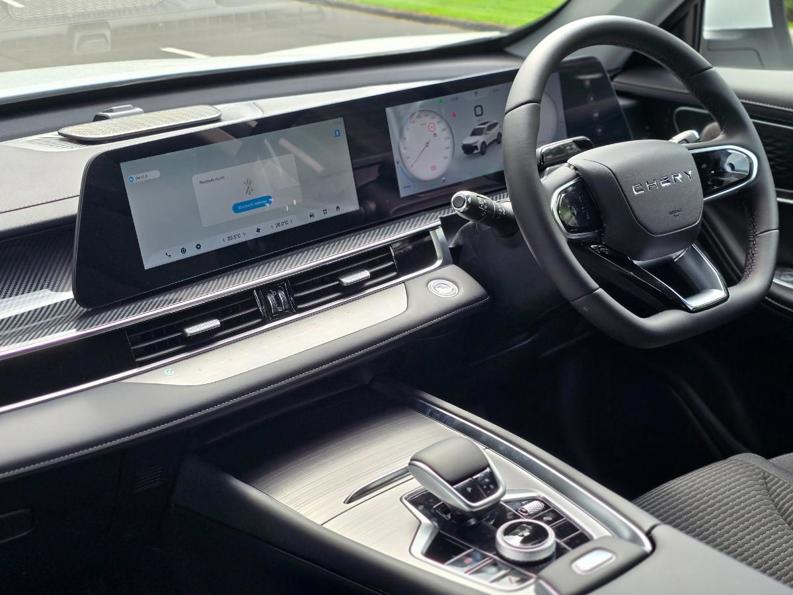
Following the traditional look of the exterior, the cabin is non-confrontational and well-appointed. A highlight is the impressive digital display, featuring a 12.3-inch LCD instrument cluster that sweeps seamlessly into an equally large 12.3-inch infotainment touchscreen.
With wireless Apple CarPlay and Android Auto, a premium feature at this price point, the infotainment system is slick and responsive, although does tend to fall back on the old “many pages of options and menus” curse that a lot of Chinese-made cars suffer from. There are some physical buttons, but it would benefit from a few more.
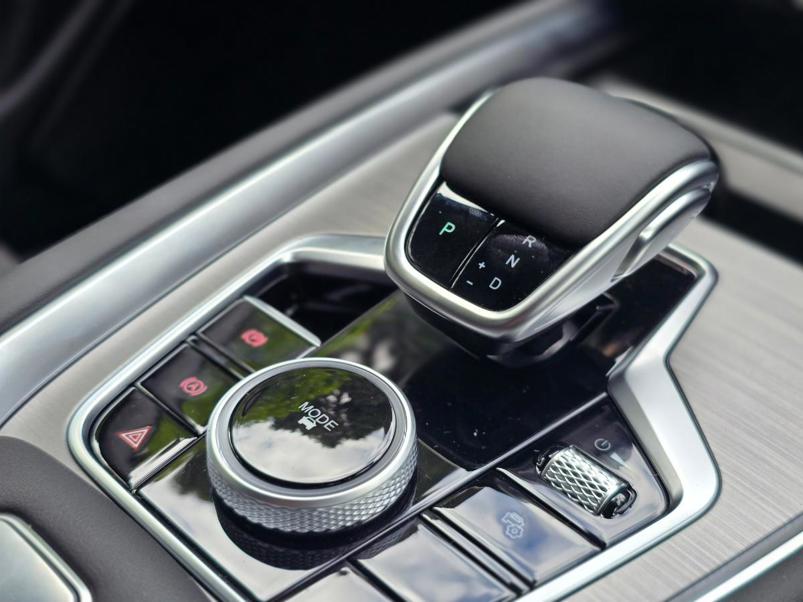
The materials, while not genuine leather or carbon fibre, are impressive for the cost. Soft-touch materials are used generously, and harder surfaces are pleasantly textured. Shiny, fake carbon fibre trim adorns the dash and door panels, adding to the upscale appearance.
The base Urban model comes with manually adjustable cloth seats, which are surprisingly comfortable and supportive, though the lack of lumbar adjustment is a slight annoyance, but the quality of the cloth upholstery is high and nicely breathable, making them superior to a lot of fake leather offerings at this price.
Standard equipment is, as mentioned previously, generous, including a wireless phone charging pad, a 6-speaker audio system, and dual-zone automatic air conditioning. The level of fit, finish, and material quality is deeply impressive for a car that clocks in at under $35,000.
INTERIOR
| Head-up display | No |
| Infotainment screen | 12.3 inches |
| Phone projection | Android Auto and Apple CarPlay, wired and wireless |
| Wireless phone charger | No |
| USB ports | 1x USB-A and 1x USB-C front, 1x USB-A rear |
| Climate control | Dual zone |
| Front seat heating/ventilation | No/No |
| Front seat adjustment | Manual |
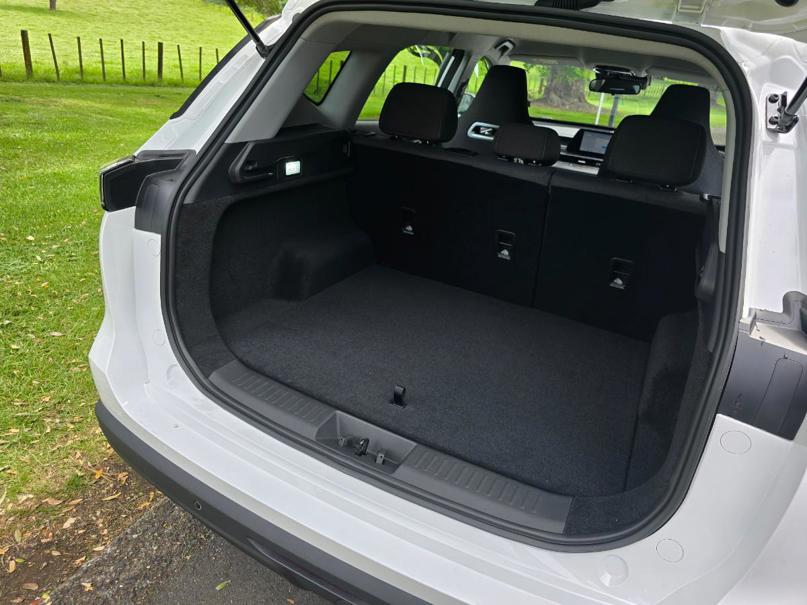
| Boot capacity | 565 litres |
| Rear seat split/fold | 60/40 |
| Power tailgate | No |
On the road: what's the Chery Tiggo 7 Urban like to drive?
This is where the Tiggo 7's appeal becomes somewhat conditional. Our test vehicle was brand new, with only 50km on the clock, and its performance reflected that.
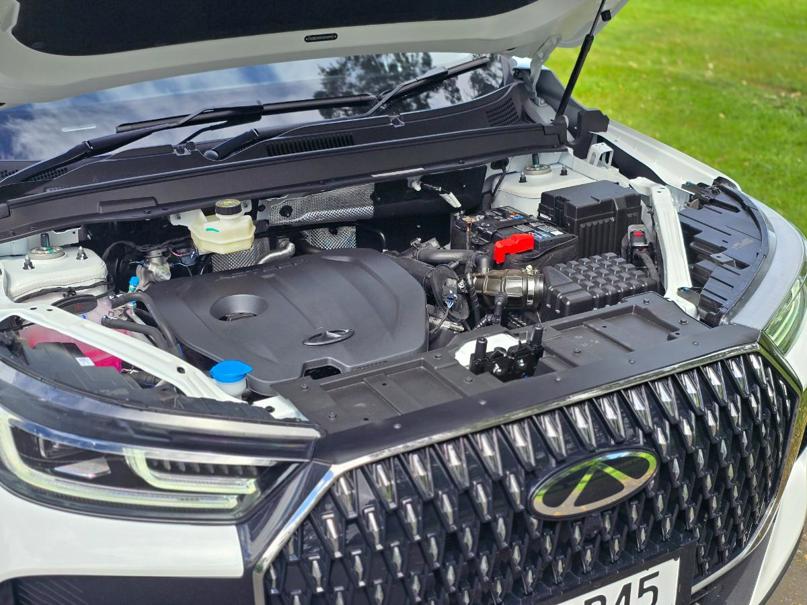
The 1.5-litre four-cylinder petrol engine, producing a modest 108kW and 210Nm of torque, felt extremely tight with utterly monstrous turbo lag.
Generally speaking car companies like to put between 500 to 1000km test cars before they send them out, so that the cars are at least mildly run in before putting them in the sweaty, fevered hands of motoring journalists.
There are two reasons for this; you want the engine to be somewhat prepared to be thrashed everywhere, but more importantly, you want it to behave as it is supposed to.
The Tiggo 7 with 50km on the clock did not do this.
The 1.5-litre four-cylinder petrol engine, producing a modest 108kW and 210Nm of torque, felt extremely tight with utterly monstrous turbo lag, while the six-speed dual clutch transmission was equally tight, and also managed to be clunky and indecisive.
When cold, the combination of catastrophic turbo lag and a jerky six-speed dual-clutch transmission made for a horrible, dithery low-speed experience, with a significant delay before the car gets going off the line.
After around 250km in our hands it had improved significantly, and if it continued on that trajectory over the next 1000km or so, it should become quite a compelling challenger for the money asked.
Once warmed up and out on the open road, the car's character improves; the transmission becomes smoother, and the engine, while never exactly feeling powerful, at least offered a decent mid-range punch.
On a happier note, the chassis is surprisingly capable, with well-controlled body roll through corners, much like its slightly smaller sibling, the Tiggo 4. However, also like the Tiggo 4, the steering is very light and offers no feel or feedback.
The ride is generally acceptable but can feel firm and brittle over New Zealand's common coarse-chip seal surfaces, especially at lower speeds, while the driver assistance systems are a strong point, proving subtle and non-intrusive.
ADAS systems are surprisingly good in the Tiggo 7, with the lane-keep assist gently guiding you back into line rather than yanking the wheel, and the systems don't scream at you or mute the audio either, being nicely inobtrusive.
Another downside of putting out a car for test with minimal mileage on it comes in the form of fuel consumption, as it is pretty much impossible to get an accurate picture of what it will be capable of when properly run in. So it's safe to say that you can pretty much ignore the fact that we couldn’t even get close to Chery’s claim of 6.9L/100km (let alone the RightCar figure of 8.0) in the Tiggo 7, instead finishing the week on a rather horrifying 11.5L/100km.
SPECIFICATIONS
| Powertrain type | Petrol |
| Capacity or battery [delete one] | 1500cc |
| Power | 108kW |
| Torque | 210Nm |
| Transmission | 6-speed DCT, FWD |
| Power to weight | 69kW/tonne |
| Adaptive suspension | No |
| Efficiency | 6.9L/100km (manufacturer claim) |
| Tank size and fuel type | 51 litres, 91 octane |
| Tow rating | 750kg |
On ownership: what's the Chery Tiggo 7 Urban's warranty and servicing situation?
All Chery vehicles come with a 7-year/Unlimited kilometre warranty, while service intervals are 12 months or 15,000 kilometres, whichever comes first.
On the whole: what do we think of the Chery Tiggo 7 Urban?
Our Chery Tiggo 7 was a car of two conflicting personalities. On one hand, it represents an absolute bargain, and for $34,990, you get a spacious, well-equipped, and impressively constructed mid-size five-seat SUV with technology and features usually found in considerably more expensive vehicles.
On the other hand, the driving experience, at least in its brand-new state, is seriously compromised.
The jerky low-speed performance and significant turbo lag are major drawbacks for a vehicle that will spend most of its life in town. That said, however, it will definitely get better with more kilometres under its belt after the engine and transmission free up. But the question remains; by how much?
If the performance significantly improves, the Tiggo 7 is a brilliant bargain. If it remains as clunky and hesitant at low speeds as it is now, it would be difficult to recommend, despite its incredible value on paper.
To be fair to our Tiggo 7 Urban, after around 250km in our hands it had improved significantly, and if it continued on that trajectory over the next 1000km or so, it should become quite a compelling challenger for the money asked.
Emphasis on ‘should’, however, meaning I honestly can’t give a definitive verdict on the Tiggo 7 Urban.
Chery Tiggo 7 Urban FAQs
What kind of car is the Chery Tiggo 7 Urban?
A medium-sized 5-seater family SUV.
Does the Chery Tiggo 7 Urban have hybrid or EV technology?
No. The Tiggo 7 Urban is powered by a 1.5-litre petrol four-cylinder engine with no electrification.
What’s the fuel economy of the Chery Tiggo 7 Urban?
Chery claims an ADR figure of 6.9L/100km, but the best we saw was 11.5L/100km...
Is the Chery Tiggo 7 Urban safe?
The Tiggo 7 has a 5 Star ANCAP safety rating and features seven airbags, including a centre side airbag.
What safety and assistance features does the Chery Tiggo 7 Urban have?
| Intelligent lights | Automatic LED headlights with Intelligent High Beam Control |
| Rain sensing wipers | Yes |
| Airbags | 7 |
| Adaptive cruise control | Yes, including Traffic Jam Assist and Intelligent Cruise Assist |
| Driver attention monitor | Yes |
| Traffic sign recognition | Yes |
| Forward collision warning | Yes |
| Blind spot warning/assist | Yes/Yes |
| Lane departure warning/assist | Yes/Yes |
| Rear cross traffic alert/braking | Yes/Yes |
| Reverse collision braking | Yes |
| Parking sensors | Yes, 2x rear only |
| Camera system | Reverse camera |
What are the [car name’s] main rivals?
- Mitsubishi Eclipse Cross XLS ($36,990): a Kiwi favourite, but more expensive with less equipment
- Jaecoo J7 EX 2WD ($34,990): a close relation under the skin with better looks
- Omoda C5 EX ($33,990): again, a close relation, slightly cheaper
- Omoda E5 BX ($36,990): or you could go full-electric for a bit more money
- MG HS Vibe ($36,990): slightly bigger, more refined


