



What’s this new car all about then?
All the fuss from Audi Sport about the RS 5 going electric, complete with advertising campaign referencing Bob Dylan at the 1965 Newport Folk Festival (look it up kids, or watch Timothy Chalamet in No Direction Home) is a bit of a smoke screen.
Audi Sport went electric(ish) ages ago. It's had mild hybrid powertrains since 2019's RS 6 and the RS e-tron GT of 2021 was full-BEV.
The RS 5 is its first "high-performance plug-in hybrid", to quote the company's media material. But that's not really the controversial bit. The manufactured going-electric kerfuffle is really Audi Sport on the offensive about potential criticism of the RS 5's added weight and complexity.
The move to a PHEV powertrain has meant a staggering 550kg weight gain over the previous model (the 22kWh battery alone is over half of that), which wasn't exactly svelte in the first place. You don't need a weather man to know which the wind blows, when you add an extra power source.
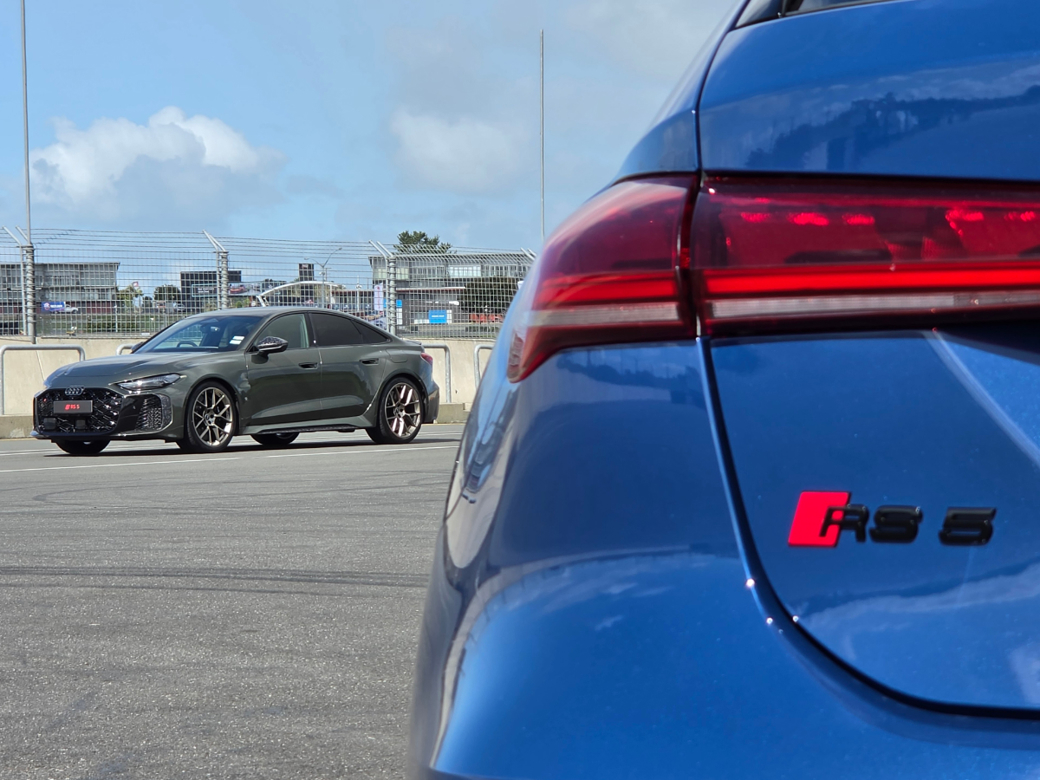
So the new RS 5 is nearly 2.4 tonnes. Needs-must when it comes to serious plug-in power and kilogrammes, so Audi's philosophy has been to embrace what PHEV technology can do to make the car stronger, faster and more exciting, rather than get all angsty about the extra mass.
The 2.9-litre twin-turbo V6 is carried over in upgraded form, and now makes 375kW: an extra 44kW over the previous model. But that's just the petrol engine: true like ICE, like fire. The electric motor is 130kW and combined we're talking system outputs of 470kW/825Nm.
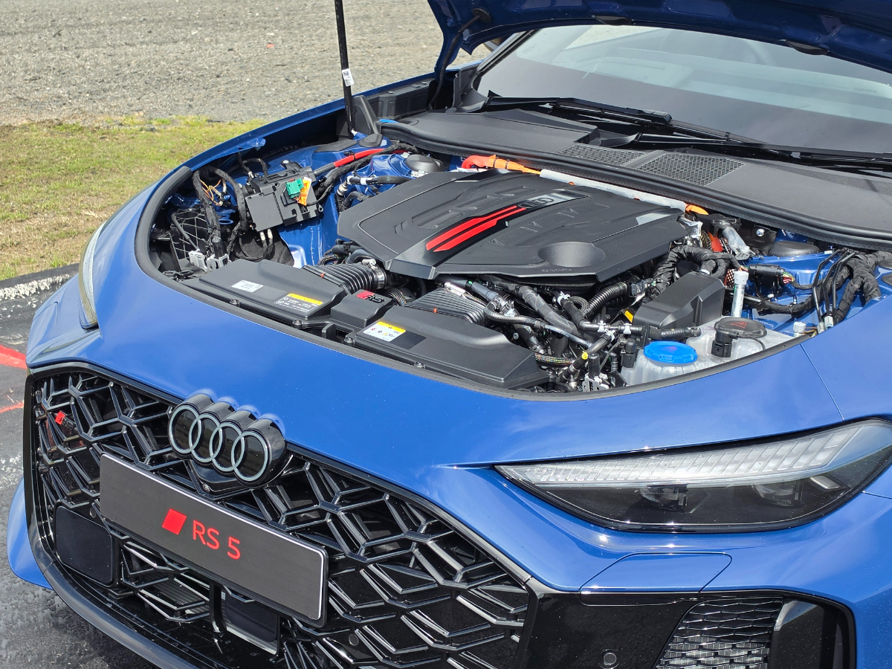
The new car will rocket to 100km/h in 3.6 seconds, which is 0.3sec faster than even the Competition Plus variant of the previous model. Not a huge gain given the 139kW/225Nm power upgrade, but remember this is a car that also offers up to 84km pure-electric range (WLTP) and a V6 that's claimed to be up to 20% more economical under high loads.
Weight is the enemy of engaging handling. Aside from the usual RS-comprehensive re-engineering of the suspension (this car is 90mm wider than a standard A5) and 10%-stiffer structure, there's a lot of fancy diff-work going on.
The centre differential is preloaded, meaning the AWD system is always coupled even when there's no torque being delivered to an axle. Audi says this improves steering inputs, reduces understeer and makes the handling more precise. The power can be split from 70/30 to 15/85, meaning this quattro can serve up something close to a rear-drive chassis when required.
The high-voltage electric power on tap is put to work in what Audi claims is a world-first: the Dynamic Torque Control rear transaxle, which has its own 8kW/40Nm electric motor that works with the conventional differential to deploy precise torque differences side-to-side in just 15 milliseconds. Think too much about all of this stuff and you'll end up with a head full of ideas that are driving you insane.
It's also probably a good time for a refresher on why this is an RS 5, not an RS 4. When the current A5/S5 were launched globally in 2024, Audi had decided that combustion-based cars should be named with odd numbers, while EVs should be even. Hence the A4/S4/RS 4 getting kicked up a digit.
But last year, it decided that was all a bit confusing and changed its mind back again. The A5 and some of its derivatives were already out there, so... oops. We still think it could have reverted to RS 4 badging for this one, given how different it is from the cooking versions. And how important the name has been for Audi Sport.
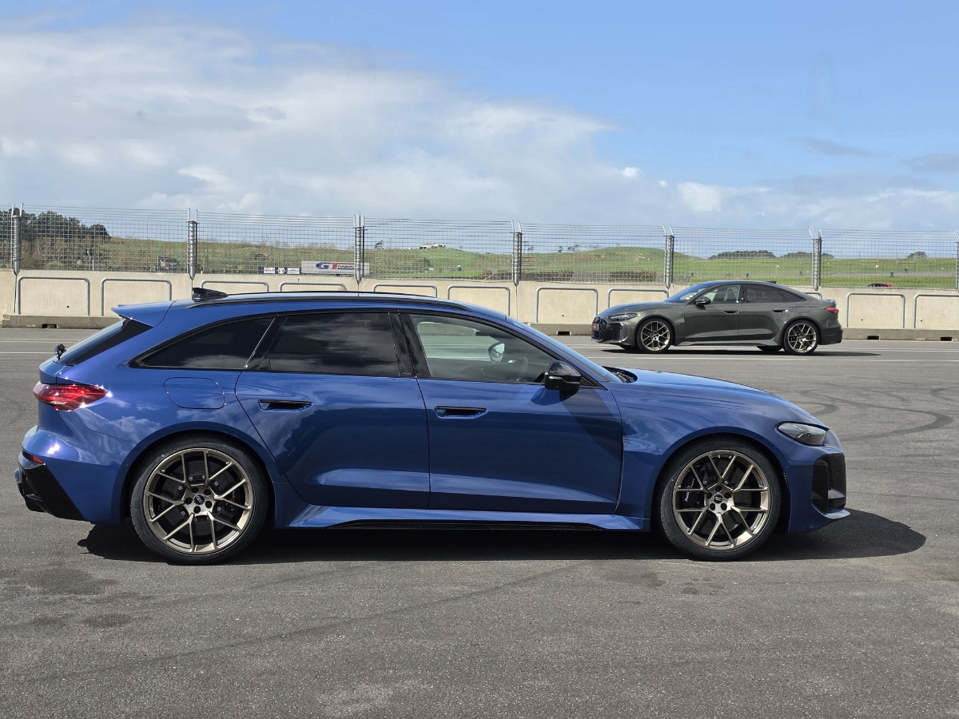
Speaking of which: just like the classic B7-generation RS 4 of 2006 (that's the cool V8 manual one that everybody loves), the new RS 5 is available not just as an Avant wagon but also a sedan.
How much is it?
The sedan opens RS 5 bidding at $194,990, while the Avant asks $196,990.
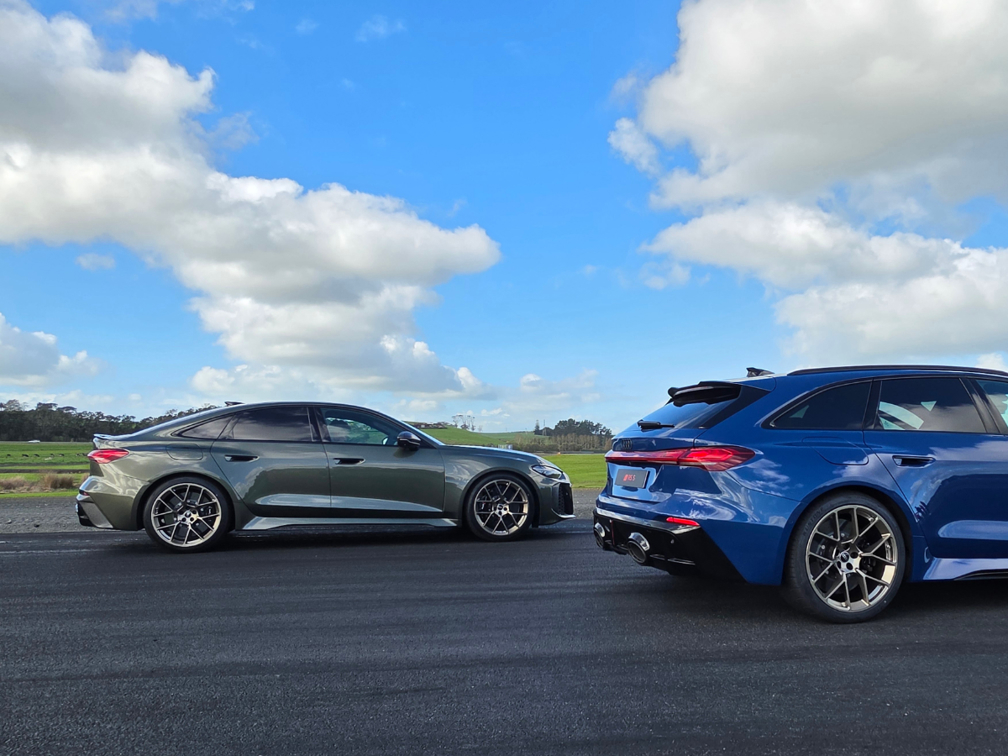
Feel free to go further from there. On the outside you can add the Carbon Styling Package for $12,000, which transforms the front side blades, side sills and rear diffuser into gloss composite. Inside, you can add an Interior RS trim with red or green accents for $4-5k depending on the colour choice.
You can also ramp things a lot up by adding a gaping mouth up front (sorry, "RS bumpers plus") with the $7k Audi Sport package and once you've done that, you've unlocked the ability to add the Matt Carbon Camouflage Styling Package for $14k.
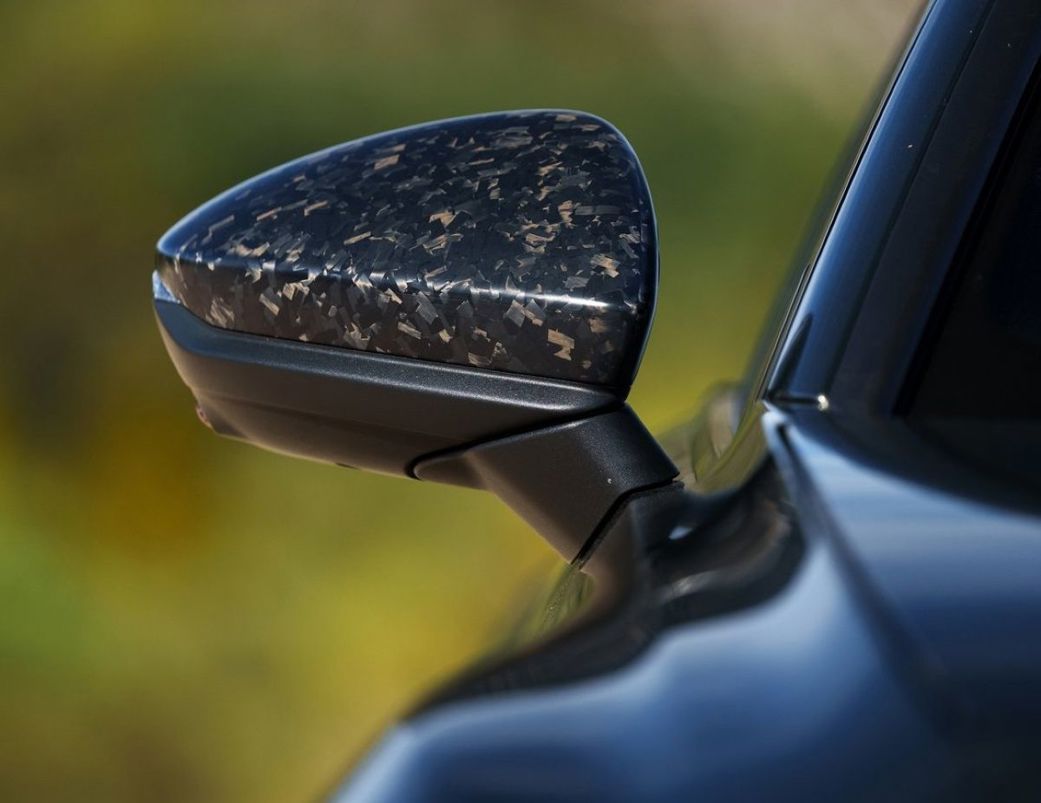
The hero Bedford Green exterior colour ($1500) is also only available with the Sport Package. Audi NZ says around 30% of early customers have chosen it, presumably for the look over the uprated 285km/h top speed.
There are also a plethora of individual options, ranging from a $1000 integrated dash cam to a $23,000 ceramic brake system. If you're intent on making your RS 5 a quarter-of-a-million-dollar concern, you can do it.
What’s it like to drive?
Our introduction to the RS 5 was at Hampton Downs Motorsport Park, with a series of track exercises, self-drive laps and some passenger rides in vehicles piloted by actual grown-up racing drivers. Circuit only this time, but we've got review cars (Avant and sedan) coming up for the full roadgoing experience.
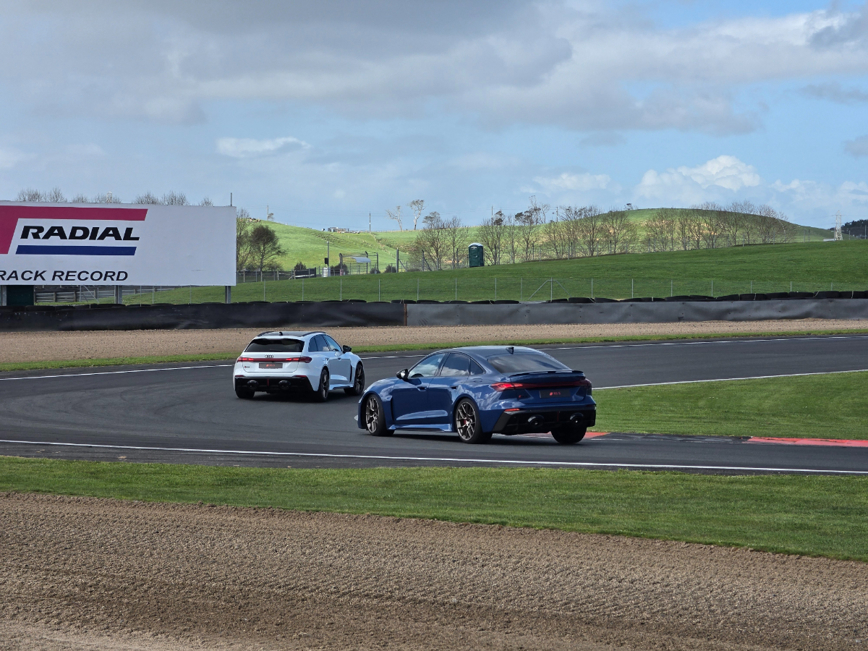
It fair to say it would have been impossible to get the full benefit of the RS 5's agility in this environment, because Audi NZ's demonstration cars for the track programme (which ran over multiple days/sessions) were fitted with sacrificial Kustone tyres. No disrespect to the fine people at the company's Hefei facility in China, but they're not exactly Pirelli P Zero Rs. They're like a good luck black tooth on a car like this.
Mind you, we're not exactly professional quality drivers. The more modest rubber certainly didn't stop the RS 5 showing off its abilities in terms of sheer straight-line go and clever chassis tech. Grip during the more challenging corner transitions was another thing at times, though.
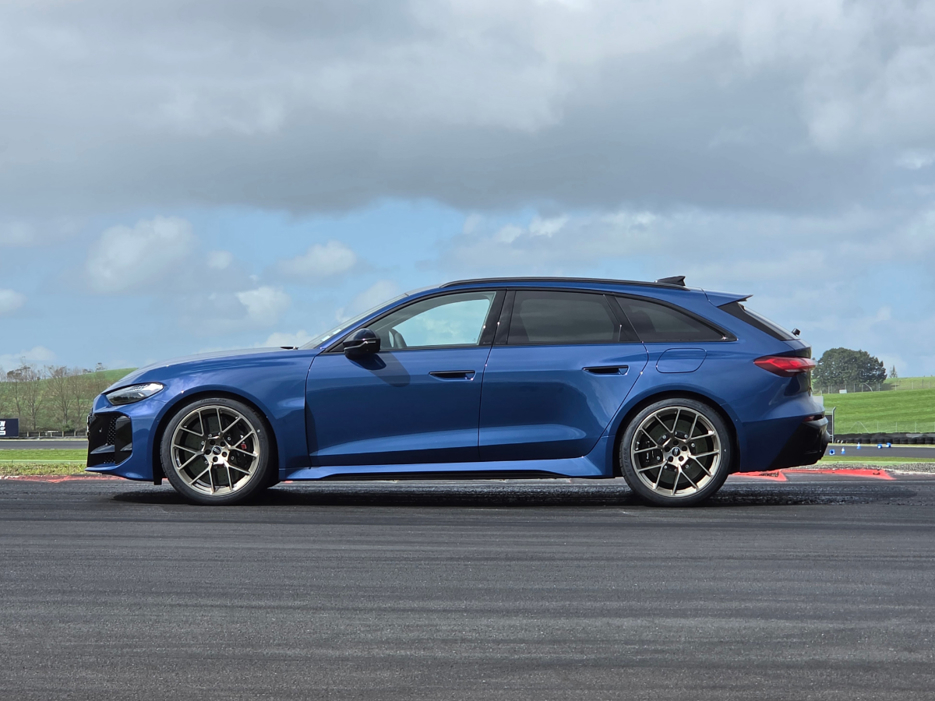
The RS 5 can drive on electric power alone for 84km and that's a key part of the package, because the beauty of RS Avants and sedans is that they are also practical family cars. You can drive on full EV in half of the available drive modes: Balanced, Dynamic and Comfort.
But the electric component is also key to the car's high performance abilities, so when you're in the more aggressive modes - RS Individual, RS Sport and the drifty RS Torque Rear - the management system keeps the battery at 90% state of charge.
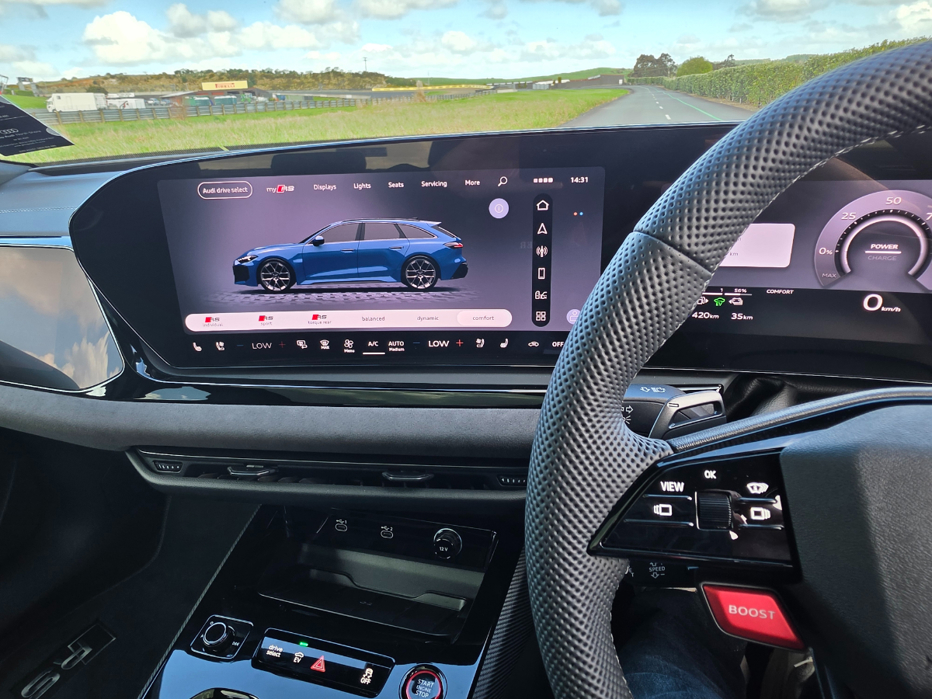
Even in the non-RS settings, you can have 10 seconds of maximum power for overtaking via a Boost button on the steering wheel, Porsche-style. Grandpa's cane, it turns into a sword.
With two turbochargers optimised for low-speed fizz and all that electric torque, the RS 5 is whip-crack fast in a straight line. You still feel the weight of the thing as it launches, but once it's rolling the throttle response is astonishing. To use a metaphor: the acceleration is electric.
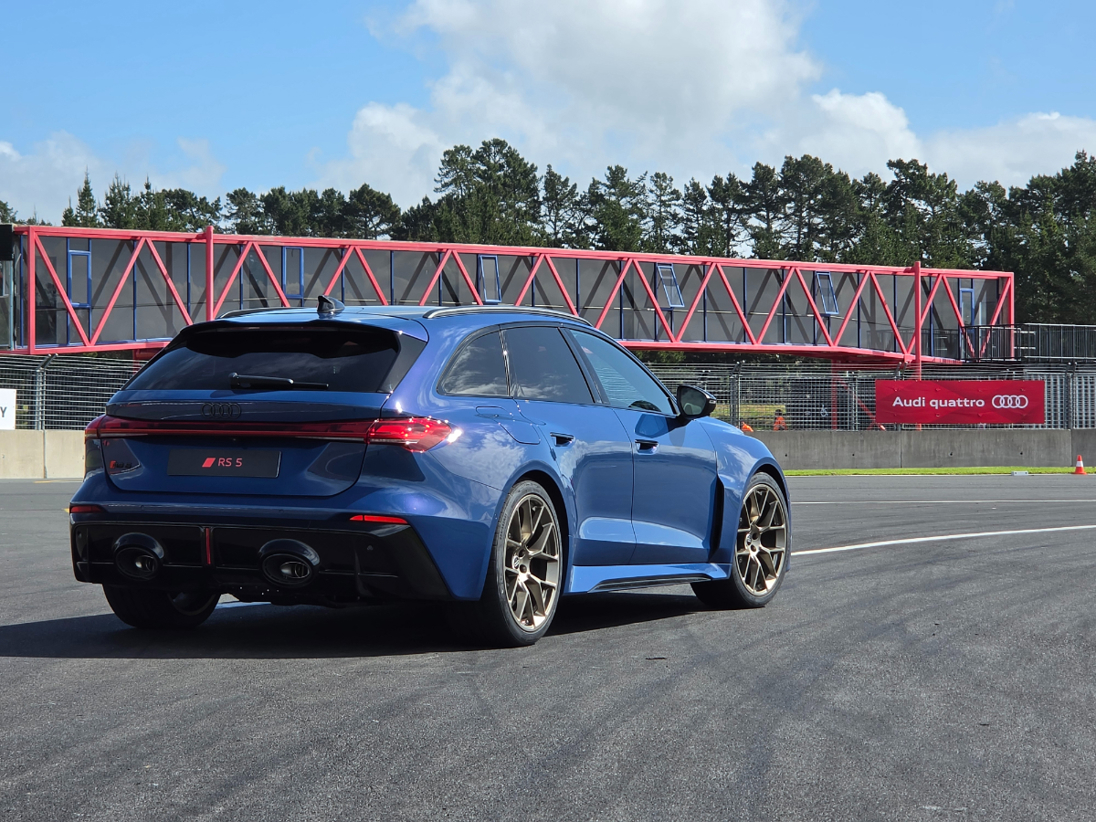
The incontrovertible laws of physics prevent us from saying the RS 5 is nimble, but the techy powertrain and chassis combo means it feels incredibly precise and responsive in corners. Left-to-right racetrack transitions that should throw a 2.4-tonne car into a panic are simply absorbed by the suspension, preload differential and that clever rear electric torque-vectoring thingy, which simply guides (or shoves, if you prefer) the car along your chosen line. It never stumbles, it's got no place to fall.
Our passenger hot laps proved Audi Sport's point about the RS 5's ability to oversteer. If there's a circuit-corner and a proper person behind the wheel, this RS can go sideways around it at serious velocity. The rest of us just fold our hands and pray for rain.
Racetracks are smooth, so what we're especially keen to experience is the RS 5's ride on regular roads in the various modes. And its handling character on real-world corners, at real-world speeds... on real factory-specification tyres. But it seems like a truly remarkable and versatile performance car at this point.
What’s the pick of the range?
If you want something even close to the more subtle appeal of RS 4s past, we'd suggest an RS 5 Avant with standard front bumpers, in a timeless colour like the Ascari Blue ($1500 extra) of our track-day car pictured here (although this one has the Sport Package). It's like a powder blue cape.
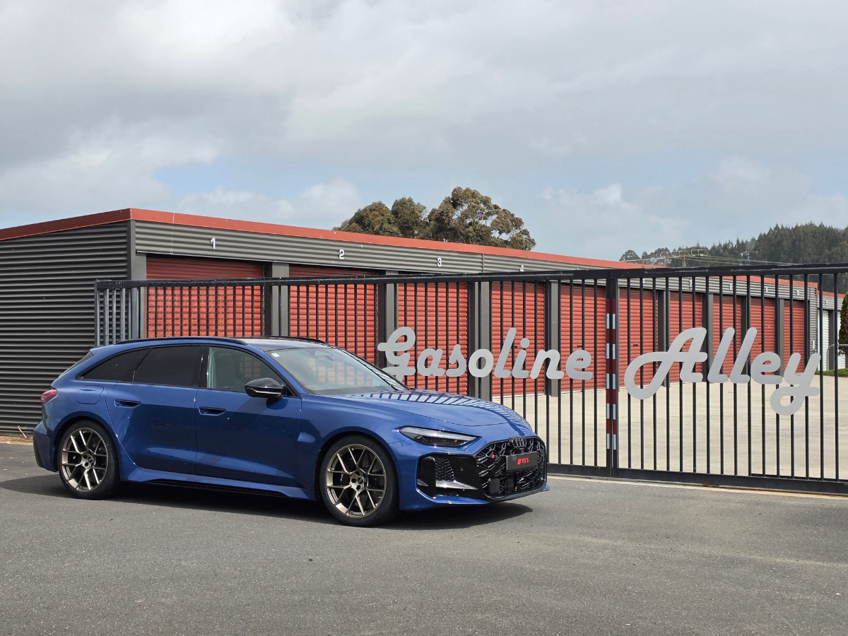
That's not necessarily the vibe around RS these days of course, so you can option up the more aggressive Sport Package look and wilder carbon addenda of choice.
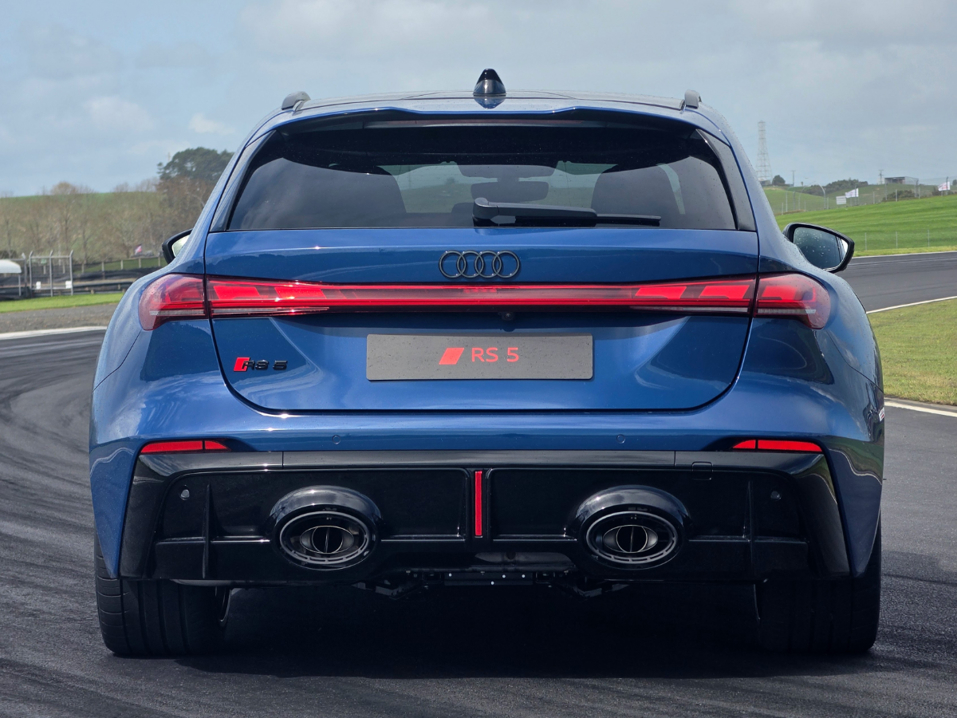
The RS 5 sedan has a truly aggresive appearance regardless of how it's dressed. While the Avant's chunky rear visually absorbs the extra width, quattro-blister wheel arches and fat exhaust pipes, the sedan has a real wide-boy look about it at the rear.
What other cars should I consider?
Well, it's the usual suspects, isn't it? The BMW M3 Competition Touring is surely the RS 5's arch rival, now that BMW M has met Audi Sport head-on with a Touring wagon option for the M3 and Audi Sport has met BMW head-on with a sedan option for the RS 5.
The pure-ICE M3 makes 390kW/650Nm, gets to 100km/h in 3.5 seconds and is priced from $197,900-$202,100.
In any other era we'd also have the Mercedes-AMG C63 in here, especially the current model with its mad 500kW/1020Nm 4-cylinder/PHEV powertrain. But you can't currently buy one of those in NZ and it's being phased out by the factory this year, to be replaced by a 6-cylinder C53.