



- Engineers tackle South Island to 'understand more about the market'.
- 'Cyber Sumo' design means less chrome, more angles.
- 'Not so easy to pull diesel out of the lineup' for a working ute.
Two of the engineers behind the new Toyota Hilux visited New Zealand this week, to drive their creation in the South Island. Not for more development - that's all finished now - but to "meet Hilux owners and hear first-hand how they use their vehicles and fully appreciate the unique conditions Kiwi drivers face".
Designed and built by Toyota Motor Corporation in Thailand, the latest Hilux includes extensive design input and testing from Toyota Australia. Read the full NZ specification and pricing story here.
Overseeing design and engineering development were Anyarat Sutthibenjakul, regional chief engineer, Sankom Pasri, deputy general manager of the Vehicle Performance Engineering Department, and Takeshi Tanabe, executive advisor to the Regional Design team, all within Toyota Motor Asia.
Anyarat Sutthibenjakul has worked on Hilux for more than 15 years: “The purpose of the trip to NZ was to understand more about the market," she says.
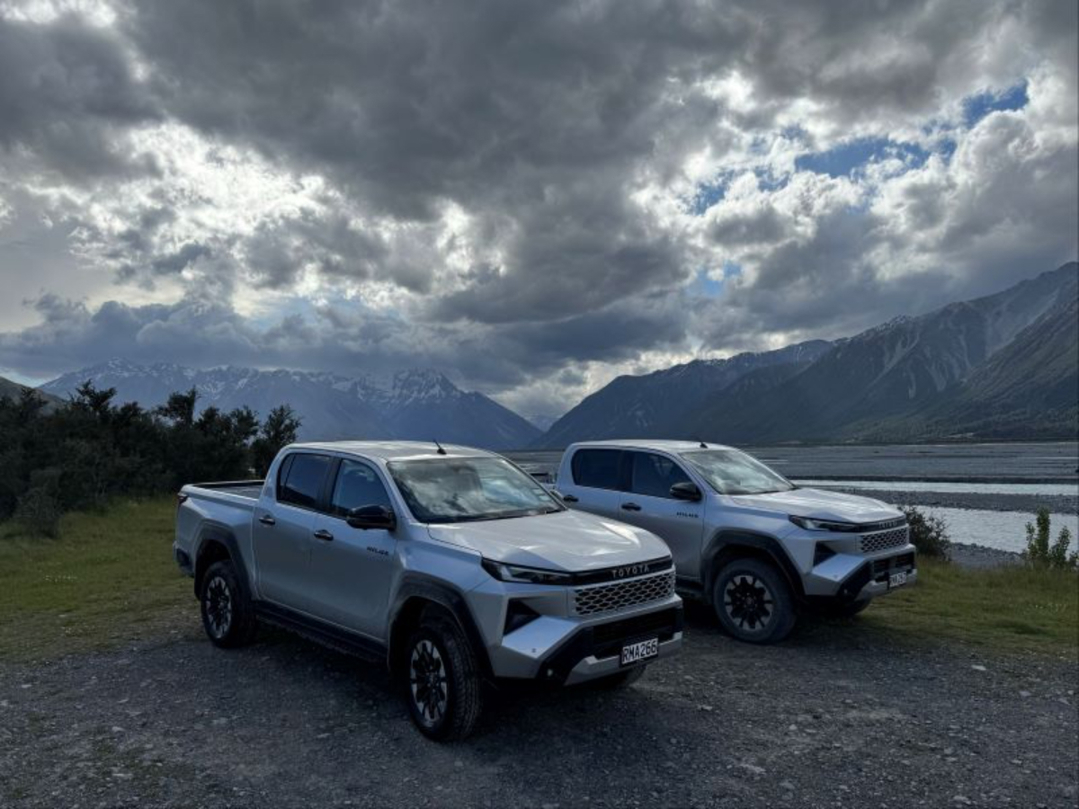
"This is my first time in NZ. I have been to many places in the world: Asia, Europe, America, South Africa and Middle East. So, I know how customers use the Hilux, but not NZ. It's very attractive and very different from other countries."
Takeshi Tanabe says the design of the Hilux makes sure it keeps the original soul, even within an entirely new body: “We set the keyword as ‘cyber Sumo’. The Sumo is, as you know, the Japanese wrestler, which is tough, with good stance, but also quite agile, powerful.
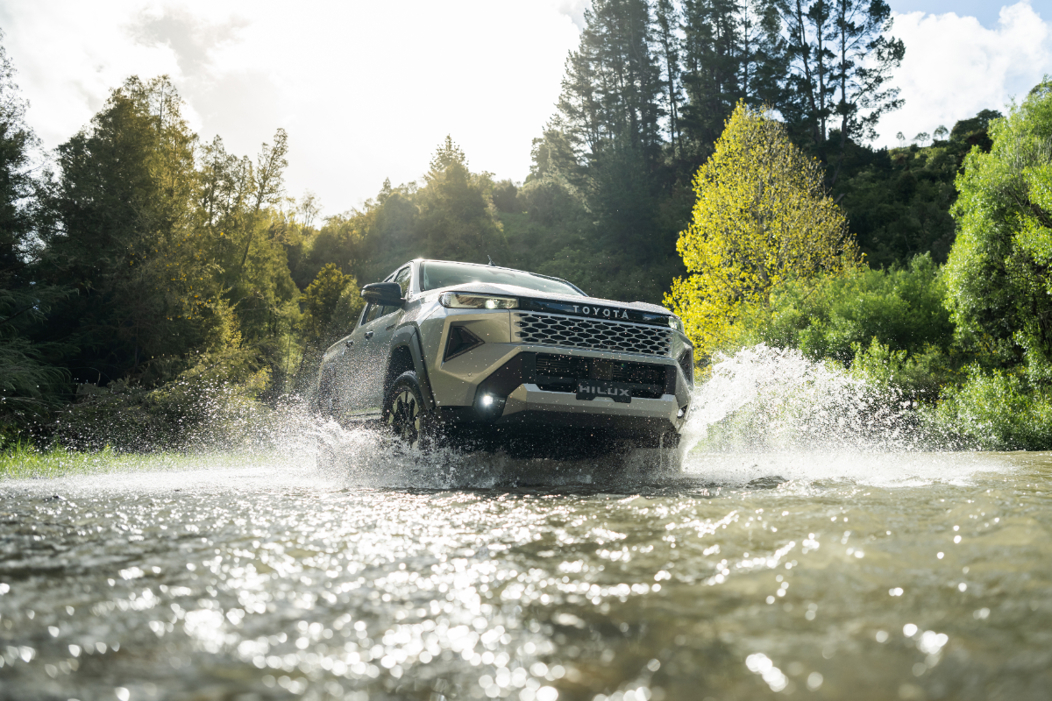
"Then we added ‘cyber’ on top of that, because it has to be a vehicle for the 21st century. It had to be modernised with a new design, but still inside the trustful QDR (quality, durability and reliability), has to be the same, or even improved."
Tanabe says certain elements such as the use of chrome were dropped and new angles and trapezoid shapes were used to emphasise toughness. A more integrated grille, using the body colour, was also adapted to create the impression of more stability and a wide stance.
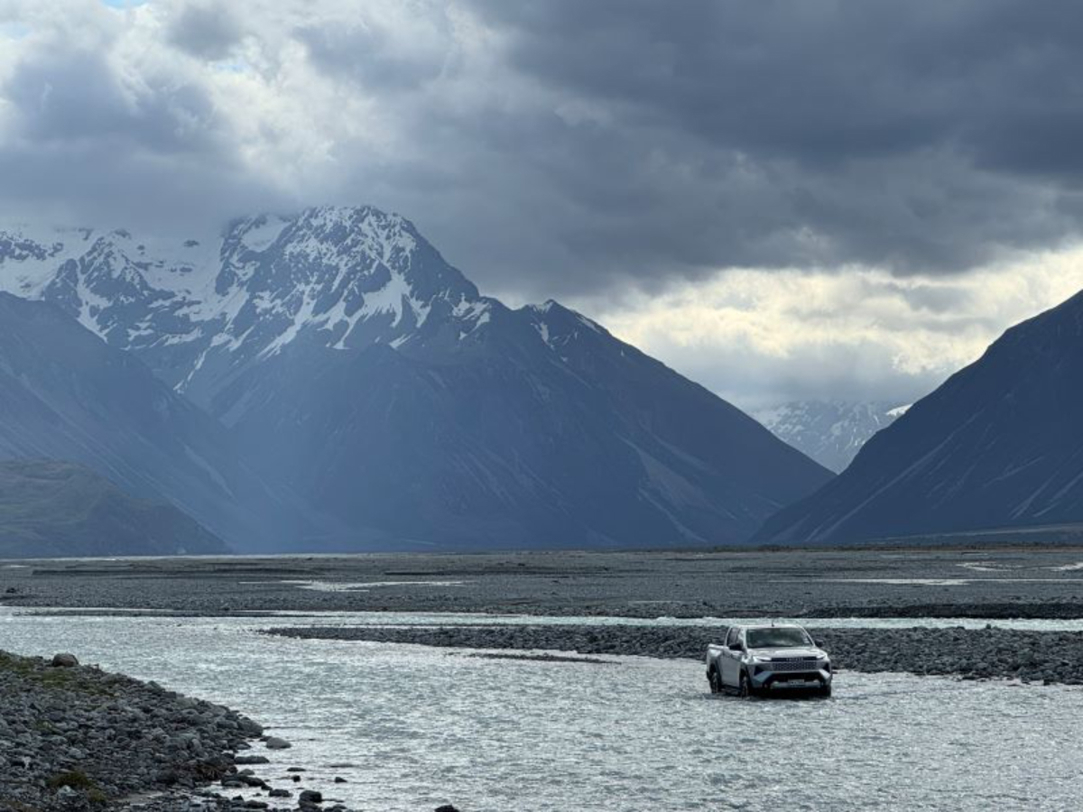
On their trip in the South Island, the two engineers sought out rough terrain, river crossings and steep hills. Anyarat says she will share her learnings with her team in Thailand, and with others in Japan.
“With some locations we went to, I never thought that Hilux could make it, you know, crossing the river or climbing up the mountain, but Hilux could do that."
She also says customer feedback has helped Toyota evolve the way it approaches the design and development of its vehicles.
“Normally when testing a new Hilux, we would carry the full payload and evaluate the vehicle on the full payload condition. But if a customer is driving only with themselves or one passenger, they may feel a bounce. There is some vibration when the ute has not got the full load. So we changed a way of thinking and a way of evaluating the vehicle, and we made a new suspension journey to meet the most common usage conditions of the customer."
The higher grades of the new Hilux have had a substantial modification to their suspension systems to give a more forgiving ride, particularly when the vehicle is driven alone, with no payload, on the road. The SR5 and higher grades of Limited and Adventure now feature an increased rear leaf spring suspension stroke, paired with newly tuned damping to minimise shock harshness and elevate ride quality.
Regarding the future, Anyarat says there is a multi-powertrain pathway strategy for the model: “Hilux is for work use. We need more power, more towing, more offroad capability, but it's also our duty to give clean air for future generations. So, we came up with the battery electric vehicle Hilux as well. And in the future, Toyota will introduce more electrified product into the market to give cleaner air.
“But the diesel is still there. It's not so easy to pull diesel out of the lineup, because Hilux is for the Hilux customer, for offroad, for work use, and for traveling to remote areas such as you have here in NZ,” she says.