


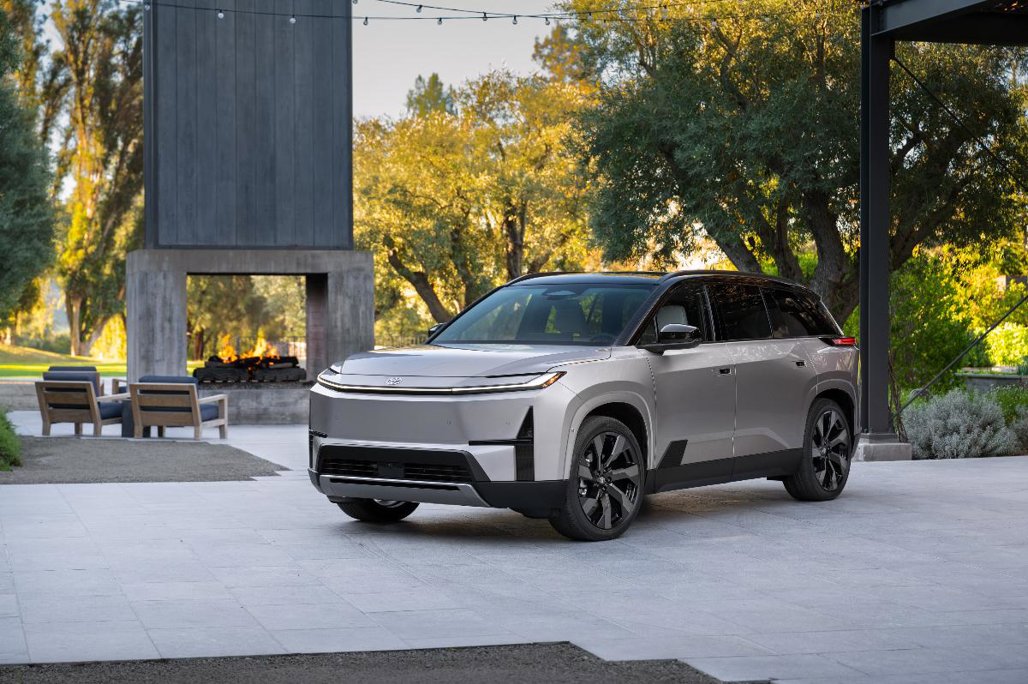

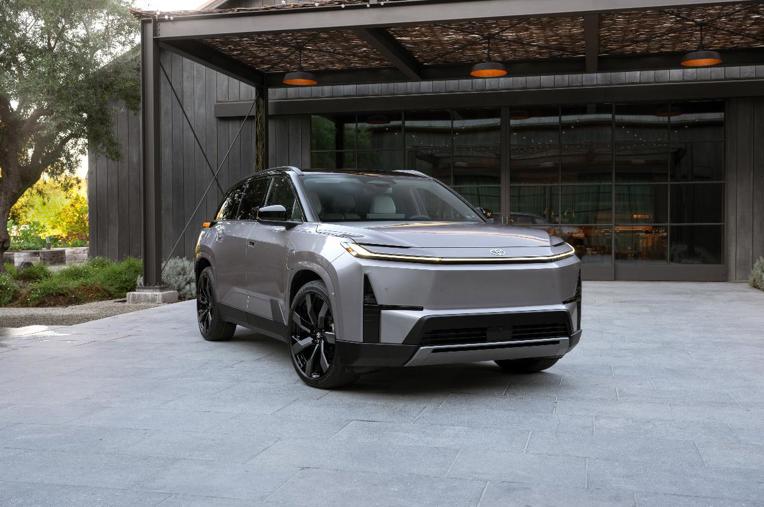
- Toyota has revealed what it has been teasing us with recently: a new Highlander.
- The Highlander has moved to become fully electric, but remains a large three-row SUV.
- Toyota New Zealand has yet to confirm the new Highlanders local availability.
After a number of small teasers Toyota has whipped the covers off an all-new Highlander SUV. And it is something quite different to what has come before.
The Toyota Highlander has maintained a consistent presence in the midsize SUV segment for over 25 years, debuting in the Australian and Japanese domestic market in 2000 (as the Kluger) and the USA in 2001. The Highlander first launched in New Zealand in 2005 after the first generation car's third update and has remained on sale here ever since, despite being dropped from sale in Japan in 2008 and production moving from Japan to the USA in 2013.
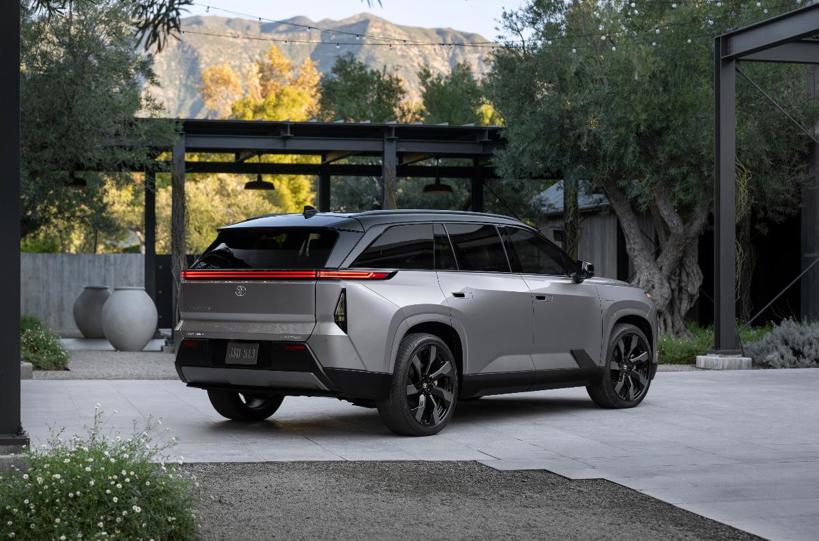
The upcoming 2027 model represents a significant shift as the nameplate’s first all-electric incarnation, while also growing in size. While initially confirmed for North American production in Kentucky, the hybrid Highlander we currently get in New Zealand is build in America, so technical specifications of this fifth-generation model provide a clear look at what New Zealand motorists might expect should the vehicle join Toyota’s local electrified lineup.
Built on a modified version of the Toyota Next Generation Architecture-K (TNGA-K) platform, the 2027 Highlander has been re-engineered specifically to accommodate high-capacity battery modules while increasing passenger room.
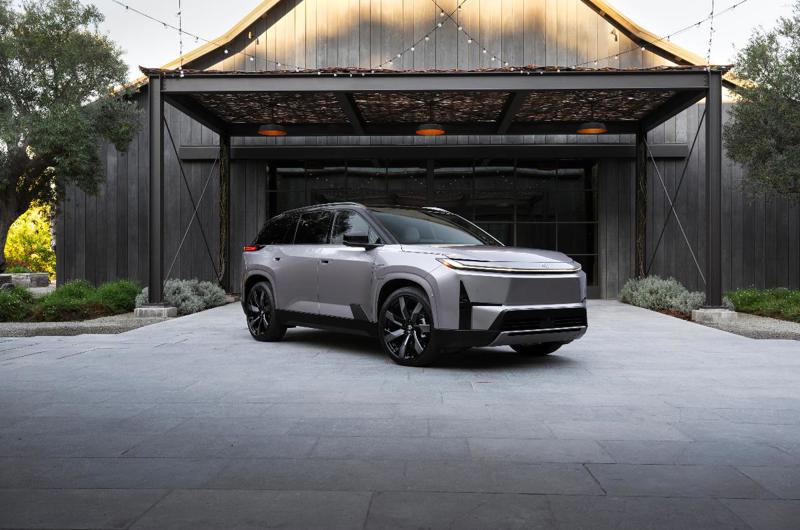
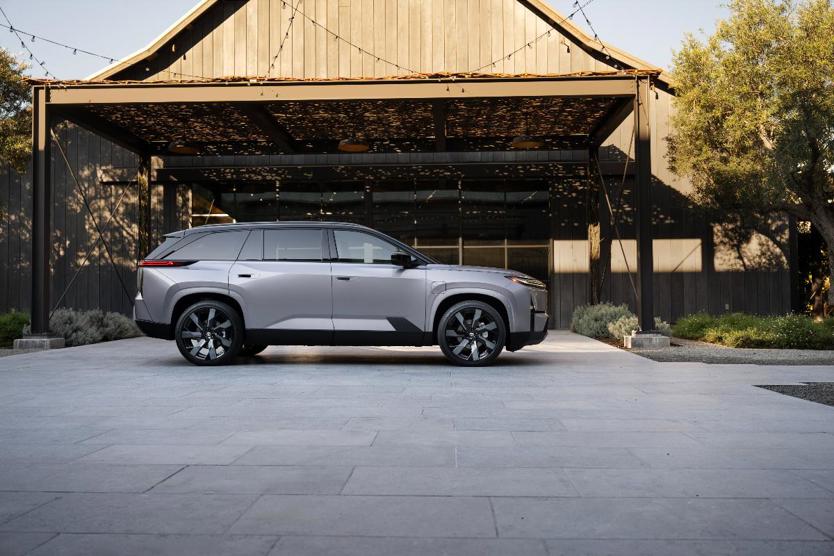
The dimensions have shifted to provide a "more stable footprint", with the wheelbase growing by 200mm over the current model (from 2850mm to 3050mm) and the overall width increasing by 60mm (to 1990mm).
Conversely, the roofline has been lowered by 20mm, a change intended to improve aerodynamic efficiency and lower the vehicle's centre of gravity. To manage the distinct noise profiles of an electric powertrain, Toyota has integrated acoustic glass for the windshield and front side windows, alongside noise-absorbing materials in the pillars, wheel wells, and roof structure.
The Highlander will be available with two battery capacities and two drivetrain options across two spec levels - XLE and Limited - with the XLE available in either FWD or AWD forms, while the top-spec Limited is AWD only.
The front-wheel-drive XLE grade uses a 77kWh battery, producing 165kW and 298Nm, with an estimated range of approximately 462 kilometres, while the all-wheel-drive XLE and Limited variants pack a combined 252kW and 438Nm, with the larger 95.8kWh battery offering up to 515 kilometres of range.
A notable technical addition to this generation is vehicle-to-load (V2L) technology, allowing the Highlander to function as a mobile power source. This system can power external electrical devices or act as a backup power supply for a home during an outage, provided the user has the necessary bi-directional accessories.
The Highlander also features battery preconditioning, which regulates the battery temperature to ensure faster and more efficient DC charging speeds regardless of the ambient environment.
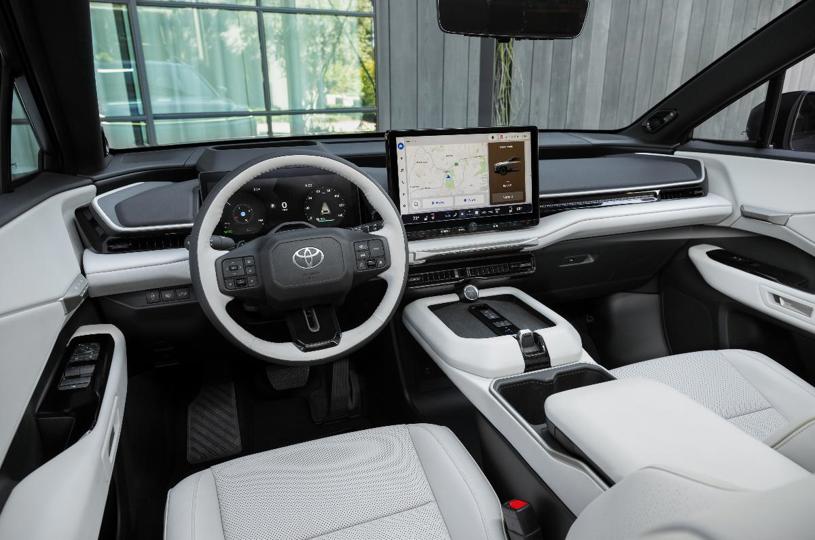
Both the XLE and Limited grades feature a tech-heavy cockpit centred on a 14-inch touchscreen running the latest Toyota Audio Multimedia system and a 12.3-inch digital gauge cluster.
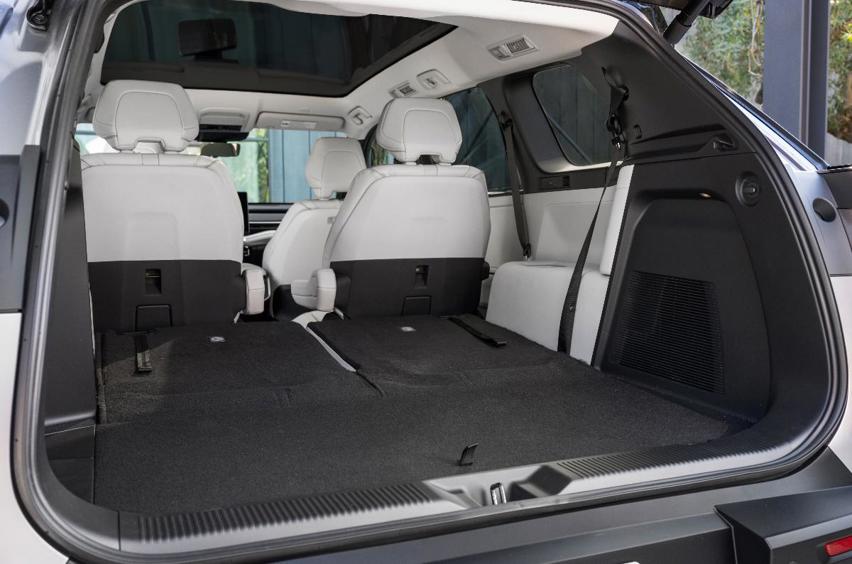
The XLE features SofTex-trimmed seating, heated front seats, a heated steering wheel, and 64-colour customisable ambient lighting. It offers seating for seven, with an AWD-exclusive option for a second-row bench seat.
The Limited grade adds further functional upgrades such as ventilated front seats, heated second-row seats, a Head-Up Display (HUD), and a Panoramic View Monitor. Toyota says that cargo capacity remains a priority, with 1290 litres of space available when the third row is folded flat.
Safety technology also sees an update to Toyota Safety Sense 4.0 (TSS 4.0) as standard across all models of Highlander. This suite includes a Pre-Collision System with Pedestrian Detection, which can trigger automatic emergency braking, and Proactive Driving Assist, which provides subtle braking and steering support to maintain distance from other vehicles.
Other standard features include Lane Tracing Assist to keep the vehicle centred and a new built-in Drive Recorder that automatically captures 20-second clips of both manual and triggered events using the external cameras. For AWD models, Multi-Terrain Select and Crawl Control are included to manage power delivery on unsealed surfaces.
The 2027 Highlander joins the Toyota bZ (called the bZ4X here), bZ Woodland (bZ4X Touring), and C-HR models as the fourth BEV in Toyota’s North American lineup, although it is currently unclear if it will join the bZ4X and upcoming bZ4X Touring in the New Zealand line up.
Like the current NZ model, the 2027 Highlander will be assembled in the United States, but instead of the current models production facility in Princeton, Indiana, will come out of Toyota’s facility in Georgetown, Kentucky, with batteries sourced from Toyota’s newly opened US$13.9-billion battery assembly plant in Liberty, North Carolina.
Sales of the new Highlander are expected to begin in the US in late 2026, with pricing being announced closer to on-sale date.
DRIVEN Car Guide has reached out to Toyota New Zealand for any indication of local availability and will update this article as we find out more.


