



Expanding is simply not enough for Jaguar, finds Mike Costello
Jaguar, in the midst of a hyper-sized expansion and overhaul of its model range, is on the precipice of significant growth over the next few years.
It’s not simply enough, says the company, to widen its range of offerings on the back of shared architectures, and to return the focus to on-road dynamism above everything else. It also has to better earn its keep within the wider Jaguar Land Rover (JLR) family.
The Jaguar side of JLR now only makes up 10 per cent of the group’s global sales, according to JLR Australia managing director Matthew Wiesner.
The mission? Take this ratio to about 30 per cent by 2020.
That means stealing sales from the German manufacturers and rekindling the Jaguar flame among the younger buyers it alienated under Ford.
Much of the JLR Group’s initial renaissance under Indian owner Tata — understood to be very hands-off with the British-based organisation — came off the back of investment into the SUV-focused Land Rover and Range Rover marques.
But now it’s Jaguar’s turn. The updated F-Type and new XE have just launched, the XF is due later this year — ditto the updated XJ range-topper.
The F-Pace crossover SUV is due to premiere next month in Frankfurt and around mid-2016 in this part of the world.
From there, leveraging common architecture — such as the big German luxury brands do — a further expansion is mooted.
A larger “J-Pace” crossover with Range Rover tech? A small hatch rival for the Audi A3? An XE coupe and wagon?

“We need to be much better, and will be much better as we have modular platforms and drivetrains. We can then say, ‘Right, instead of having different platforms scattered around the group, by having some uniformity we can start behaving like some of our competitors and saying we can actually do this, this, this and this,’ with these sorts of vehicles,” Wiesner said.
The mission to expand Jaguar is similar in this part of the world, where the company can capitalise on a market seeking luxury cars. Each of the big Germans — Audi, BMW and Mercedes-Benz — have been growing.
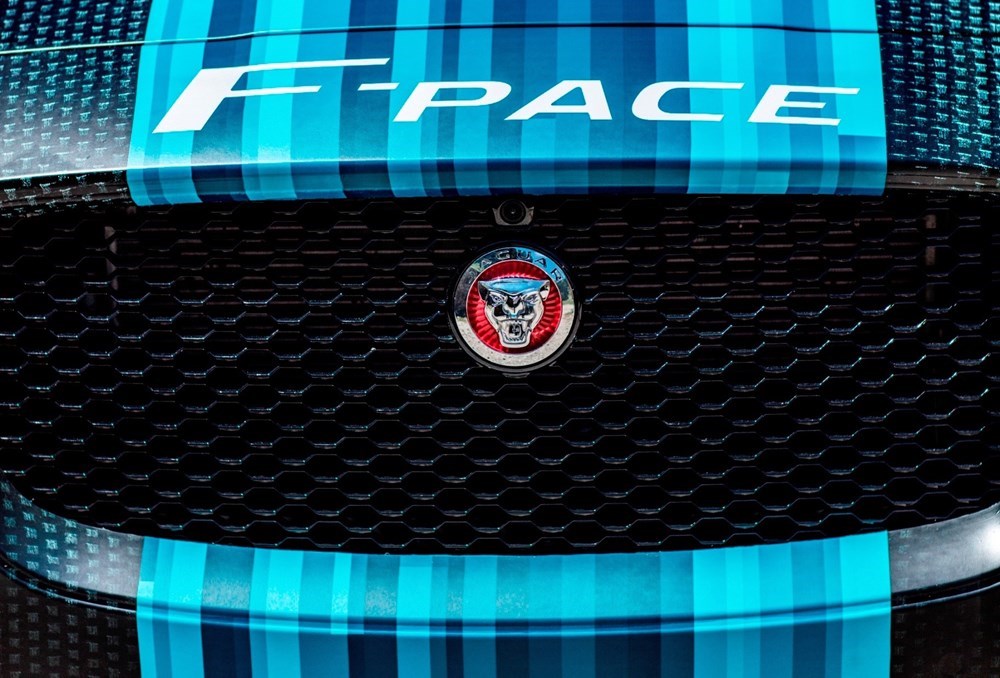
Vehicles such as the F-Pace would move people to cross-shop between Land Rover and Jaguar, though JLR gets the sale either way. The company wants people to see the whole group as one entity, ultimately.
“I’d rather they dive into an F-Pace from a Discovery Sport than wanting to try a Macan,” Wiesner said. “In that case we win, that’s exactly as we should be thinking in terms of retention.”
-CarAdvice.com.au