



Ford is replacing CEO Mark Fields as it struggles to keep its traditional auto-manufacturing business running smoothly while remaking itself as a nimble, high-tech provider of new mobility services.
The 114-year-old automaker said Fields was retiring at age 56 after 28 years at the company.
Fields has been replaced by Jim Hackett, a former CEO of office furniture company Steelcase who joined Ford’s board in 2013.
Hackett has led Ford’s mobility unit since March of last year.
Speaking at Ford’s Dearborn headquarters this week, Hackett said Ford does a lot of things well, but is not as good at handling complex strategy questions.
Hackett plans to have a small executive team that can set the company’s plans, communicate them clearly and make decisions quickly.
That’s a contrast to Fields, who had 20 direct reports and was a product of Ford’s bureaucratic culture.
“The biggest challenge I had (at Steelcase), and I will have here, is to have everybody see the future. They can see their opportunity in that. And secondly, that it’s our right to win and we don’t have to cede that to anybody, Tesla or any of them,” Hackett said.
“I love that challenge because I know how to do that.” In three years as CEO, Fields began Ford’s transition from a traditional automaker into a “mobility” company, laying out plans to build autonomous vehicles and explore new services such as ride-hailing and car-sharing.
Silicon Valley companies such as Google were pushing into the car business, while Uber and Lyft threatened to change people’s attitudes toward car ownership.
In fact, it was Fields who put Hackett in charge of those projects as head of mobility.
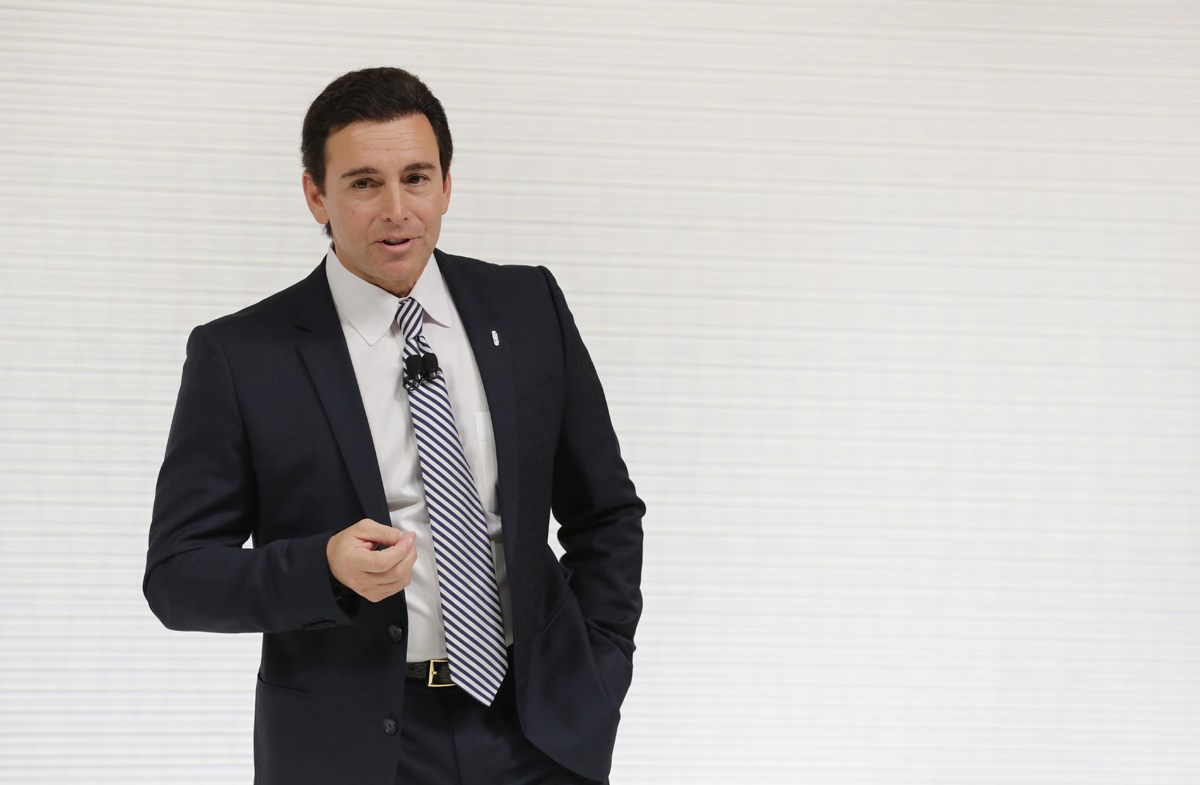
Mark Fields. Photo / AP
Under Fields, Ford achieved a record pretax profit of US$10.8 billion in 2015 as SUV and truck sales soared in the US.
But there were rumblings that Fields wasn’t focused enough on Ford’s core business.
Popular products such as the Fusion sedan and Escape SUV grew dated. Ford lagged behind rivals in bringing long-range electric cars to the market.
Ford couldn’t pivot quickly. The stock price sagged, and electric car maker Tesla even passed Ford in market value earlier this year.
Hackett was the CEO of Steelcase for 20 years. He is credited with transforming that company.
Ford executive chairman Bill Ford called Hackett a “visionary” who knows how to remake a business.
“These are really unparalleled times, and it really requires transformational leadership during these times,” Ford said.
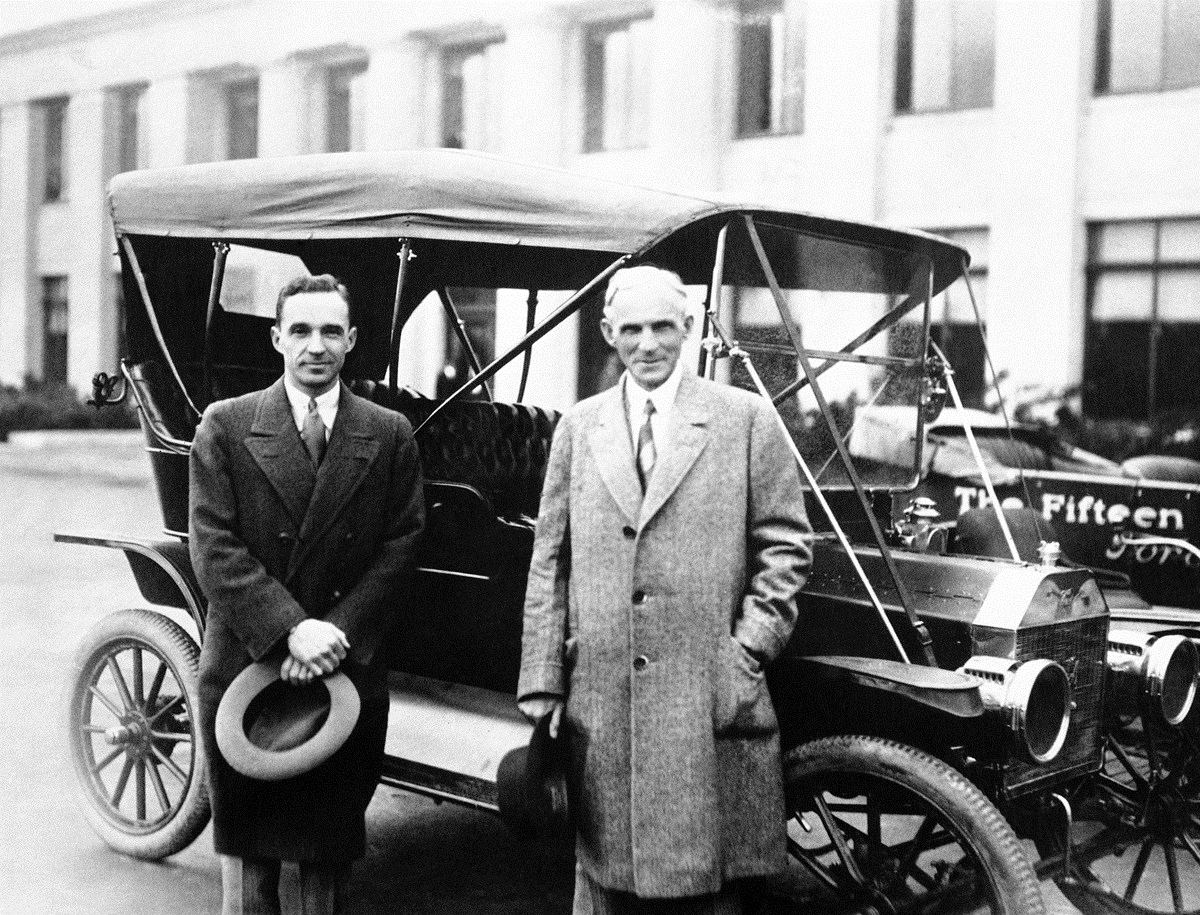
Henry Ford and son Edsel Ford pose for a picture on April 8, 1947. Photo / AP
Investors worried about Ford’s sliding US market share and product decisions. US sales are plateauing after years of growth, and Ford has been losing share in that all-important market.
Unprofitable small cars have chipped away at some of the profit from SUVs.
And in the electric car market, General Motors put the Chevrolet Bolt, with 383km of range, on sale last year; Ford is working on an electric SUV with 482km of range, but it’s not due out until 2020.
Meanwhile, Mary Barra — who became GM’s CEO about six months before Fields became Ford’s — has made a series of headline-grabbing moves, such as forming a partnership with the ride-hailing company Lyft and pulling GM out of unprofitable markets,
including Europe, India and South Africa.
Hackett is confident he can placate discontent on Wall Street.