



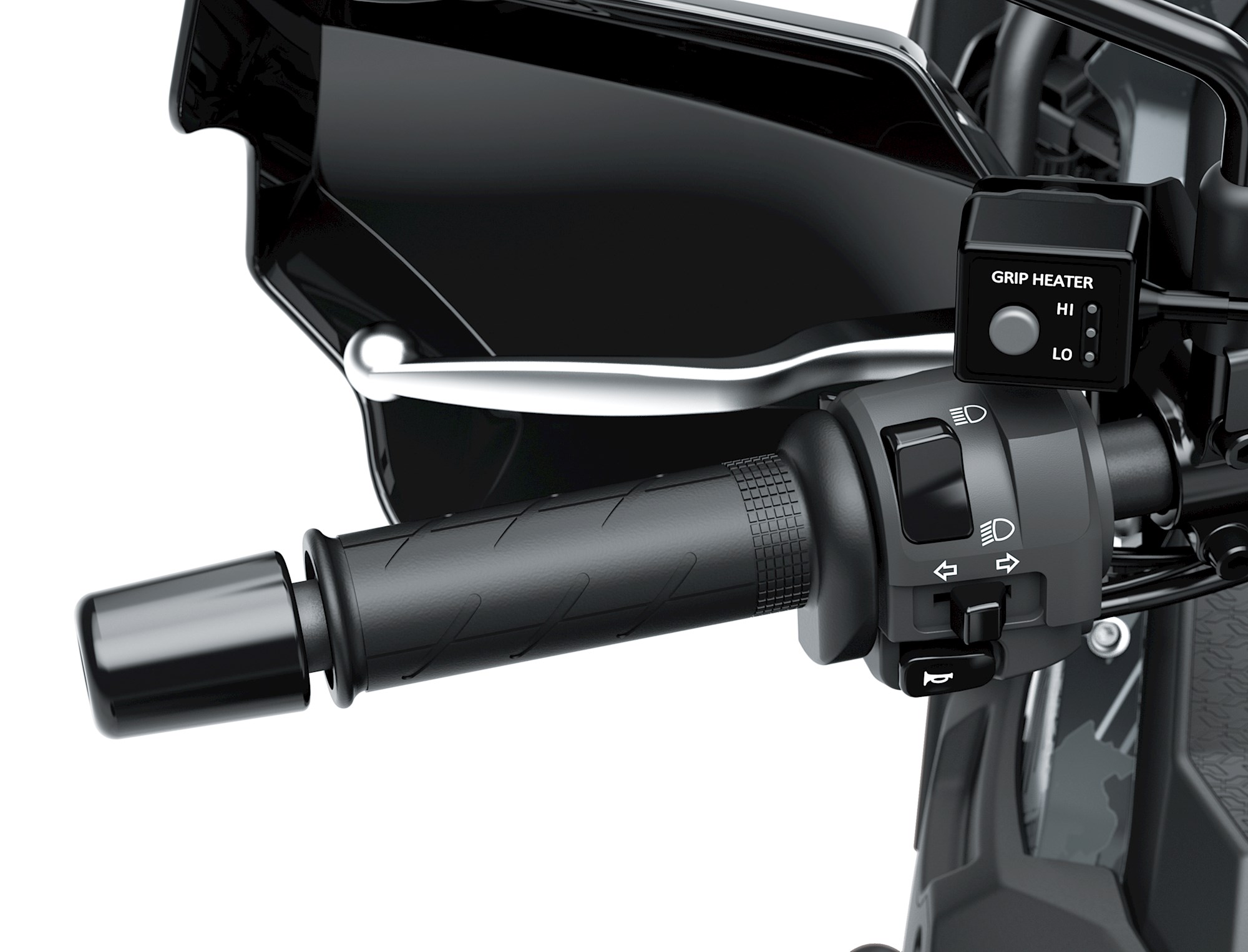
New Zealand is in line to receive the new ABS-equipped KLR650 in mid-2021, while the up-specced Adventure variant (which adds panniers, fog lamps, frame sliders, tank pad, and DC and USB sockets from the factory) is due to arrive later this year.
According to Kawasaki NZ: "The 2022MY overhaul ticks the all-important emissions and ABS boxes all while keeping an extremely competitive price point." Pricing starts at $11,495 for the base model, with the KLR650 Adventure priced at $13,295.
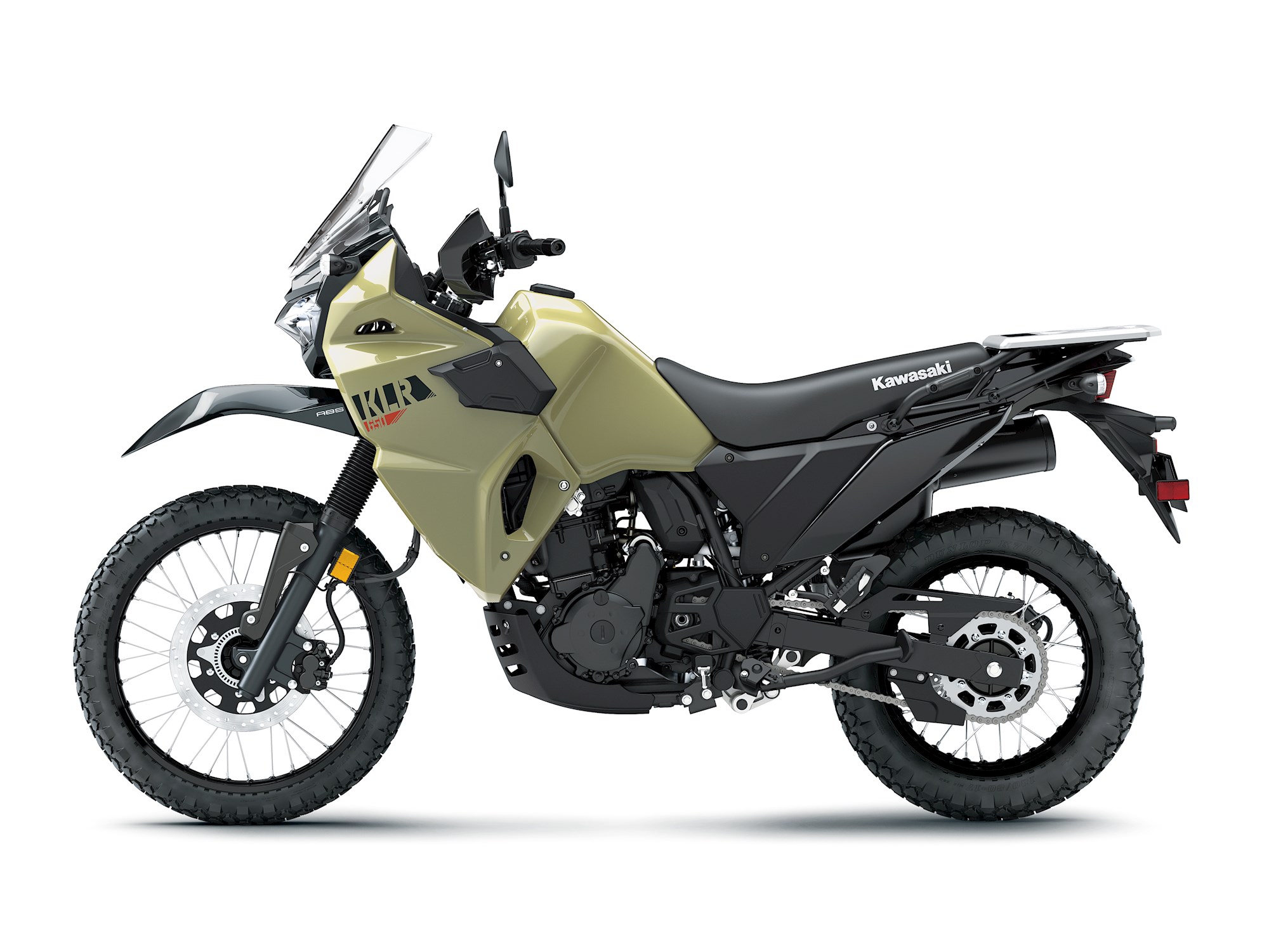
Those upgrades build upon the solid base that was the second-generation KRL650 and drag it kicking and screaming into this millennium.
Starting with the engine, Kawasaki has bucked the industry trend of moving to parallel-twin engines and instead focussed on modernising the 34-year-old 652cc single-cylinder heart of the KLR, with the headline update being the addition of EFI for the first time.
Other engine upgrades include a revised intake and exhaust cam profiles and a reduced exhaust diameter to improve mid-range power and torque characteristics. A stronger cam chain guide material and shape add to the increased reliability.
Incredibly, the five-speed gearbox remains but Kawasaki says it has also made refinements to improve shifting feel and reduce weight.
The overall weight of the KLR650 is still on the heavy side, with the bike tipping the scales at 210kg in its base trim. The KLR650 Adventure with its added crash protection and luggage tips the scales at 222kg.
Pulling all that to a stop is an updated brake system that will feature ABS in most markets, however, it is not yet clear whether this is a switchable system or Kawasaki's "off-road ABS" as seen in the KLX230.
Wheel sizing remains the same 21 and 17-inch combo as before, with larger-diameter front and rear wheel axles the only substantial change compared to the old bike.
While the main section of the frame remains essentially the same as the old model, the subframe has been integrated to increase torsional rigidity for a more composed ride. A new and 30mm longer swingarm also contributes to better handling.
Aesthetically the KLR650 leaps forward with a new LED headlight and forward fairing, however, from the seat back the bike looks very similar to the second generation.
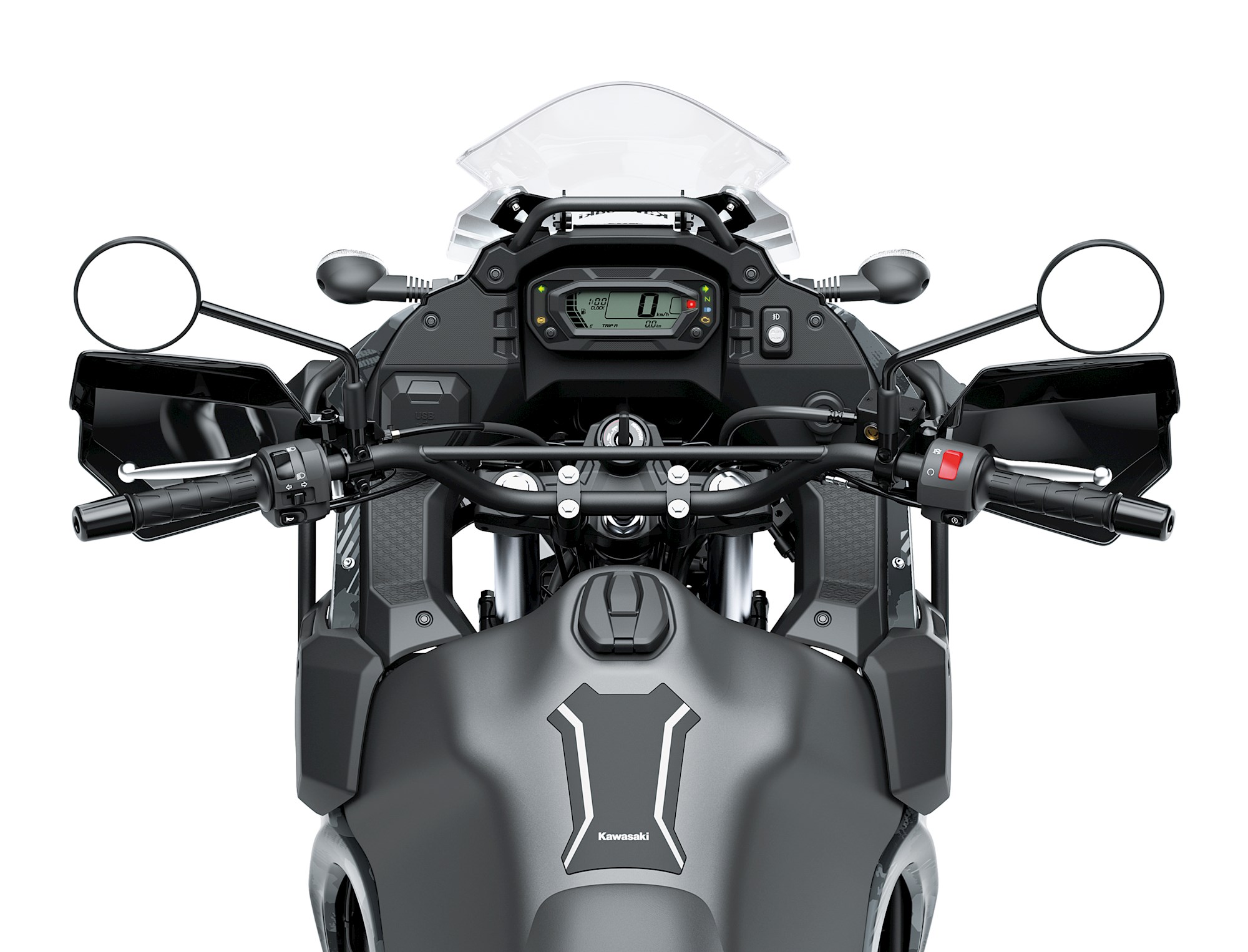
Kawasaki says it has worked on vibration dampening to improve comfort on the new KLR. This includes rubber mounting the handlebar and pegs, which have also had their positions moved 10mm outwards to provide adjustability and put the rider in a slightly more relaxed position, to support longer hours in the saddle.
A new fuel tank design maintains the bike’s huge 23 litres of capacity, with Kawasaki saying the new tank fits better with the rider’s knees for comfort and increased controllability. Kawasaki has also improved the useable volume with the new tank with the fuel pump drawing from the very bottom of the tank giving the bike an even longer range.
Other visual changes are a new talker windscreen, which is now 50 mm taller for better wind protection and features two-position bolt-on adjustability that allows windshield height to be increased a further 30 mm.
Finally, the KLR’s analogue dash has been replaced with a digital instrument panel that adds plenty of useful features including dual trip meters, a clock, and quite handily a fuel gauge for that huge fuel tank.
With many of its competitors set to leave the market in November due to their lack of ABS, the new KLR650 is well placed to return to its previous place as one of the gateway bikes to backcountry adventures.


