


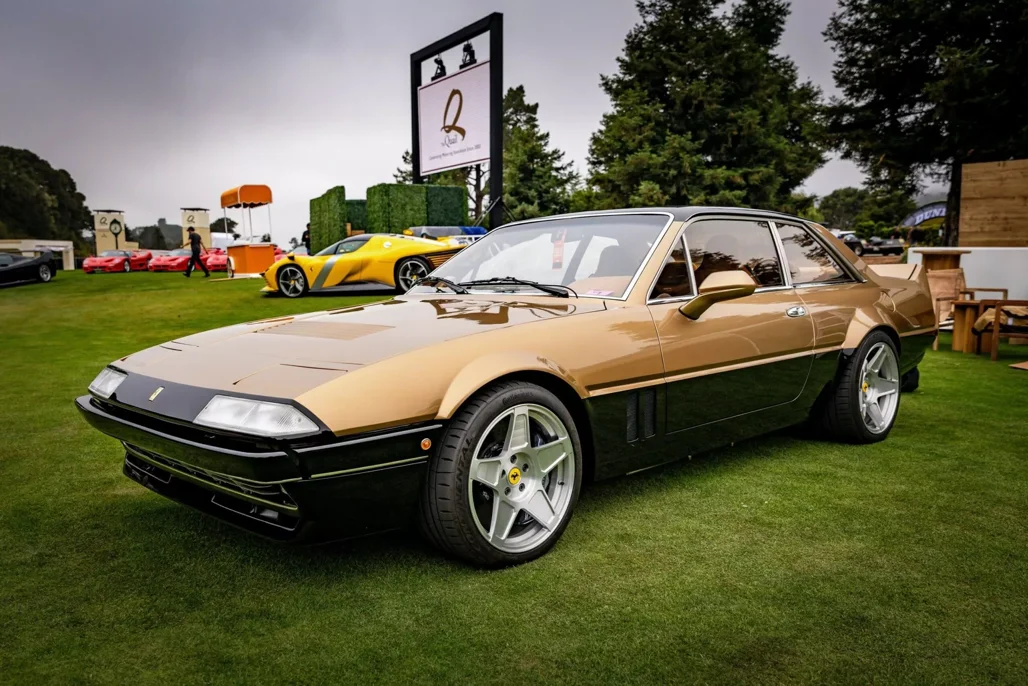

- A Ferrari 412 was rebuilt with a 6.5-litre NA V12 sourced from the 812 Superfast.
- Otsuka Maxwell Design completed the restomod in over 5000 hours.
- The build includes 12 throttle bodies, port injection, a carbon airbox and a gated manual.
When a Ferrari 412 becomes a V12, gated-manual grand tourer with cashmere carpeting, you know restraint has left the building.
A US-based owner has spent close to US$1.8 million (about NZ$3.1 million) reimagining Ferrari’s oft-forgotten four-seat coupe, turning the quietly elegant 412 into something altogether louder.
The project was executed by Otsuka Maxwell Design (OMD) over more than 5000 hours, and the brief was simple: build the ultimate 412, regardless of convention.
Old badge, very modern lungs
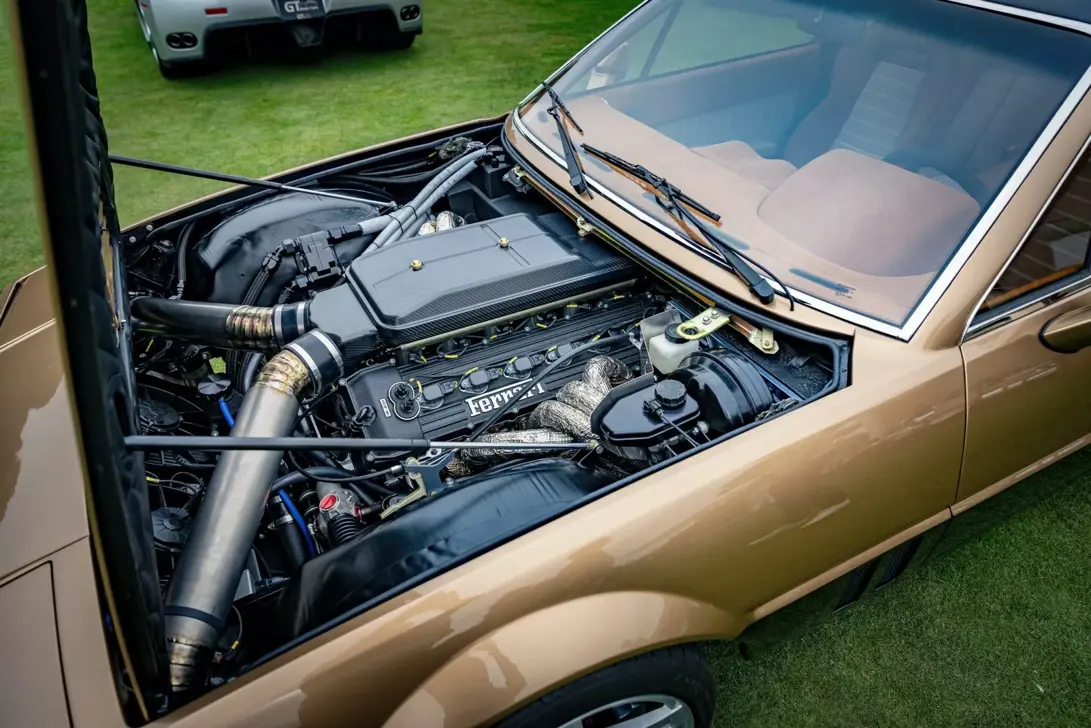
The headline act lives under the bonnet. Gone is the original Colombo-derived V12, replaced by Ferrari’s modern 6.5-litre naturally aspirated F140 engine from the 812 Superfast. Ferrari never intended this engine to power an ’80s GT, but intent has never stopped a proper restomod.
DRIVEN understands OMD has not disclosed final power or torque figures, though the standard 812 Superfast produces 588kW. What has been confirmed is that the engine has been converted from direct injection to port injection and fitted with 12 individual throttle bodies feeding a bespoke carbon-fibre airbox. Custom valve covers give the engine a more period-correct look.
The gated manual Ferrari never sold you
Then there’s the gearbox. Ferrari never offered the 812 with a manual, and certainly not a gated one. OMD’s solution was to take the automatic transmission from a Ferrari 599 GTB and re-engineer it into a six-speed manual, complete with a polished metal gate.
Yes, that sentence deserves a second read.
The result is a modern V12 Ferrari drivetrain paired with one of Maranello’s most romantic interfaces, installed in a car most people couldn’t pick out of a lineup.
Cashmere, carbon and a little madness

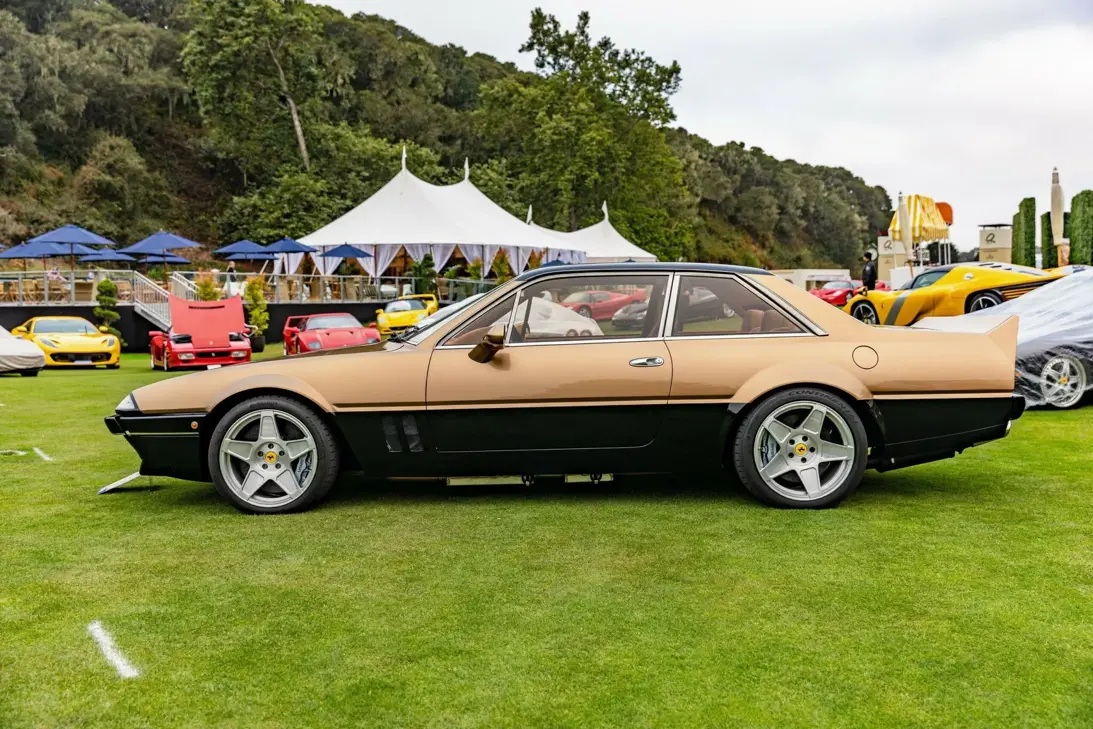
Visually, the 412 wears a Superfast Gold and black paint scheme, with tucked bumpers, flared arches, bespoke lighting, and custom 18-inch forged wheels. It’s subtle by restomod standards, but only just.
Inside, subtlety gives way to indulgence. The cabin is trimmed in Alcantara, leather, carbon-backed seats and Mongolian cashmere carpeting that reportedly costs around US$1000 per yard. Rolls-Royce-grade carpet is mentioned without irony.
A digital instrument cluster and modern infotainment system are integrated cleanly, avoiding the “iPad glued to dash” syndrome that plagues lesser builds.
This is not a preservation exercise. It’s more of an argument, one that says even Ferrari’s forgotten models deserve a second act, provided you’re willing to rewrite the rules and set fire to the budget.


