



- Toyota Australia has revealed its pricing and specs for the all-electric Hilux, and it doesn't look great.
- The Hilux BEV starts at the equivalent of NZ$90,000 and tops out at NZ$99,650.
- While it hasn't confirmed ranges yet, the number suggested also sound worrying low, as does towing capacity.
Toyota Australia has revealed tech details and pricing for the fully-electric version of the Hilux ute and, put it this way, it sure doesn't look good on paper.
Toyota Australia is launching the Hilux BEV in SR and SR5 trims, with the SR coming in double cab chassis and double cab wellside forms, while the SR5 is double cab wellside only.
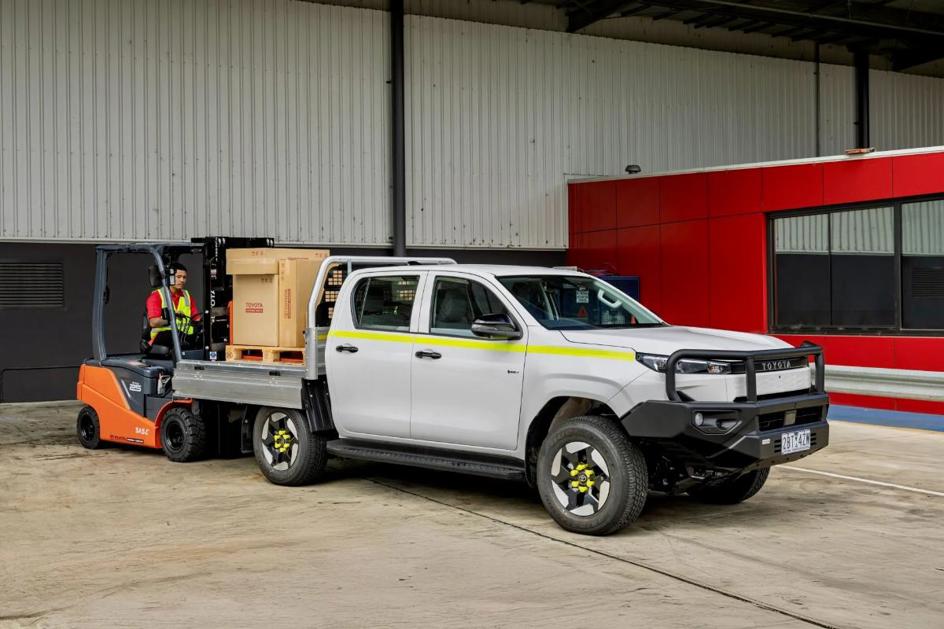
All models feature a dual motor AWD all-electric powertrain with an 82kW/206Nm motor on the front and a 129kW/269Nm one at the rear for a total system output of 144kW and 468Nm, representing a slight drop on the diesel Hilux's 150kW/500Nm outputs, let alone the hybrid version that also packs momentary 12kW/65Nm boost from its 48-volt mild hybrid system. But this is before the extra weight of the battery is taken into account.
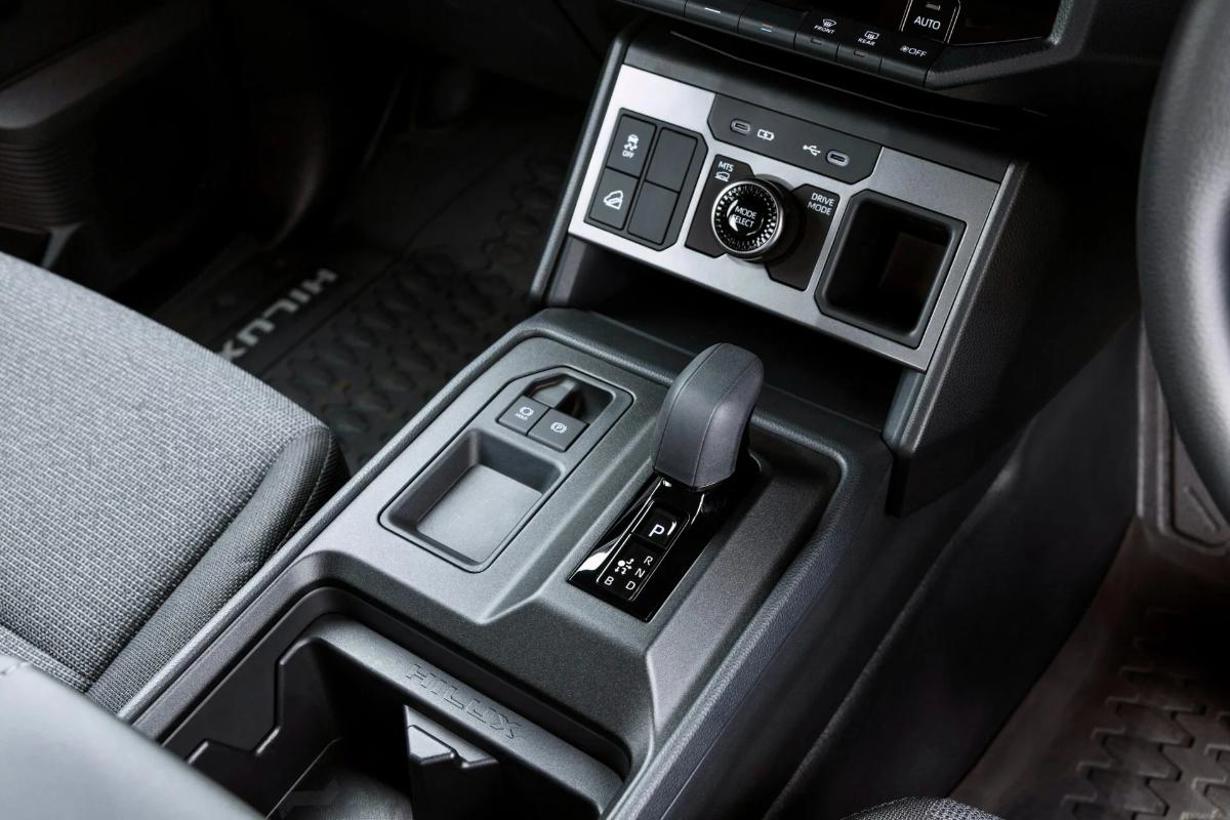
Due to that dual motor layout, the Hilux BEV boasts full-time all-wheel drive, with torque distribution variably controlled between the front and rear axles during on-road driving, and six terrain modes available for off-road driving.
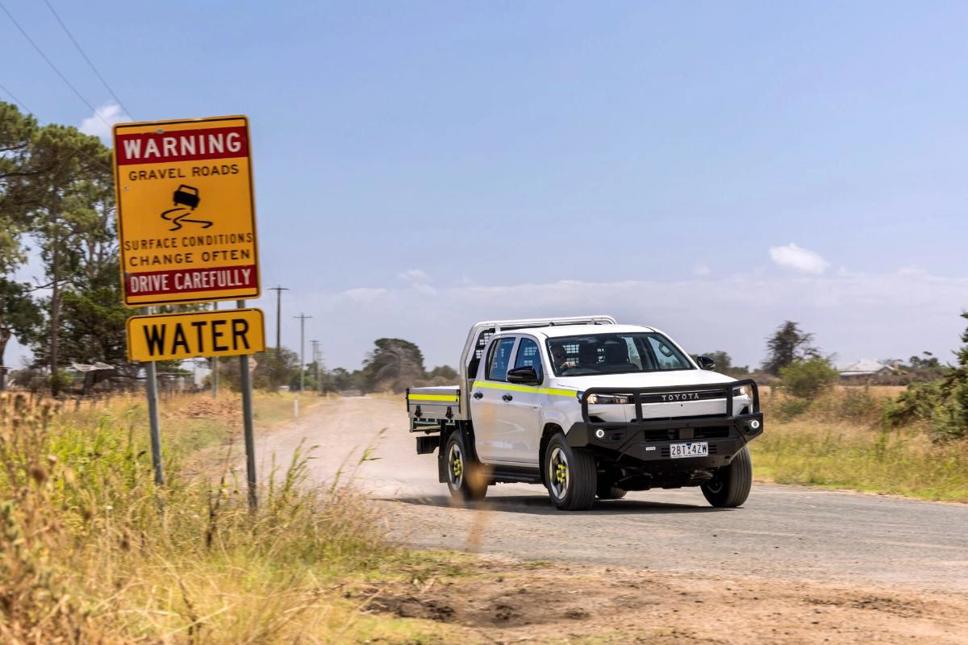
Toyota says it features a “uniquely developed suspension system” with beefed-up MacPherson strut front suspension, a live axle leaf spring setup at the rear, along with frame reinforcements. It also packs ventilated disc brakes and regenerative braking.
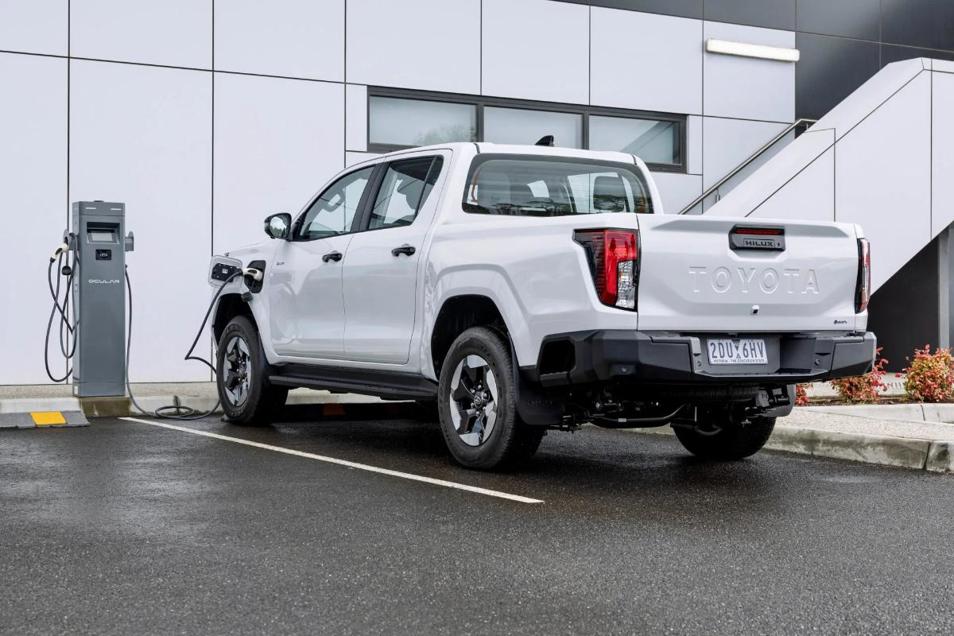
The Hilux BEV's battery is a 59.2kWh lithium-ion unit and while Toyota Australia says a driving range figure has yet to be finalised, it anticipates that it will be is "up to 315km on the NEDC cycle”.
300 or so kilometres is arguably fine for a work vehicle like the Hilux, particularly given Toyota Australia is specifically aiming the BEV at the mining and forestry industries, while 150kW fast charging will see the battery charged to 80 percent in just 30 minutes, meaning that short charges during downtime will easily keep the Hilux BEV topped up. However, the key part of Toyota's range estimate is that "NEDC" thing.
NEDC is an old, outdated testing cycle that was developed in the 1990s that Australia seems to be clinging to with a grim determination. Given that the more realistic WLTP test generally produces ranges of around 85 percent of the old NEDC tests, this leaves the Hilux BEV looking at a range of up to around 270km in ideal conditions. And totally unladen.
Realistically this leaves the real world range of the Hilux BEV hovering around the 200 to 240km mark, depending on usage, while strapping a load in the tray or a trailer on the back could realistically see that plummet to under 200km.
Then there is towing; the Hilux BEV is rated for a maximum towing capacity of 2000kg on a braked trailer, which is well down on the electrified competition, never mind traditional diesel utes. For example, the PHEV BYD Shark 6 can handle 2500kg, while the upcoming 2.0-litre version bumps this up to 3500kg to equal the PHEV GWM Cannon Alpha, and the all-electric Geely Riddara can pull 3000kg.
Toyota Australia's pricing also seems on the ridiculous side to us here in New Zealand, with the entry double cab chassis SR landing over the ditch at hefty AU$74,990 (NZ$90,044), while the pick-up version ups this to AU$76,490 ($91,845) and the SR5 tops the range at an alarming AU$82,990 (NZ$99,650).
However, Toyota Australia prices for diesel and hybrid Hilux are significantly higher than New Zealand prices. For example, an SR double cab wellside in Australia is around AU$65,000 (NZ$78,000) drive-away (there are variations between states), while here it is NZ$56,990, so depending on where Toyota New Zealand positions the BEV, it may well end up surprisingly competitively priced. But that remains to be seen.
Toyota New Zealand has said it will be introducing the Hilux BEV here, but has yet to reveal further information around spec and pricing. Toyota Australia is expecting to sell a relatively tiny amount of electric Hiluxes (around 500 this year), and says it has been extensively tested at mining sites in temperatures close to 50 degrees Celsius, indicating where it considers the market to be there.
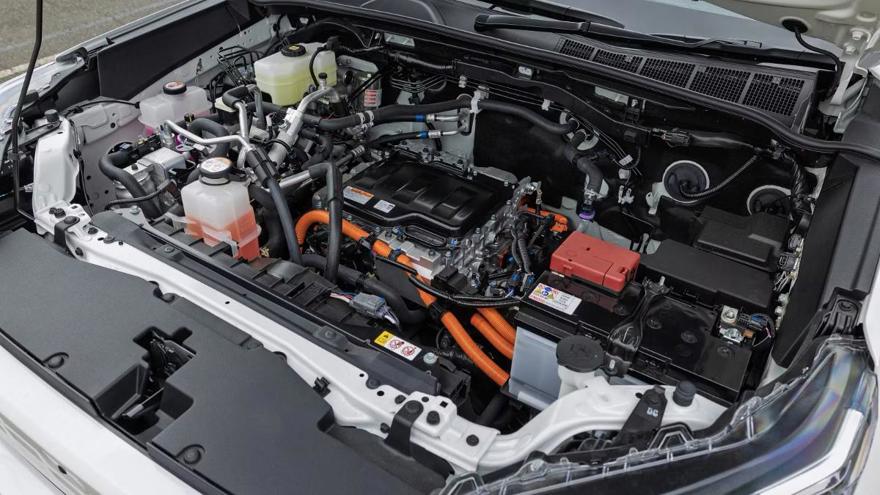
New Zealand will be a considerably different story, so TNZ will almost certainly position the BEV in a different space, possibly with a different model range, which will also inform pricing.
Another factor here is our recently watered-down Clean Car Standards. Previously these would have made the electric Hilux something that TNZ would want to sell as many as possible of in order to harvest credits that could offset penalties on diesel Hilux sales, but the National government's recent slash and burn on penalties will have lessened the resolve for TNZ to get the Hilux BEV down as cheap as possible.
But the fact remains that, either way, none of that gets past the small range and low towing capacity, both of which are key customer pain points for both EVs and utes. The proof will be in the driving, but Toyota Australia's reveal will do little to soothe the naysayers in both segments.


