



- Bosch will reveal an AI cockpit platform at CES 2026 designed to learn driver routines and context.
- The system runs on Nvidia Drive AGX Orin, delivering up to 200 TOPS for real-time processing.
- Microsoft 365 integration enables Teams access by voice, with adaptive cruise control activated automatically.
Cars that listen are nothing new. Cars that understand you are the next frontier, at least according to Bosch, which has pulled the wraps off a new AI-driven cockpit concept ahead of CES 2026.
The idea is simple but ambitious: turn the car from a passive machine into a self-learning companion that adapts to the driver’s habits, preferences and context in real time. Say “I’m cold”, and the system doesn’t just hear a command but also interprets intent, then quietly turns up the heat, warms the seat and adjusts airflow without further prompting.
Talk less, get more
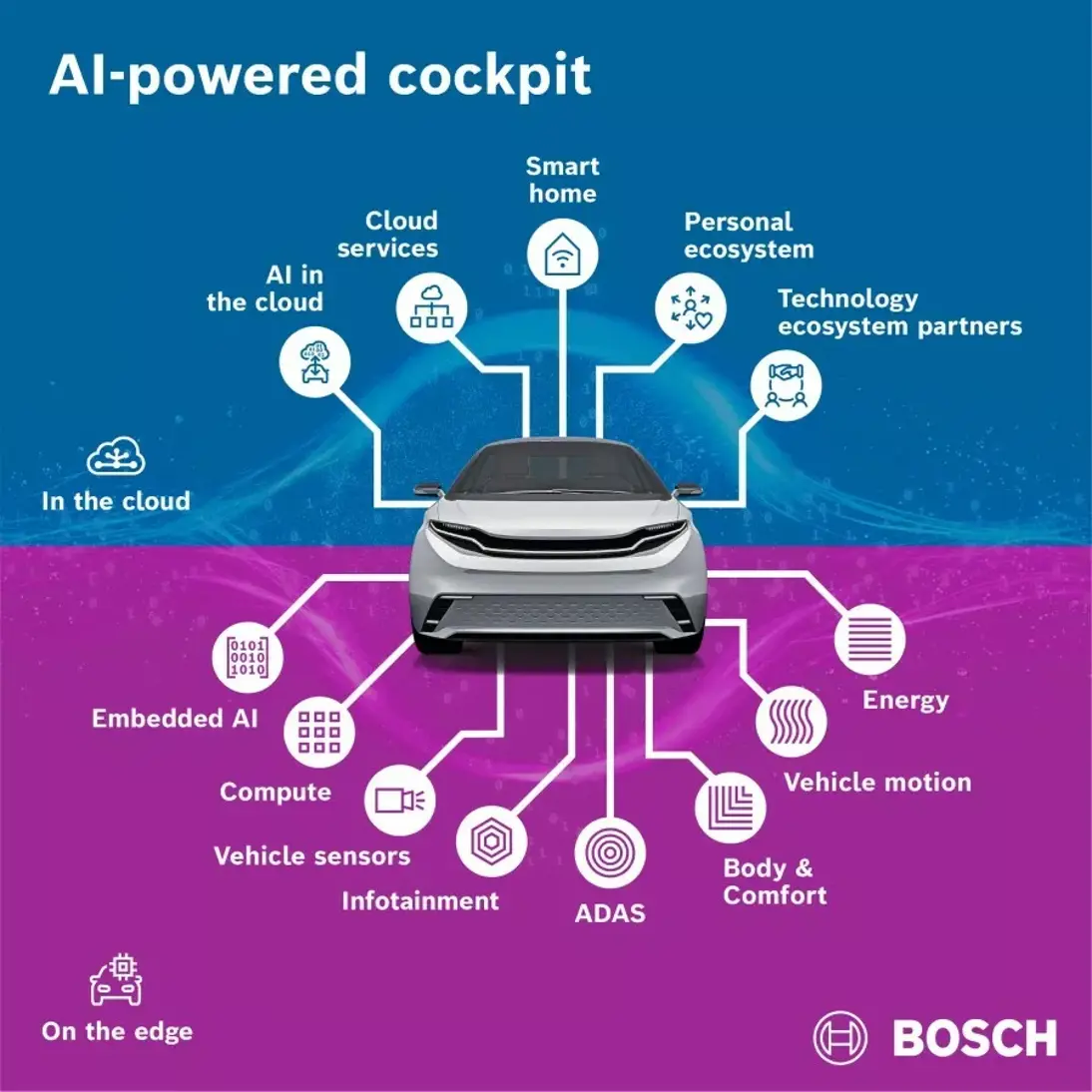
At the heart of Bosch’s system is a newly developed voice assistant designed to move beyond rigid command-and-response behaviour.
Instead, it uses advanced artificial intelligence to anticipate needs and act proactively, drawing on what Bosch describes as an understanding of routine and situation.
The platform runs on Nvidia’s Drive AGX Orin system-on-chip, delivering up to 200 tera-operations per second. That processing power allows the cockpit to juggle real-time sensor data while also running vision-language models, or AI systems capable of linking what the car “sees” with what it hears, then reasoning across multiple steps to respond more naturally.
Bosch positions this as a shift in how drivers interact with their vehicles. Rather than learning menus and prompts, the driver speaks normally, while the car figures out what to do.
Your office, now with wheels
Bosch is also leaning hard into the idea that time spent in a car doesn’t have to be wasted time. Through a partnership with Microsoft, the system integrates Microsoft 365 directly into the vehicle interface.
In practice, that means a driver could join a Microsoft Teams call using voice commands, while the car automatically engages adaptive cruise control to reduce workload behind the wheel. Bosch says the goal is to turn “unproductive downtime” into usable work time - a pitch likely aimed at both fleet buyers and commuters.
The underlying software layer uses Microsoft’s Foundry platform, which allows automakers to build, customise and manage AI applications and agents on top of Bosch’s core system.
Big ambition, big numbers
Bosch plans to officially unveil the AI cockpit platform at the Consumer Electronics Show in Las Vegas in January. By 2030, the company is targeting more than €2 billion (NZ$4 million) in revenue from in-vehicle infotainment solutions alone.
“The new AI extension platform enables existing cockpit systems to be quickly and easily upgraded with advanced AI functions,” said Bosch mobility chairman Markus Heyn. “This makes the driving experience more comfortable, intuitive, and safer for all vehicle occupants.”
Bosch has not disclosed which vehicle brands or production models will be first to adopt the system. Still, if cars start adjusting themselves after overhearing casual complaints, the line between machine and co-driver may soon get a little blurrier (and a lot warmer).