



- Study has assessed Auckland and Wellington commuter traffic.
- Expert warns that drivers could simply take longer routes to avoid charges.
- Heaviest traffic days and time delays revealed.
A University of Auckland lecturer in environmental science is warning that proposed traffic congestion charges won't work unless viable alternatives to taking the car are available.

Dr Hyesop Shin is providing research for Auckland and Wellington councils on the potential impacts of different congestion charging schemes.
His team has just completed a study of Auckland traffic and how it might change under a charging cordon around the central business district.
“Congestion has so many harmful impacts, because lots of emissions are produced while vehicles pile up," says Shin. “However, congestion charges could increase emissions, if people take detours and end up driving longer distances to avoid toll points.
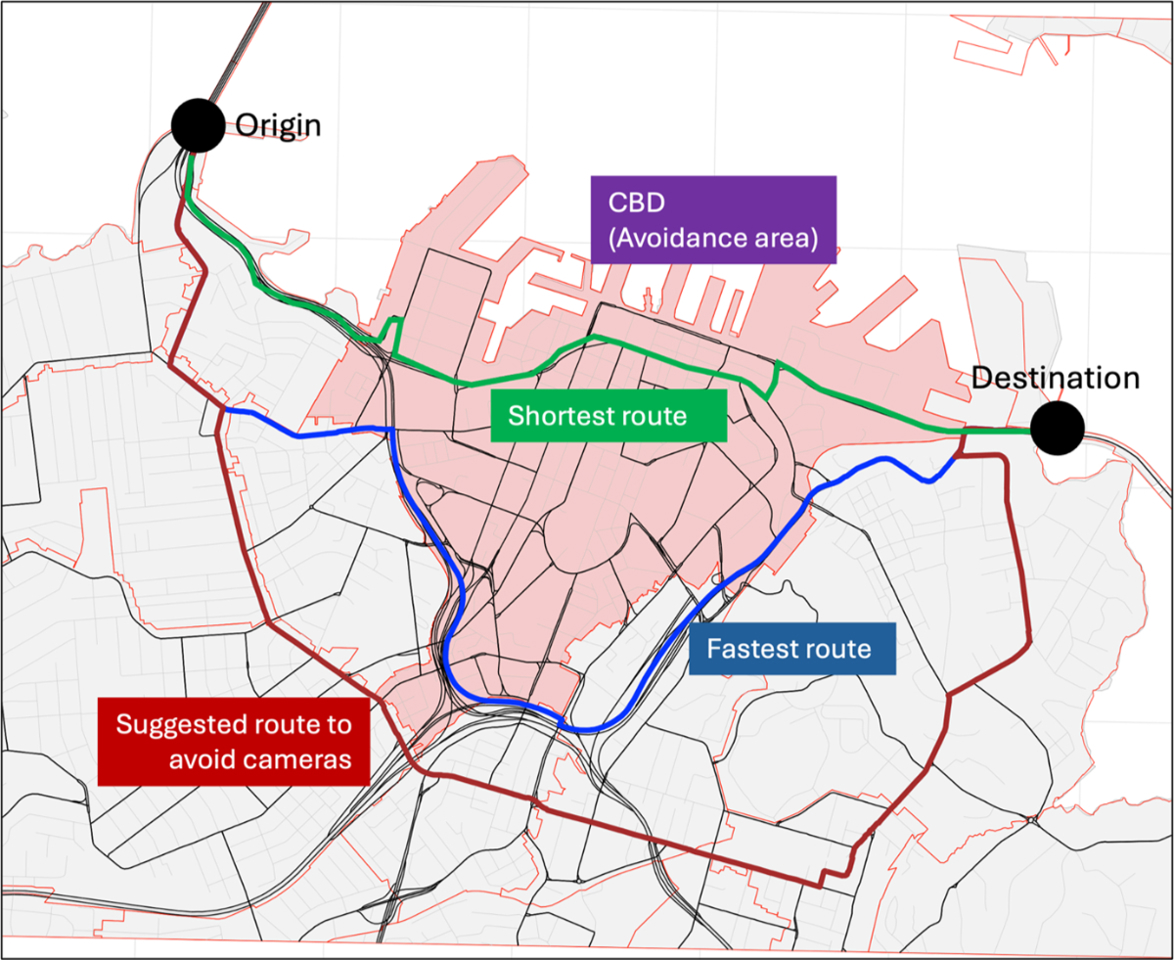
“To avoid this, better public transport and active transport pathways need to be available, so people have realistic alternatives to driving.
Congestion charging could increase pollution and punish lower-income commuters
Computer modelling by Shin's team suggests that if a cordon around the city centre is imposed, some drivers will simply take longer routes to avoid paying.
“If the charging system doesn’t anticipate drivers taking detours to avoid charges, it could create new bottlenecks, increase noise and emissions in local neighbourhoods, and push traffic onto roads that haven’t been designed for heavy traffic.
Auckland Council is weighing up six different options for setting congestion charging points, focused on the city centre, highways leading to the CBD, or a combination of both.
“I’m concerned that the charges have an equitable impact and don’t place an extra burden on people living in areas with higher deprivation," says Shin.
Drivers from wealthier suburbs might just pay congestion charges and continue to drive cars into the central business district for work or education, while lower income workers might face significant impacts from the charges if they don’t have public transport available from the areas they live in.
What the study shows about Auckland traffic
The study has found travel to the Auckland CBD takes about 50% longer at peak times on Tuesday to Thursday mornings and evenings.
Mondays are slightly faster flowing and traffic eases off on Fridays, reflecting a shift to more people working from home on these days.
As you'd expect, more vehicles hit the roads on rainy winter days, adding to traffic jams.
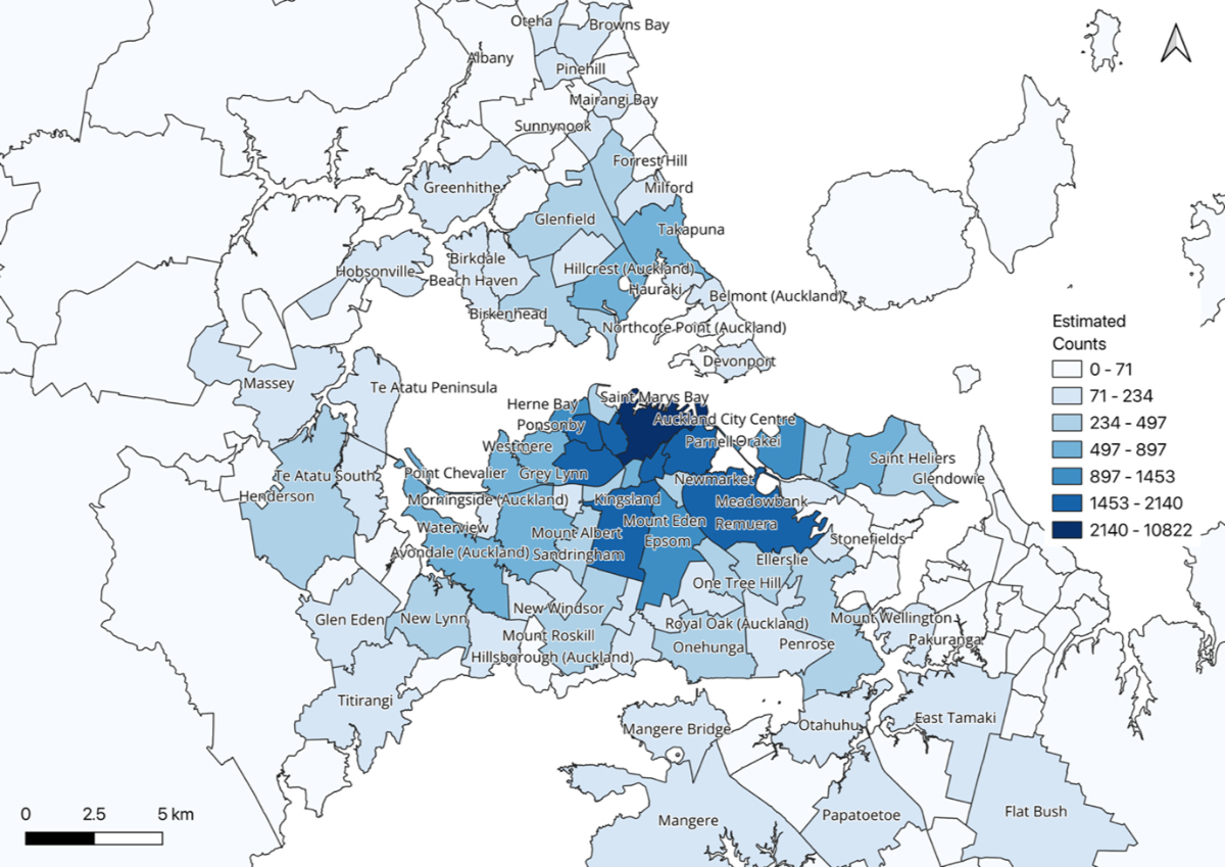
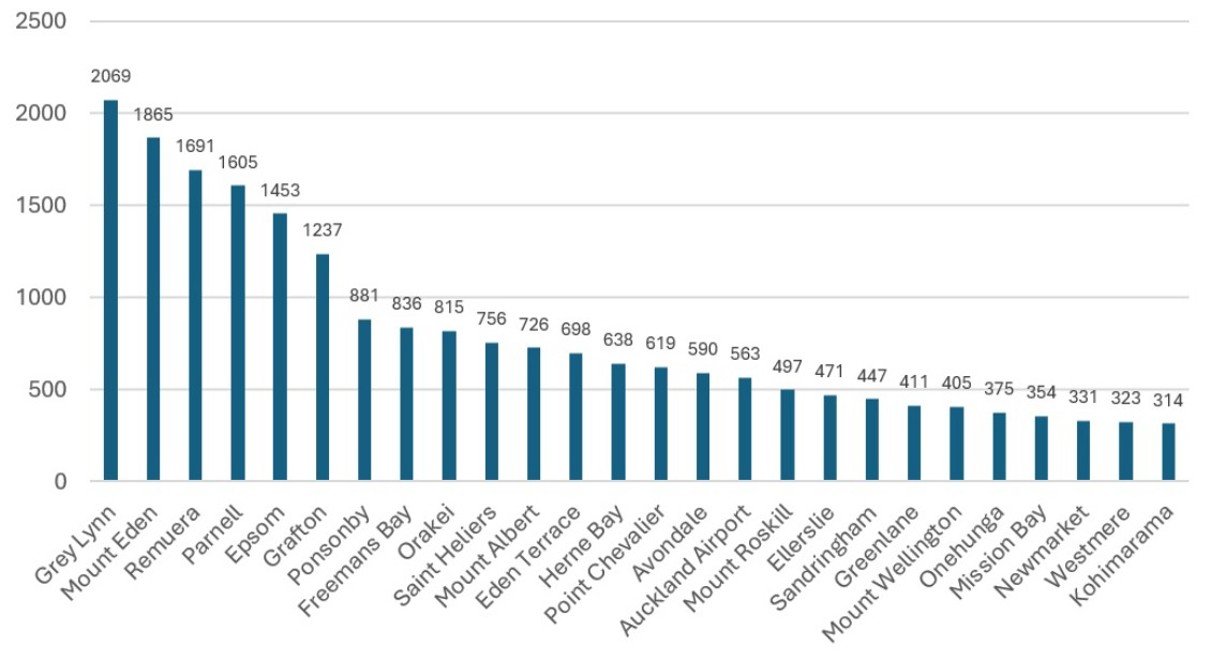
Most morning peak traffic comes from suburbs immediately surrounding the city centre, such as Grey Lynn, Mount Eden and Remuera.
“Many residents in these neighbourhoods travel a fairly short distance into the CBD, but it creates severe traffic jams some mornings,” says Shin.
High numbers of vehicles travel from South Auckland into the CBD on Tuesdays to Thursdays. State highways from the west and north are also busy, but the traffic intensity is lower than from the inner-city suburbs.
What types of congestion charging could Auckland use?
The team is looking at different international examples of traffic congestion charges, to gauge what works best.
New York provides a relevant example, with a $US9 charge between 5am and 9pm decreasing traffic volumes by an average of 11% over six months.