



The steady shift from sedans to SUVs has reshaped driveways, car parks and dealer forecourts, not just in New Zealand, but around the world. Once seen as niche lifestyle vehicles, SUVs have now become the default choice for families, commuters and retirees alike. Basically everyone.
But while marketing and fashion certainly play their part, science suggests that our preference for SUVs is rooted much deeper in our psychology, physiology and perception, which has led to the rise in popularity of SUVs and the existence of monocoque (essentially 'car-based') crossover SUVs.
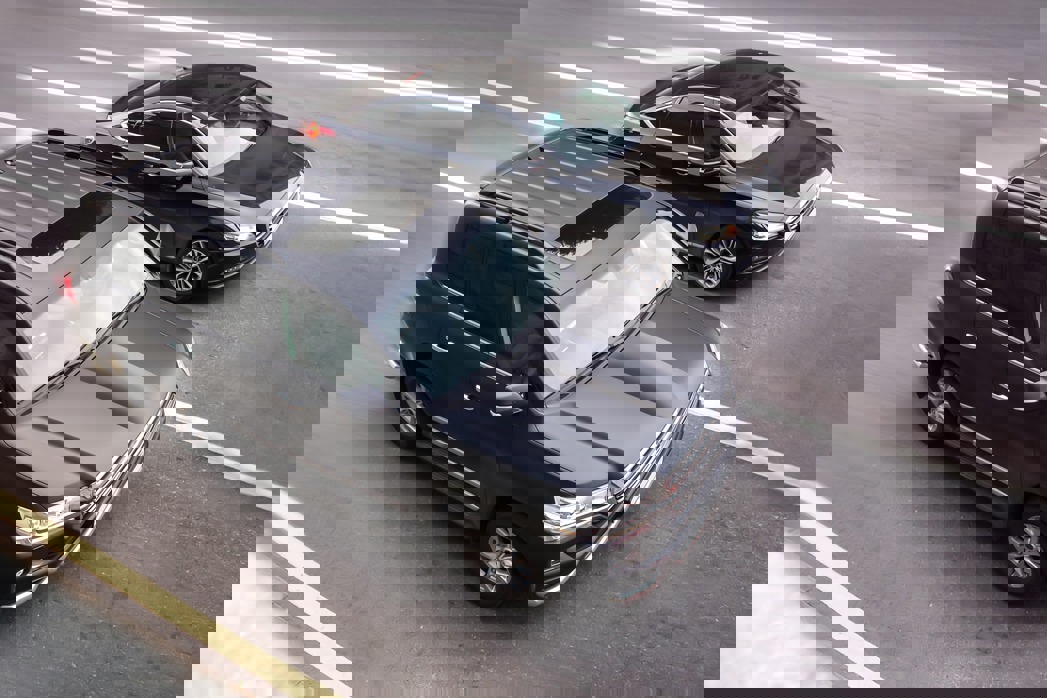
The term “SUV” now covers everything from rugged off-roaders to sleek, fashionable family transport, and small city-based runabouts, but that wasn’t always the case. The modern crossover SUV is the result of decades of evolution driven by changing customer needs, regulations, and advances in vehicle engineering.
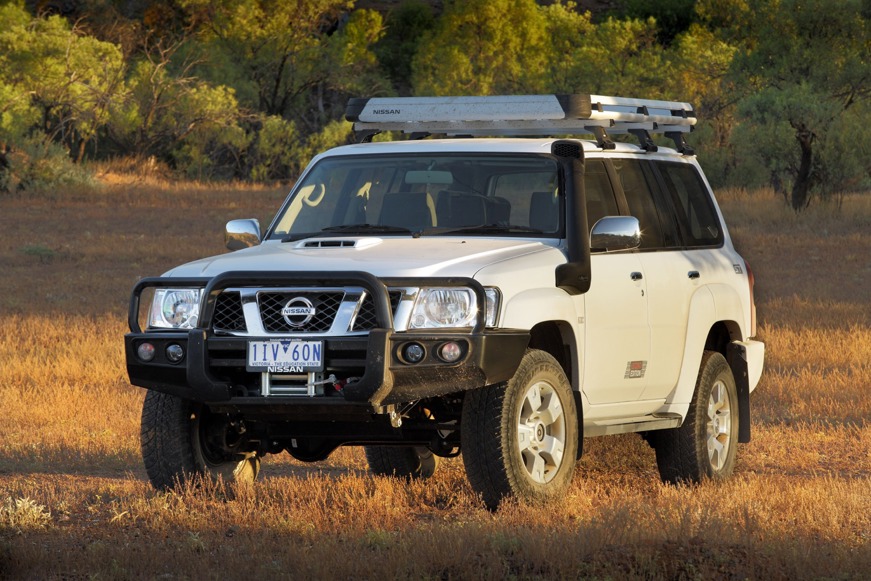
Early SUVs trace their roots to body-on-ladder frame vehicles designed primarily for work and military use. Vehicles like the original Willys Jeep, Land Rover Series, and later the Toyota Land Cruiser and Nissan Patrol were built to survive rough terrain rather than pamper occupants. A separate steel ladder chassis supported the body, providing strength and durability for off-road use, towing and heavy loads.

These early SUVs offered four-wheel drive, low-range gearing and simple mechanicals, but compromises were everywhere: heavy weight, crude ride quality, vague steering and minimal safety features. They were tools first, passenger vehicles second, yet developed a sense of perceived safety via their rugged toughness and sheer size.
This led SUVs to move more into the mainstream in the 1980s and 1990s as manufacturers began reimagining these tough off-roaders as lifestyle vehicles. Models like the Jeep Cherokee (XJ) and Toyota Prado kept ladder frames and heavy-duty drivetrains but added carpet, air-conditioning, sound insulation and family-friendly interiors.
This era marked the first major shift: buyers wanted the image and perceived safety of an off-roader, but spent most of their time on sealed roads. Engineers responded by softening suspension, improving steering and adding comfort features, while still retaining traditional SUV underpinnings.
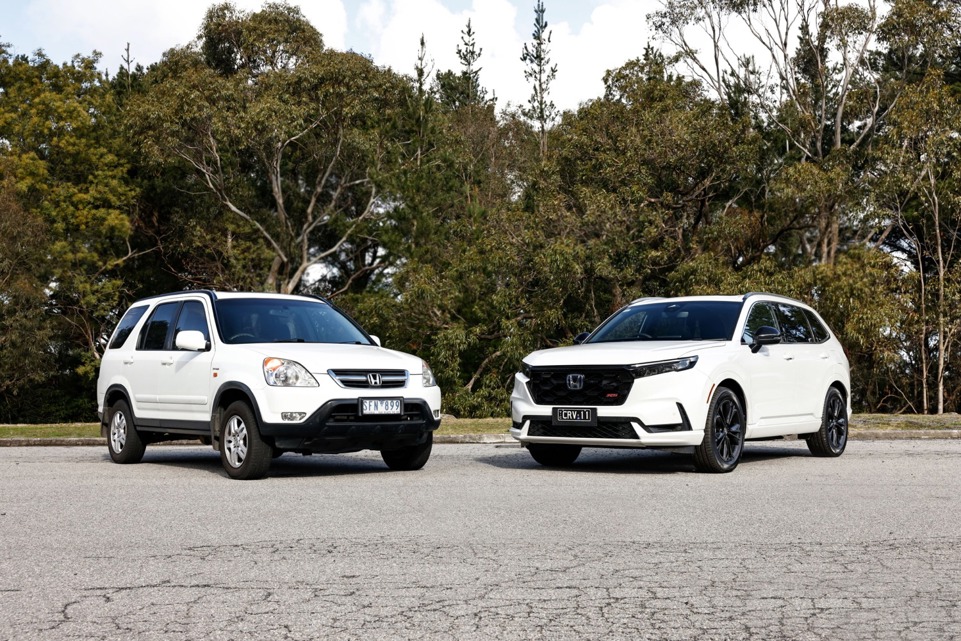
Demand from consumers for even more comfort, however, led to manufacturers experimenting with monocoque (unibody) construction, where the body and chassis are integrated into a single structure - the same approach used by passenger cars - with the result being the Toyota RAV4 (1994) and Honda CR-V (1995) that truly changed the market.
This new breed of SUVs were not only more comfortable on-road, and easier to drive and park, but they were also lighter, more fuel-efficient and, crucially, cheaper to build being based on existing car platforms, sharing engines, suspension and safety structures with hatchbacks and sedans. And so off-road ability took a back seat to everyday usability.
By the early 2000s, this formula had proven wildly successful. The term “crossover” emerged to describe vehicles that crossed over between traditional SUVs and passenger cars. Most no longer used ladder frames, low-range gearing or heavy-duty four-wheel drive systems. Instead, they offered front-wheel drive as standard, optional all-wheel drive, and suspension tuned primarily for tarmac.
As urbanisation increased and fuel prices fluctuated, buyers prioritised comfort, efficiency and ease of use, and crossovers delivered the upright seating position and flexible interiors people liked, without the cost, weight and compromises of true off-road hardware.
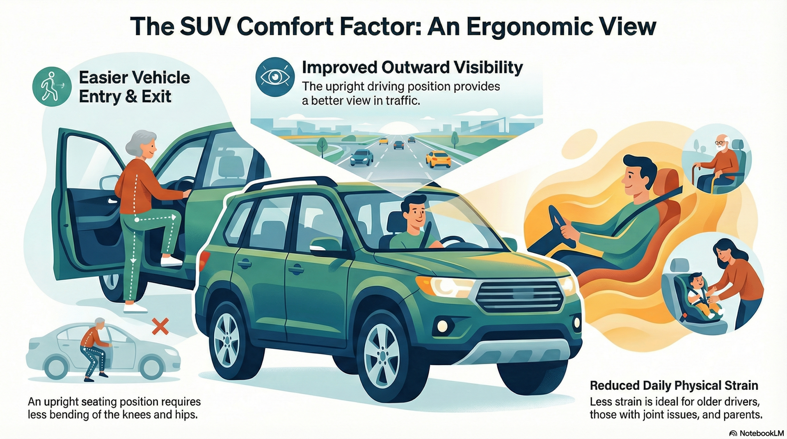
One of the strongest drivers for buyers of SUVs is the perceived safety that has always surrounded the format. Humans don’t assess risk through spreadsheets or crash statistics; we do it intuitively, and sitting higher off the ground gives drivers a broader field of view, allowing them to see further ahead in traffic and feel more aware of their surroundings.
This elevated position creates a sense of control, even in busy or unfamiliar environments. Add the visual and physical mass of an SUV and the brain instinctively concludes it offers better protection in a collision, regardless of whether that belief always aligns with real-world data. Numerous behavioural studies show that feeling safe often has more influence on decision-making than actually being objectively safe.

Then there is the biomechanical aspect - SUVs typically place occupants in a more upright seating position, with the seat base closer to standing height. This reduces the amount of knee and hip flexion required when entering or exiting the vehicle, which matters more than many people realise, particularly for older drivers, those with joint issues, or parents repeatedly lifting children in and out of car seats.
As such, over time, small reductions in physical strain add up, making SUVs feel more comfortable and less tiring to live with on a daily basis, while an upright driving position also generally improves outward visibility, particularly in urban traffic where sightlines are often blocked by other vehicles.
Being able to see over traffic or further down the road reduces mental effort when judging gaps, positioning the car, or navigating tight spaces. Psychologists refer to this as “cognitive ease” - when a task requires less mental processing, people naturally prefer it - and SUVs often deliver this ease, even if they are often physically larger and not always easier to park.
Then, of course, there is the fact that SUVs also tap into deep-seated instincts related to dominance and space. Research in environmental psychology shows that occupying more vertical space can increase feelings of confidence and security.
This isn’t necessarily about ego or aggression; it’s a subconscious response shaped by evolution - humans evolved to scan environments from an upright posture, watching for threats and opportunities (it's basically why meerkats stand on their hind legs), and a low-slung sedan places the driver closer to the ground and visually surrounded by other vehicles, while an SUV more closely mirrors the upright stance our brains are comfortable with.
Then there is the factor known as "flexibility bias" - people naturally tend to value products that can handle a wide range of possible future scenarios, even if those scenarios are unlikely. SUVs promise versatility: more luggage space, better rough-road ability, higher towing capacity, and room for changing life stages.
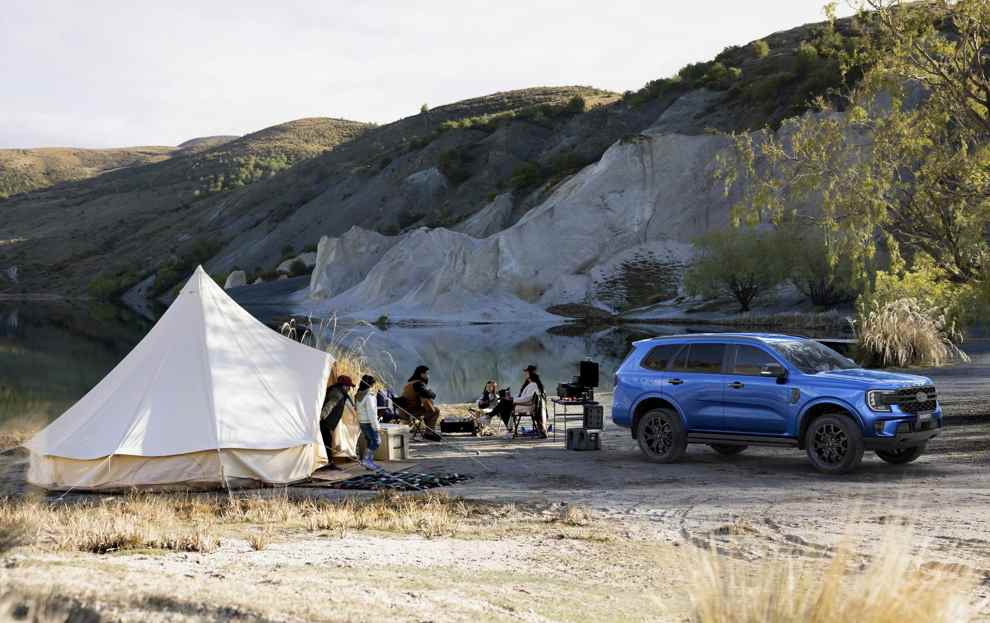
Of course, many owners rarely actually use these capabilities, but the reassurance that the vehicle could cope if needed is emotionally valuable. Psychologists describe this as “option value” - we place disproportionate weight on keeping options open, particularly when the future feels uncertain.
The rise of SUVs has also been accelerated by a social feedback loop - as more SUVs appear on the road, they change the driving environment itself. When surrounded by taller vehicles, sedans can begin to feel smaller and more vulnerable, regardless of how safe they actually are.
This perception nudges new buyers toward SUVs simply to maintain visual and psychological parity with traffic around them. Over time, this creates a self-reinforcing cycle, essentially creating a vehicle height arms race.

Of course, none of this means SUVs are objectively superior to sedans and hatches. Sedans typically offer better handling, lower weight, improved fuel efficiency and, in many cases, better outcomes for pedestrians in collisions, and from an engineering standpoint, they remain highly effective vehicles.
But humans don’t make purchasing decisions purely on engineering merit. We choose vehicles that feel right, reduce stress, and fit comfortably into our physical and psychological lives. meaning that in the end, the popularity of SUVs is less about hype and more about human nature.
Modern crossovers and SUVs align with our instincts around safety, comfort, visibility and adaptability. And regardless of their actual engineering evolution from ladder chassis off-roaders, in many ways, it’s not that SUVs replaced sedans - it’s that sedans evolved upward. Whether or not they are always the best choice on paper, they often feel like the right one - and the science helps explain why so many drivers keep coming to the same conclusion.


